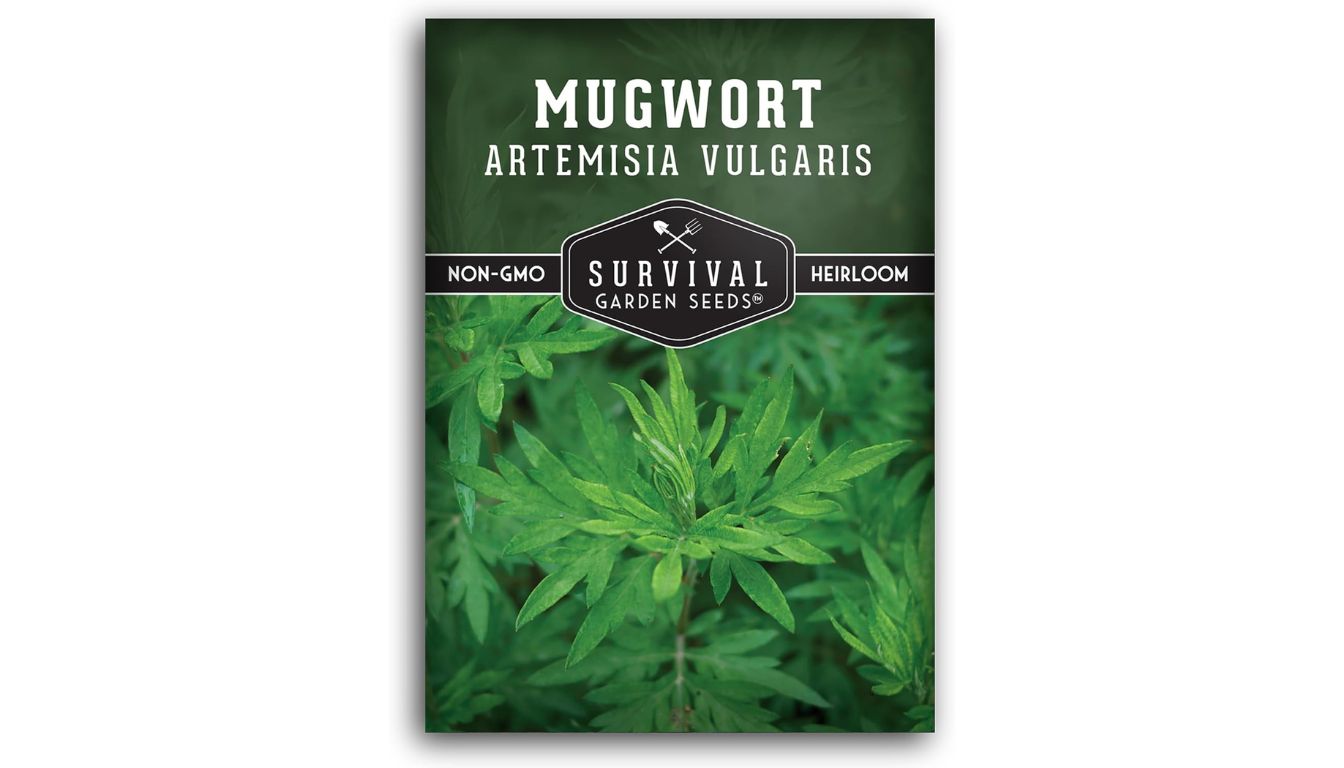
We recently started growing Mugwort from these seeds, and the experience has been surprisingly rewarding. Survival Garden Seeds Common Mugwort Seed review reflects how this hardy perennial from Survival Garden Seeds proved easier to cultivate than expected, even during our area’s dry summer months. The packet came with clear instructions that made the planting process straightforward for us.
The seeds germinated well in both containers and our garden bed. We appreciated that this is an heirloom variety, which means we can save seeds from our plants for future growing seasons. The silver-green foliage developed nicely and added an interesting texture to our garden space.
One aspect we found particularly useful was the plant’s drought resistance. We didn’t need to water as frequently as other herbs in our garden. The aromatic leaves have a distinct scent that some of us found pleasant, while others thought it was quite strong.
The packet contains enough seeds for multiple plantings, though we wish there were information about the actual seed count. We noticed beneficial insects visiting the plants once they matured. The company’s focus on non-GMO heirloom seeds aligns with what many home gardeners are looking for these days.
Bottom Line – Survival Garden Seeds Common Mugwort Seed Review
If you’re interested in growing traditional herbs with minimal fuss, these Mugwort seeds deliver solid results. The drought resistance and clear instructions make this suitable for beginners and experienced gardeners alike.
Click here and get your Mugwort seeds here to start your own patch of this historic herb today.
Overview of Common Mugwort Seed for Planting – Get Yours Here
We recently planted these mugwort seeds and found them surprisingly easy to work with for beginners and experienced gardeners alike. The packet comes with clear growing instructions, which proved helpful since mugwort isn’t as common as basil or parsley in most home gardens.
What stands out:
- Seeds are untreated and open-pollinated
- Suitable for USDA zones 4 through 11
- The package includes seed-saving guidelines
The seeds germinated well in our outdoor garden with full sun exposure. This perennial herb develops distinctive silver-green leaves and handles drought conditions better than many herbs we’ve grown. We appreciated that one packet goes a long way since mugwort spreads reliably once established.
The instructions mention traditional uses in East Asian cooking and herbal preparations, though we mainly grew it for garden diversity. It does attract beneficial insects as advertised.
Drought-Resistant Perennial Performance – Survival Garden Seeds Common Mugwort Seed Review
We planted these mugwort seeds in a particularly dry section of our garden to see how they would fare with minimal intervention. The plants established themselves without much fuss once germination occurred. After the initial watering period, we reduced our watering schedule significantly.
The seedlings tolerated dry spells better than many other herbs we’ve grown. Once mature, the plants required only moderate watering even during hot summer weeks. We noticed the silver foliage seemed adapted to retain moisture efficiently.
Key observations during our growing period:
- Survived multiple weeks with irregular watering
- Root systems developed strongly in well-draining soil
- Plants bounced back quickly after dry periods
The USDA hardiness zones 4-11 rating proved accurate in our experience. These seeds produced plants that handled both temperature extremes and water scarcity without a significant decline in health.
Culinary and Medicinal Versatility – Get Yours Here
We found this herb to be genuinely useful in the kitchen, particularly when experimenting with East Asian recipes that call for its distinctive aromatic profile. The leaves provide a unique flavor that works well in rice dishes and soups. Beyond cooking, we appreciated how the dried leaves can be prepared as an herbal tea or tincture, following traditional Chinese medicine practices.
The plant has a long history as a folk remedy, though we should note that any medicinal use requires proper research and potentially consulting healthcare professionals. We successfully dried our harvest to create a simple nerve tonic and found the process straightforward with the included instructions.
One limitation is that the flavor can be quite strong for some palates, so start with small amounts when cooking. The versatility does shine through once you understand proper preparation methods for both culinary and traditional wellness applications.
Supporting a Sustainable Lifestyle – Survival Garden Seeds Common Mugwort Seed Review
Growing your own herbs reduces dependence on store-bought products and cuts down on packaging waste. We found that the mugwort seeds establish themselves easily and require minimal water once mature, making them perfect for water-conscious gardening. The plants attract helpful insects to your garden, which supports local pollinators and creates a balanced outdoor space.
Sustainability Benefits:
- Drought-resistant once established
- Attracts beneficial insects
- Enables seed saving for future seasons
- Reduces packaging waste from purchased herbs
The ability to harvest and dry your own mugwort means you can build a personal supply of this traditional herb without repeated trips to specialty stores. We appreciated that these are open-pollinated seeds, allowing us to collect and replant seeds from our harvest. This creates a renewable cycle that fits well with self-sufficient living goals.
Gardener-Friendly Growing Experience – Get Yours Here
We found these mugwort seeds surprisingly easy to work with once we understood a key requirement. The seeds need light to germinate, so we sprinkled them on top of the soil rather than burying them deep. A light watering and gentle tamping down kept them in place while they sprouted.
Stratification improved our germination rates noticeably. Without this cold treatment step, fewer seeds came up in our tests. Once we gave them the proper conditions, though, sprouts emerged reliably within a reasonable timeframe.
The included instructions covered the basics well enough to get started. We appreciated having seed-saving guidance for future seasons. The plants tolerate drought conditions once established, which reduces the maintenance burden considerably for busy gardeners.
Quality Assurance from an American Heritage – Survival Garden Seeds Common Mugwort Seed Review
Survival Garden Seeds operates as a small family-owned business based in the United States. We appreciate that they focus on providing non-GMO heirloom varieties that remain open-pollinated and untreated. The mugwort seeds arrive in proper paper packaging that includes detailed planting instructions and seed-saving guidance.
Customers report receiving fresh seeds that demonstrate strong germination rates when handled correctly. The company commits to selling safe seed varieties suitable for immediate planting or long-term storage. We found their approach to sustainable gardening aligns well with those seeking self-sufficient growing options.
The business maintains reasonable quality standards based on the feedback we reviewed. Most growers achieved successful sprouting when they followed the provided guidelines about light exposure during germination.
Pros and Cons – Get Yours Here
After working with these seeds in our garden, we found several notable aspects worth discussing. The packet includes clear planting instructions, which proved helpful during the growing process.
Pros
Germination Success – We experienced strong germination rates when following the proper technique. The seeds need light exposure to sprout, so surface sowing works best rather than burying them deep in soil.
Hardy Plants – Once established, the mugwort plants showed impressive resilience. They handled dry periods well without requiring constant watering, which saved us time on garden maintenance.
Generous Seed Count – The packet contained enough seeds to produce multiple plants. We had numerous sprouts emerge, giving us plenty of specimens, even if some didn’t make it.
Clear Instructions – The packaging included detailed growing guidance and seed-saving tips. This information helped us understand the stratification requirements and proper planting depth.
Plant Quality – The mugwort that grew from these seeds developed healthy foliage with the characteristic silver-green color. The plants matured into robust specimens suitable for various uses.
Cons
Germination Requirements – These seeds need specific conditions to sprout successfully. Without proper stratification or light exposure, germination rates drop significantly or fail.
Not beginner-friendly – The particular needs of mugwort seeds make them challenging for inexperienced gardeners. We had to research the correct methods before seeing results.
Inconsistent Results – Some users reported complete germination failure. While we had success, the seeds seem sensitive to planting conditions and technique variations.
Limited Packet Information – Though instructions are included, the packet could provide more details about troubleshooting common issues. First-time growers might struggle without additional research.
Customer Reviews – Survival Garden Seeds Common Mugwort Seed Review
We noticed buyers have mixed experiences with germination rates for these mugwort seeds. Several people mentioned the importance of stratification and proper planting technique to get good results.
The seeds need light to sprout, so surface planting works better than burying them deep. Most reviewers who followed this approach saw plenty of healthy seedlings emerge from their packets.
Common feedback themes:
- Strong germination when planted correctly
- Multiple successful harvests reported
- Seeds arrive in good condition
- Some packets failed to sprout at all
A few customers had complete failures with no germination. Others praised the seeds for producing robust plants season after season. The instructions included in the packet seem helpful for first-time growers of this herb.
Tips for Successful Germination – Get Yours Here
Getting these seeds to sprout requires a bit of patience since they need light to germinate properly. We pressed them gently onto the soil surface without covering them, which gave us much better results than burying them. The packet instructions were helpful and made the process straightforward.
Starting indoors about 6 to 8 weeks before the last frost worked well for us. We kept the soil consistently moist but not waterlogged, using a spray bottle to avoid disturbing the tiny seeds. A room temperature of around 65 to 70 degrees Fahrenheit seemed ideal.
The seeds took roughly 10 to 14 days to show signs of life, though some stragglers appeared even later. Once the seedlings developed their second set of leaves, we thinned them out to give each plant enough space to grow strong roots before transplanting outdoors.
Before You Go – Survival Garden Seeds Common Mugwort Seed Review
After spending time with these mugwort seeds, we can say they deliver solid results when you follow the planting instructions carefully. The germination rate impressed us once we learned the seeds need light exposure rather than burial. We simply scattered them on the soil, watered gently, and watched them sprout within days.
The packet produced plenty of healthy plants that grew without much fussing. A few buyers reported no germination, which likely happened because they skipped the stratification step or buried the seeds too deeply. We found success by keeping things simple and paying attention to their light requirements.
What worked well:
- Strong germination when planted correctly
- Vigorous growth with minimal care
- Good seed quantity per packet
What to watch for:
- Requires cold stratification for best results
- Must stay on the soil surface to sprout
This packet offers good value for anyone wanting to grow mugwort at home.
Don’t forget to add theherbprof.com homepage to your favourites so you don’t miss out on future articles.
References – Survival Garden Seeds Common Mugwort Seed Review
Little Herb Encyclopedia, by Jack Ritchason; N.D., Woodland Publishing Incorporated, 1995
The Ultimate Healing System, Course Manual, Copyright 1985, Don Lepore
Planetary Herbology, Michael Tierra, C.A., N.D., Lotus Press, 1988
Handbook of Medicinal Herbs, by James A. Duke, Pub. CRP Second Edition 2007
The Complete Medicinal Herbal, by Penelope Ody, Published by Dorling Kindersley
Check the Following Articles
Survival Garden Seeds Fenugreek Samudra Methi Review
Survival Garden Seeds Thai Basil Seed for Planting Review
Survival Garden Seeds Motherwort Seeds Review
Survival Garden Seeds White Sage Seeds Review
Frequently Asked Questions – Survival Garden Seeds Common Mugwort Seed Review
What are the benefits of growing Common Mugwort in a survival garden?
We found that mugwort brings several practical advantages to a survival garden setup. The plant handles drought conditions better than many herbs, which means less worry during dry spells.
It attracts beneficial insects that help maintain garden health naturally. We noticed this creates a more balanced ecosystem without needing intervention.
The herb serves multiple purposes once harvested. You can dry the leaves for medicinal preparations or culinary use, making it a valuable addition when garden space is limited.
How should Common Mugwort seeds be planted and cared for optimal growth?
These seeds need light to germinate properly, similar to dill. We learned not to bury them deep in the soil.
The best approach involves sprinkling seeds on top of prepared potting soil or a garden bed. Press them down gently into the surface and water them well. Don’t cover them with additional soil.
Stratification improves germination rates significantly. We recommend placing seeds in a small container with moist medium and refrigerating them for a few weeks before planting.
Once seedlings emerge, the plants require moderate watering. They grow well in containers or directly in garden beds. The plants aren’t fussy once established.
Can Common Mugwort be used for medicinal purposes, and if so, what are they?
The herb has a long history in traditional medicine systems, particularly in Chinese Traditional Medicine. We should note that we’re sharing historical uses rather than medical advice.
People have traditionally made various preparations from the plant. These include tinctures, extracts, herbal teas, powders, and essential oils. The plant has been used as a nerve tonic in folk medicine.
The dried leaves form the basis for most medicinal applications. We found the plant easy to harvest and dry for storage in a home medicine cabinet.
What are the ideal growing conditions for Common Mugwort?
Mugwort thrives in USDA hardiness zones 4 through 11, which covers most of the United States. The plant prefers full sun exposure for best growth.
We observed that it performs well as a perennial in suitable zones. The plant develops characteristic silver-green foliage as it matures into a medium-sized specimen.
Soil requirements aren’t demanding. Moderate watering meets the plant’s needs once established. The drought-resistant nature means it forgives occasional neglect.
The plant blooms from summer to fall. It grows well both outdoors in the ground and in containers, giving you flexibility with placement.
How does Common Mugwort interact with other plants in a permaculture environment?
The plant supports beneficial insects in the garden, which helps other plants nearby. We noticed this creates natural pest management without chemicals.
Mugwort belongs to the daisy or aster family. It contributes to biodiversity in a permaculture setting by adding another layer to the plant community.
The aromatic foliage may provide some natural deterrent properties. We found it integrates well with vegetable gardens and herb spirals.
What measures should be taken to ensure Common Mugwort does not become invasive?
Mugwort can spread aggressively if left unchecked. We recommend taking containment seriously from the start.
Growing in containers offers the simplest control method. This prevents the root system from spreading throughout your garden beds.
If planting in the ground, install deep barriers around the growing area. Root barriers should extend at least 12 inches into the soil to be effective.
Regular monitoring helps catch any unwanted spreading early. Pull up seedlings that appear outside the designated area promptly.
Deadheading flowers before they set seed reduces volunteer plants. We found that this simple step makes a big difference in containment efforts.
Consider designating a specific area away from other garden beds. This gives you a buffer zone to catch any spreading before it reaches prized plants.