
The Herb Prof Team researches and writes our herbal guides, drawing on published research, traditional herbal references, and hands-on growing experience.
Bokashi composting transforms food scraps into nutrient-rich soil for your garden. It’s a simple process using beneficial microorganisms to ferment organic matter. Adding bokashi to your compost bin speeds up decomposition and creates a balanced, healthy soil amendment.
When it comes to adding bokashi to your compost bin, there are a few things to keep in mind. First, it’s important to have a separate bokashi bin for fermenting your food scraps. This bin should be airtight and filled with bokashi bran, a mixture of bran and microorganisms that help break down the organic matter. Once the food scraps have been fermented in the bokashi bin, they can be added to your compost bin.
Adding bokashi to your compost bin can help to balance the pH levels and increase the nutrient content of the soil amendment. The microorganisms in the bokashi bran help to break down the organic matter more quickly, which can speed up the composting process. Additionally, bokashi composting can help to reduce odors and pests in your compost bin, making it a more pleasant and effective way to compost.
Understanding Bokashi Composting
Bokashi composting is a type of anaerobic composting that uses effective microorganisms to ferment organic waste. This process is different from traditional composting because it relies on the fermentation of waste rather than decomposition.
Principles of Bokashi Composting
The principles of bokashi composting are simple.
To begin, use a bokashi bin that is airtight and equipped with a spigot at the bottom to drain off excess liquid. Once the bin is ready, add bokashi bran, a mixture of wheat bran and effective microorganisms, to kickstart the fermentation process.
Next, place your organic waste inside, such as fruit and vegetable scraps, eggshells, and coffee grounds. Press the waste down firmly to remove excess air, then sprinkle another layer of bokashi bran over the top. When everything is in place, seal the bin tightly and allow it to sit for about two weeks so the contents can ferment. I just need this text to be written in the same voice as the original.
Bokashi Composting vs. Traditional Composting
Bokashi composting differs from traditional composting in several important ways. It is an anaerobic process, meaning it takes place without oxygen. Instead of relying on decomposition, it uses fermentation to break down organic waste.
This method can also handle a wider variety of materials, including meat, dairy, and citrus, which are usually excluded from regular compost. In addition, it produces a nutrient‑rich liquid known as bokashi tea, which can be used as a natural fertilizer for plants.
Setting Up Your Bokashi Bin
If you’re looking to add bokashi to your compost bin, the first step is to set up a bokashi bin. Here are the steps to get started.
Choosing the Right Bokashi Bin
When choosing a bokashi bin, there are a few important factors to keep in mind. The size of the bin matters, since households that produce a lot of kitchen waste will benefit from a larger option. The material is also worth considering, with popular choices including plastic, stainless steel, and ceramic, each offering different levels of durability and style. Cost plays a role as well; while some bins can be on the expensive side, there are plenty of affordable options that work just as effectively.
Creating the Ideal Bokashi Mix
To create the ideal bokashi mix, you’ll need bokashi bran or inoculant. This is a mixture of wheat bran and microbes that help to ferment the organic matter. You can make your own inoculant by mixing wheat bran and sawdust with a culture of beneficial microbes. Alternatively, you can purchase a pre-made inoculant.
Once you have your inoculant, you can start adding food waste to your bokashi bin. It’s important to cut up larger pieces of food waste to speed up the fermentation process. Additionally, avoid adding liquids to the bin, as this can disrupt the anaerobic conditions needed for effective composting.
The Bokashi Process
Bokashi composting is a simple yet effective way to turn food waste into nutrient-rich compost. The process involves using bokashi bran, which is a mixture of bran, molasses, and beneficial microorganisms, to ferment food waste.
Layering Your Waste
To start the bokashi process, you will need to layer your food waste in a bokashi bin with bokashi bran. The bin should be airtight to keep out oxygen, which can interfere with the fermentation process. You can add a variety of food waste to the bin, including meat, dairy, bones, and bread. However, make sure to avoid adding liquids, as they can disrupt the balance needed for effective composting.
Maintaining the Right Conditions
Once you have added your food waste and bokashi bran to the bin, it’s important to maintain the right conditions for the fermentation process.
This includes keeping the bin at the right temperature and moisture level. The ideal temperature for bokashi composting is between 60-80°F, and the moisture level should be around 50-60%. You can use a moisture meter to check the moisture level of the compost.
Harvesting Bokashi Tea
During the fermentation process, bokashi tea is produced. This tea is a nutrient-rich liquid that can be used to fertilize plants and gardens.
To harvest the tea, you will need to drain it from the bokashi bin every 2-3 days during the 14-day fermentation period. This can be done using the spigot on the bin. You can store the bokashi tea in a container until you are ready to use it.
Integrating Bokashi into Your Garden
I am always looking for ways to improve the quality of my soil and increase the yield of my plants. One method that has worked wonders for me is adding Bokashi to my compost bin. Bokashi is a Japanese term that means “fermented organic matter.” It is a nutrient-rich pre-compost that can be added to your garden soil to improve its fertility and structure.
Pre-composting with Bokashi
The first step in integrating Bokashi into your garden is to pre-compost your food waste using a Bokashi bin. This process involves adding your food waste to the bin along with a Bokashi mix, which contains beneficial microorganisms that break down the waste and ferment it. The resulting pre-compost is a nutrient-rich mixture that can be added to your garden soil to improve its quality.
To pre-compost with Bokashi, simply add your food waste to the bin along with a layer of Bokashi mix. Repeat this process until the bin is full, making sure to press down the waste after each layer to remove any excess air. Once the bin is full, let it sit for a few weeks to allow the Bokashi mix to fully ferment the waste.
Using Bokashi as a Soil Amendment
Once your pre-compost is ready, it’s time to add it to your garden soil. One way to do this is to dig a trench in your garden and bury the pre-compost. Make sure to dig the trench deep enough to prevent pests from getting to the pre-compost. Cover the pre-compost with soil, and let it sit for a few weeks before planting.
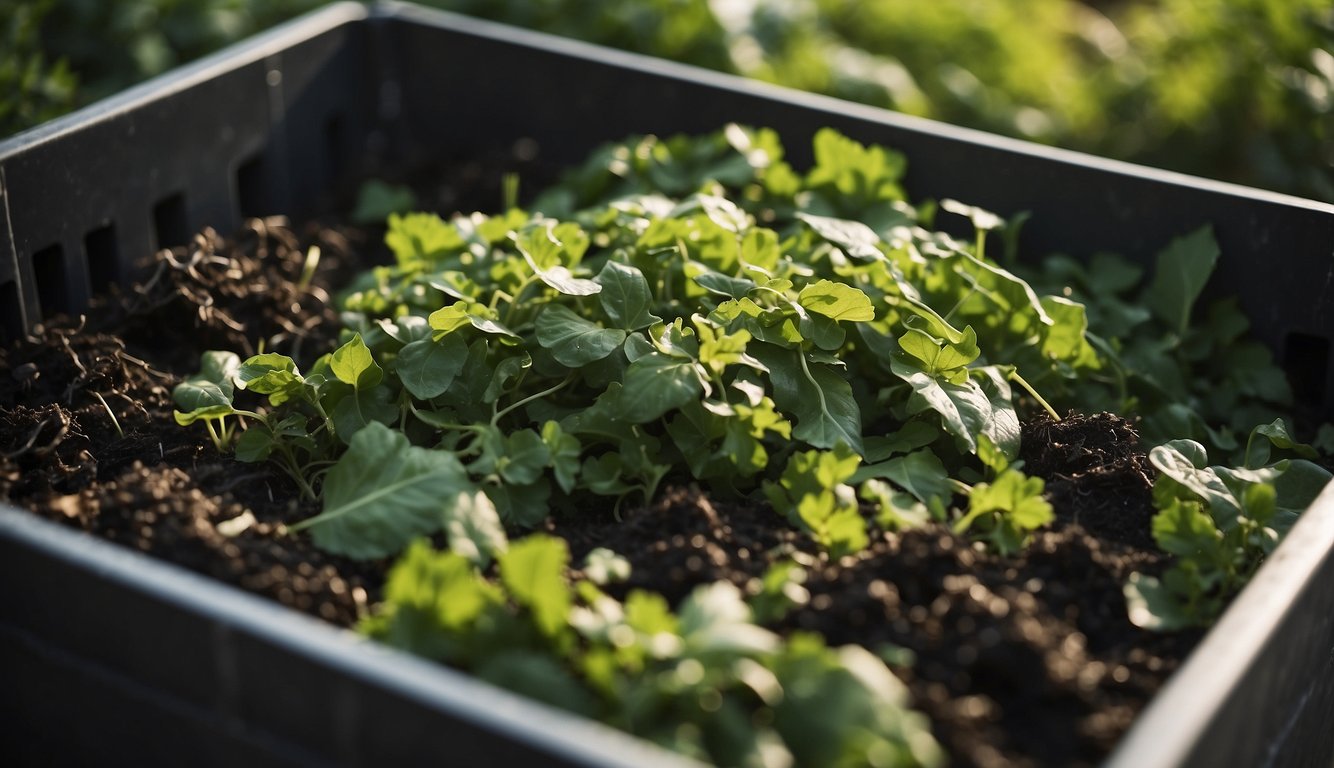
Another way to use Bokashi as a soil amendment is to add it directly to your compost bin. Simply mix the pre-compost with your other organic matter and let it decompose. The resulting compost will be nutrient-rich and can be used to fertilize your plants.
Troubleshooting Common Bokashi Issues
As with any composting method, there are some common issues that may arise when using bokashi. In this section, I will address two of the most common issues: dealing with odors and addressing mold problems.
Dealing with Odors – Adding Bokashi to Compost Bin
One of the most common complaints about bokashi composting is the sour or foul smell that can come from the bin. While this is a normal part of the fermentation process, there are some things you can do to minimize the odor.
First, make sure the lid of your bokashi bin is tightly closed. This will help to prevent any air pockets from forming, which can lead to increased odors. Additionally, try to avoid adding any liquids to the bin, as this can also contribute to unpleasant smells.
If you’re still experiencing strong odors, try adding a layer of newspaper or cardboard on top of the food scraps. This will help to absorb any excess moisture and reduce the smell. You can also try sprinkling a small amount of baking soda on top of the scraps to help neutralize the odor.
Addressing Mold Problems
Another common issue with bokashi composting is mold, particularly green or white mold. Some mold is normal and can even support the composting process, but excessive growth often signals other problems.
If you notice too much mold in your bokashi bin, increase the amount of bokashi bran you use. The extra bran ensures the fermentation process works properly and reduces mold growth. Also check the moisture level in your bin, since excess water encourages mold. When the bin feels too wet, add dry material such as shredded newspaper or cardboard to absorb the moisture.
Enhancing Compost Quality with Bokashi – Adding Bokashi to a Compost Bin

I am always looking for ways to improve the quality of my compost. One method that I have found to be particularly effective is the use of bokashi. Bokashi is a Japanese term that refers to the process of fermenting organic material.
When added to a compost bin, bokashi can help to speed up the decomposition process, while also improving the nutrient content of the resulting compost.
Combining Bokashi with Other Composting Methods – Adding Bokashi to a Compost Bin
One of the great things about bokashi is that you can use it alongside other composting methods, such as vermicomposting. When you combine bokashi with a worm bin, it produces a nutrient‑rich compost tea that works beautifully as a natural fertilizer for plants.
To make this tea, add bokashi to your vermicomposting bin and let it ferment for a few weeks. During this time, the beneficial microorganisms continue breaking down the organic material, creating a liquid full of nutrients that plants can easily absorb.
Maximizing Nutrient Content
Another benefit of bokashi is that it can help to maximize the nutrient content of your compost. Bokashi is rich in nitrogen, which is essential for plant growth.
When added to a compost bin, bokashi can help to balance out the carbon to nitrogen ratio, ensuring that your compost is rich in both nutrients. This can be particularly beneficial if you are composting a lot of kitchen scraps, which tend to be high in nitrogen.
To maximize the nutrient content of your compost, it is important to use a variety of organic materials, including both kitchen scraps and yard waste. By combining these materials with bokashi, you can create a nutrient-rich compost that is perfect for fertilizing your plants. Just be sure to mix the bokashi thoroughly into the compost, to ensure that it is evenly distributed.
Bokashi Composting for Different Waste Types – Adding Bokashi to Compost Bin
Handling Kitchen Waste
When it comes to composting, kitchen waste can be a bit tricky. However, with Bokashi composting, it is much easier to compost all types of kitchen waste, including cooked food, eggs, fat, pickles, and pickled items.
Bokashi composting uses a fermentation process to break down organic matter, which means that it can handle a wider range of waste types than traditional composting methods.
To get started with Bokashi composting, you will need a Bokashi bin and some Bokashi bran. Simply add your kitchen waste to the bin, making sure to break up any large pieces to increase the surface area for the bacteria to work on. Then, sprinkle a small amount of Bokashi bran over the waste and press it down to reduce the amount of air and water content in the waste.
Composting Dairy and Meat
Composting dairy and meat can be a bit more challenging than composting other types of waste. However, with Bokashi composting, it is possible to compost dairy and meat safely.
To compost dairy and meat with Bokashi, you will need to use a separate Bokashi bin from the one you use for other kitchen waste. You should also use a different type of Bokashi bran that is specifically designed for composting dairy and meat.
When adding dairy and meat to your Bokashi bin, make sure to cut them into small pieces to help speed up the fermentation process. You should also add a layer of Bokashi bran between each layer of dairy and meat to help control the odor and prevent any potential issues with flies or other pests.
Advanced Bokashi Techniques – Adding Bokashi to Compost Bin
Experimenting with Different Bokashi Mixes
As I continue to explore the world of bokashi composting, I have found that experimenting with different bokashi mixes can yield interesting results.
One mix I have tried is adding a small amount of yeast to the bokashi mix. This can help to speed up the fermentation process and create a more potent compost.
Another mix I have tried is adding a small amount of molasses to the bokashi mix. This can help to feed the microorganisms in the compost and create a more diverse and healthy soil.
Scaling Up Bokashi for Larger Households
If you have a larger household and generate a lot of food waste, scaling up your bokashi composting operation might be necessary. One way to do this is to use a larger bokashi bin or multiple bokashi bins.
Another way to scale up is to use a potato masher to break down the food waste into smaller pieces. This can help to create more surface area for the microorganisms to work on and speed up the fermentation process.
When using bokashi compost in larger quantities, it’s important to mix it well with other organic matter such as leaves, fruits, and vegetables. This can help to create a more balanced soil and prevent any potential imbalances that could harm your plants.
Additionally, if you have houseplants, using bokashi compost can be a great way to provide them with the nutrients they need to thrive.
Bokashi Composting Benefits – Adding Bokashi to Compost Bin
Bokashi composting is an efficient and simple method of composting organic waste that is gaining popularity among gardeners. This method involves the use of beneficial microorganisms that break down organic matter and produce a nutrient-rich compost. In this section, I will discuss the environmental impact and economic advantages of bokashi composting.
Environmental Impact of Bokashi Composting
Bokashi composting is an environmentally friendly method of composting that reduces the amount of waste sent to landfills. By composting organic waste, we can reduce the amount of methane gas produced by landfills, which is a potent greenhouse gas. Bokashi composting also reduces the need for chemical fertilizers, which can harm the environment.
Economic Advantages of Bokashi
Bokashi composting is an economically advantageous method of composting. Unlike traditional composting systems, which require expensive equipment and medium, bokashi composting requires only a bokashi bin and bokashi bran.
Bokashi bran is relatively inexpensive and can be purchased in bulk. Additionally, bokashi composting produces a nutrient-rich compost that can be used in gardens, reducing the need for expensive chemical fertilizers.
Before You Go – Adding Bokashi to Your Compost Bin

Incorporating bokashi into your compost bin is more than just a clever trick; it’s a way to speed up decomposition, reduce odors, and enrich the final compost with beneficial microbes. By fermenting food scraps before they enter the bin, you create a healthier environment for the breakdown process and ensure that your garden receives nutrient‑dense compost.
Remember to keep the balance right: layer your bokashi‑treated scraps with carbon‑rich materials, maintain moisture, and give the system time to work. With a little patience and consistency, bokashi can transform your composting routine into a faster, cleaner, and more productive cycle, turning everyday kitchen waste into a powerful resource for your soil.
Don’t forget to add theherbprof.com homepage to your favourites so you don’t miss out on future articles!
References – Adding Bokashi to Compost Bin
Little Herb Encyclopedia, by Jack Ritchason; N.D., Woodland Publishing Incorporated, 1995
The Ultimate Healing System, Course Manual, Copyright 1985, Don Lepore
Planetary Herbology, Michael Tierra, C.A., N.D., Lotus Press, 1988
Handbook of Medicinal Herbs, by James A. Duke, Pub. CRP Second Edition 2007
The Complete Medicinal Herbal, by Penelope Ody, Published by Dorling Kindersley
Check the Following Articles
What To Do With Potatoes That Sprout Roots?
Shredded Cardboard Mulch: The Benefits and How to Use It
DIY Worm Bin: How to Create Your Own Vermicomposting?
Can You Eat a Tomato with Seeds Sprouting Inside?
Frequently Asked Questions – Adding Bokashi to Compost Bin
How do I properly integrate bokashi pre-compost into a traditional compost bin?
To integrate bokashi pre‑compost into a traditional compost bin, bury the fermented waste in the compost pile. Mix it thoroughly with the other organic material in the bin to support proper decomposition.
What are the benefits of adding bokashi bran to a compost pile?
Adding bokashi bran to a compost pile speeds up the composting process and improves the quality of the finished compost. The bran contains beneficial microorganisms that break down organic material more efficiently than traditional methods.
Is it possible to use bokashi composting methods in conjunction with worm bins?
Yes, you can use bokashi composting methods with worm bins. Add the fermented waste to the worm bin, where it continues to break down and creates a nutrient‑rich environment for the worms.
Can bokashi fermented waste be added directly to garden soil, or does it require further composting?
You can add bokashi fermented waste directly to garden soil, but letting it compost for a few weeks before planting works best. This extra time allows the microorganisms to fully break down the organic material and enrich the soil.
What are the best practices for maintaining a bokashi bin outdoors?
When maintaining a bokashi bin outdoors, place it in a shaded area to prevent drying. Add a layer of soil or newspaper on top of the waste to keep flies and other pests away.
What are the common challenges faced when combining bokashi composting with traditional composting methods?
One common challenge when combining bokashi composting with traditional methods is odor. The fermentation process can produce a strong smell, so seal the bokashi bin tightly and mix the fermented waste well with other organic material in the compost pile. Another challenge is rodents, since bokashi bran can attract them. Use a secure bin and avoid adding meat or dairy products to the mix.