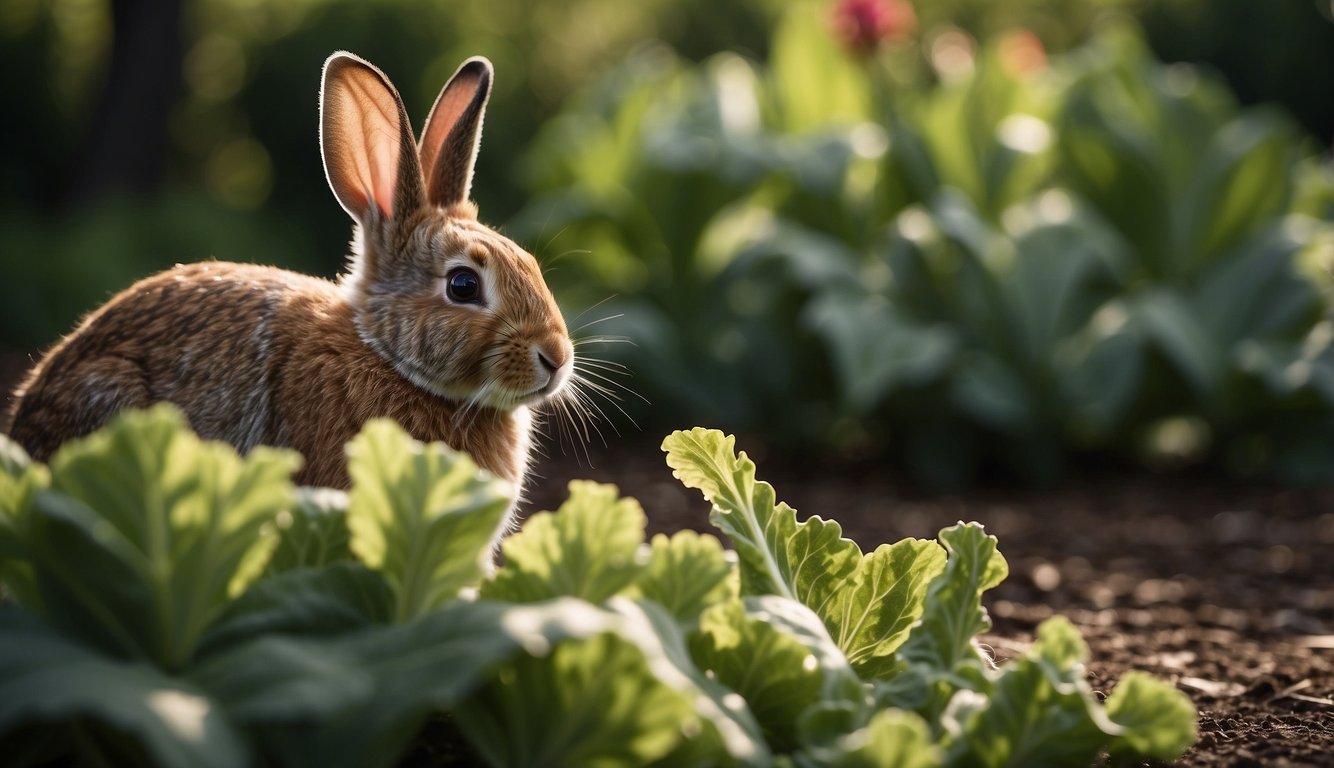
Do rabbits eat rhubarb? Rabbits love vegetables, and many owners enjoy sharing fresh produce with their pets. But not every vegetable is safe for them, and rhubarb often raises questions. Some rabbit owners wonder whether this tart plant belongs in a rabbit’s diet.
Rhubarb contains high levels of oxalic acid, a compound that poses serious risks to rabbits. Ingesting it can lead to kidney failure, seizures, and even death. The leaves of the rhubarb plant hold the highest concentration of oxalic acid, making them especially dangerous. Even small amounts can harm a rabbit’s health.
As a responsible rabbit owner, you need to ensure your pet’s diet stays healthy and balanced. While sharing vegetables may feel natural, research is essential before offering anything new. By steering clear of harmful foods like rhubarb, you protect your rabbit’s well‑being and keep them happy and healthy.
Understanding Rhubarb
As a vegetable, rhubarb is a popular ingredient in many culinary recipes. It is commonly used in pies, jams, and other desserts. Rhubarb is known for its tart flavor and unique texture. It is also a good source of fiber and vitamin C.
Rhubarb Stalk
The stalks of rhubarb are the edible part of the plant. They are often used in cooking and can be boiled, stewed, or baked. Rhubarb stalks are typically red or green in color and have a crisp texture. They are also a good source of fiber and vitamin C.
Rhubarb Leaves
While the stalks of rhubarb are edible, the leaves are toxic and should not be consumed. The leaves contain oxalic acid, which can cause kidney damage and other health problems. It is important to note that the leaves of rhubarb are poisonous to both humans and animals, including rabbits.
Rhubarb Flowers
Rhubarb plants can produce flowers, which are typically green or pink in color. While the flowers themselves are not toxic, they are not typically consumed by humans or animals. Rhubarb flowers are often grown for their ornamental value and are a popular addition to garden plants.
Rhubarb is a popular vegetable that is used in many culinary recipes. While the stalks are edible and contain many beneficial nutrients, it is important to avoid consuming the leaves, which can be toxic. If you are considering feeding rhubarb to your pet rabbit, it is important to avoid giving them any part of the plant, including the leaves.
Can Rabbits Eat Rhubarb?
As a rabbit owner, you may be wondering if it is safe to feed your pet rabbit rhubarb. The answer is no, rabbits should not eat rhubarb. All parts of the rhubarb plant are toxic to rabbits, including the leaves, stalks, and raw or cooked rhubarb.
Raw Rhubarb
Raw rhubarb is particularly toxic to rabbits due to the presence of oxalic acid. This substance can cause gastrointestinal upset, kidney damage, and even death in rabbits. Therefore, it is important to keep raw rhubarb away from your pet rabbit.
Cooked Rhubarb
Cooking rhubarb does not remove the toxic properties of the plant. While cooking may reduce the levels of oxalic acid, it is still not safe for rabbits to consume. Additionally, cooked rhubarb often contains added sugar, which is not a healthy treat for rabbits.
Rabbits should not eat rhubarb in any form. The plant contains toxic substances that can cause poisoning and other health problems in rabbits. Instead, rabbits should be fed a diet that is appropriate for their species and provides all the nutrients they need, including calcium.
The Dangers of Rhubarb for Rabbits
As a responsible rabbit owner, it is important to know what foods are safe and what foods can be dangerous for your furry friend. Rhubarb is one such food that should be avoided at all costs, as it is toxic to rabbits and can lead to serious health problems.
Symptoms of Rhubarb Poisoning in Rabbits
Rhubarb toxicity can cause a range of symptoms in rabbits, including lethargy, diarrhea, seizures, tremors, and decreased appetite. In more serious cases, it can even lead to kidney failure and calcium deficiency. If you suspect that your rabbit has ingested rhubarb, it is important to look out for these symptoms and seek veterinary treatment immediately.
Rhubarb Toxicity Treatment
If your rabbit eats rhubarb, seek veterinary treatment as soon as possible. A vet may induce vomiting to remove any remaining rhubarb from the rabbit’s system. The vet can also provide supportive care, such as fluids and electrolytes, to help the rabbit recover from the toxicity.
Rhubarb harms rabbits, and you should avoid it at all costs. If you suspect your rabbit ate rhubarb or shows symptoms of rhubarb toxicity, seek veterinary treatment immediately. As a responsible rabbit owner, always stay aware of which foods are safe and which foods can harm your furry friend.
Before You Go – Do Rabbits Eat Rhubarb

It is important to provide a balanced diet for pet rabbits that is rich in fiber, vitamins, and minerals. Wild rabbits have access to a diverse range of plants, but pet rabbits rely on their owners to provide them with the right nutrition. A balanced diet will help prevent health problems and ensure that your pet rabbit is happy and healthy.
It is important to note that rhubarb is not a suitable food for rabbits. All parts of the rhubarb plant contain oxalic acid, which can be toxic to rabbits in large quantities. Eating rhubarb can cause gastrointestinal upset, kidney damage, and even death in rabbits. Therefore, it is important to keep rhubarb away from your pet rabbit and not feed it to them.
Rabbit nutrition is a complex topic, and it is important to do your research to ensure that your pet rabbit is getting the right nutrients. Dangers of feeding your pet rabbit the wrong foods can lead to serious health problems. Therefore, it is important to consult with a veterinarian or a rabbit nutritionist to ensure that your pet rabbit is getting the right diet.
In summary, providing a balanced diet for your pet rabbit is essential to their health and well-being. It is important to avoid feeding your pet rabbit any foods that are toxic to them, such as rhubarb. By doing your research and consulting with experts, you can ensure that your pet rabbit is getting the right nutrition and living a happy, healthy life.
Don’t forget to add theherbprof.com homepage to your favourites so you don’t miss out on future articles!
References – Do Rabbits Eat Rhubarb
Little Herb Encyclopedia, by Jack Ritchason; N.D., Woodland Publishing Incorporated, 1995
The Ultimate Healing System, Course Manual, Copyright 1985, Don Lepore
Planetary Herbology, Michael Tierra, C.A., N.D., Lotus Press, 1988
Handbook of Medicinal Herbs, by James A. Duke, Pub. CRP Second Edition 2007
The Complete Medicinal Herbal, by Penelope Ody, Published by Dorling Kindersley
Check the Following Articles
Propagating Succulents: How to Grow New Plants
Coffee Grounds Pest Control: How to Keep It Away Naturally
Pros and Cons of Salvia: A Comprehensive Overview
Frequently Asked Questions – Do Rabbits Eat Rhubarb
Is rhubarb safe for rabbits to consume?
Rhubarb is not safe for rabbits. The plant contains high levels of oxalic acid, which harms rabbits in large amounts. Eating rhubarb causes gastrointestinal upset, kidney damage, and even death. Keep rhubarb out of your rabbit’s diet.
Which plants are known to be toxic to rabbits?
Avocado, tomato leaves and stems, potato leaves and stems, and rhubarb all harm rabbits. These plants contain toxins that trigger serious health problems or even death. Always research new foods before feeding them to your rabbit.
Can rabbits have rhubarb leaves as part of their diet?
Rabbits should never eat rhubarb leaves. The leaves contain the highest levels of oxalic acid, making them extremely dangerous. Eating them causes loss of appetite, weakness, and listlessness. In severe cases, rabbits suffer seizures, neurological damage, or death.
What are the immediate dangers to rabbits from eating certain plants?
Toxic plants cause gastrointestinal upset, kidney damage, seizures, neurological damage, and even death in rabbits. Research every new food before offering it. If your rabbit eats a toxic plant, contact your veterinarian immediately.
What should be included in a rabbit’s regular diet?
A rabbit’s diet should include hay, fresh vegetables, and a small amount of pellets. Hay provides fiber for healthy digestion and should dominate the diet. Offer fresh vegetables in moderation, focusing on leafy greens and variety. Limit pellets, since they contain many calories and can cause obesity.
Are cooked vegetables, like rhubarb, suitable for rabbits?
Cooked vegetables can suit rabbits, but research each food before feeding. Cook vegetables without salt, sugar, or oil. Never feed rhubarb, since its oxalic acid content harms rabbits.