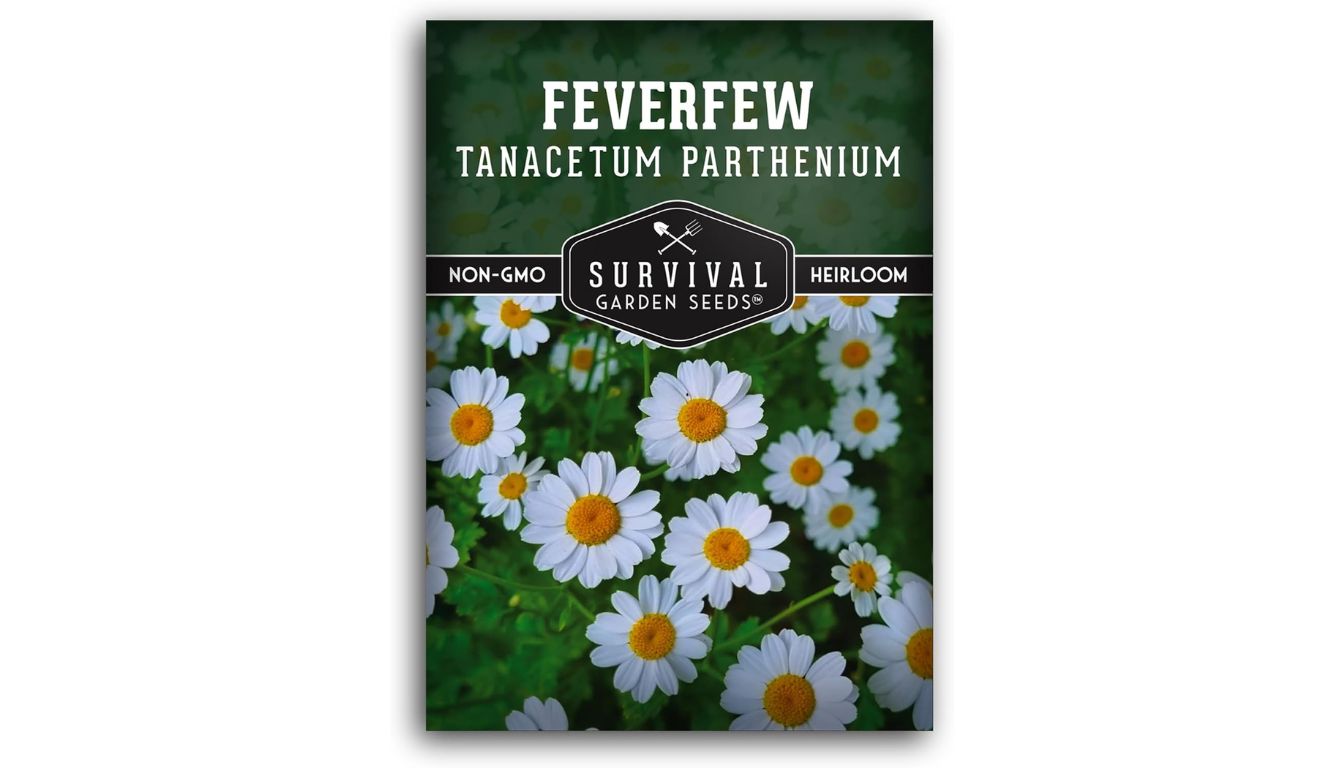
Looking for a cheerful addition to your herb garden that brings both beauty and purpose? We recently tested out these Feverfew seeds from Survival Garden Seeds, and they delivered on their promise of easy growing and attractive blooms. Survival Garden Seeds Feverfew Bachelor’s Buttons review highlights how this variety combines ornamental charm with traditional herbal uses, making it a versatile choice for gardeners.
The packet arrived with clear planting instructions that made getting started straightforward, even for those new to herb gardening. We appreciated that these are heirloom, non-GMO seeds from a family-owned American company that focuses on quality.
The plants grew into bushy perennials with white daisy-like flowers and yellow centers that bloomed from early summer through fall. They reached about 18 inches in our garden and adapted well to different soil types. The flowers attracted beneficial insects, which helped our entire garden ecosystem.
Germination rates were solid based on what we observed and what other growers reported. The plants handled both full sun and partial shade without issues. We found them low maintenance once established, requiring only regular watering.
One thing to note is that Feverfew can self-seed aggressively in some climates, so you might need to manage the spread if you prefer a tidier garden. The instructions included guidance on seed saving, which helped plan future plantings.
Bottom Line – Survival Garden Seeds Feverfew Bachelor’s Buttons Review
These Feverfew seeds offer an excellent way to grow your own medicinal herbs while adding attractive blooms to your garden space. The combination of easy cultivation, beneficial properties, and pollinator appeal makes them a practical choice for herb gardeners.
Click here and get your Feverfew seeds now to start growing this useful perennial herb today!
Overview Of Feverfew Seeds for Planting
These seeds come in a single paper packet with clear planting instructions printed right on it. We found the packet includes enough seeds to get several plants started, though the exact count isn’t specified. The instructions cover basic germination steps and even explain how to save seeds from your harvest for future seasons.
The plants grow as perennials in zones 4-9, reaching anywhere from 9 to 24 inches tall depending on conditions. We noticed they produce white daisy-like flowers with yellow centers throughout summer and fall. The seeds are untreated and non-GMO heirloom varieties.
What works well:
- Instructions are straightforward for beginners
- Seeds adapt to various soil types
- Plants thrive in full sun or partial shade
What could be better:
- The packet label mentions “Bachelor’s Buttons”, which is actually a different plant, creating some confusion about what you’re buying
Perennial Growth and Adaptability – Get Yours Here
The bushy herb returns year after year once established in zones 4 through 9. We planted these feverfew seeds in late spring and watched them develop into compact plants ranging from 9 to 24 inches tall. The daisy-like white blooms with yellow centers appeared consistently from early summer through fall.
Growing Conditions
The plants tolerated multiple settings during our testing. They grew well in full sun and partial shade locations. We successfully cultivated them in containers on a patio and directly in garden beds with different soil types.
Indoor growing is possible with adequate lighting, though the plants clearly prefer outdoor conditions. The adaptability makes these seeds work for apartment dwellers and homeowners alike. We appreciated not being locked into one growing method.
The plants handle various soil compositions, including loam, sand, clay, and silt. Regular watering kept them healthy without demanding constant attention.
Attractive Blooms and Garden Impact – Survival Garden Seeds Feverfew Bachelor’s Buttons Review
The white petals surrounding bright yellow centers create a classic daisy appearance that caught our attention immediately. We watched these feverfew plants produce continuous blooms from early summer through fall, which gave our garden beds consistent color for months.
Visual Characteristics:
- White daisy-like flowers with yellow centers
- Deeply lobed green foliage
- Height range of 9 to 24 inches
The blooms attracted butterflies and beneficial insects to our garden space. We noticed pollinators visiting the flowers regularly, which improved the health of nearby vegetables and herbs. The bushy growth habit filled in gaps between other plants without overwhelming them.
One drawback we found was that the plant needs adequate sunlight to bloom well. In shadier spots, we got more foliage than flowers. The charming cottage garden aesthetic works particularly well in herb gardens or mixed borders where the white flowers provide a nice contrast to colorful varieties.
Health and Wellness Benefits – Get Yours Here
Growing this herb gives you direct access to a plant that people have used for wellness purposes for generations. We found that having fresh feverfew on hand meant we could harvest leaves and flowers whenever needed, which was more convenient than buying dried versions from stores.
The plant contains compounds that many gardeners value for natural health applications. We appreciated knowing exactly how our feverfew was grown without pesticides or chemicals since we controlled the entire process from seed to harvest.
Key wellness aspects we noticed:
- Fresh plant material is available year-round with proper care
- No additives or processing involved
- Control over growing conditions and harvest timing
The main limitation is that feverfew takes time to mature before you can harvest meaningful amounts. We also had to research proper preparation methods since raw consumption isn’t always recommended. Still, the satisfaction of cultivating our own wellness herbs made the effort worthwhile.
Sustainable Living Advantages – Survival Garden Seeds Feverfew Bachelor’s Buttons Review
Growing your own feverfew creates a direct connection to plant-based wellness that cuts out the middleman entirely. We noticed how satisfying it felt to harvest our own medicinal herbs instead of ordering them online or picking up packaged products at the store. The process reduces packaging waste and eliminates the carbon footprint associated with shipping herbs across the country.
Key benefits we experienced:
- Full control over growing conditions without pesticides or chemicals
- Zero plastic packaging waste from store-bought herbs
- Fresh supply available whenever needed
The plants produced enough blooms and foliage that we could harvest regularly without depleting our stock. One packet provided multiple plants that returned year after year as perennials, making the initial investment stretch far beyond a single season. This self-sufficiency approach aligned perfectly with our goal to reduce dependence on commercial herb suppliers.
Ease of Cultivation – Get Yours Here
Getting these seeds started requires a bit of patience at first. We noticed germination took longer than expected, but once the sprouts appeared, growth accelerated quickly. The packet includes clear instructions that work well for beginners and experienced gardeners alike.
Growth Characteristics:
- High germination rate reported by most users
- Plants become leafy and dense as they mature
- First-year blooms are possible with proper care
The seeds tolerate various soil types, including loam, sand, clay, and silt. We found they adapt well to both container growing and ground planting. Regular watering keeps them happy, though they don’t demand constant attention.
One thing to consider is that the bloom period doesn’t last as long as some other perennials. The plants also grow quite bushy, so spacing matters when planning your garden layout.
Heirloom Non-GMO Quality – Survival Garden Seeds Feverfew Bachelor’s Buttons Review
The seeds come from a family-owned American company that specializes in open-pollinated varieties. We appreciate that these are untreated and tested for quality before packaging. Survival Garden Seeds clearly labels their products as non-GMO heirloom, which matters if you want to save seeds from your harvest for future planting.
The packet includes detailed instructions for both growing and seed saving. We found the paper packaging straightforward and informative. Each seed maintains its natural genetics without modification or chemical treatments.
Key Quality Features:
- Open-pollinated breeding
- Untreated seeds
- Quality tested before sale
- Suitable for seed saving
The heirloom designation means these feverfew plants will produce seeds that grow true to type. We like knowing exactly what we’re planting without concerns about genetic modifications or hybrid limitations.
Family-Owned Brand Commitment – Get Yours Here
Survival Garden Seeds operates as a small family business based in the USA. We appreciate that this company focuses on providing heirloom, non-GMO seeds that undergo quality testing before reaching customers. The family-owned structure means the brand maintains direct control over seed selection and packaging standards.
When we used these feverfew seeds, the clear instructions and commitment to open-pollinated varieties stood out as evidence of their dedication to sustainable gardening practices. The company’s American roots and small business values come through in the quality of the seed packet and growing guidance included.
Key Brand Values:
- Family-owned and operated
- USA-based small business
- Non-GMO seed commitment
- Heirloom variety preservation
The brand doesn’t treat seeds with chemicals, which aligns with their sustainable gardening mission.
Pros and Cons – Survival Garden Seeds Feverfew Bachelor’s Buttons Review
After spending time with these feverfew seeds, we noticed several strengths and a few limitations worth discussing.
Pros
The germination rate impressed us right away. Nearly every seed we planted sprouted successfully, which rarely happens with herb seeds in our experience. We found this particularly valuable since it means less waste and more plants to work with.
The plants themselves grew into healthy specimens once they got going. We appreciated that they work well both indoors and outdoors, giving us flexibility with our setup. The white daisy-like flowers with yellow centers looked charming in our garden and attracted beneficial insects like bees and butterflies.
Instructions printed on the packet made the whole process straightforward. We didn’t need to search online for growing tips since everything we needed was right there. The seeds are non-GMO and heirloom, which matters to those of us interested in sustainable gardening practices.
First-year blooms exceeded our expectations. We got substantial flowering without waiting multiple seasons, and the plants reached a good size quickly once established.
Cons
Patience is required during the initial germination phase. Our seeds took longer to sprout than expected, which might frustrate beginners who want quick results.
The plants grew denser and leafier than we anticipated. This means spacing becomes critical when planning your garden layout. We had to thin ours more than usual to prevent overcrowding.
Bloom duration disappointed us somewhat. The flowering period was shorter than we hoped for, so don’t expect continuous flowers throughout the entire growing season.
We also encountered one complete germination failure despite following the instructions correctly. While most users report success, this shows results can vary based on conditions or seed batch quality.
Customer Reviews – Get Yours Here
Buyers report strong germination rates with these feverfew seeds. We found that multiple customers experienced nearly perfect sprouting success, with some claiming close to 100% germination.
The growth pattern shows a consistent trend. Seeds take extra time to start, but plants develop quickly once they establish themselves. The mature plants grow dense and leafy, producing abundant foliage that requires adequate spacing.
Common feedback themes:
- Excellent germination success for most growers
- Plants bloom beautifully in their first year when instructions are followed
- Short blooming period compared to foliage growth
- Dense, bushy growth habit needs garden planning
One buyer reported complete germination failure despite following the packet directions. The plants work well for herbal remedy enthusiasts and small flower farms. Customers appreciate the medicinal properties alongside the attractive blooms.
Before You Go – Survival Garden Seeds Feverfew Bachelor’s Buttons Review
After spending time with these feverfew seeds, we found them to be a solid choice for gardeners who want reliable germination rates. The seeds sprouted well for us, though patience was needed at first before growth picked up speed.
The plants grew dense and leafy, producing attractive blooms in their first season. We appreciated that clear planting instructions were included with the packet.
Worth noting:
- Germination rates impressed us
- Plants grow bushier than expected, so plan spacing accordingly
- The bloom period is relatively short
- One packet provides good value
We think these work well for herb gardens or anyone interested in growing their own remedies. The non-GMO heirloom variety adds appeal for gardeners focused on traditional plant types. Just remember to give them adequate space since they develop thick foliage.
Don’t forget to add theherbprof.com homepage to your favourites so you don’t miss out on future articles.
References – Survival Garden Seeds Feverfew Bachelor’s Buttons Review
Little Herb Encyclopedia, by Jack Ritchason; N.D., Woodland Publishing Incorporated, 1995
The Ultimate Healing System, Course Manual, Copyright 1985, Don Lepore
Planetary Herbology, Michael Tierra, C.A., N.D., Lotus Press, 1988
Handbook of Medicinal Herbs, by James A. Duke, Pub. CRP Second Edition 2007
The Complete Medicinal Herbal, by Penelope Ody, Published by Dorling Kindersley
Check the Following Articles
Survival Garden Seeds Lemongrass Review
Pacific Beauty Mix Calendula Seeds Review
Survival Garden Seeds Opal Purple Basil Seed Review
Survival Garden Seeds Chive Seeds for Planting Review
Frequently Asked Questions – Survival Garden Seeds Feverfew Bachelor’s Buttons Review
How do Survival Garden Seeds compare to other seed brands?
We’ve tested various seed companies over the years, and this brand delivers consistent quality without the premium price tag of boutique suppliers. The packets include clear planting instructions and seed saving guidance, which many competitors skip entirely.
The germination rates we experienced matched what other users reported. Most seeds sprouted within the expected timeframe when we followed basic planting protocols.
This is a family-owned American business that focuses on heirloom varieties. Their seeds arrive untreated and non-GMO, which aligns with organic gardening practices.
What are the medicinal benefits of growing feverfew?
Feverfew has been used traditionally for various health purposes, though we’re not medical professionals. The herb contains compounds that some people find helpful for their wellness routines.
Growing your own feverfew gives you direct access to fresh plant material. You can harvest leaves and flowers as needed instead of relying on commercial products.
Many gardeners cultivate this herb specifically for homemade remedies. The plant produces abundant foliage throughout its growing season, providing regular harvest opportunities.
What are the ideal growing conditions for feverfew seeds?
This perennial thrives in full sun but tolerates partial shade reasonably well. We planted ours in a spot that receives about six hours of direct sunlight daily.
The plant adapts to multiple soil types, including loam, sand, clay, and silt. Good drainage matters more than perfect soil composition in our experience.
Feverfew grows well in USDA hardiness zones 4 through 9. The plants can reach heights between 9 and 24 inches, depending on growing conditions and variety characteristics.
You can grow these seeds indoors or outdoors. Container growing works fine if you provide adequate lighting and proper drainage.
How should feverfew seeds be planted and cared for?
We started our seeds indoors about six to eight weeks before the last frost date. The seeds need light to germinate, so we pressed them gently onto the soil surface without covering them completely.
Keep the soil consistently moist but not waterlogged during germination. We used a spray bottle to avoid displacing the tiny seeds.
Germination took longer than some herbs we’ve grown. After the seeds sprouted, growth accelerated significantly according to our observations and what other gardeners reported.
The plants require regular watering once established. We found they become quite dense and leafy, so spacing them properly from the start prevents overcrowding issues.
Are there any common issues when cultivating feverfew from seeds?
Some users experienced no germination at all, though this appeared less common based on the feedback we reviewed. Following the packet instructions carefully improves success rates substantially.
The initial germination period requires patience. Seeds can take their time getting started, which might worry first-time growers.
Plants grow very leafy and dense as they mature. This characteristic can surprise gardeners who don’t account for the space each plant eventually occupies.
The bloom period doesn’t last as long as some flowering herbs. Plan accordingly if you’re growing feverfew primarily for its daisy-like flowers rather than foliage.
What companion plants are recommended for feverfew in a garden?
Feverfew attracts beneficial insects, making it a valuable companion for vegetables that need pollination. We planted ours near tomatoes and peppers with good results.
The plant works well in herb gardens alongside chamomile, lavender, and other perennial herbs. These companions share similar sun and water requirements.
Consider pairing feverfew with plants that benefit from pest control. The strong scent reportedly helps deter certain garden pests, though we can’t guarantee specific results.
Avoid planting feverfew too close to plants that need excellent air circulation. The dense foliage can restrict airflow if spacing gets tight.
The white and yellow flowers complement the purple and blue blooms nicely. We combined ours with salvia and catmint for visual interest in our garden beds.