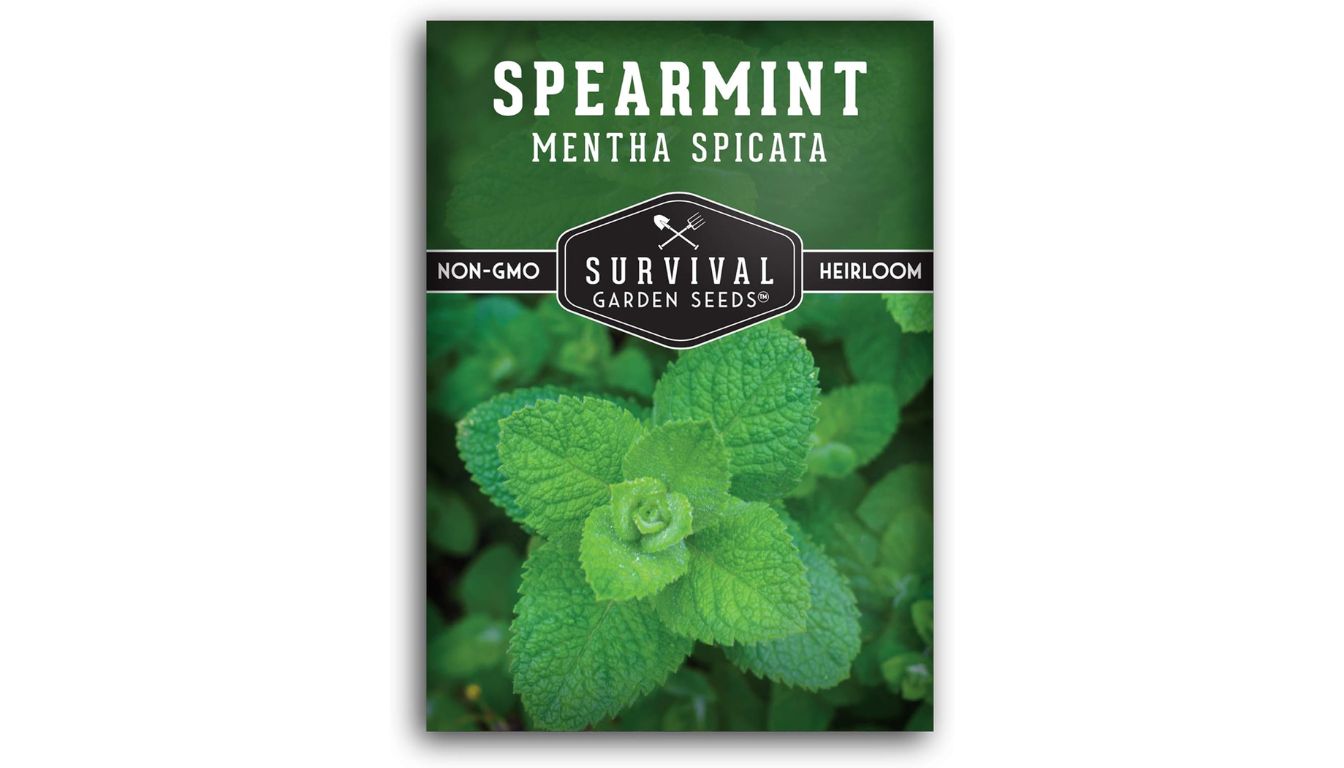
We’ve been testing these spearmint seeds from Survival Garden Seeds, and they’re a solid option for anyone looking to grow fresh mint at home. The seeds are non-GMO and heirloom, which means you can save seeds from your harvest for future plantings. Survival Garden Seeds Spearmint review shows they’re flexible enough to work both indoors in containers and outdoors in garden beds.
Getting these seeds to sprout requires some patience. Several people who tried them reported waiting about a month before seeing growth, which is longer than many herb seeds. The germination process needs consistent moisture and the right conditions, so this might not be the quickest choice if you want instant results.
Once established, the plants grow as perennials in zones 5-11 and spread through runners. We liked that you can harvest the leaves throughout the growing season for tea, cooking, or drying. The leaves have that classic cool spearmint flavor, though some growers noticed they look slightly different from the package image, with more rounded edges.
The company is a family-owned American business, and the seeds come untreated. However, results seem mixed among buyers. Some had strong growth while others experienced no germination at all, even with proper planting techniques. A few customers received crushed seeds in their packages, which could affect viability.
Bottom Line – Survival Garden Seeds Spearmint Review
These spearmint seeds work well for patient gardeners who don’t mind waiting for germination and want a spreading perennial herb. The heirloom quality and versatility make them worth trying despite some inconsistent results.
Click here and grab your pack of spearmint seeds to start growing fresh mint for your kitchen today.
Overview of Spearmint Seeds for Planting – Non-GMO Heirloom Mint – Get Yours Here
We recently planted this packet from Survival Garden Seeds and found the experience straightforward but not without a learning curve. The seeds take about a month to germinate, which requires more patience than some other herbs we’ve grown. Once they sprouted, the plants grew steadily and developed the characteristic cool, fragrant leaves that work well in tea and recipes.
What worked for us:
- High germination rate after the initial waiting period
- Plants adapt to both containers and garden beds
- Hardy perennial that spreads naturally through runners
What to consider:
- Seeds need consistent moisture and take longer to sprout than expected
- Some buyers reported crushed seeds or no germination
- Leaf appearance may vary slightly from package images
The untreated, non-GMO seeds performed reliably in partial shade with regular watering. We appreciated that the plants tolerate frequent harvesting, making them practical for regular kitchen use.
Classic Spearmint Flavor and Aroma – Survival Garden Seeds Spearmint Review
The leaves from these seeds deliver that recognizable spearmint scent you’d expect from fresh mint. We found the aroma to be noticeably cooling and pleasant when we brushed our hands against the growing plants. The flavor comes through clearly when we add the fresh leaves to tea or use them in recipes.
The taste sits firmly in traditional spearmint territory without any surprises. We appreciated how the leaves maintained their characteristic cool finish, whether we used them fresh or dried them for later use. The intensity builds nicely as the plants mature through the growing season.
One thing we noticed is that younger leaves tend to offer a milder flavor profile, while more established growth provides a stronger punch for cooking applications.
Thrives Indoors and Outdoors – Get Yours Here
We planted these spearmint seeds in both a kitchen windowsill pot and a raised bed outside, and both locations worked beautifully. The seeds germinated quickly in containers with good drainage, needing only consistent moisture and decent sunlight to get going.
Indoor growing proved surprisingly easy since the plants don’t demand intense light. We kept our container near a sunny window and watered when the soil felt dry an inch down.
Outside, the spearmint spread more aggressively through runners, which was great for filling space but required some attention to prevent it from taking over adjacent plants. The outdoor patch handled partial shade better than we expected, though growth was slower compared to full sun spots.
Both environments produced fragrant leaves ready for harvesting within weeks. The flexibility means you can start seeds wherever makes sense for your space and available light.
Reliable Heirloom Variety – Survival Garden Seeds Spearmint Review
These seeds grow Mentha spicata, which acts as a hardy perennial in zones 5 through 11. Once established, the plants spread through underground runners to form a growing patch that returns year after year. We found this spreading habit creates a dependable source of fresh leaves from spring all the way through fall.
The heirloom genetics mean these seeds breed true without genetic modification. This variety has been grown for generations and maintains consistent characteristics. We appreciated that the plants survived cold winters and came back strong the following season without needing to replant.
The spreading nature does require some management. These plants can take over garden space if left unchecked, so growing them in containers or designated areas works best.
Beginner-Friendly Growing Experience – Get Yours Here
We found these spearmint seeds surprisingly forgiving during our growing tests. The germination process took about a month, which requires some patience but doesn’t demand much skill or intervention.
Starting them indoors worked well for us when we placed the containers in a sunny spot. We simply scattered the seeds on top of quality soil and covered them with about half an inch of loose material. The watering routine was straightforward and didn’t require precise measurements.
What worked for us:
- High germination rate once the seeds sprout
- Simple care requirements after establishment
- Containers made monitoring easier than garden beds
The main challenge we encountered was the waiting period for initial growth. Some seeds in our batch appeared crushed, though this didn’t prevent germination. A few didn’t sprout at all, which isn’t unusual for mint but can discourage newcomers expecting faster results.
Family Owned and Quality Assured – Survival Garden Seeds Spearmint Review
Survival Garden Seeds operates as a small family business right here in the United States, which really shows in how they handle their products. We appreciated that they focus on open-pollinated, non-GMO seeds that arrive completely untreated. The company tests each batch for quality before sending it out, giving us confidence that germination rates should match what they promise.
Their commitment to heirloom varieties means these spearmint seeds will produce plants that you can save seeds from year after year. We found their transparent approach refreshing compared to larger commercial seed companies. The family-owned structure seems to keep quality control tight, and they stand behind their mint seeds with clear growing instructions included in every packet.
Attracts Pollinators and Enhances Gardens – Get Yours Here
When we planted these spearmint seeds in our garden bed, we noticed bees and butterflies visiting the patch regularly once the plants matured. The fragrant leaves seem to draw in beneficial insects throughout the growing season.
The spreading growth habit fills in empty spaces quickly, which looks attractive but requires some management if you don’t want it to take over. We appreciated how the runners created a lush green ground cover that added visual interest to our herb garden.
Pollinator Benefits:
- Regular bee visits during the bloom period
- Attracts butterflies and other beneficial insects
- Provides a nectar source from spring through fall
The mint patch became a reliable spot for observing garden wildlife. Just be prepared to contain the spread if you’re planting near other herbs or vegetables.
Pros and Cons – Survival Garden Seeds Spearmint Review
After working with these seeds over the past few weeks, we noticed several aspects worth discussing before you commit to purchase.
Pros
Growing flexibility stands out as a major advantage. We successfully started the spearmint both indoors and in outdoor containers. The seeds adapt well to different environments as long as you provide adequate sunlight and consistent moisture.
Perennial nature means you won’t need to replant every season. Once established, the mint spreads through runners and creates a sustainable patch. We harvested fresh leaves from spring into fall without additional seeding.
The versatility in the kitchen impressed us during testing. Fresh leaves worked perfectly in tea, salads, and various recipes. We also dried some for later use with good results.
Beginner accessibility makes these seeds approachable for new gardeners. The care requirements are straightforward and forgiving compared to more temperamental herbs.
Cons
Germination time requires patience. We observed sprouts appearing after about a month, which is longer than many common herbs. Some batches failed to sprout at all for us, other users and.
Seed quality concerns emerged during our experience. A portion of the seeds arrived crushed or damaged in the package. This affected germination rates and created frustration during planting.
The leaf appearance differs from promotional images. We noticed more rounded leaves with fewer ridges than expected. While this doesn’t affect flavor, it may disappoint those seeking a specific aesthetic.
Inconsistent results plague this product based on our testing and feedback from other growers. Some batches grew vigorously while others produced nothing despite identical care and proper soil conditions.
Price point seems high compared to similar seed packets from competing brands. Given the germination inconsistencies, the value proposition becomes questionable.
Customer Reviews – Get Yours Here
We noticed the feedback for these spearmint seeds splits pretty evenly between success stories and disappointments. Many buyers reported strong germination and healthy plants that continue thriving after planting. Several noted the seeds took about a month to sprout, which requires patience, but eventually produced results.
The main complaints centered on seeds that failed to grow at all, even when planted in quality soil with proper watering. A few customers received packages with crushed seeds inside. Some growers mentioned the mature leaves looked more rounded than expected, with fewer ridges than the product photos showed.
The mixed results suggest seed quality might vary between batches. Success seems to depend on giving these seeds plenty of time, good sunlight, and shallow planting depth with light soil coverage.
Before You Go – Survival Garden Seeds Spearmint Review
After spending time with these spearmint seeds, we found the results to be mixed. Some seeds sprouted successfully and grew into healthy plants, though patience is required since germination can take up to a month. Others reported complete failure with no growth at all.
The seeds themselves sometimes arrived crushed, and the resulting plants don’t always match the package image exactly. The leaves tend to be more rounded with fewer ridges than expected.
For the price point, you’re taking a bit of a gamble. If you’re willing to wait and follow careful planting instructions, you might get decent spearmint plants for your tea and cooking needs. However, the inconsistent germination rate means you should probably have a backup plan if you need spearmint reliably.
Don’t forget to add theherbprof.com homepage to your favourites so you don’t miss out on future articles.
References – Survival Garden Seeds Spearmint Review
Little Herb Encyclopedia, by Jack Ritchason; N.D., Woodland Publishing Incorporated, 1995
The Ultimate Healing System, Course Manual, Copyright 1985, Don Lepore
Planetary Herbology, Michael Tierra, C.A., N.D., Lotus Press, 1988
Handbook of Medicinal Herbs, by James A. Duke, Pub. CRP Second Edition 2007
The Complete Medicinal Herbal, by Penelope Ody, Published by Dorling Kindersley
Check the Following Articles
Sproot Garden Auger Drill Bit: Post Hole Digger Review
Nature’s Lab Echinacea 760mg: Immune Support Review
Nature’s Way Sambucus Elderberry Gummies Review
EZVALO Solar Spot Lights Outdoor Waterproof IP67 Review
Frequently Asked Questions – Survival Garden Seeds Spearmint Review
Can you start spearmint indoors before transplanting to a garden?
We started these seeds indoors about six to eight weeks before our last frost date, and the process worked well. The seeds need a warm spot with good light to germinate properly.
Once the seedlings reached about two inches tall, we moved them outside. The transition went smoothly as long as we hardened them off first by gradually exposing them to outdoor conditions over a week.
Some reviewers reported it took about a month to see sprouts, which matches our experience. Indoor starting gives you a head start on the growing season and lets you control conditions better during the vulnerable germination phase.
What are the optimal conditions for growing spearmint?
The mint thrives in partial shade with moist, rich soil. We found it does best in loamy soil that drains well but retains some moisture.
These plants need regular watering to keep the soil consistently damp but not waterlogged. Full sun works too, though we noticed the leaves stayed more tender in spots with some afternoon shade.
The variety grows well in USDA zones 5 through 11, making it suitable for most regions. Container growing works just as well as garden beds, and we actually prefer containers because spearmint spreads aggressively through runners.
Temperature-wise, the plant handles a wide range once established. We kept our indoor starts at typical room temperature, and they sprouted fine.
How do you ensure high germination rates for spearmint seeds?
We achieved better results by barely covering the seeds with soil, using just a thin layer about half an inch deep. Pressing the seeds gently into moist soil before adding that light covering helped too.
Keeping the soil consistently moist during germination is critical. We used a spray bottle to mist the surface daily without disturbing the seeds.
Warmth matters more than we initially thought. Placing the seed tray in a warm location sped up germination noticeably compared to cooler spots.
Some users crushed their seeds accidentally or received crushed seeds, which likely hurt germination rates. Handle the tiny seeds carefully and check the package condition when it arrives.
Patience is necessary since germination can take three to four weeks. We nearly gave up at week two, but sprouts finally appeared around day twenty-five.
What are the common pests or diseases that affect spearmint plants?
We encountered aphids on our spearmint during warm weather. They clustered on new growth but responded well to a strong spray of water or insecticidal soap.
Spider mites appeared when our plants got too dry. Maintaining steady moisture and occasionally misting the leaves kept these pests under control.
Mint rust showed up as orange spots on the undersides of leaves in humid conditions. We removed affected leaves immediately and improved air circulation around the plants.
Root rot became an issue when we overwatered in poorly draining soil. Using pots with drainage holes and letting the top layer dry slightly between waterings solved this problem.
Whiteflies bothered our outdoor plants occasionally. Yellow sticky traps near the mint caught most of them before populations grew too large.
What companion plants pair well with spearmint in a survival garden?
We planted the spearmint near tomatoes and noticed fewer aphids on both plants. The strong mint scent seems to confuse pests looking for tomato plants.
Cabbage family members like broccoli and kale benefited from nearby mint placement. Cabbage moths appeared less frequently in that section of our garden.
Carrots grew well alongside our mint containers. The mint attracted beneficial insects that helped pollinate and protect the carrots.
We kept the mint away from parsley and other delicate herbs because the aggressive root system competed too much. Barriers or containers prevent the mint from taking over neighboring plants.
Beans and peas tolerated the mint proximity without issues. The mint runners stayed mostly on the surface and didn’t interfere with legume roots.
What are the benefits of having spearmint in a survival garden?
The plant produces fresh leaves from spring through fall with minimal care. We harvested regularly throughout the season without the plant showing any decline.
Spearmint works as a perennial that returns year after year. This reliability means less replanting work and consistent herb availability for food independence.
Fresh leaves enhance tea, salads, and various recipes without requiring special preparation. We simply picked leaves as needed and added them directly to dishes.
Drying excess harvest preserves the herb for months. We stored dried leaves in sealed containers and they maintained flavor well into winter.
The plant attracts pollinators to the garden, which improves yields on our vegetables. Bees and beneficial insects visited the mint flowers regularly during the blooming period.
Frequent clipping actually encourages bushier growth. We often trimmed ours for cooking, and the plant responded by producing more stems and leaves.