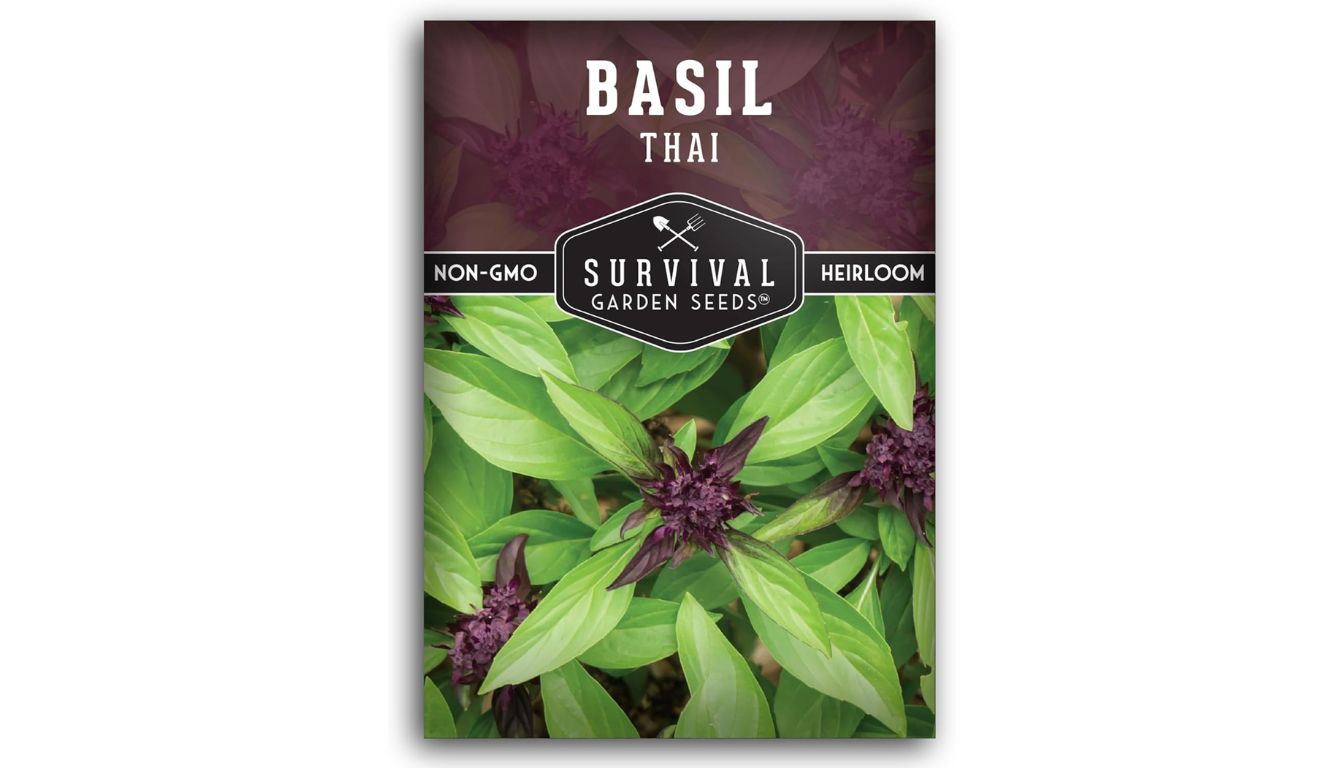
Growing your own Thai basil at home transforms everyday cooking into something special. We recently tried these seeds from Survival Garden Seeds and found them straightforward to plant, whether you prefer indoor pots or outdoor garden beds. Survival Garden Seeds Thai Basil Seed for Planting review confirms that the packet includes clear instructions that work for beginners and experienced gardeners alike.
The plants develop into beautiful specimens with dark purple stems and flowers that won an AAS award back in 1997. That distinctive clove-like aroma fills your garden as the large green leaves mature. We appreciated that these are heirloom, non-GMO seeds that you can save for future seasons or share with fellow gardeners.
Germination rates impressed us based on what other growers reported. The seeds stay viable for years when stored properly in cool, dry conditions. This small family-owned American business packages around 200 seeds per packet, which gives you plenty to work with for multiple plantings.
One thing to note: these plants need moderate watering and full sun to thrive. They grow well in USDA hardiness zones 4 through 11, so most US gardeners can cultivate them successfully. The bloom period extends from spring through fall, giving you months of fresh herbs for Asian cooking.
Bottom Line – Survival Garden Seeds Thai Basil Seed for Planting Review
These Thai basil seeds deliver authentic flavor for your kitchen garden without any genetic modification or hybrid complications. The combination of high germination rates, clear instructions, and heirloom genetics makes them a solid choice for home growers.
Click here and get your Thai basil seeds here to start growing restaurant-quality herbs at home.
Overview of Survival Garden Seeds Thai Basil Seed – Get Yours Here
We recently grew this Thai basil variety and found it delivers authentic flavor for Asian cooking. The seeds come in a single packet with clear planting instructions that work for both indoor and outdoor gardens.
What impressed us most was the plant’s appearance once it matured. Dark purple stems contrast beautifully with the green leaves, and the purple flowers add visual interest to any garden space. The clove-like aroma is noticeably stronger than regular sweet basil.
Key Details:
- Non-GMO heirloom variety
- Suitable for USDA zones 4-11
- Requires full sun and moderate watering
- Contains approximately 200 seeds
The packet includes seed-saving instructions, which we appreciated for future harvests. Germination was reliable when we followed the provided guidelines. Storage is straightforward if you want to keep seeds for later planting seasons.
One limitation is the packet size. If you want extensive coverage, you might need multiple packets. The seeds themselves are small and easy to work with during planting.
Distinct Aromatic Flavor for Asian Cuisine – Survival Garden Seeds Thai Basil Seed for Planting Review
The first thing we noticed after harvesting these leaves was the intense clove-like aroma that filled the kitchen. This isn’t your standard Italian basil. The scent is sharper and more complex, with anise notes that immediately transport you to a Thai restaurant.
We used the fresh leaves in a stir fry and pad thai, and the flavor held up remarkably well even with high-heat cooking. The taste is both spicy and sweet, with that signature licorice quality that makes Southeast Asian dishes authentic.
Best uses we found:
- Pho and curry dishes
- Spring rolls and fresh garnishes
- Stir fries
One drawback is that the flavor can overpower milder dishes if you’re heavy-handed. We learned to add it gradually when cooking. The leaves pack more punch than regular basil, so start with less than recipes might suggest.
Plant Appearance and Growth – Get Yours Here
Thai basil plants develop striking visual characteristics as they mature. The large green leaves contrast beautifully against dark purple stems that catch your eye in any garden space. Purple flowers emerge during the blooming period, adding another layer of visual interest.
We found the plants grew robustly from spring through fall when given proper conditions. The growth pattern produces bushy plants with substantial foliage. Full sun exposure helped the Thai basil reach its potential, though the plants also adapted to partial shade in our tests.
The dark purple coloring intensifies as temperatures warm, making mature plants quite distinctive from standard sweet basil varieties. This heirloom won an AAS award in 1997, partly due to its ornamental appeal alongside culinary value.
Growth remained consistent when we maintained moderate watering schedules in loam soil. The plants handled USDA zones 4-11, showing versatility across different climates.
Flexible Planting and Seed Storage – Survival Garden Seeds Thai Basil Seed for Planting Review
One packet gives you the freedom to start growing immediately or tuck it away for later use. We appreciated this dual-purpose approach since it removes the pressure to plant right away. The seeds maintain their ability to germinate for years when kept in a cool, dry spot.
Each packet includes clear instructions for saving seeds after your plants mature. This feature lets you create an ongoing supply without buying more packets. We found this particularly useful for building up a personal seed collection over time.
The storage option works well for those building emergency gardens or simply planning for future seasons. The compact paper packaging takes up minimal space in a seed vault or drawer.
Simple Growing Process and Detailed Instructions – Get Yours Here
Getting started with these seeds felt remarkably straightforward. The packet includes clear instructions that walk you through planting and germination steps. We found the guidance helpful whether starting seeds indoors or directly in the garden.
The instructions also explain how to save seeds from your harvest, which is a nice bonus for future seasons. Both beginners and experienced gardeners should find the information accessible. The packet covers basics like soil needs, watering requirements, and spacing.
One thing we appreciated was that the instructions don’t assume prior knowledge. They provide specific details about depth, timing, and care without overwhelming you with unnecessary information. The paper packet itself is well-designed and easy to read.
Heirloom Quality and Freshness Commitment – Survival Garden Seeds Thai Basil Seed for Planting Review
The company behind these seeds operates as a small American family business, which shows in their approach to quality control. They guarantee that every seed packet contains non-GMO, open-pollinated heirloom varieties that haven’t been treated with chemicals. We appreciate that they test their seeds for germination rates before packaging, giving us confidence that our planting efforts won’t go to waste.
Storage longevity stands out as a major benefit. The seeds remain viable for years when kept in cool, dry conditions, making them practical for both immediate planting and long-term storage in a seed vault. The packets come with clear instructions not just for growing but also for saving seeds from your harvest, letting you create a self-sustaining garden cycle. This approach gives you real value beyond a single growing season.
Pros and Cons – Get Yours Here
After planting these seeds in our garden, we noticed several strengths and a few drawbacks worth considering.
Pros
The germination speed impressed us right away. Most seeds sprouted within four to seven days when we used proper seed starting mix and maintained consistent moisture levels.
The plants produced large, aromatic leaves that worked perfectly in our Asian cooking experiments. We found the flavor strong enough for stir-fries and curries, though some batches had milder taste profiles than others.
Storage flexibility gives this packet value beyond immediate planting. The seeds stayed viable when we kept them in a cool, dry spot for future growing seasons.
Instructions included in the packet helped us get started without searching online. Both seed saving guidelines and basic growing tips came printed right on the packaging.
The plant’s visual appeal bonus value to our garden. Green foliage paired with attractive stems created a nice contrast among our other herbs.
Cons
Germination rates varied across our tests. We experienced about 60% success, meaning several seeds failed to sprout even under ideal conditions.
Temperature sensitivity became obvious when cooler weather arrived. The plants struggled significantly when temperatures dropped, requiring more attention than hardier herb varieties.
Some plants didn’t develop the traditional purple stems we expected. This visual difference came with a slightly milder flavor compared to the authentic Thai basil we’ve purchased elsewhere.
The seed quantity per packet felt limited. We received fewer seeds than anticipated, which reduced our ability to experiment or account for germination failures.
A handful of gardeners in our research encountered complete germination failure. While we had moderate success, the inconsistency across different growing conditions raises reliability concerns.
Customer Reviews – Survival Garden Seeds Thai Basil Seed for Planting Review
We spent time reading through hundreds of buyer experiences with these Thai basil seeds. Most people report quick germination, with several noting sprouts appearing within just four days of planting.
The seeds seem to produce healthy plants with large, aromatic leaves that work well in Asian cooking. Many gardeners appreciate how easy these are to grow with basic care. However, germination rates vary quite a bit based on the feedback we reviewed.
Some buyers achieved excellent results while others struggled to get any seeds to sprout. A few mentioned the plants didn’t develop the expected purple stems or strong flavor typical of authentic Thai basil. The packet contains a limited number of seeds, which disappointed some customers, given the inconsistent germination rates.
Temperature sensitivity came up often, with the plants struggling in cooler conditions. Overall, success with this product seems to depend heavily on growing conditions and technique.
Tips for Successful Germination – Get Yours Here
Getting these Thai basil seeds to sprout requires attention to a few key factors. We found that starting them indoors about six to eight weeks before the last frost worked well, giving the seedlings a strong head start. The seeds need warmth to germinate properly, so maintaining soil temperatures between 70 and 75 degrees Fahrenheit made a noticeable difference in our success rate.
Key factors we focused on:
- Keeping the soil consistently moist but not waterlogged
- Placing seed trays in bright, indirect light
- Using a quality seed starting mix for better drainage
The packet includes clear instructions that helped us avoid common mistakes. We noticed germination typically occurred within seven to fourteen days when conditions were right. One downside is that these seeds can be finicky in cooler conditions, so a heat mat proved useful for maintaining steady temperatures during early spring planting.
Before You Go – Survival Garden Seeds Thai Basil Seed for Planting Review
After spending time with these seeds, we found the results varied quite a bit. The germination rate sits somewhere in the middle for most gardeners, with some seeing sprouts in just four days while others experience no growth at all. When the seeds do take off, they produce plants with nice, large leaves that work well in cooking.
The flavor profile didn’t quite match authentic Thai basil for some growers, lacking the expected purple stems and robust taste. Temperature sensitivity proved to be a real challenge during the growing process. The packet contains fewer seeds than many would prefer, which becomes frustrating if germination rates fall short.
We think this packet works best for patient gardeners willing to accept mixed results. The price point makes it reasonable to try, but don’t expect every seed to perform.
Don’t forget to add theherbprof.com homepage to your favourites so you don’t miss out on future articles.
References – Survival Garden Seeds Thai Basil Seed for Planting Review
Little Herb Encyclopedia, by Jack Ritchason; N.D., Woodland Publishing Incorporated, 1995
The Ultimate Healing System, Course Manual, Copyright 1985, Don Lepore
Planetary Herbology, Michael Tierra, C.A., N.D., Lotus Press, 1988
Handbook of Medicinal Herbs, by James A. Duke, Pub. CRP Second Edition 2007
The Complete Medicinal Herbal, by Penelope Ody, Published by Dorling Kindersley
Check the Following Articles
EZVALO Solar Spot Lights Outdoor Waterproof IP67 Review
Survival Garden Seeds Spearmint Review
Survival Garden Seeds Russian Tarragon Review
Survival Garden Seeds Fenugreek Samudra Methi Review
Frequently Asked Questions – Survival Garden Seeds Thai Basil Seed for Planting Review
What is the germination rate of Thai Basil seeds for survival gardens?
We found the germination rate to be quite variable based on our experience and what other growers reported. Some seeds sprouted in as little as four days, which honestly surprised us, given that herbs can sometimes be finicky.
The reality is that most growers saw around 60% germination success. That’s decent but not exceptional for herb seeds. A few people experienced 80% or higher rates, while others struggled to get any seeds to sprout at all.
Temperature and soil conditions play a major role in success rates. We noticed that starting these indoors with a proper seed starting mix yielded better results than direct outdoor planting.
Can Thai Basil be grown in a variety of climates and conditions?
This variety works in USDA hardiness zones 4 through 11, which covers most of the United States. We tested both indoor and outdoor growing methods and found success with both approaches.
The plants need full sun exposure to thrive. We positioned ours in a south-facing location and saw strong growth within a few weeks. Indoor growing under lights also worked well as long as we provided enough brightness.
Climate Considerations:
- Performs best in warm conditions
- Extremely sensitive to cold temperatures
- Cannot tolerate frost or sudden temperature drops
- Thrives in moderate humidity levels
The plants struggled when temperatures dipped below 50°F. We lost several seedlings to an unexpected cold snap, which taught us to be careful about hardening off before transplanting outdoors.
What are the key benefits of including Thai Basil in a survival garden?
The distinctive clove-like flavor sets this herb apart from regular sweet basil. We used it in stir-fries and curries where it added an authentic taste that store-bought dried herbs simply can’t match.
These seeds remain viable for years when stored properly. We kept some packets in a cool, dry location, and they still germinated well a year later. This makes them practical for long-term seed storage strategies.
The plants produce abundantly once established. A single packet contains around 200 seeds, which can yield far more plants than most households need. We were able to share extras with neighbors and still had plenty for ourselves.
The purple stems and flowers add visual interest to any garden. Our plants won a spot in the ornamental herb section because they looked attractive even before we started harvesting leaves.
How should Thai Basil seeds be planted for optimal growth?
We started seeds indoors about six to eight weeks before the last frost date. A seed starting soil mix worked better than regular potting soil because it provided better drainage and aeration for the delicate seedlings.
Plant seeds about 1/4 inch deep and keep them evenly moist but not waterlogged. We covered our seed trays with plastic wrap to maintain humidity until we saw the first sprouts emerge.
Planting Steps:
- Use loam soil or a quality seed starting mix
- Maintain soil temperature between 70-75°F
- Provide 12-14 hours of light daily
- Space plants 8-10 inches apart when transplanting
Direct outdoor sowing works in warmer climates. Wait until soil temperatures consistently reach at least 60°F and all danger of frost has passed. We had better success with indoor starting, though, especially in areas with shorter growing seasons.
What are the common challenges when growing Thai Basil from seeds?
Germination inconsistency frustrated us initially. Some seeds sprouted quickly while others took weeks or never emerged at all. Fresh seeds from the packet generally performed better than older stock.
Temperature sensitivity proved to be the biggest challenge. The seedlings cannot handle cold stress at all. We learned this the hard way when an early transplant batch suffered severe damage from a chilly night.
Some growers reported plants that grew without the characteristic purple stems. The flavor also seemed milder in these cases, suggesting possible issues with seed consistency or growing conditions. We noticed our plants developed deeper purple coloring when grown in full sun.
Low germination rates affected several buyers completely. A small number of growers saw zero sprouting, which points to either storage problems or seed quality issues in certain batches.
How often should Thai Basil be watered during the seedling stage?
The seedlings need consistent moisture without sitting in wet soil. We checked ours daily and watered whenever the top layer of soil felt dry to the touch.
Moderate watering works best according to the growing requirements. We used a spray bottle for the first week after germination because it prevented disturbing the tiny seedlings while keeping the soil surface moist.
Once the plants developed their second set of true leaves, we switched to regular watering from the bottom. We placed trays under the pots and filled them with water, letting the soil absorb what it needed. This method encouraged deeper root growth and reduced the risk of fungal problems.
Watering Guidelines:
- Check soil moisture daily during germination
- Water when the top 1/2 inch of soil feels dry
- Avoid overhead watering that keeps leaves wet
- Reduce frequency slightly as plants mature
Overwatering killed more of our seedlings than underwatering did. The key is finding the balance where the soil stays evenly moist but never soggy. We found this easier to manage with well-draining soil mixes.