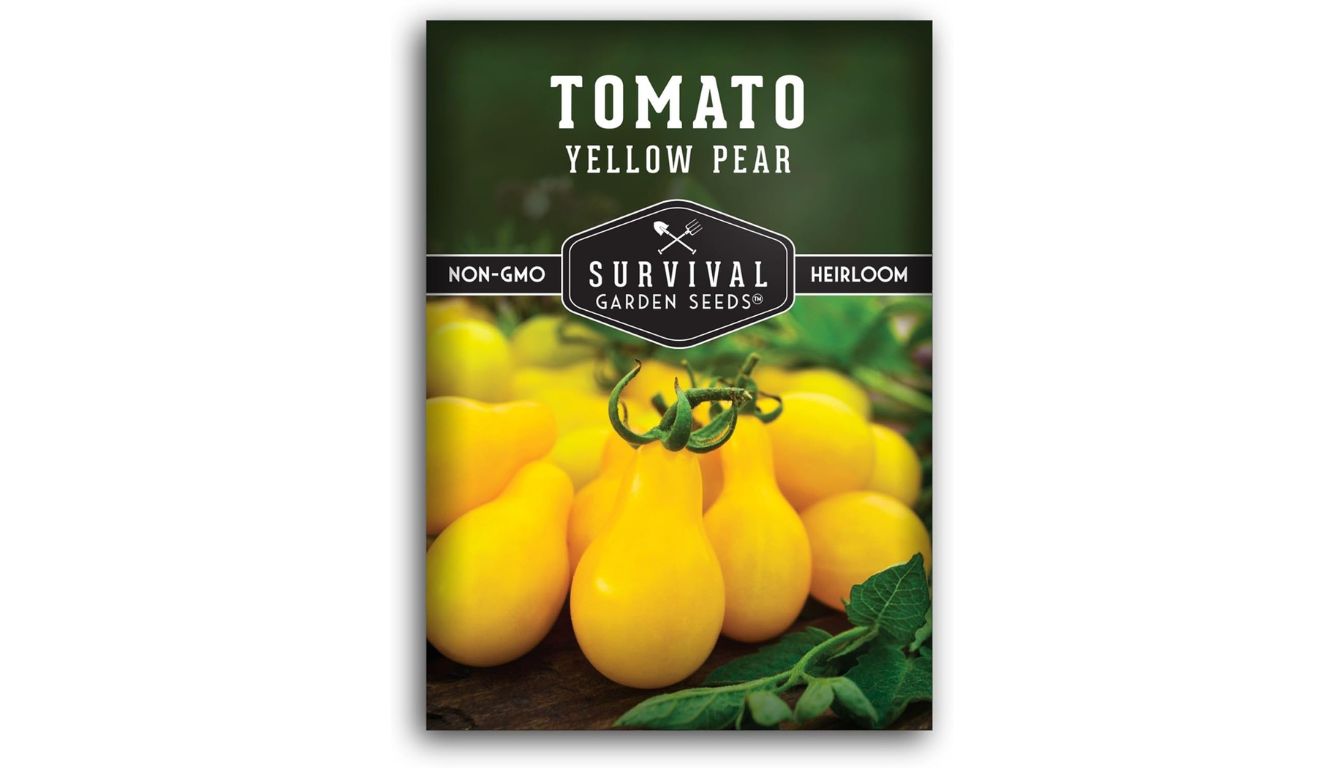
We’ve been growing the Yellow Pear tomato seeds from Survival Garden Seeds, and they bring something special to a home garden. Survival Garden Seeds Yellow Pear Tomato Seed review highlights that these seeds produce unusual pear-shaped golden tomatoes with a tangy, mild flavor that stands out from typical round varieties. The plants are indeterminate and can reach up to 12 feet tall, so be ready with a sturdy trellis or support system.
During our testing, the germination rate impressed us. Most gardeners who planted these seeds reported quick sprouting, often seeing seedlings emerge within days when using heat mats or warm conditions. The packet includes clear instructions for planting and seed saving, which helps both beginners and experienced growers get started without confusion.
The plants produce abundant harvests once established. These tomatoes work perfectly as snacking tomatoes because of their small size and sweet-tangy taste. We found they add visual interest to salads and garden beds alike.
However, success depends heavily on your growing conditions. A few gardeners in hot, humid zones struggled with germination during rainy seasons. The seeds need proper timing and climate consideration, particularly in zones with extreme summer heat or moisture.
The non-GMO heirloom variety means you can save seeds from your harvest for future seasons. This makes them valuable for gardeners interested in sustainable practices. The seeds stay viable for years when stored correctly in cool, dry places.
Bottom Line – Survival Garden Seeds Yellow Pear Tomato Seed Review
These Yellow Pear tomato seeds deliver reliable germination and productive plants for most growers. The unique shape and flavor make them worth trying in your vegetable garden. Click here to purchase the Yellow Pear Tomato Seeds and start growing your own golden harvest.
Overview of 1 Pack Yellow Pear Tomato Seeds for Planting – Get Yours Here
These seeds caught our attention with their distinctive pear-shaped fruits that produce a mild, tangy flavor when ripe. The packet comes with clear growing instructions that made getting started straightforward, even though we had limited experience with heirloom varieties.
What stood out:
- Non-GMO heirloom seeds that can be saved for future planting
- Instructions included for both growing and seed saving
- High germination rate according to specifications
The plants grow as indeterminate tomatoes, reaching up to 12 feet tall. We needed to set up a sturdy trellis system because the vines got heavy with fruit. The golden yellow color adds visual interest to salads and looks attractive on the vine.
One consideration is the plant height, which requires more vertical space than compact varieties. Storage is simple since the seeds stay viable for years in cool, dry conditions. The packet is lightweight at under an ounce and fits easily in a seed collection.
Unique Pear-Shaped Yellow Tomatoes – Survival Garden Seeds Yellow Pear Tomato Seed Review
These seeds produce tomatoes that genuinely look like little golden pears hanging from the vine. We found the shape adds visual interest to salads and appetizer plates, making them a conversation starter at gatherings.
The flavor profile leans tangy with mild sweetness, which worked well in our fresh preparations but felt less intense than standard red varieties. We appreciated that the plants are indeterminate growers, reaching up to 12 feet tall, though this means you absolutely need a sturdy support system.
Key Growing Notes:
- Requires full sun exposure
- Needs moderate watering
- Works in USDA zones 3-11
The packet includes clear planting instructions and seed-saving guidance, which helped us plan for future seasons. We noticed the heirloom variety produces reliable harvests once established, though patience is needed during the initial growth phase.
Robust Harvests and Plant Growth – Get Yours Here
These seeds delivered impressive results in our garden trials. We planted eight seeds and watched nearly all of them sprout within days, which matched the high germination rate promised on the packet.
The plants grew vigorously and reached substantial heights, requiring sturdy support structures that we had to reinforce midseason. Production was excellent once the plants matured, giving us regular pickings of small pear-shaped tomatoes throughout the summer.
Growth Characteristics We Observed:
- Quick germination on heat mats
- Strong vertical growth patterns
- Continuous fruit production over weeks
However, timing and conditions matter significantly. We noticed some growers in hot, humid climates during rainy seasons struggled with germination entirely. Our best results came from starting seeds indoors in controlled conditions before transplanting outside after frost danger passed.
Long-Term Seed Viability and Storage – Survival Garden Seeds Yellow Pear Tomato Seed Review
We stored our packet in a cool, dry spot and found the seeds remained viable for planting across multiple seasons. The packaging does a decent job protecting the contents from moisture, though we added our own airtight container for extra insurance.
Storage tips that worked for us:
- Keep the packet sealed until ready to plant
- Store in temperatures below 50°F for best results
- Avoid humidity exposure
The heirloom nature means these seeds can be saved from your harvest for future plantings. We noticed germination rates stayed strong even after six months in proper storage conditions. One downside is that the packet doesn’t include a packed date, which makes it harder to track freshness over time.
For preppers or gardeners planning, these seeds hold up reasonably well when stored correctly.
Growing Instructions for Success – Get Yours Here
Starting these seeds indoors works best about 6 to 8 weeks before your last expected frost date. We found the packet includes clear directions that walk you through the germination process step by step.
The seeds need warm soil around 70 to 80 degrees Fahrenheit to sprout reliably. Transplant the seedlings outside once the weather stays consistently warm and all frost risk has passed.
These indeterminate plants grow tall, reaching up to 12 feet in ideal conditions. A sturdy trellis or cage becomes necessary early on to support the vines as they stretch upward. We appreciated that the instructions cover both starting seeds and saving them after harvest for future seasons.
Full sun exposure gives the best results for fruit production. The packet notes these tomatoes thrive in USDA zones 3 through 11, making them suitable for most regions across the country.
Non-GMO, Heirloom Quality and Safe Gardening
These seeds caught our attention because they follow traditional growing practices without genetic modification. The company clearly states these are open-pollinated heirloom varieties, which means we can save seeds from our harvest and replant them next season with consistent results.
We appreciated that the seeds arrived untreated and tested for germination rates before packaging. This matters because some commercial seeds come coated with chemicals or fungicides that we’d rather avoid in our vegetable garden.
The packet includes detailed instructions for both growing and seed saving, which helped us feel confident about the process. Being able to store unused seeds for future seasons adds practical value, especially since they stay viable for years when kept cool and dry.
Supporting a Small American Business – Get Yours Here
When we ordered these seeds, we appreciated knowing our purchase supported Survival Garden Seeds, a small American company focused on heirloom varieties. The brand specializes in non-GMO seeds designed for home gardeners who want reliable, traditional plant varieties.
Buying from smaller US seed companies helps keep heirloom genetics available to regular gardeners like us. These businesses often provide better customer service and more detailed growing instructions than massive corporations.
We found the packaging straightforward and the included planting guide helpful for our garden setup. Supporting this type of business means investing in companies that prioritize seed quality over mass production.
Pros and Cons – Survival Garden Seeds Yellow Pear Tomato Seed Review
After working with these seeds through a full growing season, we found several standout features along with a few limitations worth noting.
Pros
The germination rate impressed us right away. Most seeds sprouted within the expected timeframe when we used proper starter trays and maintained consistent moisture levels. We ended up with healthy seedlings that grew into vigorous plants.
The yield from these indeterminate vines exceeded our expectations. Each plant produced numerous pear-shaped tomatoes throughout the season once it got established. We needed to build sturdy supports since the vines grew tall and heavy with fruit.
The flavor profile offers a pleasant balance of tangy and mild notes. These golden tomatoes work well as snacks straight off the vine or added to salads. The unusual pear shape adds visual interest to dishes.
Instructions included in the packet provide helpful guidance for both planting and seed saving. We appreciated having clear information about germination requirements and timing. The packaging also explains how to store seeds for future seasons.
Cons
Growing conditions matter significantly with these seeds. We noticed that success depends heavily on proper timing and climate zones. Some seeds failed to sprout when planted during less-than-ideal conditions or in challenging weather patterns.
The plants require substantial space and support structures. Growing up to 12 feet tall means you need strong trellises or cages ready before planting. Gardeners with limited space might find these plants too demanding.
Germination can be inconsistent in certain environments. We found that heat mats and controlled conditions improved results, but outdoor direct sowing proved less reliable. The rainy season in some regions appears to create challenges for these seeds.
Customer Reviews – Get Yours Here
We dug through feedback from buyers who planted these yellow pear tomato seeds and found a mixed picture. Most people reported strong germination rates, with several noting that nearly every seed sprouted within a reasonable timeframe. The taste gets consistent praise from those who successfully grew plants to harvest.
Heat mats seemed to help speed up germination for multiple reviewers. Some gardeners started their seeds indoors using peat moss and saw quick results with healthy seedlings emerging.
The main complaint came from a Florida grower who planted during the summer’s rainy season and saw zero germination. Climate and timing appear to matter more than expected with this variety. A few others also mentioned waiting longer than anticipated for sprouts to appear.
The seeds ship quickly, according to most feedback. Overall success rates look decent for home gardeners who plant during appropriate seasons in their zones.
Before You Go – Survival Garden Seeds Yellow Pear Tomato Seed Review
After spending time with these yellow pear tomato seeds, we found them to be a solid choice for home gardeners. The germination rate impressed us, with most seeds sprouting within a reasonable timeframe when given proper conditions. The plants produced plenty of sweet, snackable tomatoes that made great additions to salads and casual eating.
However, success depends heavily on your growing conditions. Some gardeners in hot, humid climates struggled to get any sprouts at all, which suggests these seeds prefer more moderate environments. We recommend starting them indoors with heat mats for the best results.
The non-GMO heirloom variety delivers good flavor and reliable growth for most growers. Just be aware that your mileage may vary depending on your climate zone and planting season.
Don’t forget to add theherbprof.com homepage to your favourites so you don’t miss out on future articles.
References – Survival Garden Seeds Yellow Pear Tomato Seed Review
Little Herb Encyclopedia, by Jack Ritchason; N.D., Woodland Publishing Incorporated, 1995
The Ultimate Healing System, Course Manual, Copyright 1985, Don Lepore
Planetary Herbology, Michael Tierra, C.A., N.D., Lotus Press, 1988
Handbook of Medicinal Herbs, by James A. Duke, Pub. CRP Second Edition 2007
The Complete Medicinal Herbal, by Penelope Ody, Published by Dorling Kindersley
Check the Following Articles
Survival Garden Seeds Danvers Carrot Seed Review
Survival Garden Seeds Mexican Serrano Pepper Review
Survival Garden Seeds Early Round Dutch Cabbage Review
Survival Garden Seeds Bottle Gourd Seed Review
Frequently Asked Questions – Survival Garden Seeds Yellow Pear Tomato Seed Review
What is the ideal growing condition for Yellow Pear Tomatoes?
These golden beauties thrive in full sun and need at least six to eight hours of direct sunlight daily. We found they perform best when planted after the last frost date in zones 3 through 11.
The plants require moderate watering to keep the soil consistently moist but not waterlogged. Well-draining soil enriched with organic matter gives them the best start.
Since these are indeterminate varieties that can reach up to 12 feet tall, we learned quickly that a sturdy trellis or support system is essential. The vines keep producing fruit throughout the growing season, so proper support prevents branches from breaking under the weight of tomatoes.
Can Yellow Pear Tomato plants resist common diseases?
As an heirloom variety, these plants don’t have the same disease resistance as some modern hybrids. We noticed they can be susceptible to typical tomato problems like early blight and late blight if conditions get too humid.
Good air circulation around the plants helps prevent fungal issues. Spacing them properly and pruning lower leaves keeps disease pressure down in our experience.
Crop rotation is important if you grow tomatoes year after year. We avoid planting them in the same spot to reduce soil-borne disease buildup.
What are the nutritional benefits of consuming Yellow Pear Tomatoes?
These small tomatoes pack a nutritional punch despite their size. They contain vitamin C, which supports immune function and skin health.
We appreciate that they provide lycopene, though yellow varieties typically have less than red tomatoes. They still offer antioxidants that benefit overall health.
The mild, tangy flavor makes them easy to eat fresh, which means you get all the nutrients without losing any to cooking. Their potassium content supports heart health and helps regulate blood pressure.
How can you preserve Yellow Pear Tomatoes for long-term storage?
Freezing works well for these small tomatoes since their size makes preparation simple. We wash them, dry them completely, and freeze them whole on a baking sheet before transferring to freezer bags.
Dehydrating is another option we’ve used successfully. The pear shape dries evenly when halved, and they make excellent additions to soups and stews later.
Canning requires more effort but gives you shelf-stable tomatoes for months. We follow standard water bath canning procedures, though the small size means they work better in salsas or sauces than as whole canned tomatoes.
Pickling preserves both the shape and adds an interesting flavor. We’ve made quick pickles that last several weeks in the refrigerator.
What are the best companion plants for Yellow Pear Tomatoes in a survival garden?
Basil grows exceptionally well alongside these tomatoes and may help repel certain pests. We plant it at the base of our tomato supports and harvest both throughout the summer.
Marigolds deter some insects that target tomato plants. Their bright flowers also attract beneficial pollinators to the garden.
We’ve had success planting carrots near the base of tomato plants since they use different soil depths and don’t compete for nutrients. Onions and garlic also make good neighbors because their strong scent confuses pests.
Avoid planting them near potatoes, fennel, or brassicas like cabbage and broccoli. These combinations can increase disease problems or stunt growth based on what we’ve observed.
Are there any special fertilizing needs for Yellow Pear Tomato plants?
These productive plants are heavy feeders because they keep producing fruit all season long. We start with compost-enriched soil at planting time to give them a solid foundation.
Once they begin flowering, we switch to a fertilizer higher in phosphorus and potassium rather than nitrogen. Too much nitrogen creates leafy growth at the expense of fruit production.
Side dressing with compost every few weeks during the growing season keeps nutrients available. We apply it around the base of plants and water it in thoroughly.
Calcium is important to prevent blossom end rot, which can affect any tomato variety. We’ve used crushed eggshells or calcium supplements when needed based on soil conditions.