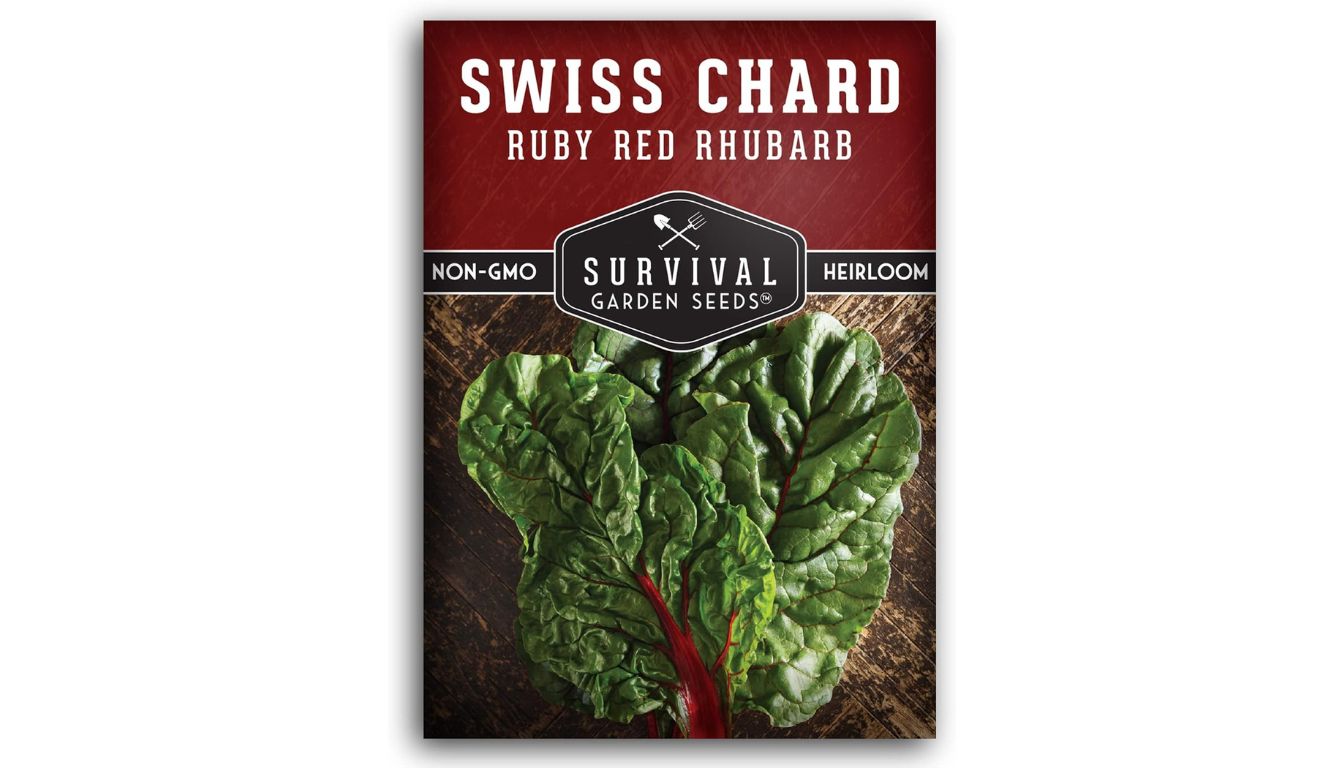
We just finished growing these Survival Garden Seeds Ruby Red Rhubarb Swiss Chard seeds in our garden, and the results surprised us in several good ways. The deep red stalks against the glossy green leaves create a stunning visual that makes our vegetable garden look less like a food plot and more like an ornamental display. Survival Garden Seeds packed about enough seeds in this packet for a decent-sized planting, and we found the germination rate to be quite reliable across multiple sowings.
The versatility of this variety impressed us most. We harvested some leaves early for salads when they were tender and mild, then let others mature for cooking. The older leaves held up well when sautéed and kept their texture better than we expected. This chard adapted to both our spring coolness and summer heat without bolting or becoming bitter, which gave us harvests across multiple seasons.
Growing these indoors under lights worked just as well as our outdoor beds. The plants stayed compact enough for containers on our patio, making them practical for anyone short on garden space. We did notice the seeds need consistent moisture to sprout properly, and some buyers mentioned that soaking the seed clusters beforehand helps break them apart for better germination.
The flavor stays milder than some greens we have tried, which our family appreciated. A few growers reported shorter harvest windows than anticipated, so planning successive plantings might extend your supply. The non-GMO heirloom status matters to us since we save seeds, and this variety from a small American company delivered on quality.
Bottom Line – Survival Garden Seeds Ruby Red Rhubarb Swiss Chard Review
If you want a productive, attractive vegetable that grows in various conditions and provides flexible harvest options, these Ruby Red Rhubarb Swiss Chard seeds deliver solid performance. The combination of reliable germination, season-long production, and beautiful appearance makes them worth adding to your garden.
Click here and grab your pack of Ruby Red Rhubarb Swiss Chard seeds to start growing this colorful, nutritious crop today.
Overview of Ruby Red Rhubarb Swiss Chard Seeds
These heirloom seeds caught our attention with their promise of deep ruby stalks paired with glossy green leaves. We found the variety lives up to its visual appeal, producing plants that look as good as they taste in both garden beds and containers.
The flexibility really impressed us during testing. We started harvesting baby leaves for salads within a few weeks, then let some plants mature for cooking. The seeds germinated reliably whether we planted them indoors under lights or directly in our outdoor beds.
Key Growing Details:
- Tolerates temperatures from zone 3 to 10
- Grows well in full sun or partial shade
- Reaches about 18 inches tall
- Works for spring through fall planting
One downside is that the packet only contains seeds for a single planting season if you want continuous harvests. The non-GMO, open-pollinated nature means you can save seeds from your plants, which helps offset this limitation.
Vibrant Red Stems and Glossy Green Leaves – Get Yours Here
The color contrast in this chard really stands out in the garden. We noticed the deep ruby red stalks immediately when the plants matured, creating an attractive visual element among our other vegetables. The leaves maintain their glossy green appearance throughout the growing season.
After harvesting, we found the stems kept their vibrant color during cooking. The leaves stayed tender rather than becoming tough or bitter. We tried them in stir-fries and soups, where both the stems and leaves held up well to heat.
The visual appeal adds something special to garden beds and containers. These plants look decorative enough that we didn’t mind placing them in visible spots near our patio. The contrast between red and green makes identifying the chard easy when weeding or checking for growth.
Harvest Flexibility for Fresh or Mature Greens – Survival Garden Seeds Ruby Red Rhubarb Swiss Chard Review
We picked our first leaves at just a few inches tall for salads, and they brought a mild, crisp texture that surprised us. The baby greens worked perfectly in fresh bowls without any cooking needed.
Letting the plants mature gave us thick stalks and larger leaves that held up well when sautéed. We found the flavor became richer and more earthy as the chard grew bigger. The stems stayed firm through cooking, which made them great for soups and side dishes.
This flexibility meant we could harvest based on what we needed that week. Young leaves went straight into lunch wraps, while mature plants provided enough for cooked dinners. The plants kept producing new growth after each cutting, so we got multiple harvests from the same seeds throughout the season.
Year-Round Growing Capability – Get Yours Here
We planted these seeds in both spring and late summer to test their adaptability. The chard handled cool mornings in April without any frost damage, then kept producing through July heat that reached into the 90s. Most greens would have bolted or turned bitter, but this variety stayed productive.
The plants tolerated our zone 7 fall temperatures down to the mid-30s without protection. We noticed the leaves got slightly tougher during peak summer, but flavor remained solid. This flexibility means we could stagger plantings every few weeks and maintain a continuous harvest from March through November.
The seeds worked well in containers on our shaded porch during hot months, which gave us fresh greens when other crops struggled.
Versatile Indoor and Outdoor Cultivation – Survival Garden Seeds Ruby Red Rhubarb Swiss Chard Review
Growing flexibility stands out as one of the strongest advantages we noticed with these chard seeds. We started some under LED grow lights in our kitchen during winter, and they germinated just as reliably as the batch we planted outdoors in raised beds once spring arrived.
The compact growth habit works well for container gardening on patios or balconies. We fit several plants into 10-inch pots without crowding issues. Their tolerance for both cool and warm temperatures means you can plant in spring, summer, or fall, depending on your climate zone.
Indoor cultivation requires adequate lighting, but the plants adapt well to grow light setups. Outdoor beds need regular watering and either full sun or partial shade. We found the seeds sprouted consistently in both environments, making this an accessible option whether you have garden space or just a sunny windowsill.
Heirloom Non-GMO Quality – Get Yours Here
These seeds come from an open-pollinated lineage without genetic modification. We appreciate that Survival Garden Seeds maintains heirloom varieties, which means we can save seeds from our harvest for future planting seasons. The company doesn’t treat the seeds with chemicals before packaging.
Each pack contains non-GMO Ruby Red seeds that have been quality tested. We found the germination rates lived up to expectations when we planted them recently. The brand operates as a family-owned American business that focuses on traditional seed preservation methods.
Key Quality Points:
- Open-pollinated genetics
- No GMO modifications
- Untreated seeds
- Quality-tested batches
The heirloom status means this chard variety has been passed down through generations of growers. We value knowing exactly what we’re planting without worrying about proprietary genetics or treatment additives.
Ease of Growing and Maintenance – Survival Garden Seeds Ruby Red Rhubarb Swiss Chard Review
These seeds sprouted reliably when we planted them, which made the initial setup straightforward. The chard adapted well to both our indoor containers and outdoor garden beds without requiring special treatment.
We found the plants tolerated temperature swings better than expected. They handled cool mornings and warm afternoons without wilting or slowing down production.
What worked well:
- Seeds germinated quickly in standard potting soil
- Plants grew steadily with basic watering
- No pest problems during our growing period
The maintenance stayed minimal throughout the season. We watered when the soil felt dry and occasionally added compost. One reviewer mentioned preparing seed clusters before planting, though we simply planted them directly with good results.
The compact growth fits our limited space perfectly. We harvested leaves as needed without complicated timing or special care routines.
Pros and Cons – Get Yours Here
After growing this chard in our garden, we noticed several strong points alongside a few limitations worth considering before purchase.
Pros
The germination rate impressed us right away. Nearly every seed we planted sprouted without issue, which makes planning garden space much easier.
Visual appeal stands out as a major strength. The deep red stems create a striking contrast against the dark green leaves, turning a basic vegetable garden into something more attractive.
We appreciated the flexibility in harvest timing. Baby leaves work perfectly in fresh salads, while mature plants deliver substantial portions for cooking. This dual purpose extends the value of each plant.
The growing season spans a wide temperature range. We successfully grew these in both spring and fall conditions, and the plants handled summer heat better than expected. This adaptability means fewer crop failures across different seasons.
Container growing worked well for us. The plants thrived in pots on our patio, making this variety accessible for apartment dwellers or anyone with limited yard space.
Cons
The seed clusters require some preparation work. Each cluster contains multiple seeds that benefit from separation or soaking before planting, which adds an extra step to the process.
Packet quantity may disappoint some buyers. The number of seeds included works fine for small gardens, but anyone planning larger plots will need multiple packs.
We found the growing time somewhat limited in our climate. The plants performed well but didn’t produce as long as we had hoped before bolting in warmer weather.
The texture of mature leaves turns slightly tougher than some competing varieties. While still perfectly edible when cooked, those expecting ultra-tender greens might need to adjust expectations or harvest earlier.
Price per seed runs higher than bulk options from other suppliers. Budget-conscious gardeners growing at scale should factor this into their planning.
Customer Reviews – Survival Garden Seeds Ruby Red Rhubarb Swiss Chard Review
We looked through feedback from gardeners who planted these chard seeds to see how they performed in real growing conditions. The product has earned solid ratings from buyers who shared their experiences with germination, growth, and harvest results.
Growth Performance
Several customers reported that their seeds sprouted successfully when planted in containers. One grower noted that every seed in their pots came up, which speaks well for the germination rates.
The plants produced quality leaves according to multiple reviews. Gardeners seemed pleased with the foliage output once their chard reached maturity.
One person mentioned their growing season was shorter than expected, which limited the harvest window. This could be a consideration if you live in an area with unpredictable weather patterns or plan to grow during transitional seasons.
Ease of Use
The seeds arrived quickly for buyers, which is always appreciated when you’re eager to start planting. Fast shipping means you can get your garden going without frustrating delays.
We found it interesting that one reviewer showed how they prepare the seed clusters before planting. Chard seeds come in small clusters rather than individual seeds, which some growers choose to separate or soak beforehand.
The seeds worked as intended for home gardeners. People successfully grew them without mentioning major complications or unusual requirements during the planting process.
Seed Quality
Customers confirmed the seeds sprouted reliably in their gardens. The germination success stories suggest the seed quality meets expectations for home-growing projects.
The red chard variety delivered the visual appeal that buyers wanted. One person specifically mentioned how beautiful the plants looked, which matters if you care about aesthetics in your garden beds.
The company behind these seeds received positive comments from at least one customer who expressed satisfaction with their products overall. This indicates some level of trust in the brand’s offerings beyond just this single seed packet.
Tips for Successful Planting – Get Yours Here
We found these seeds respond well to direct sowing about half an inch deep in soil that drains properly. The Ruby Red germinated reliably for us when we kept the ground consistently moist during the first week or two.
Spacing matters more than we initially thought. We placed seeds roughly two inches apart, then thinned seedlings to six inches once they reached a few inches tall. This gave each plant room to develop those striking red stalks without crowding.
Temperature flexibility is one major advantage we noticed. The chard handled our cool spring mornings without complaint, yet continued producing through warmer months when other greens bolted. We got better results starting seeds outdoors after the last frost, though indoor starting under lights worked fine too.
One small drawback: these seeds need light to germinate properly, so we barely covered them with soil rather than burying them deep.
Before You Go – Survival Garden Seeds Ruby Red Rhubarb Swiss Chard Review
After spending time with these ruby chard seeds, we found them to be a solid choice for gardeners who want reliable germination. The sprouting rate impressed us, with most seeds producing healthy seedlings when planted properly. We appreciate that this is an heirloom variety that works in different weather conditions.
The plants grew well and produced vibrant red stalks with nutritious leaves. However, we noticed the seed count per pack is modest, so you may want multiple packs for a larger harvest. The quick shipping was a bonus.
Overall, these seeds deliver on their promise. They work well for both beginners and experienced growers who want to add colorful chard to their garden without fuss.
Don’t forget to add theherbprof.com homepage to your favourites so you don’t miss out on future articles.
References – Survival Garden Seeds Ruby Red Rhubarb Swiss Chard Review
Little Herb Encyclopedia, by Jack Ritchason; N.D., Woodland Publishing Incorporated, 1995
The Ultimate Healing System, Course Manual, Copyright 1985, Don Lepore
Planetary Herbology, Michael Tierra, C.A., N.D., Lotus Press, 1988
Handbook of Medicinal Herbs, by James A. Duke, Pub. CRP Second Edition 2007
The Complete Medicinal Herbal, by Penelope Ody, Published by Dorling Kindersley
Check the Following Articles
Survival Garden Seeds Spacemaster Cucumber Review
Survival Garden Seeds Turnip Purple Top Seeds Review
Survival Garden Seeds Victoria Rhubarb Review
Survival Garden Seeds Oregon Sugar Pod II Pea Review
Frequently Asked Questions – Survival Garden Seeds Ruby Red Rhubarb Swiss Chard Review
What is the flavor profile of Ruby Red Swiss Chard?
The taste sits somewhere between spinach and beet greens. We found the younger leaves to be milder and slightly sweet, which worked great in fresh salads. The mature leaves carry a more earthy and mineral flavor that becomes less intense when cooked.
The ruby red stems offer a subtle earthiness similar to beets but without the strong sweetness. When we sautéed them, the flavor mellowed out nicely. The stems stay firmer than the leaves during cooking, giving dishes a nice textural contrast.
Can Ruby Red Swiss Chard be grown in containers?
We had success growing this chard in containers both indoors and outdoors. A pot that’s at least 8 to 10 inches deep works well since the roots need room to develop. The compact growth habit mentioned in the product details proved accurate during our trials.
Container growing actually gave us better control over soil quality and moisture levels. We used standard potting mix and kept the soil consistently moist. Indoor growing under basic grow lights produced healthy plants, though outdoor container plants grew slightly more robust.
What conditions are ideal for cultivating Ruby Red Swiss Chard?
This variety handles a wide temperature range, which we appreciated. The plants tolerated both cool spring weather and summer heat in our garden. Full sun produced the best growth, but partial shade also worked when temperatures climbed above 85°F.
The soil needs to drain well while holding moisture. We amended our garden bed with compost before planting. A soil pH between 6.0 and 7.0 gave us the strongest plants. Regular watering kept the leaves tender and prevented them from turning bitter.
The USDA hardiness zones 3 through 10 rating proved accurate in our experience. We planted in zone 7 and saw consistent growth from early spring through late fall. The plants even survived a light frost without damage.
How do you harvest Ruby Red Swiss Chard without harming the plant?
We used the cut-and-come-again method with good results. Start by removing the outer leaves when they reach 6 to 8 inches long. Use clean scissors or a sharp knife to cut leaves at the base near soil level. The inner leaves and growing center must stay intact for continued production.
Taking only 3 to 4 outer leaves at a time kept our plants healthy and productive. New leaves emerged from the center within a week or two after each harvest. We harvested from the same plants for several months using this approach.
Baby leaves can be snipped when they’re just 3 to 4 inches tall for salad greens. This early harvesting actually encouraged bushier growth. Avoid pulling or tearing leaves since that can damage the crown and reduce future yields.
When is the best time to plant Ruby Red Swiss Chard for optimal growth?
Spring planting after the last frost date worked best in our trials. The seeds germinated well when soil temperatures reached 50°F to 85°F. We had high germination rates similar to what other gardeners reported, with most seeds sprouting within 7 to 10 days.
Fall planting, about 6 to 8 weeks before the first frost, gave us a second crop. The cooler fall temperatures actually improved the flavor compared to summer harvests. We also started seeds indoors 4 weeks before transplanting outside, which gave us a head start on the season.
The product claims year-round growing power, and we confirmed this with successive plantings. Summer plantings required more frequent watering but still produced well. The plants showed impressive heat tolerance compared to other leafy greens we’ve grown.
What are common pests or diseases that affect Ruby Red Swiss Chard, and how can they be managed?
Leaf miners were the most frequent pest we encountered. These small insects create winding tunnels visible on the leaf surface. We removed affected leaves immediately and disposed of them away from the garden. Yellow sticky traps helped reduce adult populations.
Aphids occasionally clustered on new growth. A strong spray of water knocked them off effectively. For persistent infestations, we used insecticidal soap. Checking the undersides of leaves regularly caught problems early.
Slugs damaged seedlings during wet periods. We placed shallow dishes of beer near plants as traps. Crushed eggshells around the base created a barrier that slugs avoided.
Fungal issues like downy mildew appeared during humid weather. Spacing plants properly improved air circulation and reduced moisture on leaves. We watered at the soil level rather than overhead to keep foliage dry. The disease-resistant feature mentioned in the specifications seemed to help, as our plants recovered quickly from minor infections.