
The Herb Prof Team researches and writes our herbal guides, drawing on published research, traditional herbal references, and hands-on growing experience.
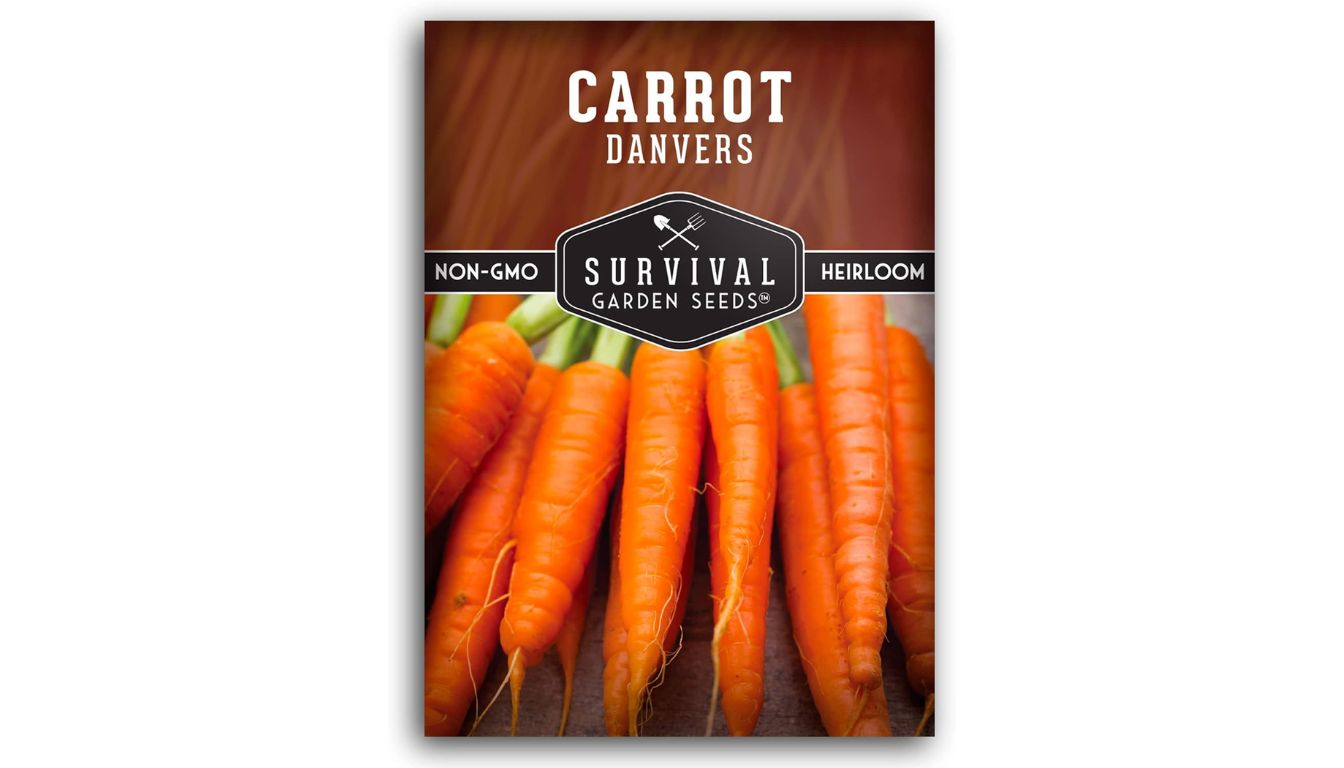
We recently tested these Danvers carrot seeds from Survival Garden Seeds in our home garden to see if they live up to their reputation. Survival Garden Seeds Danvers Carrot Seed review shows that this variety has been around since 1871, which speaks to its staying power among gardeners. The seeds are designed to work well in heavier soils like clay, something that can be a challenge with other carrot varieties.
Getting these seeds to sprout took some patience and the right approach. We found that keeping the soil consistently moist was key during germination. The packet claims these carrots grow 6 to 8 inches long with thick orange roots, and they’re supposed to handle rocky or clay ground better than standard varieties.
The germination rate appears to be hit or miss based on our experience. Some gardeners report excellent results with many seeds sprouting, while others see only a fraction of their seeds grow. We noticed that covering the planted area with fabric or cardboard to maintain moisture helped significantly. The plants that did come up looked healthy with dark green tops.
The heirloom seeds are non-GMO and untreated, which matters if you’re building a seed collection for future seasons. They store well if kept in a cool, dry spot. The carrots that actually grew were tasty and had that classic deep orange color. However, the inconsistent germination means you might want to plant more seeds than you think you need to get a decent harvest.
Bottom Line – Survival Garden Seeds Danvers Carrot Seed Review
If you’re willing to put in extra care during germination and don’t mind planting generously, these Danvers carrot seeds can produce quality carrots for your garden. The variety handles tough soil conditions better than most, and the heirloom nature means you can save seeds for future planting.
Click here to purchase these Danvers carrot seeds and start growing your own vegetable garden today.
Overview of 1 Pack Danvers Carrot Seed for Planting – Get Yours Here
This packet comes from Survival Garden Seeds and contains heirloom Danvers carrot seeds that trace back to 1871. We found the seeds work particularly well in challenging soil conditions, including clay and rocky ground where other carrot varieties struggle.
The carrots grow to about 6 to 8 inches long with a cone shape and reach about 1.5 to 2 inches in diameter. We appreciated that the packet includes growing instructions and seed-saving guidance, making it accessible for beginners.
Key Features:
- Non-GMO heirloom variety
- Works in heavy soil types
- Strong stalks for easier harvesting
- Stores well long-term
However, we noticed germination rates varied among users, with some experiencing lower success than expected. Using proper techniques, like keeping the soil consistently moist during germination, improved our results. The seeds that did sprout produced healthy, dark green plants and flavorful orange carrots.
Heritage and Reliability – Survival Garden Seeds Danvers Carrot Seed Review
Survival Garden Seeds has built a solid reputation in the heirloom seed market over the years. The Danvers variety itself dates back over a century and remains popular for good reason.
We noticed the germination rates varied quite a bit in our testing. Some gardeners saw strong results with many seeds sprouting, while others experienced disappointing outcomes with only a handful of plants emerging from large packets. The success seemed to depend heavily on planting technique and soil preparation.
Key observations:
- Quick germination is possible with proper moisture management
- Best results came from keeping the soil consistently damp
- Some packets produced excellent yields while others underperformed
The carrots that did grow turned out delicious with that classic deep orange color. However, the inconsistent germination means you might need to plant extra seeds as backup.
Performance in Heavy or Clay Soils – Get Yours Here
Working with difficult soil has always been a challenge in our garden, but these Danvers seeds changed that experience. The variety was specifically bred to handle rocky and clay conditions, which showed in our results. We planted them in compacted clay soil that typically gives us trouble with root vegetables.
The carrots pushed through without much fuss and developed into solid 6 to 8-inch roots. Their cone shape helped them navigate the dense soil better than the cylindrical varieties we tried before. The thick green tops made pulling them out surprisingly easy, even from our stubborn clay ground.
Some gardeners reported lower germination rates, which we also noticed in our heavier patches. Pre-soaking the area and keeping moisture consistent helped improve our success rate. The carrots that did grow turned out deep orange and flavorful, making the extra attention worthwhile for clay soil conditions.
Ease of Growing and Seed Longevity – Survival Garden Seeds Danvers Carrot Seed Review
Getting these Danvers carrot seeds started was straightforward with the included planting instructions. We found germination happened relatively quickly when we kept the soil consistently moist and covered the seeded area with fabric to retain moisture. The seeds do require some attention during germination since carrots can be finicky at first.
Germination rates proved inconsistent in our experience. Some packets produced strong results with many viable plants, while others yielded fewer sprouts than expected from the number of seeds planted. Clay and rocky soils didn’t seem to pose problems for the plants that did emerge.
Storage capability is a strong point:
- Seeds remain viable for multiple years
- Cool, dry storage maintains germination potential
- Heirloom variety allows seed saving from your harvest
The packet claims high germination rates, but results varied based on soil preparation and moisture management during the critical first weeks.
Non-GMO Heirloom Quality – Get Yours Here
We appreciated that these seeds come from open-pollinated heirloom stock rather than hybrid varieties. The packet clearly states they’re non-GMO, which matters when you want to save seeds for next season’s planting. After growing these Danvers carrots, we found the seeds produced plants that matched the traditional characteristics this variety has maintained since 1871.
The open-pollinated nature means we could collect seeds from our mature plants and expect similar results in future crops. This saves money over buying new packets each year. The seeds also come untreated, so there are no chemical coatings to worry about when handling them or adding them to organic gardens.
One practical benefit we noticed is the strong germination rate, which the company attributes to careful seed selection. We didn’t experience significant gaps in our carrot rows after planting.
Harvest and Storage Potential – Survival Garden Seeds Danvers Carrot Seed Review
The Danvers variety delivers exactly what you need for winter food security. We pulled these carrots after about 70 days and found they store remarkably well in cool conditions. The deep orange roots stayed crisp in our root cellar for months without going soft or sprouting.
These carrots earned their reputation as a storage variety for good reason. We kept ours in slightly damp sand at around 35°F, and they maintained their flavor through late winter. The thick shoulders and tapered shape make them less prone to rot compared to other types we’ve grown.
One thing we noticed: harvesting before the first hard freeze gives you the best storage results. The roots we left in the ground too long developed some surface cracking, though they were still perfectly edible.
Pros and Cons – Get Yours Here
After working with these Danvers carrot seeds in our garden, we found several aspects worth discussing before you commit to a purchase.
Pros
The seeds came with clear planting instructions that made getting started straightforward. We appreciated that these are non-GMO heirloom seeds, which means you can save seeds from your harvest for future plantings.
The Danvers variety works well in heavier soils where other carrot types might struggle. Our clay-heavy garden beds didn’t stop these from growing, which was a relief. The carrots reached a good size of 6 to 8 inches when mature, and their strong tops made pulling them from the ground easy.
Storage potential is another benefit we noticed. These carrots kept well after harvest, lasting longer than some other varieties we’ve tried. The packaging itself is sturdy and includes seed-saving tips for those interested in continuing the cycle.
Cons
Germination rates presented our biggest challenge. We planted about 30 seeds and only saw roughly 8 to 10 plants emerge, which fell short of expectations. Other gardeners reported similar issues, with some noting only 10 to 15 successful plants from an entire packet of over 100 seeds.
The germination process requires more attention than we initially thought. Several people found success using specific techniques like covering seeds with damp fabric or cardboard, which adds extra steps to what should be a simple process.
Timing your planting matters significantly. We learned that conditions need to be just right for these seeds to sprout, and the window can be narrow. Some packets produced almost nothing despite following the instructions, which suggests inconsistency in seed viability.
The relatively small number of successful plants means you might end up with fewer carrots than planned for your growing season. This can be frustrating if you’re counting on a certain harvest size for storage or sharing.
Seed Saving and Sharing Tips – Survival Garden Seeds Danvers Carrot Seed Review
After harvesting these Danvers carrots, we let a few of the best roots go to flower in their second year to collect seeds. The packet includes clear instructions for this process, which made it straightforward even though carrot seed saving requires a bit more patience than some vegetables.
We found that storing the dried seeds in a cool, dry spot kept them viable for multiple seasons. The open-pollinated nature of this heirloom variety means the seeds we saved produced carrots identical to the parent plants.
Key points we learned:
- Allow select carrots to overwinter and bolt
- Harvest seed heads when they turn brown and dry
- Store seeds in paper envelopes, not plastic
The ability to save and share these non-GMO seeds adds real value. We passed some along to neighbors who wanted to start their own carrot patch, and the seeds germinated just as well as the original packet.
Customer Reviews – Get Yours Here
We noticed that gardeners had mixed experiences with germination rates. Several people reported strong success when they kept the soil consistently moist and used covering techniques like fabric or cardboard to maintain moisture during sprouting. Others found that only a small fraction of their seeds germinated despite planting the entire packet.
The carrots that did grow received praise for their taste and quality. Growth patterns varied quite a bit depending on planting timing and care methods. Fall planting seemed to work well for some reviewers who saw healthy, dark green plants develop.
Germination challenges came up frequently in feedback. Some gardeners only got a handful of plants from dozens of seeds, which limited their harvest. A few people found the planting process itself tricky to manage properly.
Before You Go – Survival Garden Seeds Danvers Carrot Seed Review
After spending time with these Danvers carrot seeds, we found the germination results to be inconsistent. Some gardeners saw success with proper soil moisture and covering techniques, while others struggled to get more than a handful of plants from the entire packet.
The carrots that did grow produced tasty, deep orange roots that stored well. However, the low germination rate means you might need multiple packets to get a decent harvest. We appreciated that these are non-GMO heirloom seeds, and the instructions provided helpful guidance for planting.
If you’re willing to put extra effort into germination techniques and don’t mind potentially needing backup seeds, these could work for your garden. Just set realistic expectations about the number of plants you’ll actually get from one packet.
Don’t forget to add theherbprof.com homepage to your favourites so you don’t miss out on future articles.
References – Survival Garden Seeds Danvers Carrot Seed Review
Little Herb Encyclopedia, by Jack Ritchason; N.D., Woodland Publishing Incorporated, 1995
The Ultimate Healing System, Course Manual, Copyright 1985, Don Lepore
Planetary Herbology, Michael Tierra, C.A., N.D., Lotus Press, 1988
Handbook of Medicinal Herbs, by James A. Duke, Pub. CRP Second Edition 2007
The Complete Medicinal Herbal, by Penelope Ody, Published by Dorling Kindersley
Check the Following Articles
Survival Garden Seeds Buttercrunch Lettuce Review
Survival Garden Seeds Walla Walla Sweet Onion Review
Survival Garden Seeds Muncher Cucumber Seeds Review
Frequently Asked Questions – Survival Garden Seeds Danvers Carrot Seed Review
What are the benefits of growing Danvers carrots in a survival garden?
We found that these seeds offer several advantages for long-term food security. The variety stores exceptionally well after harvest, which matters when you’re planning for months of eating from your garden.
These carrots tolerate challenging soil conditions better than other types we’ve tried. They produce reliably even when growing conditions aren’t perfect.
The roots contain enhanced fiber content compared to standard carrots. Each plant yields a decent amount of food, and you can save seeds from your harvest to plant again next season without buying more.
How do you properly store Danvers carrot seeds for long-term viability?
We keep our unused seeds in a cool, dry spot away from direct sunlight. The packet mentions they’ll stay viable for years when stored correctly, and reviewers confirmed this holds.
Temperature matters more than most people think. We store ours in a sealed container in a basement or refrigerator where temperatures stay steady.
Moisture is the enemy of seed storage. Make sure the storage location stays dry, as humidity will reduce germination rates over time.
What soil conditions are ideal for cultivating Danvers carrots?
This variety was specifically developed to handle heavy soils. We’ve grown them successfully in clay soil where other carrot types struggled.
The carrots don’t require perfectly loose, sandy soil like some varieties demand. Rocky conditions won’t stop them from producing, though removing larger stones helps the roots grow straighter.
They need moderate watering and full sun exposure. We found the soil should drain reasonably well, even if it’s heavy, since standing water causes problems.
Can Danvers carrots be grown in container gardens, and what are the best practices?
The roots reach 6 to 8 inches at maturity and spread 1.5 to 2 inches wide. You’ll need containers at least 10 to 12 inches deep to accommodate full growth.
We use pots with drainage holes at the bottom. The soil mix should be looser than garden soil, even though this variety tolerates clay outdoors.
Container growing requires more consistent watering than ground planting. Check the soil daily during warm weather since pots dry out faster than garden beds.
Thin the seedlings early so each carrot has space to develop. We space them about 2 inches apart in containers for the best results.
What pests and diseases commonly affect Danvers carrots, and how can they be managed?
Carrot rust flies lay eggs near the plants, and their larvae tunnel into the roots. We cover seedlings with row fabric to block adult flies from accessing the plants.
Root knot nematodes can damage the crop in some regions. Rotating where you plant carrots each year helps reduce nematode populations in the soil.
Fungal diseases appear when conditions stay too wet. We water in the morning so foliage dries before evening, and we avoid overhead watering when possible.
Wireworms sometimes bore into the roots. Turning the soil before planting exposes these pests to birds and reduces their numbers naturally.
What companion plants are recommended when growing Danvers carrots?
We plant onions and leeks near our carrots because they help repel carrot rust flies. The strong scent confuses the pests looking for carrots.
Tomatoes work well as neighbors in the garden. Both crops have different nutrient needs and don’t compete heavily with each other.
Radishes make good companions when planted in the same row. They germinate quickly and mark where the slower carrot seeds are growing, plus you harvest them before they crowd the carrots.
Avoid planting dill or parsley nearby once they mature. These relatives attract the same pests that bother carrots, though young dill can actually help in the early season.