
The Herb Prof Team researches and writes our herbal guides, drawing on published research, traditional herbal references, and hands-on growing experience.
Growing thyme from cuttings is an easy, low-cost way to turn one healthy plant into several. A cutting is a small piece of stem that grows roots and becomes a new plant. It copies the parent exactly, so you keep the flavor you already like. In this guide, you will learn when to take cuttings, how to root them in compost or water, how to care for them, and how seed, division and layering compare.
What You Need for Growing Thyme From Cuttings
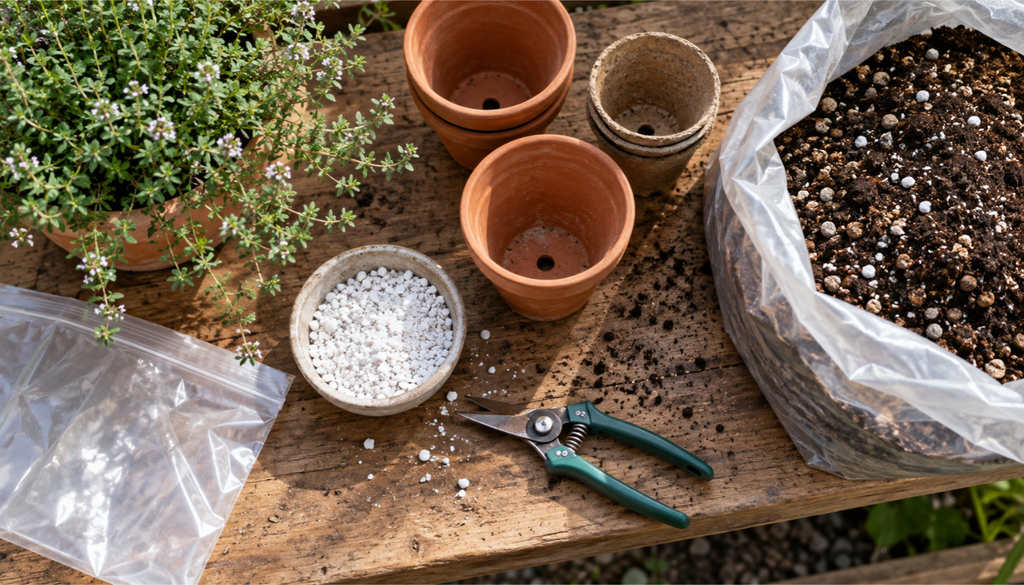
- A healthy, established thyme plant to take cuttings from
- Clean, sharp scissors or snips
- Small pots with drainage holes
- Free-draining compost mixed with grit or perlite
- Optional: rooting hormone powder
- A clear plastic bag or cover for humidity (optional)
Best Time for Growing Thyme From Cuttings
The Royal Horticultural Society (RHS) advises taking softwood cuttings from new growth in spring or early summer. You can also take semi-ripe cuttings, which come from firmer stems, in summer. Because new growth roots most easily, choose fresh, non-flowering shoots rather than old, woody stems.
Growing Thyme From Cuttings Step by Step
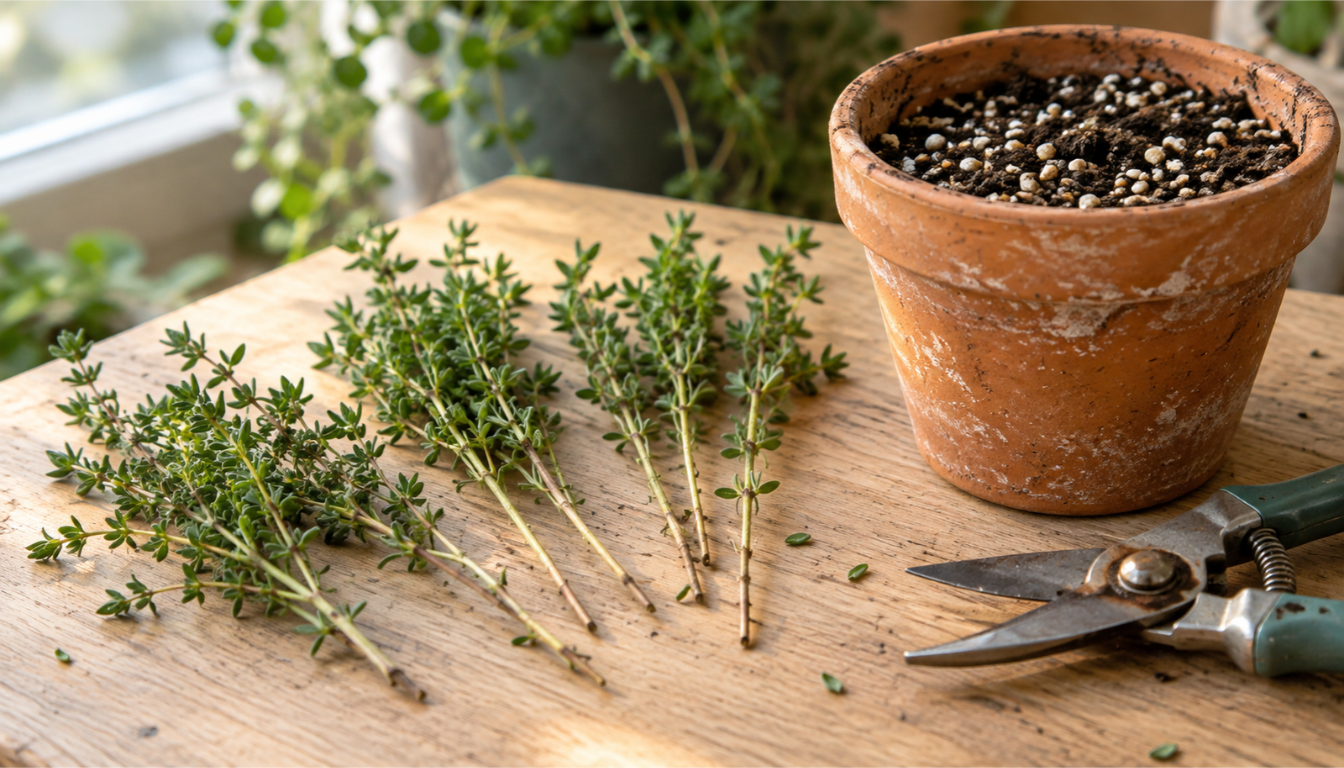
- First, choose a healthy shoot. Pick a strong stem with firm leaves and no signs of pests or disease.
- Next, cut a piece about 3 to 4 inches (8 to 10 cm) long. Cut just below a leaf node, which is the point where leaves grow from the stem.
- Then strip the leaves from the lower half of the cutting. Leave a few leaves at the top.
- If you like, dip the cut end in rooting hormone. It can help, but thyme often roots without it.
- After that, push the cutting into a small pot of free-draining compost. Bury it deep enough to cover the bare nodes.
- Water lightly, so the compost is just damp. Do not soak it.
- Finally, place the pot in a warm, bright spot out of harsh midday sun. A clear bag over the pot helps keep humidity up. Remove the bag now and then to let air in.
Roots usually form within a few weeks. To check, give the cutting a very gentle tug. If you feel resistance, roots have formed. If the cutting slides out, give it more time.
Rooting Thyme Cuttings in Water
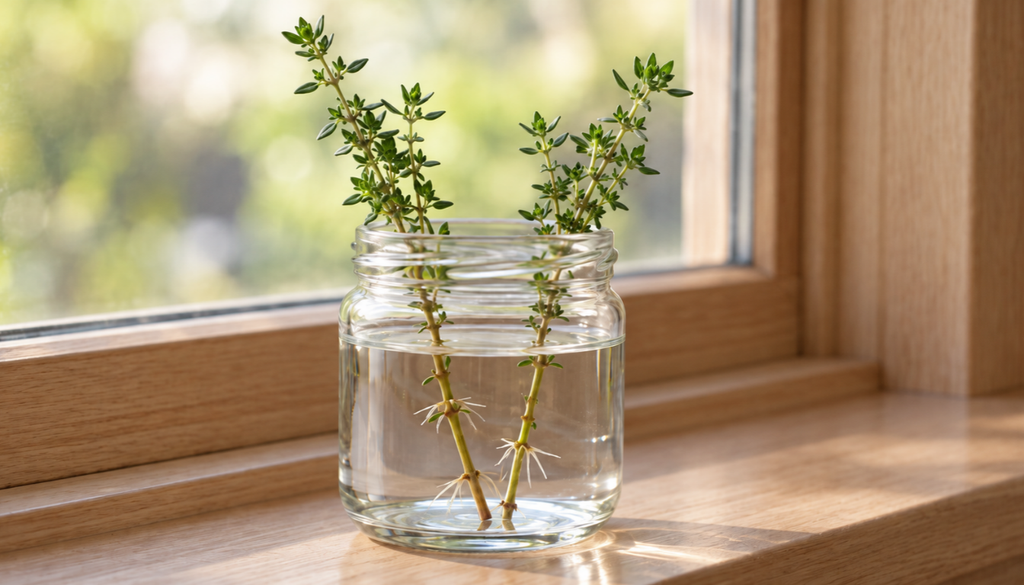
Some gardeners root thyme in water instead. It is easy to watch, but roots grown in water can be fragile when you pot them.
- Prepare the cutting as above, and remove all leaves that would sit below the water line.
- Place the cutting in a glass of water, so the bare nodes are under the surface and no leaves touch the water.
- Put the glass in a bright spot out of direct sun.
- Change the water every two to three days, so it stays fresh.
- When the roots are about half an inch (1 cm) long, pot the cutting in free-draining compost.
Caring for Thyme Cuttings
- Moisture. Keep the compost lightly damp until roots form. However, never let it become soggy, because wet compost causes rot.
- Light. Give plenty of bright light, but avoid harsh midday sun on young cuttings.
- Warmth. A warm room speeds up rooting.
- Hardening off. Before moving plants outdoors, harden them off. Do this by putting them outside for a few hours a day and gradually lengthening the time over a week or two.
Planting Out Your New Thyme
The RHS recommends planting from mid-spring to early summer, after hardening off indoor-raised plants. Choose a warm, sunny spot with light, well-drained soil. Space plants 8 to 12 inches (20 to 30 cm) apart.
If your soil is heavy or stays damp, especially in winter, grow thyme in a container or raised bed instead. Use a pot at least 6 inches (15 cm) wide and 4 inches (10 cm) deep, with plenty of drainage holes. A soil-based compost mixed with up to 25% horticultural grit works well. Most widely sold varieties withstand frost, but check before you buy. Less hardy types should grow in containers and move to a sheltered place for winter.
Once established, thyme is drought tolerant and rarely needs watering. Therefore, water newly planted thyme and container plants in hot, dry weather, and leave the rest alone.
Other Ways to Grow Thyme: Seed, Division and Layering
Cuttings are not the only option. Here is how the other methods compare, according to the RHS.
- From seed. Sow indoors in spring on moist, peat-free seed compost. Scatter the seed thinly and do not cover it. Keep it at 15 to 20°C (59 to 68°F). Germination takes about two weeks. Pot the seedlings on when they have several leaves, and plant them out once well rooted. Plants grown from seed can take about a year to be ready for harvesting. In addition, seed from named varieties may not match the parent plant.
- By division. Divide established plants in spring or autumn. This method suits creeping, mat-forming thymes.
- By layering. In spring or autumn, peg low stems into the soil so they root. Then pot up any stems that have rooted.
For this reason, cuttings are the best choice if you want an exact copy of a plant you already like. Seed is cheaper, but it is slower and less predictable.
Common Problems When Growing Thyme From Cuttings
- Rot. Wet compost or poor drainage causes root rot, which is the main risk for thyme. Use gritty, free-draining compost and water lightly.
- Damping off in seedlings. Seedlings are prone to this fungal problem. Use clean pots and fresh compost, and avoid overwatering.
- Slugs and snails. They may eat young shoots, so check plants regularly.
- Wilting cuttings. Cuttings often wilt at first. Make sure they have humidity and bright light without strong sun.
Before You Go – Grow Thyme from Cuttings
Growing thyme from cuttings is simple, affordable and reliable. Take softwood cuttings in spring or early summer, root them in gritty compost, and keep them lightly damp. Then plant them out in a sunny, well-drained spot and water only when needed. With a little patience, one plant soon becomes many.
References – Growing Thyme From Cuttings
Little Herb Encyclopedia, by Jack Ritchason; N.D., Woodland Publishing Incorporated, 1995
The Ultimate Healing System, Course Manual, Copyright 1985, Don Lepore
Planetary Herbology, Michael Tierra, C.A., N.D., Lotus Press, 1988
Handbook of Medicinal Herbs, by James A. Duke, Pub. CRP Second Edition 2007
The Complete Medicinal Herbal, by Penelope Ody, Published by Dorling Kindersley
Related Article
Home Remedies for Cold and Cough
Frequently Asked Questions – Growing Thyme From Cuttings
When is the best time to take thyme cuttings?
Take softwood cuttings in spring or early summer, according to the RHS. Semi-ripe cuttings work in summer.
How long do thyme cuttings take to root?
Roots usually form within a few weeks, although the time varies with warmth and light.
Can I root thyme cuttings in water?
Yes. Change the water every two to three days, and pot the cutting when the roots are about half an inch long.
Do I need rooting hormone?
No. It can help, but thyme often roots without it.
Can I grow thyme from store-bought stems?
It can work, but results vary. Choose fresh, healthy stems and follow the same steps.
How long does thyme take to grow from seed?
The RHS says seed germinates in about two weeks, and plants can take about a year to be ready to harvest.
Should I cover thyme seed with soil?
No. The RHS advises scattering the seed thinly without covering it.
Is thyme easy to grow indoors?
Thyme needs plenty of light and free-draining compost. A bright windowsill suits it best.