
The Herb Prof Team researches and writes our herbal guides, drawing on published research, traditional herbal references, and hands-on growing experience.
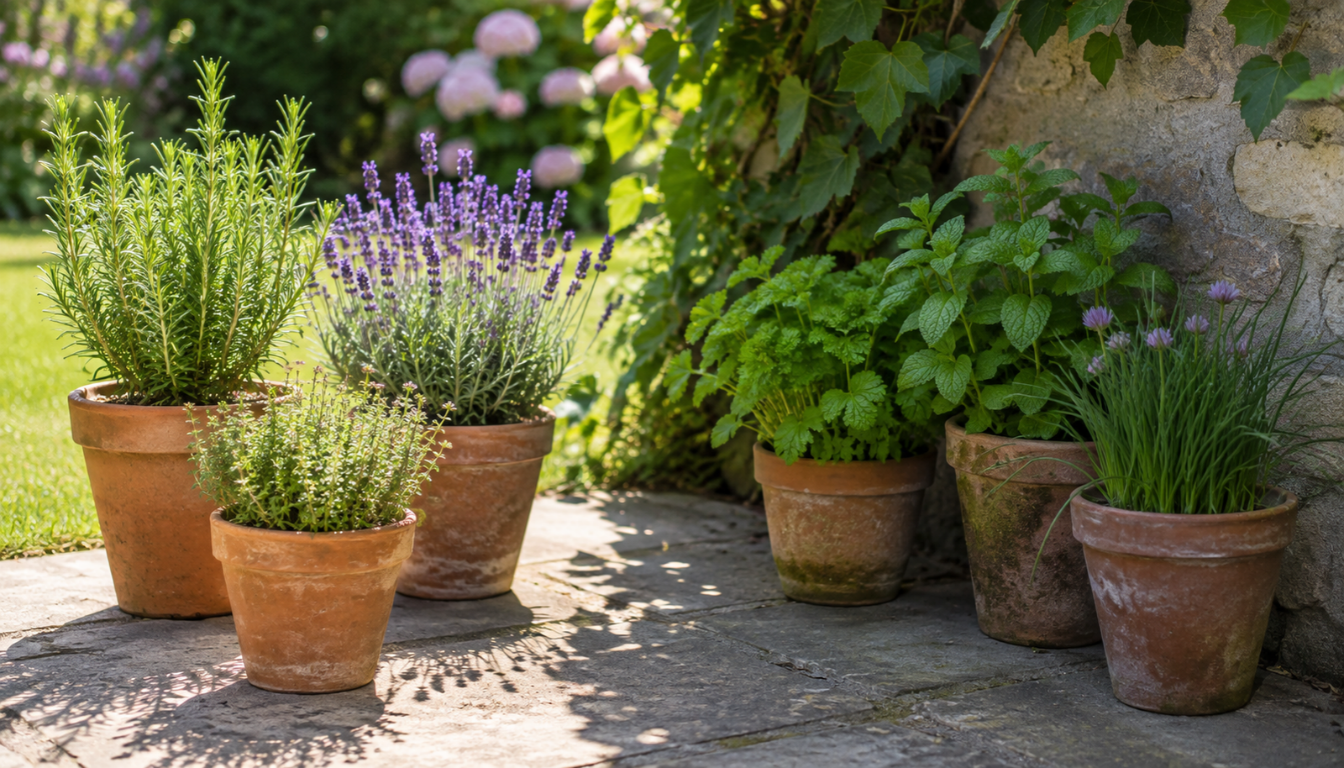
Herbs for sun and shade fall into two groups. Rosemary, thyme, oregano, lavender and dill want full sun, which means six or more hours of direct light a day. Second, parsley, chives, mint and a few others tolerate part shade. However, no herb is productive in full shade, according to Iowa State University Extension.
This guide shows how much light each herb needs and what shade does to growth and flavour. It also covers light indoors. Where extension sources disagree, we show both.
How Much Light Counts as Sun, Part Shade and Shade
Iowa State University Extension gives these definitions for edible plants:
- Full sun: at least 6 hours of direct sunlight a day.
- Partial sun: 4 to 6 hours. Some edibles grow with moderate success here.
- Heavy shade: under 2 hours. It says no vegetable, fruit or herb will be productive in full shade.
However, its herb table lists mint as the only herb that also tolerates moderate shade, which it defines as 2 to 4 hours of direct sun.
Herbs That Need Full Sun
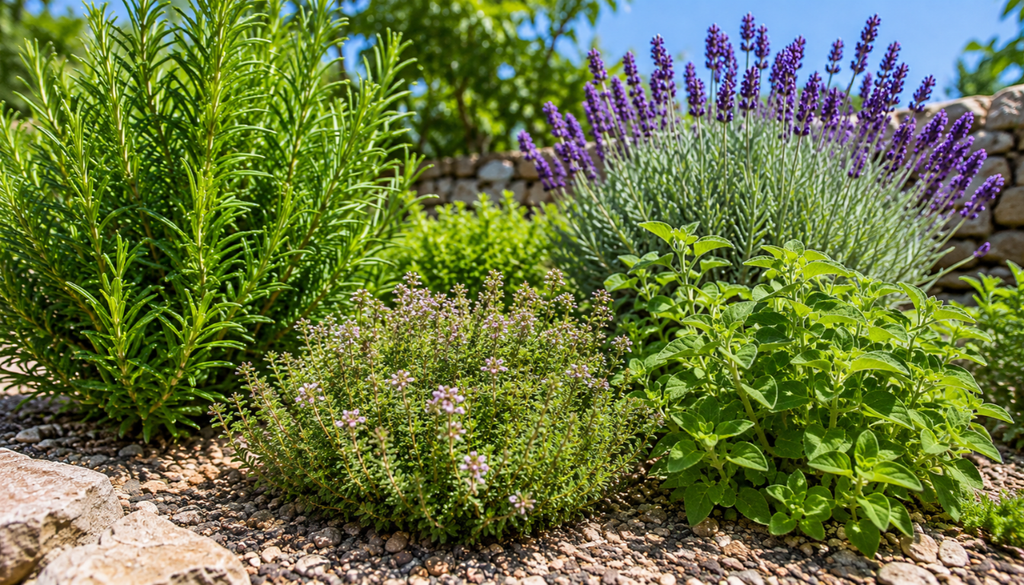
These herbs do best with six or more hours of direct sun:
- Rosemary. Washington State University (WSU) Extension says sun and good drainage are essential. Penn State Extension also lists rosemary as a direct-sun herb.
- Thyme and bay. Penn State lists both as direct-sun herbs. Bay is a woody herb, and an older version of this page called it a shade herb, which Penn State does not support.
- Oregano. WSU lists it for full sun.
- Lavender. University of California IPM says lavender does best with “full sun for 6 hours or more each day.”
- Dill. WSU lists dill for full sun, and University of Minnesota Extension says to give it six to eight hours. Dill is an annual, so you sow it again each year. See our how to grow dill guide.
Herbs That Tolerate Part Shade
This table shows what each source says. Where they disagree, the sources are named.
| Herb | What the sources say |
|---|---|
| Basil | WSU: full sun. Iowa State: tolerates light shade (4 to 6 hours of direct sun). |
| Cilantro (coriander) | WSU: full sun. Iowa State: light shade. Penn State: 2 to 6 hours of direct sun indoors. |
| Chervil | Iowa State: light shade. |
| Chives | WSU: sunny or lightly shaded. Penn State: 2 to 6 hours indoors. |
| Lemon balm | Penn State: 2 to 6 hours indoors. |
| Mint | Iowa State: tolerates moderate shade (2 to 4 hours). WSU: part shade. |
| Parsley | WSU and Iowa State: part shade. |
| Sage | WSU: full sun. Iowa State: light shade. |
| Tarragon | Iowa State: light shade. |
Our reading: where sources disagree, the lower number is the least the herb will put up with, not the amount it prefers. So give basil, sage and cilantro as much sun as you can. Meanwhile, put parsley, mint and chives in the shadier spots.
What Shade Does to Herbs
Iowa State says plants in shade take longer to produce a crop, and the flavour may be weaker. Leafy crops, which includes herbs harvested for their leaves, are more productive in part shade than plants grown for flowers or fruit.
Indoors, Penn State says too little light makes herbs thin and spindly, with smaller leaves and weaker aroma. It advises rotating the pots often so every side gets light.
Herbs for Sun and Shade Indoors
Penn State Extension says most herbs need 6 hours of direct sunlight, so it recommends a window with southern exposure. For example, it says lemon balm, chives and cilantro only need 2 to 6 hours.
If you have no sunny window, Penn State describes this lighting setup: place herbs 6 to 12 inches from two 40-watt cool white fluorescent bulbs for 14 to 16 hours a day. However, the page covers fluorescent bulbs only, so check the maker’s advice if you use LED lights.
Soil, Water and Feeding
Mediterranean herbs. WSU says sage prefers dry, well-drained soil, and rosemary, thyme and oregano need good drainage. In addition, WSU says most established perennial herbs rarely need extra water once mulched. For lavender, UC IPM recommends well-drained soil with a pH of 6.5 to 7.5. It also says mature lavender does not require fertiliser.
Moisture-loving herbs. By contrast, WSU says basil needs rich soil and a warm, sunny spot, and mint likes moist soil. It advises growing mint in a container because it spreads.
In pots indoors. Penn State says bay, marjoram, oregano, sage, thyme and rosemary should dry out slightly between waterings, while basil should never dry out completely. For fertiliser it advises a low dose of water-soluble fertiliser every two weeks. However, it says feeding more often may hurt flavour and aroma.
Skip the gravel layer. University of California Cooperative Extension says adding gravel to the bottom of a container does not improve drainage, and it can trap water above it. Instead, fill the pot with well-drained potting mix and keep the drain hole open.
Before You Go – Herbs for Sun and Shade
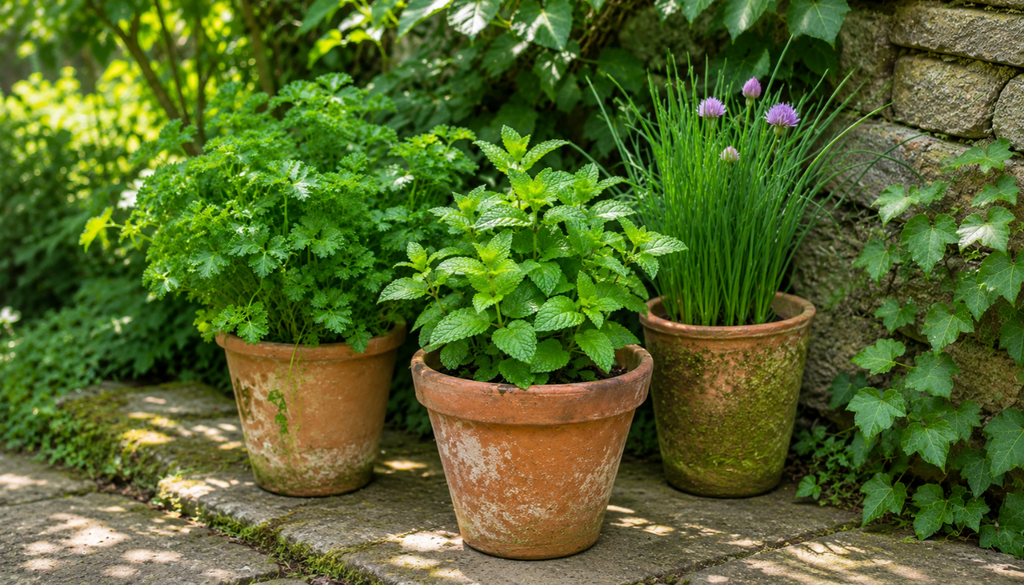
Most herbs want about six hours of direct sun, and rosemary, thyme, oregano, lavender and dill are the clearest examples. However, mint, parsley and chives cope with part shade. In shade, expect slower growth and weaker flavour. Indoors, therefore, a sunny window or grow lights matter more than the choice of herb.
References – Herbs for Sun and Shade
Little Herb Encyclopedia, by Jack Ritchason; N.D., Woodland Publishing Incorporated, 1995
The Ultimate Healing System, Course Manual, Copyright 1985, Don Lepore
Planetary Herbology, Michael Tierra, C.A., N.D., Lotus Press, 1988
Handbook of Medicinal Herbs, by James A. Duke, Pub. CRP Second Edition 2007
The Complete Medicinal Herbal, by Penelope Ody, Published by Dorling Kindersley
Sources
- Iowa State University Extension and Outreach, Growing Edible Plants in Shady Areas
- Washington State University Extension, King County, Tip Sheet #8: Herbs
- Penn State Extension, Growing Herbs Indoors
- University of California IPM, Cultural Tips for Growing Lavender
- University of California Cooperative Extension, The Stanislaus Sprout
- University of Minnesota Extension, Growing Dill in Home Gardens
Related Articles
Collecting Rainwater Without Gutters: An Efficient Guide
Herbs That Grow In Sun: A Guide to Sun-Loving Plants
Frequently Asked Questions – Herbs for Sun and Shade
Can herbs grow without any sunlight?
No. Iowa State says no herb will be productive in full shade. Indoors, therefore, herbs need a bright window or grow lights.
How many hours of sun do herbs need?
Most need about 6 hours of direct sun, according to Iowa State and Penn State. However, mint, parsley, chives, lemon balm and cilantro can manage with less, although growth is slower.
Do shaded herbs need more fertiliser?
None of the sources we checked say so. Instead, Penn State advises a low dose every two weeks for indoor herbs, and says more may hurt flavour.
Is dill a sun or shade herb?
Sun. WSU lists it for full sun, and Minnesota says six to eight hours.
What herbs grow indoors?
Penn State Extension says most herbs need about 6 hours of direct sun indoors. However, lemon balm, chives and cilantro only need 2 to 6 hours, so they suit lower-light windows. Bay, rosemary and thyme do best in direct sun, so give them your sunniest window or a grow light.
Which herbs are best in shade?
Mint, parsley and chives are the most consistent in the sources. In addition, chervil and tarragon appear in Iowa State’s light-shade list.