

The Herb Prof Team researches and writes our herbal guides, drawing on published research, traditional herbal references, and hands-on growing experience.
When you grow healthy and productive tomato plants, fertilization plays a key role. But how often should tomato plants be fertilized? Fertilizer delivers essential nutrients that help plants grow strong and produce a bountiful harvest. Determining the right frequency can feel challenging when you want optimal growth and yield.
As an experienced gardener, I learned that the frequency of tomato plant fertilization changes with several factors, including the type of fertilizer, the soil quality, and the growth stage of the plants. You need to understand these factors to set the best fertilization schedule for your tomato plants.
In this article, I share my knowledge and expertise on how often to fertilize tomato plants. I also provide tips for choosing the right type of fertilizer and applying it correctly so your tomato plants thrive. By following these guidelines, you grow healthy plants and enjoy an abundant tomato harvest.
Understanding Tomato Plant Nutrition
It’s important to understand the nutritional needs of tomato plants in order to grow healthy and productive plants. In this section, I will discuss the essential nutrients for tomato growth, soil health and nutrient availability, and the role of organic matter in fertilization.
Essential Nutrients for Tomato Growth
Tomato plants require a balance of macronutrients and micronutrients to grow and produce fruit. The primary macronutrients are nitrogen, phosphorus, and potassium. These nutrients are essential for plant growth, photosynthesis, and fruit development. Micronutrients, such as calcium, magnesium, and iron, are also important for plant growth and development.
Soil Health and Nutrient Availability
Soil health determines nutrient availability to plants. Healthy soil shows good structure, adequate drainage, and a balanced pH. Use soil testing to measure nutrient content and pH. Maintain a pH range of 6.0 to 6.8 to ensure optimal nutrient availability for tomato plants.
The Role of Organic Matter in Fertilization
Organic matter plays an important role in soil fertility and nutrient availability to plants. Organic matter, such as compost, manure, and cover crops, improves soil structure, water-holding capacity, and nutrient retention. It also provides a slow-release source of nutrients to plants. Incorporating organic matter into your soil is an important step in maintaining soil health and fertility.
Tomato plants require a balance of macronutrients and micronutrients for optimal growth and fruit production. Soil health and nutrient availability are critical factors in tomato plant nutrition, and organic matter plays an important role in soil fertility. By understanding these principles, you can provide your tomato plants with the nutrients they need to thrive.
Types of Fertilizers for Tomatoes
I understand the importance of fertilizing tomato plants to ensure a healthy and bountiful harvest. However, choosing the right fertilizer can be a daunting task, especially with the variety of options available in the market. In this section, I will discuss the different types of fertilizers for tomatoes and their benefits.
Comparing Organic and Synthetic Fertilizers
Organic fertilizers come from natural sources such as compost, bone meal, blood meal, and fish emulsion. They release nutrients slowly and improve soil structure and fertility over time. Compared to synthetic fertilizers, organic fertilizers burn plants less often and avoid leaching harmful chemicals into the soil. However, they contain lower nutrient concentrations and may not give plants an immediate growth boost.
Synthetic fertilizers use chemical compounds and provide an immediate, concentrated source of nutrients. Manufacturers offer them in various NPK ratios and formulations, which makes it easier to match the fertilizer to the specific needs of tomato plants. However, synthetic fertilizers can harm the environment and degrade soil over time.
Understanding NPK Ratios and Fertilizer Formulations – How Often Should Tomato Plants Be Fertilized?
When choosing a fertilizer for your tomato plants, it is essential to understand the NPK ratio, which represents the percentage of nitrogen (N), phosphorus (P), and potassium (K) in the fertilizer. Different stages of plant growth require different ratios of NPK. For example, a fertilizer with a high nitrogen content is suitable for promoting vegetative growth, while a fertilizer with a high phosphorus content is ideal for promoting root and flower development.
Fertilizer formulations also play a crucial role in determining the effectiveness of the fertilizer. Slow-release fertilizers release nutrients over an extended period, providing a steady supply of nutrients to the plants. Water-soluble fertilizers, on the other hand, dissolve quickly in water and provide an immediate boost to plant growth.
The Benefits of Slow-Release vs. Water-Soluble Fertilizers
Slow-release fertilizers are ideal for gardeners who do not want to fertilize frequently. They release nutrients over a more extended period, reducing the risk of over-fertilization and nutrient leaching. Slow-release fertilizers also improve soil structure and fertility over time, making them a sustainable option for long-term gardening.
Water-soluble fertilizers, on the other hand, are ideal for gardeners who want to see immediate results. They dissolve quickly in water and provide an immediate boost to plant growth. However, they require more frequent fertilization, increasing the risk of over-fertilization and nutrient leaching.
Choosing the right fertilizer for your tomato plants can make a significant difference in their growth and yield. Organic fertilizers are a sustainable option that improves soil structure and fertility over time, while synthetic fertilizers provide an immediate and concentrated source of nutrients. Understanding NPK ratios and fertilizer formulations can help you tailor the fertilizer to the specific needs of your tomato plants. Slow-release fertilizers are ideal for long-term gardening, while water-soluble fertilizers provide an immediate boost to plant growth.
Fertilizing Schedule for Tomato Plants – How Often Should Tomato Plants Be Fertilized?
I know that fertilizing tomato plants is an essential part of growing healthy and productive plants. In this section, I will explain the fertilization schedule for tomato plants, including when and how often to fertilize.
Fertilizing at Planting Time
When planting tomato seedlings, it is important to give them a good start by adding fertilizer to the soil. I recommend using a balanced fertilizer with equal amounts of nitrogen, phosphorus, and potassium, such as a 10-10-10 or 8-8-8 blend. Mix the fertilizer into the soil before planting, following the manufacturer’s instructions. This will provide the necessary nutrients for the young plants to grow strong roots and healthy foliage.
Feeding During the Growing Season – How Often Should Tomato Plants Be Fertilized?
Once the tomato plants start to grow, they will need regular feeding to ensure they continue to thrive. I recommend fertilizing every two to three weeks during the growing season, from spring until fall. You can use the same balanced fertilizer you used at planting time or switch to a fertilizer with a higher nitrogen content, such as a 20-10-10 blend. Nitrogen is essential for leafy growth, which is important during the vegetative stage of tomato plant growth.
Adjusting Fertilization for Flowering and Fruit Development
As tomato plants mature and start to flower, it is important to adjust the fertilization routine to promote fruit development. Too much nitrogen can lead to excessive vegetative growth and fewer fruits. I recommend switching to a fertilizer with a lower nitrogen content and a higher phosphorus and potassium content, such as a 5-10-10 blend. Phosphorus and potassium are essential for flower and fruit development.
Fertilizing tomato plants is crucial for their growth and productivity. By following a regular fertilization schedule and adjusting the fertilizer to the plant’s growth stage, you can ensure healthy and abundant tomato harvests.
Application Methods for Tomato Fertilizers – How Often Should Tomato Plants Be Fertilized?
I know that fertilizing is an essential part of the process to ensure a healthy and bountiful harvest. However, it’s important to know the right way to apply fertilizers to avoid over-fertilization, which can lead to negative consequences such as stunted growth and reduced yield. In this section, I will outline the various methods of applying tomato fertilizers.
How Often Should Tomato Plants Be Fertilized? Side-Dressing and Surface Applications
Surface applications and side-dressing are two common methods of applying fertilizers to tomato plants. Surface applications involve spreading the fertilizer on the soil surface around the plant, while side-dressing involves placing the fertilizer in a shallow trench or furrow beside the plant.
When using surface applications, it’s important to avoid getting the fertilizer too close to the plant stem, as this can burn the plant. A good rule of thumb is to apply the fertilizer at least 6 inches away from the stem. Side-dressing is typically done once or twice during the growing season, and the fertilizer is placed about 2-3 inches deep and 6-8 inches away from the plant stem.
Incorporating Fertilizers into the Soil
Another method of applying fertilizers is to incorporate them into the soil before planting the tomato seedlings. This can be done by mixing the fertilizer into the soil in the planting hole or by broadcasting it over the entire planting area and then tilling it into the soil.
When incorporating fertilizers into the soil, it’s important to follow the recommended application rates and to avoid over-fertilizing. Over-fertilization can lead to nutrient imbalances and can harm the plant.
Foliar Feeding and Its Effectiveness – How Often Should Tomato Plants Be Fertilized?
Foliar feeding means applying fertilizer directly to the leaves of the tomato plant. This method provides nutrients quickly, but you should use it sparingly and only as a supplement to other fertilization methods.
When you use foliar feeding, dilute the fertilizer solution and apply it early in the morning or late in the evening when the leaves stay cooler and avoid burning in the sun. Keep the fertilizer solution off the fruit to prevent damage.
There are several methods of applying fertilizers to tomato plants, and each method has its own advantages and disadvantages. By following the recommended application rates and using the right method for your specific situation, you can ensure that your tomato plants receive the nutrients they need to grow healthy and strong.
Recognizing Signs of Improper Fertilization
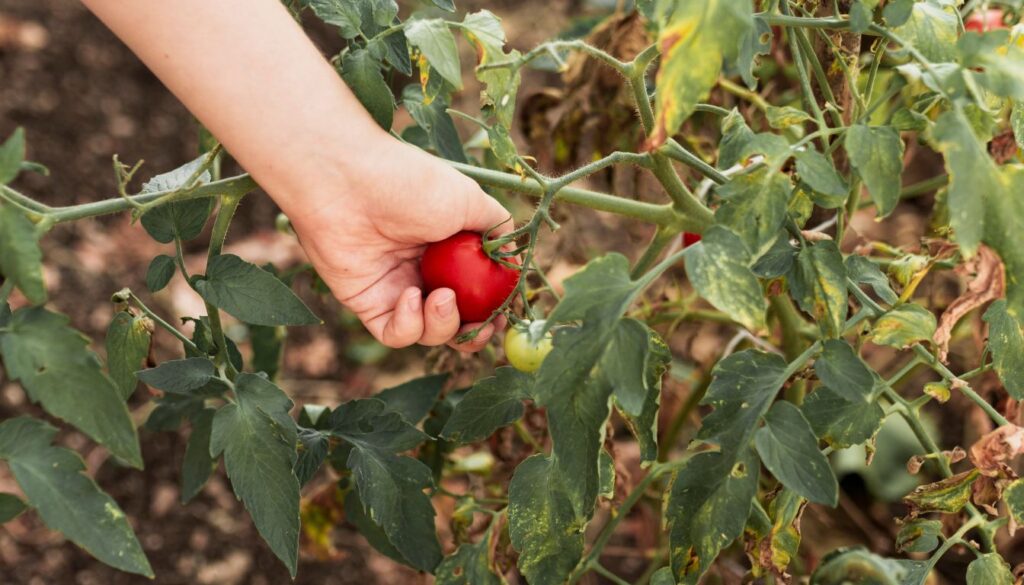
As a tomato plant grows, it needs a steady supply of nutrients to produce healthy foliage, flowers, and fruits. However, improper fertilization can lead to nutrient deficiencies, toxicities, and other problems that can stunt growth, reduce yields, and even kill the plant. In this section, I will discuss how to recognize signs of improper fertilization, including nutrient deficiencies and toxicities, the impact of over-fertilization on tomato plants, and how to adjust fertilization to avoid common problems.
Identifying Nutrient Deficiencies and Toxicities – How Often Should Tomato Plants Be Fertilized?
Nutrient deficiencies and toxicities can cause a wide range of symptoms in tomato plants, including yellowing leaves, stunted growth, blossom end rot, and other problems. For example, a lack of nitrogen can cause yellowing of the lower leaves, while an excess of nitrogen can lead to excessive foliage growth at the expense of fruit production. Similarly, a deficiency of calcium can cause blossom end rot, while an excess of calcium can lead to leaf tip burn and other problems.
To identify nutrient deficiencies and toxicities, it is important to monitor your tomato plants regularly and keep track of any changes in growth, color, or other factors. You can also use soil tests and leaf analysis to identify specific nutrient imbalances and adjust your fertilization accordingly.
The Impact of Over-Fertilization on Tomato Plants
Over-fertilization can be just as damaging to tomato plants as under-fertilization. When you apply too much fertilizer, the excess nutrients can build up in the soil and cause a range of problems, including leaf burn, root damage, and even plant death. Over-fertilization can also lead to nutrient imbalances, which can cause a range of symptoms, such as yellowing leaves, stunted growth, and poor fruit development.
To avoid over-fertilization, it is important to follow the recommended fertilization rates and schedules for your specific type of tomato plant. You should also monitor your plants regularly and adjust your fertilization as needed based on the plant’s growth and nutrient needs.
To avoid common problems associated with improper fertilization, it is important to adjust your fertilization based on the specific needs of your tomato plants. This may involve using different types of fertilizers, adjusting the timing and frequency of fertilization, or adjusting the pH of your soil to ensure optimal nutrient uptake.
Some common tips for adjusting fertilization include:
- Using slow-release fertilizers to provide a steady supply of nutrients over time
- Applying fertilizers in small amounts and at regular intervals to avoid nutrient build-up
- Adjusting the pH of your soil to ensure optimal nutrient uptake
- Using organic fertilizers to improve soil health and reduce the risk of nutrient imbalances
By following these tips and monitoring your tomato plants regularly, you can avoid common problems associated with improper fertilization and ensure healthy growth and high yields.
Special Considerations for Tomato Fertilization
It’s also important to understand that tomato plants have unique fertilization needs that require special consideration. In this section, I will discuss some important considerations for fertilizing tomato plants, including fertilizing tomatoes in containers and pots, using homemade fertilizers and natural amendments, and the role of compost teas and other liquid solutions.
Fertilizing Tomatoes in Containers and Pots
If you’re growing tomatoes in containers or pots, it’s important to understand that these plants have different fertilization needs than those grown in the ground. Container-grown tomatoes require more frequent fertilization because the nutrients in the soil are quickly depleted. As a rule of thumb, you should fertilize your container-grown tomatoes every two weeks using a water-soluble fertilizer. During the peak of the growing season, you may need to fertilize more frequently.
Using Homemade Fertilizers and Natural Amendments
Homemade tomato fertilizers and natural amendments can be a great way to provide your plants with the nutrients they need while avoiding the use of synthetic fertilizers. Some popular natural amendments for tomato plants include banana peels, Epsom salt, and wood ash. Banana peels are a great source of potassium, which is essential for fruit production. Epsom salt is rich in magnesium, which is important for chlorophyll production. Wood ash is high in potassium and other micronutrients that are beneficial for plant growth.
The Role of Compost Teas and Other Liquid Solutions
Compost teas and other liquid solutions can be a great way to provide your tomato plants with a quick boost of nutrients. Compost tea is made by steeping compost in water and then applying the resulting liquid to your plants. This liquid is rich in beneficial microorganisms that can help improve soil health and plant growth. Other liquid solutions, such as fish emulsion and seaweed extract, can also be beneficial for tomato plants.
Fertilizing tomato plants requires special consideration and attention to detail. By understanding the unique needs of your plants and providing them with the right nutrients at the right time, you can help ensure a successful harvest.
Maximizing Tomato Yield and Quality – How Often Should Tomato Plants Be Fertilized?
As a tomato grower, I am always looking for ways to maximize my yield and enhance the flavor and nutritional value of my tomatoes. One of the key factors that can significantly affect the quality and quantity of tomato fruit is fertilization.
Optimizing Fertilization for Bumper Crops
To achieve a bumper crop of tomatoes, it is important to provide the plants with the right amount and type of fertilizer at the right time. According to The Spruce, a balanced fertilizer such as 5-5-5 or 5-10-5 is ideal for tomato plants. I prefer to use organic fertilizers such as compost, fish emulsion, and bone meal, which provide a slow-release source of nutrients to the plants.
It is recommended to fertilize tomato plants at least twice during the growing season. The first application should be done when transplanting the seedlings into the garden, and the second application should be done when the first fruits appear on the plant. For heavy feeders like tomatoes, it may be necessary to fertilize more frequently during the peak of the growing season.
Enhancing Tomato Flavor and Nutritional Value – How Often Should Tomato Plants Be Fertilized?
In addition to maximizing yield, fertilization also impacts the flavor and nutritional value of tomato fruit. According to Gardening Chores, over-fertilization can cause tomatoes to become bland and watery, while under-fertilization can result in small, tasteless fruit.
To enhance the flavor and nutritional value of my tomatoes, I use organic fertilizers that contain micronutrients such as calcium, magnesium, and sulfur. These micronutrients play an essential role in healthy plant growth and improve the flavor, texture, and nutrient content of tomato fruit.
Fertilization Strategies for Disease Resistance
Another important benefit of fertilization is disease resistance. Healthy plants that receive adequate fertilization are less susceptible to diseases such as early blight and blossom end rot.
To promote disease resistance in tomato plants, I prefer to use organic fertilizers that contain beneficial microorganisms such as mycorrhizae and beneficial bacteria. These microorganisms can improve soil health, increase nutrient uptake, and enhance disease resistance in tomato plants.
Fertilization is a critical factor in maximizing tomato yield and quality. By optimizing fertilization for bumper crops, enhancing tomato flavor and nutritional value, and promoting disease resistance, tomato growers can achieve healthy plants and high-quality fruit.
Before You Go – Fertilizing Tomato Plants

Fertilizing tomato plants is key to growing strong vines and producing flavorful, abundant fruit. By choosing the right fertilizer and applying it at the correct stages of growth, you give your tomatoes the nutrients they need to thrive.
Before you go, remember to test your soil, follow a feeding schedule, and avoid over-fertilizing, which can lead to lush foliage but fewer tomatoes. With a little planning and care, your tomato plants will reward you with a harvest worth the effort.
Don’t forget to add theherbprof.com homepage to your favourites so you don’t miss out on future articles!
References – How Often Should Tomato Plants Be Fertilized?
Little Herb Encyclopedia, by Jack Ritchason; N.D., Woodland Publishing Incorporated, 1995
The Ultimate Healing System, Course Manual, Copyright 1985, Don Lepore
Planetary Herbology, Michael Tierra, C.A., N.D., Lotus Press, 1988
Handbook of Medicinal Herbs, by James A. Duke, Pub. CRP Second Edition 2007
The Complete Medicinal Herbal, by Penelope Ody, Published by Dorling Kindersley
Check the Following Articles
How to Trim a Plum Tree: The Mega Guide
How to Save Tomato Seeds for Next Year?
A Comprehensive Guide – How to Water Cyclamen Plants
Frequently Asked Questions – How Often Should Tomato Plants Be Fertilized?
What is the ideal frequency for fertilizing tomato plants in the growing season?
Tomato plants need regular fertilization throughout the growing season. As a general rule of thumb, fertilize tomato plants every two to three weeks during the growing season. The frequency changes depending on the type of fertilizer you use. Slow-release fertilizers feed the plant for a longer period, so you apply them less often.
Can over-fertilizing affect tomato plant health, and how can it be identified?
Over-fertilizing harms tomato plant health. It causes excessive growth, poor fruit quality, and even plant damage. Look for signs such as yellowing leaves, stunted growth, and burnt leaf edges. When you notice these signs, adjust your fertilization schedule immediately.
What are the signs that tomato plants require additional fertilization?
Tomato plants need many nutrients to grow properly. If you skip fertilization, your plants produce a small harvest. Watch for signs such as slow growth, yellowing leaves, and small fruit size. When you see these signs, fertilize your plants right away.
How does the fertilization schedule differ for tomato plants grown in pots versus in the ground?
Tomato plants grown in pots demand more frequent fertilization than those grown in the ground. Nutrients in potting soil deplete faster than in garden soil. As a general rule of thumb, fertilize tomato plants in pots every two weeks during the growing season.
What are the recommended fertilizer ratios for optimal tomato growth?
Tomatoes grow best with a balanced fertilizer that contains nitrogen, phosphorous, and potassium. Use a ratio of 5-10-10 or 10-10-10 for optimal growth. Adjust the specific ratio depending on your soil conditions and the growth stage of the tomato plant.
How should the fertilization of tomato plants be adjusted for organic gardening practices?
Organic gardening relies on natural fertilizers such as compost, manure, and bone meal. These fertilizers release nutrients slowly and improve soil health. Add compost to the soil before planting or apply a liquid organic fertilizer every two to three weeks during the growing season.