
The Herb Prof Team researches and writes our herbal guides, drawing on published research, traditional herbal references, and hands-on growing experience.
How to grow and care for lemongrass is a topic that comes up often among home gardeners. First, what is Lemongrass? Lemongrass is a tropical plant native to Southeast Asia. It’s a popular herb widely used in Asian cuisine, especially in Thai and Vietnamese dishes. It has a citrusy and lemony flavor, making it a great addition to soups, curries, and stir-fries.
In addition to its culinary uses, lemongrass has many health benefits, such as reducing inflammation, relieving anxiety, and improving digestion. If you are interested in growing lemongrass, you will be happy to know that it is relatively easy to grow. Lemongrass can be grown from seeds, but it is much easier to propagate from stalks.
To do this, simply cut off the top part of a lemongrass stalk and place it in a glass of water. After a few days, roots will start to grow, and you can transfer the stalk to a pot filled with soil. It is important to note that lemongrass needs warm temperatures and plenty of sunlight to grow. If you live in a colder climate, you may need to grow lemongrass indoors or in a greenhouse. With the right care and conditions, you can have a steady supply of fresh lemongrass to use in your cooking or for its many health benefits.
Understanding Lemongrass: How to Grow?
Lemongrass, scientifically known as Cymbopogon citratus or Cymbopogon flexuosus, grows as a tropical grass in the Poaceae family. Gardeners and cooks use it in cooking, tea, fragrance, and soap making because of its strong citrus flavor and aroma.
Botanical Profile
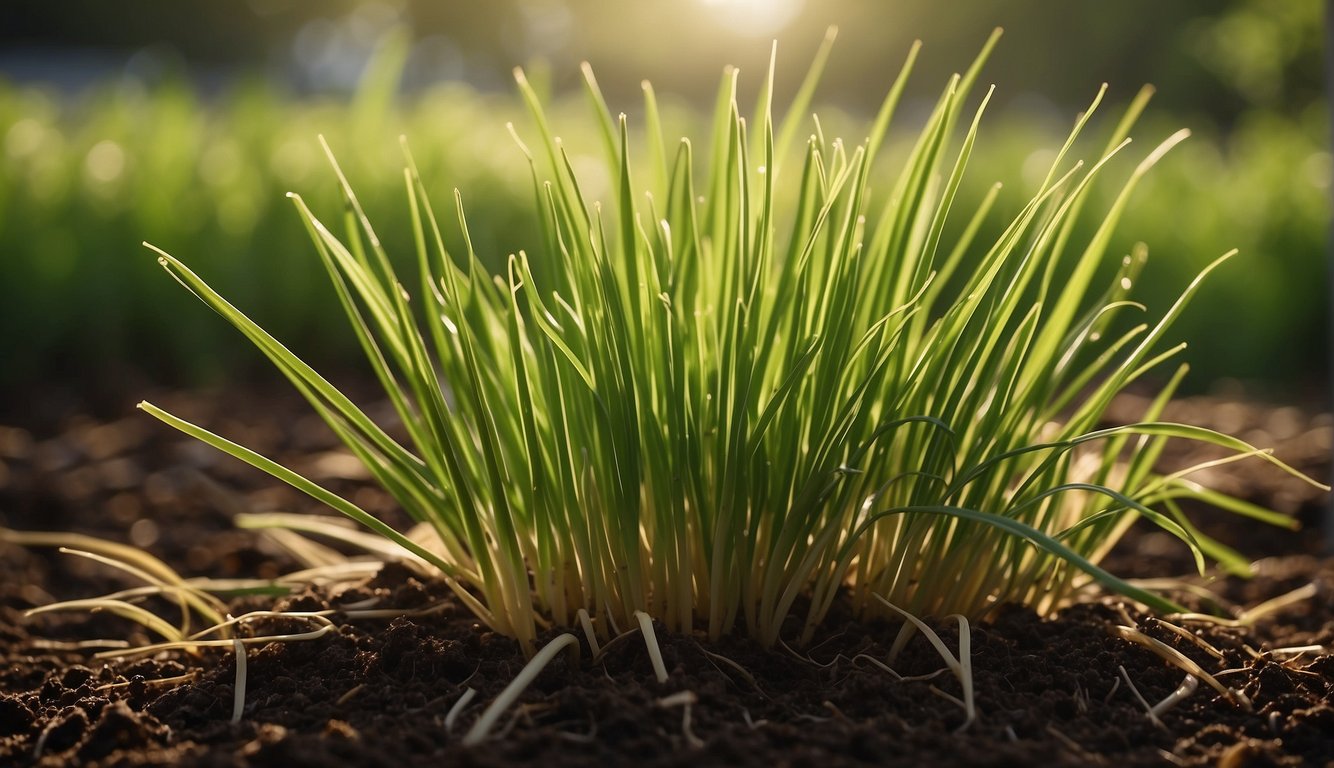
Lemongrass grows as a perennial plant that reaches up to 6 feet tall. Its long, narrow leaves show a gray-green color, and its bulbous base adds flavor in culinary dishes. Growers extract their fragrant oil through steam distillation.
Varieties of Lemongrass
There are two main varieties of lemongrass: East Indian lemongrass and West Indian lemongrass.
East Indian lemongrass, or Cymbopogon flexuosus, is a tall, perennial grass that is native to India and Sri Lanka. West Indian lemongrass, or Cymbopogon citratus, is a shorter, more tender grass that is native to tropical regions of Asia and Africa.
Another variety of lemongrass is citronella grass, which is also a member of the Cymbopogon genus. Citronella grass is often used to make citronella oil, which is used as a natural insect repellent.
Health Benefits and Uses
Lemongrass offers several health benefits and practical uses. People brew it into tea to calm the body and aid digestion.
Aromatherapists use lemongrass oil to promote relaxation and ease stress. Cooks also add lemongrass to seafood, poultry, and vegetable dishes, especially in Thai, Vietnamese, and Indian cuisine, to enhance flavor.
Cultivation Requirements – How to Grow and Care for Lemongrass
Climate and Temperature
Lemongrass is a tropical plant that thrives in full sun and heat. It prefers warm climates with temperatures ranging from 70°F to 85°F (21°C to 29°C). It is hardy in USDA zones 9 to 11 and cannot tolerate frost or cold temperatures.
Soil Preferences
Lemongrass prefers well-draining, rich, and loamy soil with a pH range of 6.0 to 7.5. It can also grow in clay soil as long as it is well-draining. It is important to keep the soil moist but not waterlogged to prevent root rot.
Watering and Humidity
Lemongrass requires regular watering, especially during the growing season. It prefers moist soil and can tolerate some rainfall. In areas with low humidity, it is important to mist the leaves with water to increase humidity levels around the plant.
Planting Lemongrass
Growing lemongrass is a rewarding experience that can provide a fresh and citrusy flavor to your dishes. Here are some tips on how to plant lemongrass successfully.
Propagation Methods – How to Grow and Care for Lemongrass
Lemongrass can be propagated through seeds, division, or cuttings. Seeds can be started 3 weeks indoors before the final frost, and cuttings can be taken from established plants. Division is another option, where the plant is divided into smaller sections and replanted.
Planting in Gardens
When planting lemongrass in a garden, choose a sunny spot with well-drained soil. Add compost and fertilizer to the soil before planting. Lemongrass should be spaced 3-4 feet apart to allow room for growth. Water the plants regularly and deeply in the absence of rain.
Container and Indoor Planting
Lemongrass can also be grown in containers both indoors and outdoors. When planting in pots, use a potting mix that is well-draining. Choose a pot that is at least 12 inches wide and 12 inches deep. Place the pot in a sunny spot and water regularly.
Ongoing Care and Maintenance – How to Grow and Care for Lemongrass
Feeding and Mulching
To ensure the optimal growth of lemongrass, it is crucial to provide it with proper nutrition. I recommend using a balanced fertilizer with a higher nitrogen content. You can apply it once every two months during the growing season. Additionally, you can add a layer of compost around the base of the plant to provide it with extra nutrients.
Mulching is also important because it helps to retain moisture in the soil and suppresses weed growth. You can use organic materials such as straw, leaves, or grass clippings as mulch. I suggest applying a 2-3 inch layer of mulch around the base of the plant, making sure to avoid direct contact with the stems.
Pruning and Harvesting
Pruning is essential for maintaining the shape and size of your lemongrass plant, as well as for removing dead or diseased blades. I recommend trimming off about 4 to 6 inches of the plant anytime it grows beyond 1 foot. This will encourage new growth and keep the plant healthy.
Harvesting lemongrass is a simple process. You can harvest the stalks when they are about 1/2 inch in diameter and 12-18 inches long. To harvest, simply use a sharp knife to cut the stalks at the base of the plant. Make sure to leave at least 1/3 of the plant intact to allow for regrowth.
Overwintering and Perennial Growth
Lemongrass is a popular herb that is used in many dishes and teas. It is a tropical plant that can be grown as an annual in colder climates, but it is also possible to grow it as a perennial if you take the proper steps to overwinter it.
In this section, I will share some tips on how to overwinter and care for lemongrass to ensure it comes back year after year.
Protecting from Cold – How to Grow and Care for Lemongrass
Lemongrass is a tropical plant that is sensitive to frost and cold temperatures. To protect it from the cold, you can either bring it indoors or cover it with a layer of mulch.
Bring the plant indoors and place it in a sunny location, giving it enough water to keep the soil moist but not waterlogged. Another option is to cover the plant with mulch, using a thick layer of organic material such as straw or leaves to insulate it from the cold.
Dividing and Transplanting
Dividing and transplanting lemongrass is an important step in maintaining its health and promoting its growth. To divide the plant, use a sharp knife or garden shears to cut the clumps into smaller sections.
Make sure each section has at least one healthy shoot and a good root system. Then, transplant the sections into a new pot or garden bed with fresh soil. This will help prevent overcrowding and promote better growth.
Harvesting and Utilization – How to Grow and Care for Lemongrass
Harvesting and utilizing lemongrass is a simple and rewarding process that can be done throughout the growing season. In this section, I will discuss when to harvest, how to store and preserve, and the culinary and medicinal applications of lemongrass.
When to Harvest
Lemongrass can be harvested when the stalks are about 1/4 inch thick and around a foot tall. The best part of the stalk is near the bottom, so it is recommended to snap or cut off the stalks as close to the base of the plant as possible. Older stalks should be harvested first, and new growth should be left to mature.
Storing and Preserving
Fresh lemongrass stalks can be stored in the refrigerator for up to two weeks. To extend the shelf life, they can be dried or frozen. Also, to dry, cut the stalks into small pieces and place them in a warm, dry place for several days until they are completely dry. To freeze, chop the stalks into small pieces and store them in an airtight container in the freezer for up to six months.
Culinary and Medicinal Applications
Lemongrass grows as a versatile herb that supports both culinary and medicinal applications. Cooks and herbalists value it for its strong citrus flavor and health benefits.
This herb delivers a bright, citrusy flavor that enhances soups, curries, and stir-fries. Use lemongrass fresh or dried depending on the dish. Fresh stalks add depth to soups and curries, while dried lemongrass flavors teas and spice blends.
Lemongrass oil serves as a popular choice in aromatherapy and works well as a natural insect repellent. You can also use it in cooking or rely on it as a natural remedy for headaches, muscle aches, and digestive issues.
Companion Planting and Ecology
Beneficial Companions – How to Grow and Care for Lemongrass
Gardeners use companion planting as a technique to grow different plants together for mutual benefits. This method improves growth, attracts pollinators, and helps manage pests naturally.
When it comes to lemongrass, several plants make great companions. One of the best companions for lemongrass is bee balm. Bee balm attracts pollinators to your garden and needs similar conditions to lemongrass. You can plant lemongrass and bee balm next to each other in a landscape bed or in adjacent rows in a vegetable garden.
Lavender also grows well with lemongrass. Lemongrass produces citronella, a chemical compound that repels mosquitoes and other insects. Lavender adds a pleasant fragrance that balances the strong scent of lemongrass, creating a healthier and more enjoyable garden space.
Ecological Impact
Lemongrass grows easily as an ornamental grass that requires little maintenance. The plant releases a pleasant lemony fragrance and supports both cooking and herbal medicine. Gardeners also value lemongrass for its insect-repellent properties, which come from its natural citronella content.
When it comes to the ecological impact of lemongrass, it is important to note that it can have both positive and negative effects. On the positive side, lemongrass can attract beneficial insects like bees and butterflies to your garden. It can also repel pests like mosquitoes, flies, and ants.
However, lemongrass can also be invasive and can displace native plant species if not properly contained. Therefore, it is important to plant lemongrass in a controlled environment, such as a container or raised bed, to prevent it from spreading uncontrollably.
Troubleshooting Common Issues – How to Grow and Care for Lemongrass
As with any plant, lemongrass may encounter some problems during its growth. In this section, I will cover some common issues that may arise and how to address them.
Addressing Growth Problems
Lemongrass often struggles with slow or stunted growth when it doesn’t get enough light, receives improper watering, or grows in poor soil. Give your plant 6–8 hours of direct sunlight each day to encourage healthy development.
Water your plant regularly, but be careful not to overwater, as this can lead to root rot. Additionally, make sure that your soil is well-draining and nutrient-rich. Consider adding compost or fertilizer to improve soil quality.
Another growth problem that may arise is overcrowding. If your lemongrass is growing too close together, it may struggle to thrive. To address this issue, consider transplanting your lemongrass to a larger pot or spacing out your plants more.
Dealing with Pests and Diseases
Like all plants, lemongrass may be susceptible to pests and diseases. Some common pests that may affect lemongrass include aphids, mealybugs, and spider mites. To prevent these pests from infesting your plant, ensure that your lemongrass is receiving proper care, including adequate light, water, and nutrients.
Additionally, consider using an insecticidal soap or neem oil to deter pests. Diseases that may affect lemongrass include fungal infections such as rust and leaf spot. To prevent these diseases, ensure that your lemongrass is not sitting in water and that the soil is well-draining.
Avoid overcrowding to help lemongrass thrive. Provide adequate air circulation around the plant to reduce disease risk. If infection occurs, remove affected leaves or apply a fungicide to treat the problem.
Buying and Sourcing
When it comes to growing lemongrass, selecting quality plants or seeds is essential. Lemongrass can be found in most grocery stores, but it is important to select healthy plants or seeds to ensure a good harvest.
Selecting Quality Plants – How to Grow and Care for Lemongrass
When buying lemongrass plants, look for plants that have firm, green stalks and a strong lemon scent. Avoid plants that have yellow or brown leaves, as this may indicate disease or poor health. If you are buying lemongrass from a grocery store, look for plants with roots attached. This will ensure that the plant is fresh and has not been sitting on a shelf for too long.
Seed and Plant Suppliers
If you are looking to grow lemongrass from seeds, there are many suppliers available online. When choosing a supplier, look for companies that specialize in herbs and spices, as they are more likely to have quality lemongrass seeds. Some of the best places to source lemongrass seeds include Asia, India, and Sri Lanka.
These regions are known for producing high-quality lemongrass, and many seed suppliers source their seeds from these areas. When buying from a supplier, make sure to read reviews and check their reputation. This will ensure that you are getting quality seeds that are likely to germinate and produce healthy plants.
Lemongrass in Landscape Design – How to Grow and Care for Lemongrass
As an ornamental grass, lemongrass can add both aesthetic and functional value to garden design. Here are some considerations when incorporating lemongrass into your landscape design:
Aesthetic Considerations
Lemongrass, with its tall, slender stalks and feathery leaves, adds a tropical touch to any garden. Its lemony scent and flavor make it a popular choice for culinary gardens, while its hardiness and drought tolerance make it an attractive choice for xeriscaping.
When designing with lemongrass, consider its height and texture. It can be used as a backdrop for shorter plants or as a focal point in a garden bed. It also pairs well with other ornamental grasses, such as fountain grass or pampas grass, for a cohesive look.
Integrating with Other Plants
Lemongrass is a versatile plant that can be used as a companion plant with many other species. It is said to repel pests such as mosquitoes and whiteflies, making it a popular choice for planting near outdoor living areas.
When selecting companion plants for lemongrass, consider plants with similar water and sun requirements. Some good options include lavender, rosemary, and sage. These plants not only complement the lemongrass visually but also attract beneficial insects to the garden.
Before You Go – How to Grow and Care for Lemongrass
Lemongrass rewards you with fragrance, flavor, and beauty when you give it the right care. Plant it in sunny spots, keep the soil moist but well-drained, and trim it regularly to encourage fresh growth. Whether you grow it in the garden or in containers, this versatile herb thrives with consistent attention.
Beyond the garden, lemongrass offers culinary uses, soothing teas, and even natural remedies. With steady care, you’ll enjoy a plant that not only elevates your cooking but also brings a touch of wellness and charm to your home.
Don’t forget to add theherbprof.com homepage to your favourites so you don’t miss out on future articles!
References – How to Grow and Care for Lemongrass
Little Herb Encyclopedia, by Jack Ritchason; N.D., Woodland Publishing Incorporated, 1995
The Ultimate Healing System, Course Manual, Copyright 1985, Don Lepore
Planetary Herbology, Michael Tierra, C.A., N.D., Lotus Press, 1988
Handbook of Medicinal Herbs, by James A. Duke, Pub. CRP Second Edition 2007
The Complete Medicinal Herbal, by Penelope Ody, Published by Dorling Kindersley
Check the Following Articles
Jade Tree Propagation: A Comprehensive Guide
Grow Cucumbers Upside Down: A Beginner’s Guide
Lots of Tomatoes but Not Ripening: Reasons and Solutions
Frequently Asked Questions – How to Grow and Care for Lemongrass
What is the best method to grow lemongrass indoors?
The best method to grow lemongrass indoors is to propagate the stalk cuttings in water or soil. Lemongrass requires a warm and humid environment, so it is important to keep the plant in a sunny spot with plenty of moisture.
How can I propagate lemongrass from stalk cuttings?
To propagate lemongrass from stalk cuttings, cut the stalks at the base and place them in a glass of water. Change the water every few days and wait for the roots to grow. Once the roots are about an inch long, you can transfer the stalk to a pot with well-draining soil.
What are the steps to grow lemongrass in pots successfully?
To grow lemongrass in pots successfully, start by selecting a pot that is at least 12 inches deep and wide. Fill the pot with well-draining soil and plant the stalks about 6 inches apart. Water the plant regularly and keep it in a sunny spot with plenty of moisture.
What are the advantages of cultivating lemongrass indoors?
Cultivating lemongrass indoors has several advantages, including having fresh herbs available year-round, controlling the environment to ensure optimal growth, and avoiding exposure to pests and diseases that can affect outdoor plants.
Can you provide guidelines for growing lemongrass from seeds?
To grow lemongrass from seeds, start by planting the seeds in a flat filled with sterile potting mix. Press the seeds about 1/8 inch deep into the soil and keep them moist. Once the seedlings have grown a few inches tall, you can transfer them to a larger pot with well-draining soil.
How does one grow lemongrass in water effectively?
To grow lemongrass in water effectively, place the stalks in a glass of water and change the water every few days. Wait for the roots to grow about an inch long before transferring the stalk to a pot with soil. Keep the plant in a sunny spot with plenty of moisture and water regularly.