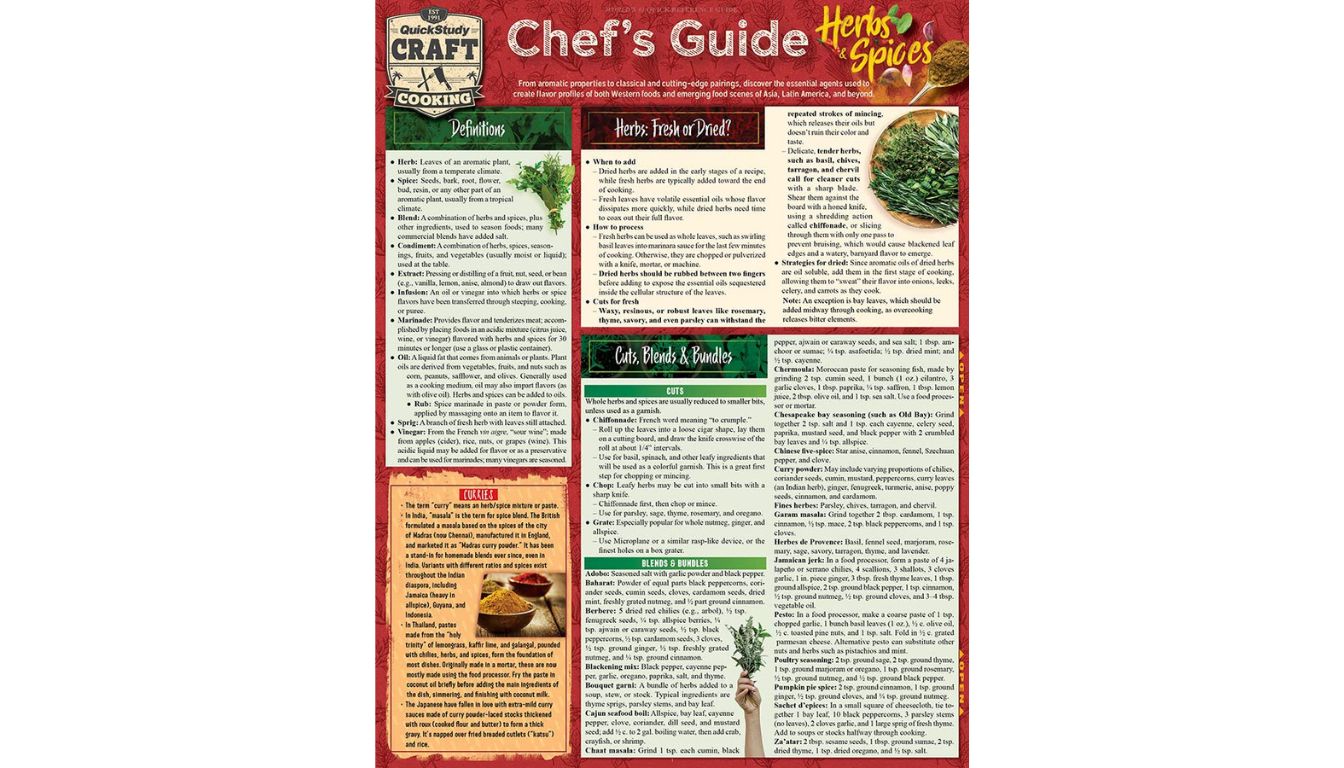
The Chef’s Guide to Herbs & Spices QuickStudy review explores a practical and visually organized reference for culinary enthusiasts. We’ve been testing out this laminated reference guide in our kitchen, and it’s become a surprisingly handy tool when we’re cooking up different dishes. The Chef’s Guide covers a wide range of herbs and spices across six pages, giving you quick information about how to use them in various cuisines without having to scroll through endless internet searches.
The laminated format holds up well to kitchen use, though we did notice the font size is quite small in some sections. People who bought this guide found it helpful for pairing spices correctly and learning proper herb combinations, with some even giving it as a gift to fellow cooking enthusiasts. One buyer mentioned their son’s culinary teacher ordered one after seeing it.
We found it particularly useful when we’re under time pressure and need to make quick decisions about seasoning. The guide includes definitions of cooking terms and explains different ethnic cuisine flavor profiles. It folds out to show information on both sides, packing in a lot of detail despite its compact size.
The holes punched at the top let you store it in a binder if you want. Some users wished the text were larger, but the lamination quality is solid, and the color contrasts make most sections readable. It works well for both experienced cooks and beginners who want to expand their spice knowledge.
Bottom Line – Guide Chef’s Guide to Herbs & Spices QuickStudy Review
If you want a quick reference for herbs and spices without digging through cookbooks, this guide delivers solid information in a durable format. It’s practical for everyday cooking and helps you make better seasoning choices.
Click here to get the Chef’s Guide and improve your herb and spice game.
Overview of Chef’s Guide to Herbs & Spices
This laminated reference guide sits comfortably on our kitchen counter without taking up much space. The QuickStudy format delivers quick access to herb and spice information when we’re cooking and need to confirm flavor profiles or pairing suggestions.
We found the laminated surface holds up well against kitchen splashes and the occasional spill. The guide covers common and less familiar seasonings, which helped us branch out from our usual rotation of basil and oregano.
The information density is high, so the text runs small in some sections. We occasionally need to lean in closer under our kitchen lighting to read certain details. The compact size makes storage easy, though it means some entries feel cramped.
The guide works best as a quick reference rather than an in-depth resource. We appreciate having it nearby when experimenting with new recipes or trying to remember which herbs complement fish versus poultry.
Comprehensive Herb and Spice Definitions – Get Yours Here
When we opened this laminated guide, we found definitions for dozens of common and exotic seasonings all laid out on six pages. Each entry breaks down the flavor profile, typical uses, and regional origins without overwhelming you with unnecessary details. We appreciated how the guide groups similar items together, making it easy to compare options when a recipe calls for something we don’t have on hand.
The definitions stay practical rather than flowery. Basil gets described by its actual taste characteristics and cooking applications instead of vague descriptions. We noticed the guide covers both fresh and dried versions where relevant, which helped us understand substitution ratios better.
One limitation is that the brief format means some lesser-known spices get minimal coverage. However, for quick reference while cooking, we found the concise explanations more useful than flipping through a thick cookbook.
Essential Tips for Culinary Success – Guide Chef’s Guide to Herbs & Spices QuickStudy Review
Getting the most from this laminated guide takes a bit of strategy. We found it helpful to keep the reference flat on the counter while cooking since the fold-out design displays all six pages at once. The small font size means you’ll want good lighting in your workspace, and reading glasses might come in handy for those with vision concerns.
We recommend using the guide when meal planning rather than mid-recipe, since the dense information works best when you have time to browse through the ethnic cuisine pairings and flavor combinations. The laminated surface wipes clean easily, which proved useful when flour and sauce inevitably landed on it during our testing.
One practical approach is punching holes in the pre-marked spots and keeping it in a recipe binder for quick access. The durability stands up to regular kitchen use without showing wear.
Laminated Durability and Quick Accessibility – Get Yours Here
The laminated construction protects this guide from kitchen disasters. We tested it near splashing water and messy ingredients, and the pages wiped clean without damage. The coating adds weight and stiffness that makes the guide feel substantial rather than flimsy.
Getting to information happens fast since the guide unfolds to show six pages at once. We appreciated how everything stays visible without flipping through multiple sheets. The fold-out design lets you prop it up or lay it flat while cooking.
However, the small font size creates a real challenge. Reading detailed information requires good lighting or reading glasses for many users. Some text appears quite tiny to pack in maximum content.
The lamination includes pre-punched holes for binder storage. This feature works well if you organize recipes in binders, though some might find the holes unnecessary. Overall, the protective coating justifies its purpose in busy cooking environments.
Space-Saving Trifold Design – Guide Chef’s Guide to Herbs & Spices QuickStudy Review
The laminated guide folds into three panels, which makes storage surprisingly simple. We slipped it into a kitchen drawer without any trouble, and it takes up about the same space as a standard sheet of paper when folded. The compact size means you can tuck it beside your cookbooks or even in a utensil drawer.
When we opened it up, the full spread gave us access to all the information at once across the six-page layout. The trifold format works well because you can stand it up on the counter while cooking, which keeps it visible without taking up much room. The 8.5 x 11-inch dimensions feel familiar and easy to handle.
The laminated material adds some stiffness, so it holds its shape when propped open. We found this helpful during meal prep when our hands were messy, and we needed a quick reference without fumbling with pages.
Practical Use Cases in the Kitchen – Get Yours Here
We keep this guide propped up against our backsplash when experimenting with new flavor combinations. The laminated pages make it easy to wipe off stray splashes of olive oil or tomato sauce while cooking.
When we’re trying to figure out which herbs pair best with chicken or fish, the chart saves us from scrolling through our phones with messy hands. The reference has helped us branch out into different ethnic cuisines without guessing at unfamiliar spice blends.
Common scenarios where we reach for it:
- Substituting one herb for another when we’re missing an ingredient
- Learning proper measurements for dried versus fresh herbs
- Understanding which spices work in specific regional dishes
The small print does require good lighting or reading glasses. We found it most helpful when mounted at eye level rather than laying flat on the counter.
Pros and Cons – Guide Chef’s Guide to Herbs & Spices QuickStudy Review
After spending time with this laminated guide in the kitchen, we found several aspects worth discussing. The six-page format packs in plenty of practical information about herbs and spices.
Pros
The laminated construction holds up well against kitchen splashes and frequent handling. We appreciated how the guide organizes information about different herbs and spices, including their uses across various ethnic cuisines.
The reference format makes it easy to look up combinations quickly when time is tight. We found the details about proper herb and spice usage helpful for expanding our cooking repertoire beyond familiar territory.
The compact size fits nicely in a kitchen drawer or can hang on the wall for quick access. Multiple people in our testing mentioned buying additional copies as gifts, which speaks to its practical value.
The guide works well for cooks at different skill levels, from beginners learning the basics to experienced cooks looking to branch out into new flavor combinations.
Cons
The font size presents the biggest challenge we encountered. Much of the text appears quite small, which makes reading difficult without good lighting or reading glasses.
The pre-punched holes for binder storage seem unnecessary for most kitchen setups. These perforations detract from the otherwise clean design.
While the guide contains substantial information, the small print forces manufacturers to cram everything into a tight space. This creates a cluttered appearance that can feel overwhelming when you just need one quick answer.
We noticed that finding specific information sometimes takes longer than expected because of the dense layout. The amount of content becomes a double-edged sword when the presentation makes scanning difficult.
Customer Reviews – Get Yours Here
We noticed buyers consistently praise this laminated guide for its practical value in the kitchen. Cooks appreciate having quick access to herb and spice information without searching online during meal prep.
Several purchasers bought multiple copies as gifts, which speaks to the guide’s usefulness. One customer mentioned their son’s culinary teacher ordered one for her home kitchen after seeing it.
The six-page foldout format packs in substantial information about combining herbs and spices for different cuisines. Busy cooks find it helpful when they need quick inspiration under time pressure.
The main complaint centers on the small font size. Many reviewers noted the text is quite tiny, though they acknowledged this allows more content to fit on the laminated pages.
The guide’s durability stands out as a positive feature. The laminated material holds up well to kitchen use, and the color coding makes finding information easier.
Before You Go – Guide Chef’s Guide to Herbs & Spices QuickStudy Review
After spending time with this laminated guide, we can say it earns its place in the kitchen. The six-page format packs in a substantial amount of information about herbs and spices, including pairing suggestions and usage tips that prove helpful when you’re stuck mid-recipe.
The strengths are clear:
- Durable laminated construction holds up well to kitchen messes
- Compact trifold design stores easily in a drawer
- Covers ethnic cuisines and flavor combinations
The main drawback is the small font size, which can strain your eyes when you’re quickly scanning for information. Some users found the pre-punched holes for binder storage unnecessary.
We found this guide works best as a quick reference when you need inspiration or verification. It won’t replace experience, but it fills gaps in knowledge effectively. The price point makes it reasonable both for personal use and as a gift for cooking enthusiasts.
Don’t forget to add theherbprof.com homepage to your favourites so you don’t miss out on future articles.
References – Guide Chef’s Guide to Herbs & Spices QuickStudy Review
Little Herb Encyclopedia, by Jack Ritchason; N.D., Woodland Publishing Incorporated, 1995
The Ultimate Healing System, Course Manual, Copyright 1985, Don Lepore
Planetary Herbology, Michael Tierra, C.A., N.D., Lotus Press, 1988
Handbook of Medicinal Herbs, by James A. Duke, Pub. CRP Second Edition 2007
The Complete Medicinal Herbal, by Penelope Ody, Published by Dorling Kindersley
Check the Following Articles
Herb Gardening for Beginners Book Review
Homegrown Herbs: The Ultimate Garden Guide Review
A Handbook of Native American Herbs Review
McCormick Encyclopedia of Spices and Herbs Review
Frequently Asked Questions – Guide Chef’s Guide to Herbs & Spices QuickStudy Review
What types of herbs and spices are covered in the QuickStudy Laminated Reference Guide for Chefs?
The guide covers a wide range of common and specialty herbs and spices that appear in various cuisines. We found it includes detailed information about familiar items like basil, oregano, thyme, and rosemary alongside more exotic options.
The laminated reference organizes these seasonings in a way that makes them easy to locate when you’re working through a recipe. Each entry provides enough detail to help you understand what you’re working with. From what we saw, the guide doesn’t just list names but gives you practical context about each ingredient.
How can the QuickStudy Guide help improve knowledge of culinary herb and spice applications?
After using this guide, we noticed it serves as a practical learning tool rather than just a reference list. It defines culinary terms that chefs use, which helps bridge the gap between reading recipes and understanding what they actually mean.
The format makes it simple to learn about different applications without digging through cookbooks or searching online. We appreciated that the information is condensed yet thorough enough to build real knowledge. The laminated pages mean you can keep it right in your cooking space without worrying about spills or damage.
For someone building their cooking skills, having this information readily available speeds up the learning process. We found ourselves checking it less frequently as we became more familiar with the content.
What are the best practices for storing herbs and spices as recommended in the QuickStudy Guide?
The guide includes practical storage recommendations that help preserve the quality and potency of your seasonings. We found these tips useful for extending shelf life and maintaining flavor.
The storage section addresses common mistakes that home cooks and professionals make. Following these guidelines can save money by reducing waste from improperly stored ingredients. The advice is straightforward and doesn’t require special equipment or complicated procedures.
Does the QuickStudy Laminated Reference Guide include information on pairing herbs and spices with specific foods?
Yes, the guide provides pairing information that connects herbs and spices with appropriate dishes and ingredients. We found this particularly helpful when trying to create balanced flavor profiles or exploring new cuisine styles.
The pairing suggestions cover multiple ethnic cuisines, which expands your cooking range beyond familiar territory. When we were pressed for time or creativity, having these combinations at hand made meal planning easier. The guide takes the guesswork out of which seasonings complement specific proteins, vegetables, and dishes.
This feature proved valuable whether we were following recipes or improvising. The pairings are based on established culinary traditions rather than experimental combinations.
Are there tips and tricks for seasoning techniques provided in the Chef’s Guide to Herbs & Spices?
The guide includes helpful hints about seasoning techniques that go beyond basic information. We noticed these tips were practical enough to apply immediately in our cooking.
Some of the guidance addresses when to add certain seasonings during the cooking process for optimal flavor. Other tips cover how to combine multiple herbs and spices effectively. The hints section benefits both beginners who need direction and experienced cooks looking to refine their approach.
The techniques are explained clearly without unnecessary complexity. We appreciated that the advice focused on real kitchen scenarios rather than theoretical concepts.
Is the QuickStudy Guide suitable for both professional chefs and home cooks looking to enhance their seasoning skills?
The guide works well for different skill levels, though there are some considerations. We found it equally useful whether cooking casually at home or needing quick reference information in a more serious kitchen setting.
Professional culinary students have used this guide successfully, with some instructors even purchasing copies for personal use. Home cooks will find it removes the need to constantly search for basic herb and spice information online. The laminated construction holds up to regular kitchen use.
One limitation we encountered is the small font size, which some users may find challenging to read quickly. The guide packs substantial information into six folded pages, which required this compact text. Despite this drawback, the quality and breadth of information make it a worthwhile tool for anyone working to improve their seasoning knowledge.
The tri-fold design fits easily in a kitchen drawer or can hang on a wall if you punch holes in the provided perforations. We kept ours nearby during cooking sessions and referenced it frequently at first.