The Herb Prof Team researches and writes our herbal guides, drawing on published research, traditional herbal references, and hands-on growing experience.
People make herbal tea from herbs, spices, and other botanical ingredients. Cultures worldwide have been using it for centuries. Herbal tea is particularly well-known for its calming qualities, and many people turn to it for relaxation, sleep support, and general comfort.
Herbal tea comes in many different flavors and blends. Some of the most popular types include chamomile, peppermint, ginger, and lavender. Each herb has its own properties, making it easy to find a blend that suits your needs. Herbal tea is also a great alternative to traditional tea and coffee, since it’s caffeine-free and contains no artificial ingredients.
This guide covers how to select, brew, and blend herbal teas. For the full research and safety picture on any specific herb, we link to our dedicated guides throughout.
What is Herbal Tea?
Definition
Herbal tea is a beverage made from the infusion of various plants, leaves, barks, roots, and fruits. Unlike traditional tea, which comes from the Camellia sinensis plant, herbal tea is made from a variety of other plants.
Difference from Traditional Tea
One of the main differences between herbal tea and traditional tea is that herbal tea doesn’t contain caffeine. Traditional tea, such as black tea and green tea, contains caffeine, which can cause jitters, anxiety, and insomnia in some people. Herbal tea, by contrast, is caffeine-free and can be consumed at any time of day.
Varieties of Herbs Used
Many herbs work well in herbal tea blends. Some of the most popular include mint, chamomile, ginger, hibiscus, and lavender. Each has its own flavor and traditional use, mint for soothing an upset stomach, chamomile for relaxation and sleep, and so on.
Benefits of Herbal Tea
Herbal tea is a natural, generally low-risk alternative to caffeinated beverages, worth considering as part of a wellness routine.
Natural Caffeine-Free Option
One of the biggest advantages of herbal tea is that it’s naturally caffeine-free, a great option for those sensitive to caffeine or looking to reduce their intake. Unlike decaf coffee or decaf tea, which still retain trace amounts of caffeine from the decaffeination process, true herbal tea contains none at all, since it doesn’t come from the tea or coffee plant to begin with. Herbal tea won’t cause jitters or disrupt sleep, and can be enjoyed any time of day without worrying about an afternoon cup affecting your night’s rest.
Promotes Relaxation
Part of herbal tea’s calming effect comes simply from the ritual, a warm drink, a few quiet minutes, a break from screens or work. But some herbs genuinely contribute more than that: chamomile contains apigenin, a compound researchers have studied for its calming effect on the nervous system, and several studies have linked lavender’s aroma alone to reduced stress.
Chamomile is one of the best-known calming herbs, see our full chamomile guide for the full research and safety details. Drinking a cup of herbal tea before bed can be a genuinely useful part of a relaxing wind-down routine.
Can Aid in Digestion and Other Health Benefits
Warm liquids generally support digestion by relaxing the digestive tract, and certain herbs add to that effect through their own active compounds, menthol in peppermint and gingerols in ginger, for instance, both support digestive comfort. For digestive comfort specifically, see our dedicated guides on ginger and peppermint.
For immune support, see our guides on echinacea and elderberry, each with the full research behind them. Herbal tea can also be a good source of vitamins and minerals depending on the herbs used, rosehip tea, for example, is high in vitamin C and antioxidants.
How to Select and Brew the Best Herbal Tea
Selecting high-quality ingredients and using proper brewing technique both make a real difference in the final cup.
Choosing High-Quality Ingredients
When selecting herbs for your tea, choose high-quality, organic ingredients where possible. Look for herbs that are wild-harvested or grown in small batches for freshness and potency. Your local herbalist or health food store can be a good source of recommendations.
Elderberry, ginger, and honey tea is a popular combination people use for immune support during cold season. A French press also works well for brewing, producing a clear, flavorful cup.
Proper Brewing Techniques
Start with fresh, filtered water brought to a boil, then add your herbs to a strainer or tea bag. Steep for at least 5-10 minutes to allow the herbs to fully infuse.
Different herbs call for different brewing times and temperatures, so check the recommended instructions for each one. Overbrewing can make tea bitter; underbrewing leaves it weak and flavorless.
Recommended Herbal Tea Blends
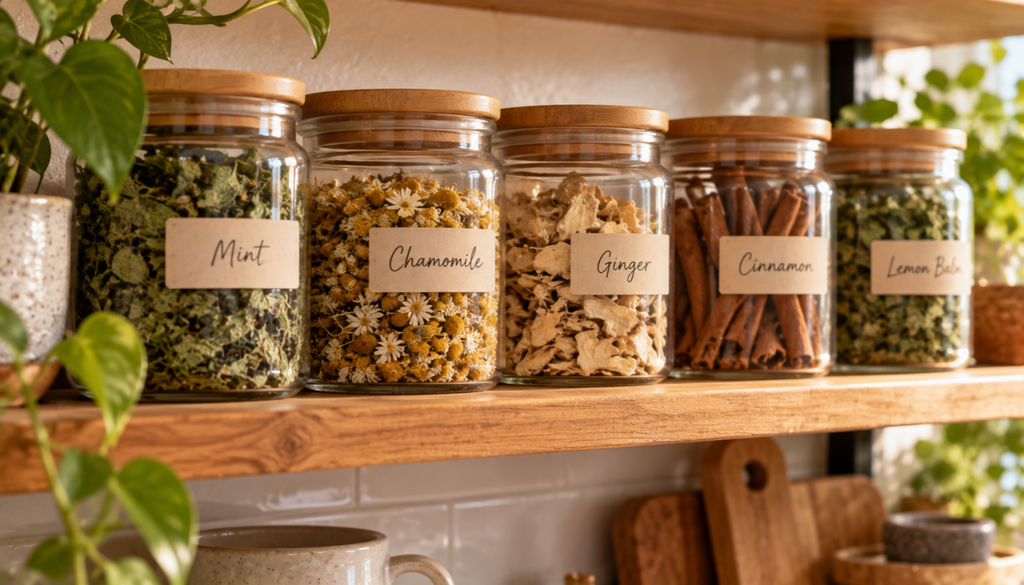
A few popular combinations:
- Chamomile and lavender tea, calming and relaxation-focused
- Peppermint and lemon balm tea, aimed at digestion and stress relief
- Nettle and red raspberry leaf tea, traditionally used to support women’s health, red raspberry leaf in particular has a long history of traditional use during pregnancy specifically, worth discussing with a doctor or midwife before use
Experiment with different blends to find what works for you, and don’t be afraid to add honey or another natural sweetener for extra flavor.
Building Your Own Blends
If you want to go beyond the blends above and create your own, a simple three-part formula makes it easy to get a balanced, well-flavored cup:
- Base (3 parts) – a mellow herb with a neutral flavor, like mint, chamomile, or nettle, forms the foundation of your blend.
- Star (1–2 parts) – a stronger, more robust herb, like ginger or rosemary, gives the blend its main character.
- Accent (¼–1 part) – a smaller amount of something like cinnamon or lemon balm rounds out the flavor with a touch of sweetness or brightness.
Adjust the ratios to taste once you’ve got the basic formula down. When storing a blend you like, use a glass jar and label it with the herbs used, the date, and brewing instructions, so you can recreate (or tweak) it next time.
Before You Go – Herbal Tea
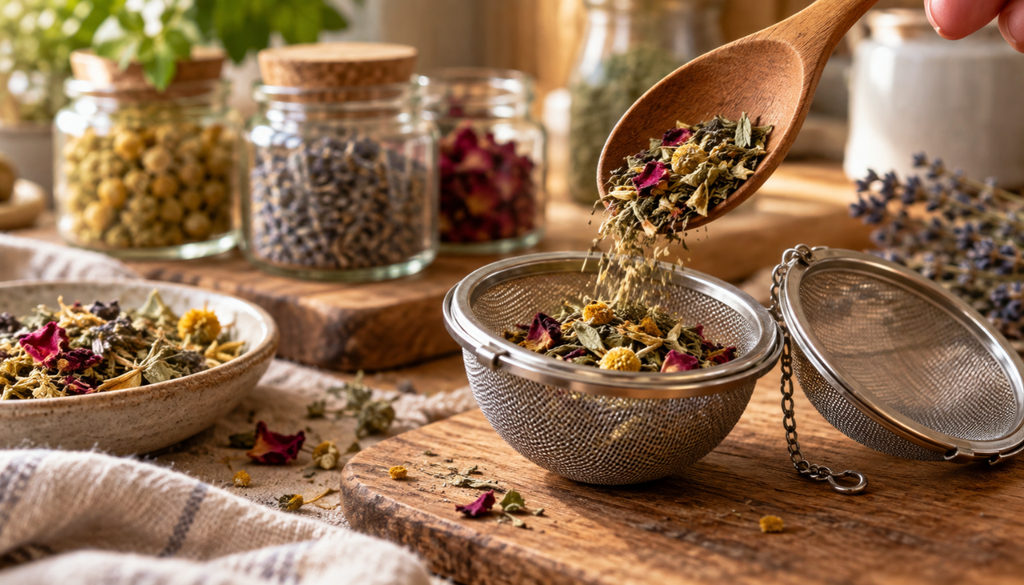
Herbal tea is a natural, generally gentle way to support relaxation, comfort, and wellness, and a genuinely enjoyable, aromatic drink in its own right. You can make it as an infusion or decoction, and enjoy it hot or cold. Popular herbs for tea include elderflower, sage, valerian, rose, yarrow, and peppermint, along with everything covered above.
Incorporating herbal tea into your daily routine is easy: set aside time each day for a cup, or try replacing your morning coffee with one for a gentler start to the day. A cup of chamomile before bed can be part of a calming wind-down routine.
When purchasing herbal tea, buy from a reputable retailer to ensure quality and safety. You can also experiment with making your own blends using dried herbs, fresh herbs, or extracts.
References – Herbalist Tea
Little Herb Encyclopedia, by Jack Ritchason; N.D., Woodland Publishing Incorporated, 1995
The Ultimate Healing System, Course Manual, Copyright 1985, Don Lepore
Planetary Herbology, Michael Tierra, C.A., N.D., Lotus Press, 1988
Handbook of Medicinal Herbs, by James A. Duke, Pub. CRP Second Edition 2007
The Complete Medicinal Herbal, by Penelope Ody, Published by Dorling Kindersley
Related Articles
Tooth Infection Symptoms: Home Comfort Measures
Frequently Asked Questions – Herbalist Tea
What are some popular types of herbal tea infusions?
Some popular herbal infusions include chamomile, peppermint, ginger, and hibiscus. Chamomile is traditionally used for relaxation, see our dedicated chamomile article for the full research picture. Peppermint is known for its refreshing taste and can aid in digestion. Ginger is often used to ease nausea, and hibiscus is known for its tart flavor and high vitamin C content.
What are the medicinal uses of different herbal teas?
Different herbal teas have different traditional uses. For specific herbs like chamomile, echinacea, and ginger, see our dedicated guides linked throughout this article, they cover the research, dosing, and safety information in full. It’s important to note that while many herbal teas have traditional or research-supported properties, they should never replace prescribed medication.
What are some organic herbal tea companies?
Some organic herbal tea companies include Traditional Medicinals, Pukka Herbs, and Yogi Tea. These companies use organic ingredients and sustainable practices to produce their teas.
Who can benefit from drinking herbal tea?
Most people can enjoy herbal tea as part of a wellness routine, and certain blends may appeal more depending on individual needs, chamomile for relaxation, ginger for digestive comfort, and so on. See our dedicated herb guides for the specific research behind each one, and consult a healthcare professional before using any herbal tea for a specific medicinal purpose.
What are some potential risks associated with drinking herbal tea?
While herbal tea is generally considered safe, some types carry real risks worth knowing about. Certain herbal teas may interact with prescription medications, and some may cause allergic reactions in people sensitive to specific plants. It’s worth researching the specific risks of any herb before regular use, our dedicated guides cover this in detail for each herb.
What are some tips for selecting the best loose-leaf herbal tea?
Consider the quality of the ingredients, the flavor profile, and your intended use. Look for organic, high-quality ingredients and avoid teas with artificial flavors or additives. Choose a flavor that appeals to your taste preferences, and match the tea to what you’re actually looking for, relaxation, digestion, or simply a pleasant caffeine-free drink.