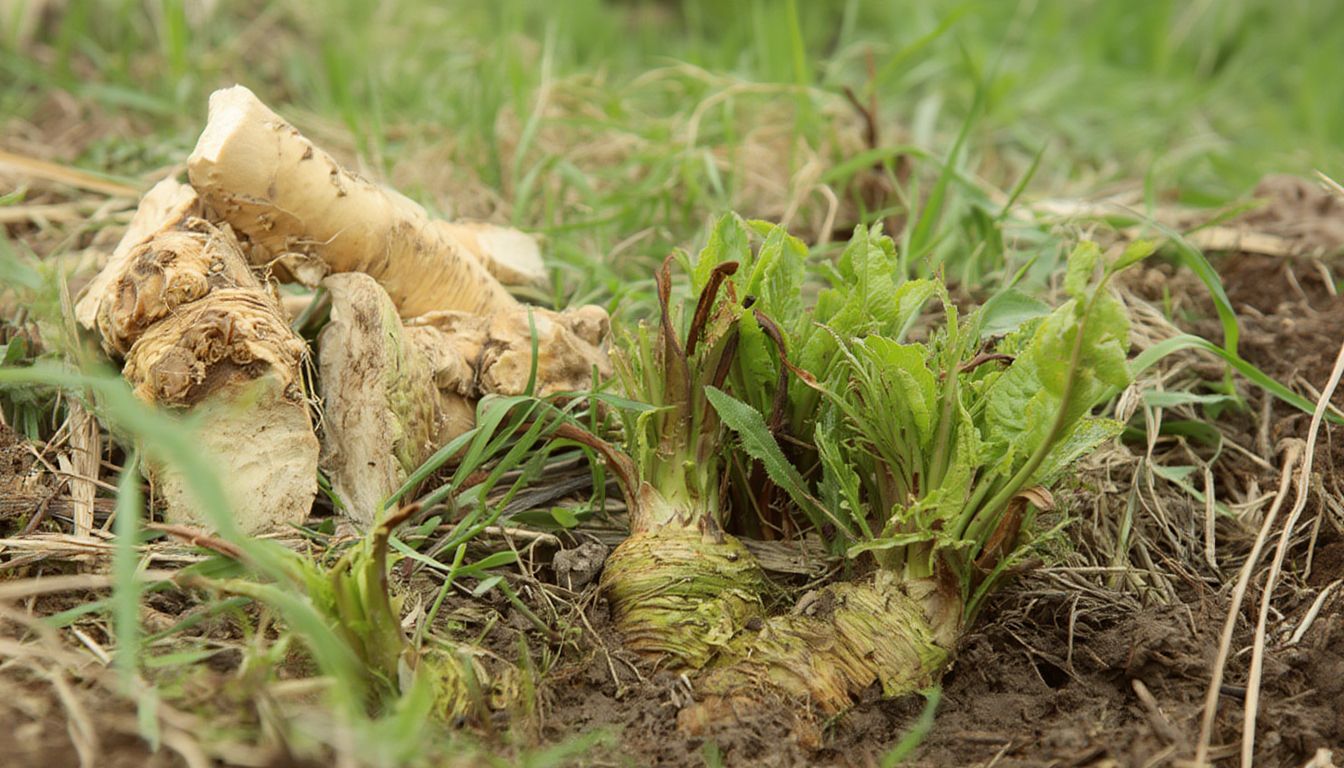
Horseradish, also known as chren, hren, kren, and Meerrettich, is a hardy perennial root vegetable from the Brassicaceae family, which also includes mustard, wasabi, broccoli, cabbage, and radish. Its scientific name is Armoracia rusticana, and it has been cultivated for centuries, originating in Eastern Europe before spreading to kitchens worldwide. Renowned for its pungent aroma and fiery flavor, it has earned a lasting place in both culinary traditions and folk medicine.
This root is more than just a condiment. It carries deep cultural roots, a long history in traditional remedies, and a surprising nutritional profile. A single tablespoon provides vitamin C, folate, calcium, magnesium, and potassium, along with compounds that support immunity and may help fight infections. Low in calories yet rich in nutrients, this plant delivers bold taste and potential health benefits in every bite.
In this article, I’ll explore its history, cultivation, culinary uses, and medicinal properties, while sharing practical tips on preparation and storage. Whether you already enjoy its sharp flavor or are discovering it for the first time, you’ll find everything you need to know about this versatile root.
Nutritional Value and Varieties
Horseradish delivers bold flavor and surprising nutrition. A single tablespoon provides just six calories, yet it packs vitamin C, folate, calcium, magnesium, and potassium. These nutrients strengthen immunity, support bone health, and promote digestion. The root also contributes small amounts of protein and dietary fiber, making it a smart choice for a balanced diet.
Horseradish grows in two main varieties. White horseradish dominates kitchens with its sharp, spicy flavor that cuts through rich dishes. Red horseradish appears less often, offering a milder taste and usually blending with beets to add sweetness and color. In Japanese cuisine, cooks often substitute horseradish for wasabi because of its similar taste and appearance, though true wasabi comes from the Wasabia japonica plant, a distinct species.
Varieties and Substitutes
Horseradish (Hren) comes in several varieties, but when fresh roots are unavailable, there are effective substitutes that can deliver a similar pungent kick.
Wasabi: True wasabi grows from the stem of Wasabia japonica, though most commercial versions blend horseradish, mustard, and food coloring. It offers a milder, sweeter taste than horseradish and accompanies sushi and sashimi widely. You can also use wasabi in sauces and spreads where recipes traditionally call for horseradish.
Mustard and Mustard Oil: Mustard oil is a strong alternative to horseradish sauce, offering comparable sharpness. With many varieties available, English mustard, Dijon, wholegrain, honey mustard, and more, mustard provides flexibility in flavor and intensity.
Other Vegetables: Members of the mustard family, such as cabbage, kale, and broccoli, share a related flavor profile and work well as substitutes in certain dishes. Black radish also makes an excellent option: larger than red radishes, with a dark exterior and crisp white interior, it delivers a spicy, hot taste reminiscent of horseradish.
Overall, whether you choose wasabi, mustard, or other pungent vegetables, there are plenty of alternatives to suit different dishes and preferences.
Cultivation, Harvest, and Plant Care
Planting and Soil Requirements
Horseradish thrives in well‑drained soil rich in organic matter. To begin, gardeners plant root cuttings in spring, setting them at a 45‑degree angle and covering them with soil. This angled planting encourages strong root development and ensures a healthy crop. The plant grows vigorously throughout the season, producing tall stalks and broad leaves, but it is the root that holds the prized flavor.
Harvesting
Harvest typically takes place in autumn, often after the first frost, when the root develops its strongest pungency. At this stage, the roots are carefully dug up, cleaned, and trimmed for use. To maintain soil health and ensure consistent yields, crop rotation is essential. Horseradish should not be planted in the same location year after year; instead, rotate planting sites every two to three years to reduce the risk of soil‑borne problems.
Pests and Diseases
Although horseradish is a hardy plant, pests and diseases can still affect it. Aphids create one of the most common problems, feeding on the leaves and weakening the plant. Slugs also cause damage by chewing through foliage, particularly in damp conditions. Gardeners can manage both with organic methods such as neem oil or diatomaceous earth, which protect the crop without harming the environment.
The most serious disease that attacks horseradish is black rot. This bacterial infection softens the roots and turns them black, making them unusable. Prevention plays a key role: plant horseradish in well‑drained soil, avoid overwatering, and rotate crops every two to three years to reduce the risk of soil‑borne pathogens. Careful monitoring and good garden hygiene keep plants healthy.
Storage and Preservation
As a Chren lover, I know that storing and preserving horseradish is crucial to maintaining its flavor and freshness. Proper handling ensures that the pungency and sharpness remain intact for as long as possible.
Refrigeration and Freezing
Refrigeration remains the most common method of storing horseradish. Place prepared horseradish in an airtight container and keep it in the refrigerator at a stable temperature between 32°F (0°C) and 40°F (4°C). Avoid placing it near the freezer compartment or in areas where the temperature fluctuates, since those conditions can cause the flavor to fade. Because horseradish loses its pungency when exposed to air, you must seal the container tightly.
Freezing also offers an excellent option for long‑term storage. Wash and peel the roots, grate them, and store the horseradish in an airtight container or freezer bag. Label the container with the date of preparation and then place it in the freezer. Frozen Chren retains its flavor for up to six months.
Shelf Life
The shelf life of horseradish depends on how it is stored. An unopened prepared horseradish can last up to six months in the refrigerator. Once opened, it should be consumed within two months. Freezing is the best way to extend its shelf life if you don’t plan to use it right away.
Preparation and Usage
Homemade Horseradish
Fresh horseradish offers several preparation methods. Peel and chop the root into small pieces, then grate it by hand with a box grater or pulse it in a food processor until finely ground. To make prepared Chren, mix the grated horseradish with vinegar, salt, and a touch of sugar. You can adjust the level of heat by varying the amount of horseradish you use. Store homemade horseradish in an airtight container in the refrigerator, and it will keep its flavor for up to a month.
Cooking Techniques
Horseradish is a versatile ingredient that enhances a wide range of dishes. It pairs beautifully with prime rib, beef tenderloin, salmon, and trout, and you can incorporate it into salad dressings, sauces, and condiments such as mustard, ketchup, and cocktail sauce. Because of its strong flavor, use it sparingly and taste as you go to maintain balance in the dish.
Condiments and Sauces
Horseradish sauce serves as a classic accompaniment to beef, pork, and fish. Cooks typically make it by mixing grated horseradish with sour cream, mayonnaise, and a splash of vinegar. You can also stir horseradish into other condiments like mustard, ketchup, or cocktail sauce to add a sharp, spicy kick.
Complementary Foods
Beyond meats and fish, horseradish adds flavor to salads, sandwiches, and wraps. Mixing grated Chren into mayonnaise or sour cream creates a bold, creamy spread that can be used as a topping or dip.
Handling and Safety Tips
Working with fresh horseradish requires care, as its pungent odor and strong oils can irritate the eyes, sinuses, and skin.
Ventilation and Protection: Always prepare horseradish in a well‑ventilated area to avoid inhaling its sharp fumes directly. Wear gloves to prevent skin irritation, especially when grating or handling large amounts.
Grating and Texture: For the best consistency, use a microplane or fine grater. Don’t over‑grate, because that action releases excess moisture and creates a watery texture. You can also use a food processor, but pulse gently to maintain the right balance.
Moderation in Use: Horseradish is potent, and consuming large quantities may cause stomach upset. Use it sparingly to enhance flavor without overwhelming the dish or causing discomfort.
Purchasing Guidelines: When buying fresh horseradish, look for roots that are firm, free of soft spots, and without mold or discoloration. A strong aroma is a good indicator of freshness. If fresh roots are unavailable, prepared horseradish in jars or tubes is a reliable alternative.
Culinary Uses and Recipes
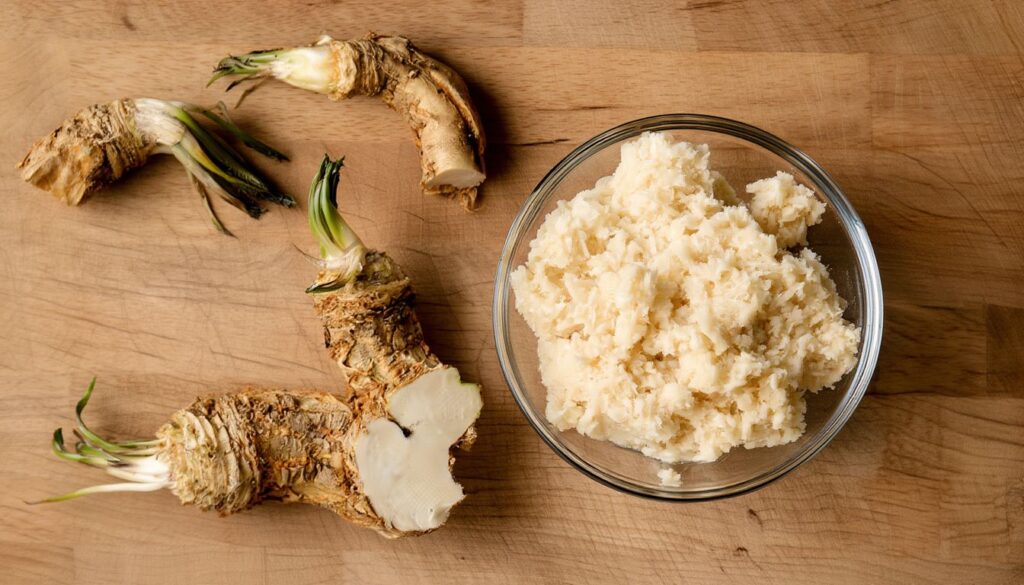
Horseradish transforms dishes with its fiery kick. Below are classic variations and practical recipes:
- Prime Rib Sauce: A tangy, creamy blend that pairs perfectly with roasted meats. How to make: Mix ½ cup sour cream with 2–3 tablespoons grated horseradish, 1 teaspoon vinegar, a pinch of salt, and a little sugar. Stir until smooth. Tip: Avoid serving in a silver dish ashorseradish can tarnish the metal. Use glass or ceramic instead.
- Steak Sauce: A bold companion to grilled beef. How to make: Start with the sour cream–horseradish base, then add 1 tablespoon chopped chives and 1 teaspoon Worcestershire sauce. Blend well.
- Heavy Cream Sauce: Rich and delicate, ideal for tender cuts. How to make: Whip ½ cup heavy cream until soft peaks form. Fold in 2 tablespoons of grated horseradish, 1 teaspoon of Dijon mustard, a pinch of white pepper, and salt. Chill before serving.
- Sandwich Spread: Sharp and creamy, perfect for roast beef or pastrami. How to make: Combine ¼ cup mayonnaise with 1–2 tablespoons horseradish and a squeeze of lemon juice. Spread generously on bread.
- Cocktail Sauce: A seafood classic. How to make: Stir together ½ cup ketchup, 2 tablespoons horseradish, 1 teaspoon lemon juice, 1 teaspoon Worcestershire sauce, and a dash of hot sauce. Serve chilled with shrimp or oysters.
Beyond sauces, horseradish can be stirred into dips, infused into teas for traditional remedies, or used to spice up cocktails, most famously the Bloody Mary.
Health and Medicinal Properties
As a root vegetable, horseradish packs nutrients and minerals that deliver numerous health benefits. Some of the key nutrients in Chren include vitamin C, calcium, magnesium, and potassium. A serving of horseradish measures only 1 tablespoon, but it contains a high number of vitamins and minerals. For example, a tablespoon of horseradish provides 3.75 milligrams of vitamin C, which equals about 6% of the recommended daily value.
Medicinal Properties
Horseradish has served medicinal purposes all over the world for centuries. It contains glucosinolates, sulfur‑containing compounds that demonstrate antibacterial properties. When you cut or grate horseradish, the enzyme peroxidase activates and converts the glucosinolate sinigrin into allyl isothiocyanate (AITC). AITC produces the pungent odor and spicy flavor of Chren, and research shows it also carries anti‑cancer properties.
Dietary Considerations
Chren is low in fat and sugar, and it contains only 2.4 calories per teaspoon. However, it is high in sodium, with one teaspoon containing 57 milligrams. Therefore, those on a low-sodium diet should consume horseradish in moderation. Additionally, it is low in carbohydrates, with one teaspoon containing only 0.3 grams. As a result, it can be a good choice for those on a low-carbohydrate diet.
Chren is a nutritious root vegetable that can provide numerous health benefits. Its high vitamin and mineral content, along with its antibacterial and anti-cancer properties, make it a great addition to any diet. However, those on a low-sodium diet should consume it in moderation due to its high sodium content.
Cultural Significance of Horseradish
Horseradish (Hren) holds a special place in cultural traditions across the world. Its sharp, pungent flavor has made it more than just a condiment; it is a symbol of resilience, remembrance, and renewal.
Role in Traditions
- Eastern Europe (Easter) In many Eastern European countries, horseradish is an essential part of the Easter meal. It is served with hard‑boiled eggs, ham, and other meats. The bitterness of Hren symbolizes the suffering of Christ on the cross, while its ability to regrow after being cut down represents resurrection and renewal.
- Jewish Passover Horseradish is a key element of the Passover Seder, eaten with matzo to symbolize the bitterness of slavery in Egypt. It serves as a reminder of hardship but also of liberation, connecting generations through ritual and taste.
- German Traditions In Germany, horseradish is a common accompaniment to roast beef, potatoes, and sausages. In Bavaria, it is used to prepare Radi, a traditional dish made with grated horseradish, cream, and salt. Its role in everyday meals reflects its deep integration into regional cuisine.
Horseradish’s cultural significance lies not only in its flavor but also in its symbolism. Across traditions, it represents both bitterness and renewal, hardship and resilience, making it a root with meaning far beyond the kitchen.
Horseradish in Modern Cuisine
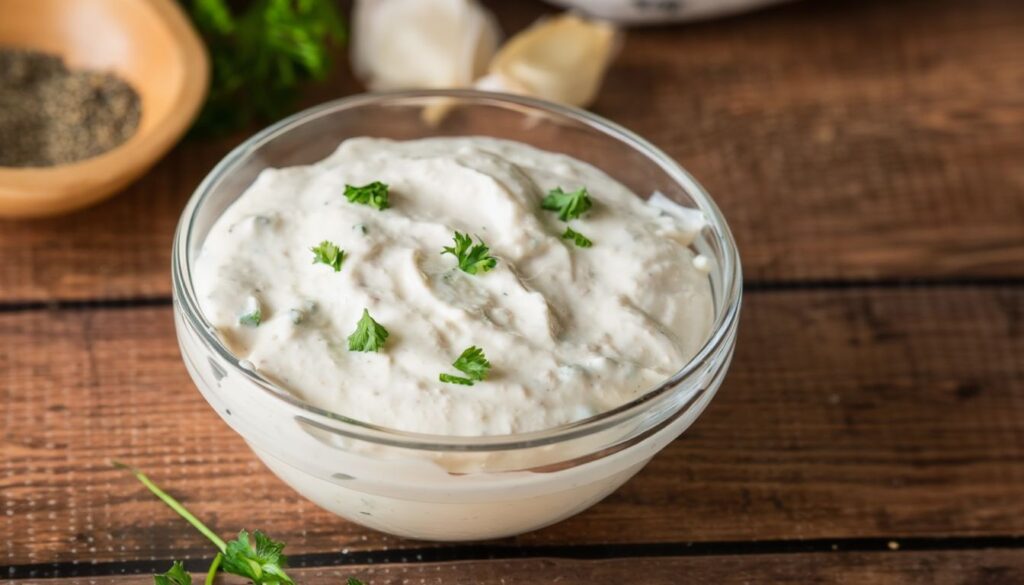
Horseradish (Hren) has moved beyond its traditional role as a sharp condiment, and cooks now embrace it as a versatile ingredient in contemporary cooking. Chefs and home cooks alike experiment with new ways to highlight its pungent flavor and nutritional value.
Sauces and Dressings
Modern cuisine often uses horseradish as a base for creative sauces and dressings. Blended with sour cream, mayonnaise, or yogurt, it creates creamy accompaniments for seafood, steak, and roasted vegetables. By adding citrus or herbs, chefs craft unique flavor profiles that balance heat with freshness.
Smoothies and Juices
Horseradish has also found its way into smoothies and juices. Its high vitamin C content, along with minerals such as calcium and iron, makes it a nutritious addition. A small amount adds a spicy kick while contributing potential anti‑inflammatory benefits. This trend reflects a growing interest in functional foods that combine flavor with health.
Culinary Experimentation
Beyond traditional pairings, horseradish is being incorporated into dips, spreads, and even fusion dishes. Food processors and blenders make it easy to integrate into recipes, though care must be taken not to over‑process, which can lead to bitterness. Creative chefs are using horseradish to surprise diners with unexpected flavor combinations, proving that this ancient root still has a place in modern gastronomy.
Horseradish’s evolution from a ritual ingredient to a contemporary culinary star demonstrates its adaptability. Whether in sauces, drinks, or innovative dishes, it continues to add a distinctive edge to modern cuisine.
Horseradish Myths and Misconceptions
As a popular condiment and medicinal root, horseradish (Hren) has inspired a number of myths and misunderstandings. Separating fact from fiction helps clarify its true role in cuisine and health.
Horseradish vs. Wasabi
A common misconception is that horseradish and wasabi are the same. While both belong to the Brassicaceae family, true wasabi comes from the stem of Wasabia japonica, a plant native to Japan. Most commercial “wasabi” served in restaurants is actually a mixture of horseradish, mustard, and food coloring, not authentic wasabi.
Milk Production in Breastfeeding
Another traditional belief is that horseradish can increase milk production in breastfeeding women. There is no scientific evidence to support this claim. While horseradish has been used in folk medicine for various purposes, its effectiveness in this area remains unproven.
Antibacterial Properties
Horseradish contains compounds, such as glucosinolates, that laboratory studies show have antibacterial activity. However, researchers need to conduct more studies to determine how effective these properties are in humans. Do not consider it a substitute for medical treatment.
This basic formula dates back to medieval Europe and Asia, where the plagues struck so hard. In Korea, people developed this tonic into a popular sauce called kimchee (scientists are studying kimchee and finding anti‑cancer properties). The formula acts as a broad‑spectrum antibiotic that destroys both gram‑positive and gram‑negative bacteria. It also works as a potent antiviral and antifungal remedy, while increasing blood circulation to every cell.
Traditional Remedies
Horseradish (Hren) has held value for centuries not only as a pungent condiment but also as a component of folk medicine. People believed its strong flavor and volatile oils offered healing properties, making it a staple in traditional remedies across cultures.
Plague Tonic
One of the most well‑known folk preparations is the “plague tonic.” This mixture combines horseradish with garlic, ginger, onion, and hot peppers steeped in vinegar and alcohol. Traditionally, it was believed to strengthen immunity and ward off infections during times of widespread illness.
Traditional Recipe (Historical Use)
- Garlic cloves
- Ginger root
- Horseradish (Hren) root
- White onions
- Cayenne or other hot peppers (Habanero, African Bird, Scotch Bonnet, etc.)
- 1/3 unfiltered apple cider vinegar
- 2/3 grain alcohol
Cooks blended the ingredients into a fiery tonic, stored them in jars, and shook them daily. Folk tradition recommended taking small amounts regularly, sometimes gargled and swallowed. While this preparation reflects historical practices, scientists have never proven its effectiveness, and we should understand it as a cultural remedy rather than medical advice.
Poultices
Grated horseradish was often applied externally as a poultice to relieve muscle pain, joint stiffness, or chest congestion. The warming sensation produced by its compounds could provide temporary relief, though it also risked skin irritation if left on too long.
Digestive and Circulatory Aid
In small amounts, horseradish was consumed to stimulate digestion and improve circulation. Its sharp compounds were believed to “wake up” the body, clear nasal passages, and invigorate the senses.
Historical Uses
Throughout history, people considered horseradish a natural remedy for colds, respiratory issues, and sluggish digestion. Rural communities often used it where access to formal medicine was limited, and it symbolized both practicality and resilience.
While these remedies reflect centuries of cultural practice, we should understand them as historical traditions rather than proven medical treatments. Today, people continue to appreciate horseradish for its flavor and symbolic role, even though its medicinal claims remain largely anecdotal.
Before You Go – Horseradish: Culinary Delights and Medicinal Traditions
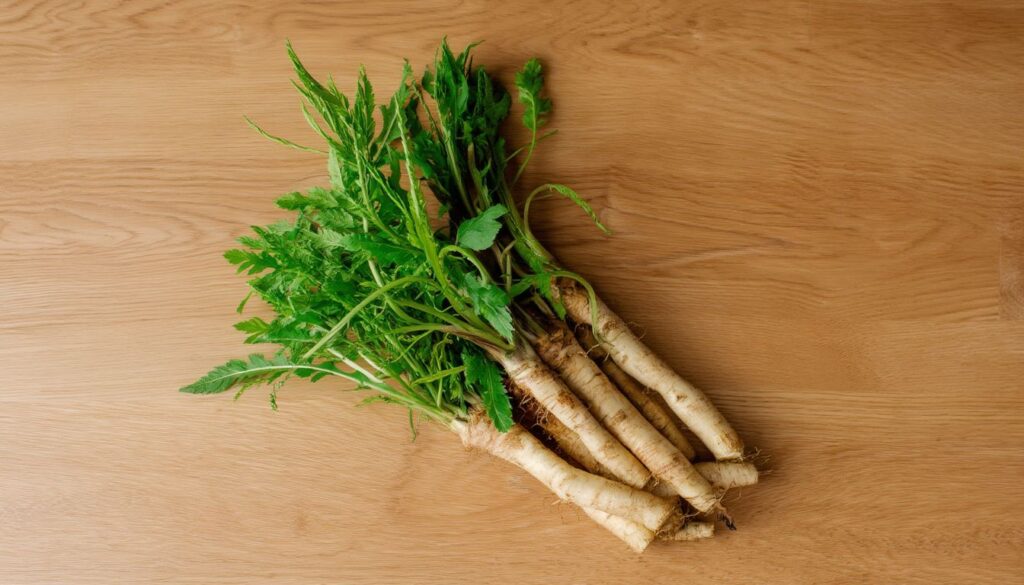
Horseradish (Kren) is more than just a sharp condiment; it’s a root with history, flavor, and surprising versatility. Whether you choose to grow it in your garden or pick up a jar at the market, it rewards you with a bold taste and a touch of tradition.
- Grow it: Cultivating horseradish in your garden is simple and rewarding, giving you a fresh supply of its spicy roots year after year. For detailed instructions, see the Complete Guide to Growing and Caring for Kren.
- Store it: Keep both fresh root and prepared sauce in airtight containers in the refrigerator to preserve their pungency and extend their shelf life.
- Enjoy it: Use horseradish sparingly to elevate meats, seafood, vegetables, and dips. A little adds brightness without overwhelming the dish.
- Appreciate it: Remember its place in Easter meals, Passover traditions, and folk remedies. Horseradish connects food with culture and history.
Before you go, consider giving this plant a place in your kitchen or garden. Whether you grate it fresh, stir it into a sauce, or plant it for next season, you’ll be carrying forward a tradition that blends flavor, health, and heritage.
Don’t forget to add theherbprof homepage to your favorites so you don’t miss out on future articles!
References – Horseradish: Culinary Delights and Medicinal Traditions
Little Herb Encyclopedia, by Jack Ritchason; N.D., Woodland Publishing Incorporated, 1995
The Ultimate Healing System, Course Manual, Copyright 1985, Don Lepore
Planetary Herbology, Michael Tierra, C.A., N.D., Lotus Press, 1988
Handbook of Medicinal Herbs, by James A. Duke, Pub. CRP Second Edition 2007
The Complete Medicinal Herbal, by Penelope Ody, Published by Dorling Kindersley
Check the Following Articles
Gotu Kola Benefits: How to Boost Brain and Skin Health
Guarana: Boost Your Energy, Mood, and Brain Function
Gymnema Sylvestre: Benefits for Sugar Control & Diabetes
Hawthorn Berries: Medicinal Benefits and Herbal Uses
Frequently Asked Questions – Horseradish: Culinary Delights and Medicinal Traditions
How is horseradish sauce prepared?
Horseradish sauce is typically made by grating fresh Kren root and mixing it with vinegar, salt, and sometimes sugar or cream. Some recipes also include mustard or mayonnaise.
What are the health benefits associated with consuming horseradish?
Horseradish has traditionally been valued for its antibacterial, antiviral, and anti‑inflammatory properties. It is also a source of vitamin C, fiber, calcium, and potassium. More research is needed to confirm these benefits.
Can you suggest some recipes that prominently feature horseradish?
Popular recipes include cocktail sauce, horseradish mashed potatoes, and Kren‑crusted salmon.
Are there any dietary restrictions or medical conditions that you should avoid horseradish?
Horseradish is generally safe in moderation. People with thyroid problems should avoid large amounts, as it contains goitrogens that may interfere with thyroid function. Some individuals may also be allergic.
What are some popular dishes that pair well with horseradish?
Horseradish pairs well with roast beef, pork, fish, sausages and can add flavor to sandwiches, salads, and dips.
What is the local name for horseradish in India?
Horseradish is not commonly used in Indian cuisine, so it does not have a widely recognized local name. In some regions, it may be referred to as “horseradish” or occasionally “sahijan.”