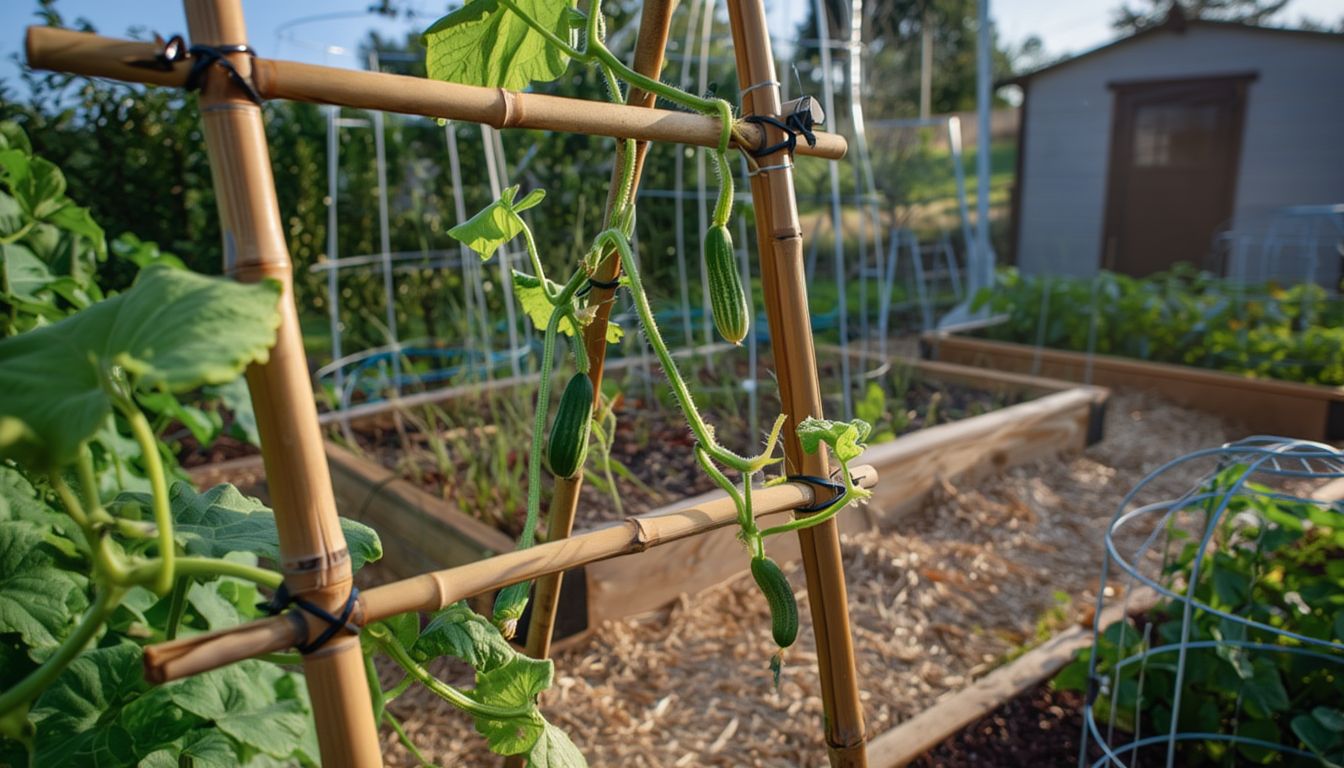
How tall should a cucumber trellis be? When growing cucumbers, a trellis is fantastic for saving space and improving plant health. Cucumber plants grow vigorously and can quickly overtake your garden if left to sprawl. A trellis supports the vines, letting them grow upward and spread out without taking up much space.
One of the most common questions gardeners ask when it comes to growing cucumbers on a trellis is how tall the trellis should be. The answer to this question depends on a few factors, including the type of cucumber you are growing, the available space in your garden, and your personal preferences. Some cucumber varieties are more compact and bushy, while others are more vining and require a taller trellis.
In general, it is recommended to provide a trellis that is at least 6 to 8 feet tall for cucumbers. This height allows the vines to climb and spread out without becoming too crowded. However, if you are growing a bush variety of cucumber or have limited space, a shorter trellis of around 4 feet can still be sufficient. Ultimately, the height of your cucumber trellis will depend on your specific growing conditions and preferences.
Benefits of Using a Cucumber Trellis
As a seasoned gardener, I can confidently say that using a cucumber trellis has numerous benefits. Here are some of the top benefits of growing cucumbers vertically using a trellis:
Maximizes Yield
Cucumbers grown on a trellis tend to produce a higher yield compared to those grown on the ground. This is because the vines have more space to grow and spread out, allowing them to produce more fruit. Additionally, when you grow cucumbers vertically, you can plant them closer together, which also maximizes the yield.
Prevents Disease and Rot
Growing cucumbers on the ground can increase the risk of disease and rot. This is because the fruit is in direct contact with the soil, which can harbor harmful bacteria and fungi. When you grow cucumbers vertically on a trellis, the fruit is off the ground and less likely to come into contact with soil-borne diseases.
Easier Harvesting
Harvesting cucumbers grown on a trellis is much easier than harvesting those grown on the ground. The fruit is more visible and accessible, so you don’t have to search through the foliage to find it. Additionally, when you grow cucumbers vertically, they tend to be straighter and more uniform in size, making them easier to harvest and prepare.
Saves Space
Growing cucumbers vertically on a trellis can save a lot of space in your garden. Instead of letting the vines spread out on the ground, they grow up the trellis, taking up less space. This is especially beneficial if you have a small garden or limited space.
Other Benefits
In addition to the above benefits, growing cucumbers vertically on a trellis has other advantages. For example, it can improve air circulation around the plants, which can reduce the risk of fungal diseases. It can also make it easier to apply pesticides and fertilizers to the plants, as you don’t have to bend down to reach them. Overall, using a cucumber trellis is a smart and efficient way to grow cucumbers and maximize your yield.
Determining the Ideal Height for a Cucumber Trellis
As a gardener, one of the most important decisions you will make is determining the ideal height for a cucumber trellis. The right height will ensure that your vining cucumbers grow and produce quality fruits, while also making it easy for you to manage and harvest them.
Cucumber Varieties and Trellis Height
The height of your cucumber trellis will depend on the variety of cucumber you are growing. For instance, if you are growing a bush variety or have limited space, a shorter trellis of around 4 feet can still be sufficient. However, if you are growing vining cucumbers, it is recommended to provide a trellis that is at least 6 to 8 feet tall. This height allows the vines to climb and spread out without becoming too crowded.
Sunlight and Trellis Height
Another factor to consider when determining the ideal height for a cucumber trellis is sunlight. Cucumbers require a lot of sunlight to grow and thrive. Therefore, it is essential to place your trellis in a location that receives plenty of sunlight.
If your trellis is too tall, it may cast a shadow over your cucumber plants, preventing them from receiving the necessary amount of sunlight. On the other hand, if your trellis is too short, your cucumber plants may become overcrowded, making it difficult for them to access the sunlight they need to grow and produce fruits.
Determining the ideal height for a cucumber trellis requires careful consideration of factors such as cucumber varieties and sunlight. By providing the right height, you can ensure that your vining cucumbers grow and produce quality fruits, while also making it easy for you to manage and harvest them.
Trellis Design Types – How Tall Should a Cucumber Trellis Be?
When it comes to designing a cucumber trellis, there are several options to choose from. Each design has its own advantages and disadvantages, so it’s important to choose the one that best fits your needs.
A-Frame Trellis
One popular option is the A-frame trellis. As the name suggests, this trellis is shaped like an “A” and is typically made from wood or bamboo. A-frame trellises are easy to build and provide excellent support for cucumber plants. They also allow for good air circulation and sunlight penetration, which can help prevent disease.
Arch Trellis
Another option is the arch trellis, which is shaped like an archway. This type of trellis is often made from metal or PVC pipe and can be covered with netting or wire mesh. Arch trellises are a good choice for gardeners with limited space, as they can be placed over a path or walkway. They also provide good support for cucumber plants and can be used for other climbing vegetables as well.
Vertical Trellis – How Tall Should a Cucumber Trellis Be?
Vertical trellises are another popular option for cucumber plants. These trellises are typically made from wood or metal and are designed to stand upright. They can be placed against a wall or fence, or they can be freestanding. Vertical trellises are a good choice for gardeners with limited space, as they take up very little room. They also provide good support for cucumber plants and can be used for other climbing vegetables as well.
Lean-To Trellis
If you have a wall or fence that gets plenty of sunlight, a lean-to trellis might be the right choice for you. This type of trellis is designed to lean against a wall or fence and is typically made from wood or metal. Lean-to trellises are a good choice for gardeners with limited space, as they take up very little room. They also provide good support for cucumber plants and can be used for other climbing vegetables as well.
Overall, there are many trellis options to choose from when it comes to growing cucumbers. Other options include using cattle panels, tomato cages, or lattice. The key is to choose a design that provides good support for your plants and fits your space and budget.
Selecting Materials for Your Trellis
When it comes to selecting materials for your cucumber trellis, there are several options available. Each material has its own advantages and disadvantages, so it’s important to choose the right one for your needs.
Wooden Trellis Options
Wooden trellises are a popular choice for many gardeners. They are sturdy, durable, and can be customized to fit any size or shape. Cedar and redwood are popular choices for wooden trellises, as they are naturally resistant to rot and insects. However, any type of wood can be used as long as it is treated to resist decay.
Metal Trellis Options – How Tall Should a Cucumber Trellis Be?
Metal trellises are another popular choice. They are durable, long-lasting, and can be very decorative. Steel, aluminum, and wrought iron are all common materials used for metal trellises. They are also available in a variety of styles and designs, so you can choose one that complements your garden’s aesthetic.
Alternative Trellis Materials
If you’re looking for a more unique trellis option, there are several alternative materials you can use. Bamboo is a popular choice, as it is lightweight, inexpensive, and easy to work with. Netting, string, and wire fencing can also be used to create a trellis. Twigs and scrap wood can be used to create a rustic-looking trellis, while rebar can be used for a more industrial look.
No matter which material you choose, make sure it is strong enough to support the weight of your cucumber plants. Cucumbers can become heavy once they start fruiting, so it’s important to choose a trellis material that can support their weight.
Preparing the Garden Space – How Tall Should a Cucumber Trellis Be?
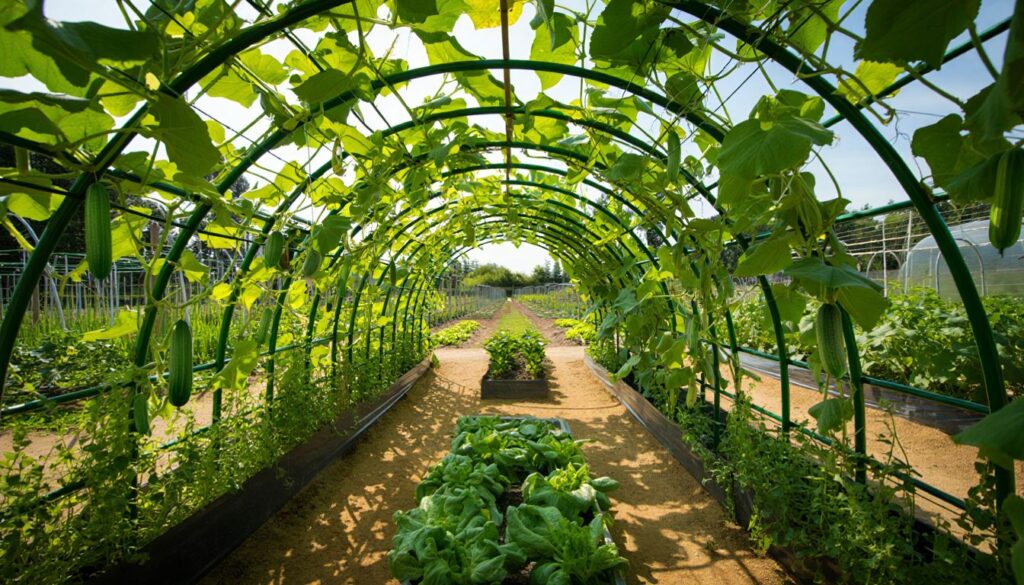
I know that preparing the garden space is crucial for the success of my crops. When it comes to growing cucumbers, the first step is to prepare the soil.
Soil Preparation
Cucumbers grow best in well-draining soil that is rich in organic matter. Before planting, I make sure to amend the soil with compost or well-rotted manure to provide the necessary nutrients. I also ensure that the soil pH is between 6.0 and 7.0, which is the ideal range for cucumber growth.
Spacing and Trellis Placement – How Tall Should a Cucumber Trellis Be?
Once the soil is ready, it’s time to think about spacing and trellis placement. Cucumbers need plenty of growing space, so I make sure to plant them at least 24 inches apart in rows that are 36 inches apart. This allows the vines to spread out and prevents overcrowding.
When it comes to trellis placement, I prefer to use a trellis that is at least 6 to 8 feet tall. This height allows the vines to climb and spread out without becoming too crowded. I also ensure that the trellis is placed in a location that receives full sun exposure, as cucumbers need at least 6 to 8 hours of direct sunlight each day.
If I’m growing cucumbers in a raised bed or container, I make sure to choose a planter that is at least 18 inches deep to provide enough growing space for the roots. I also ensure that the container is placed in a location that receives full sun exposure.
Overall, preparing the garden space is an important step in growing healthy and productive cucumber plants. By amending the soil, spacing the plants correctly, and choosing the right trellis placement, I can ensure that my cucumbers have the best chance of success.
Planting and Training Cucumbers on the Trellis – How Tall Should a Cucumber Trellis Be?
As a seasoned gardener, I have found that growing cucumbers on a trellis is a great way to save space and improve yields. In this section, I will share some tips on how to plant and train cucumbers on a trellis for a bountiful harvest.
Sowing Cucumber Seeds
Before planting cucumber seeds, it is important to prepare the soil by adding compost or well-rotted manure. Cucumbers prefer well-draining soil with a pH of 6.0 to 7.0. Once the soil is ready, sow the seeds about an inch deep and 6 inches apart. Water the soil well and keep it moist until the seeds germinate.
Training Young Vines – How Tall Should a Cucumber Trellis Be?
When the cucumber seedlings reach about 6 inches tall, it’s time to start training the vines up the trellis. Gently tie the main stem to the trellis with soft twine or plant ties. As the plant grows, it will start to produce tendrils that will cling to the trellis on their own. Encourage the tendrils to wrap around the trellis by gently guiding them in the right direction.
Ongoing Vine Care
As the cucumber vines grow, continue to tie them to the trellis every 6 to 8 inches. This will keep the vines from becoming too heavy and breaking off. You can also pinch off any side shoots that form on the main stem to encourage the plant to put its energy into producing fruit.
It’s also important to keep the soil consistently moist, especially during hot weather. Cucumber plants need plenty of water to produce juicy, flavorful fruit. Finally, be sure to harvest your cucumbers regularly to keep the plant producing new fruit.
Growing cucumbers on a trellis is a great way to save space and improve yields. By following these tips for planting and training cucumber vines, you can enjoy a bountiful harvest of delicious cucumbers all season long.
Caring for Cucumbers on the Trellis – How Tall Should a Cucumber Trellis Be?
Growing cucumbers on a trellis is a great way to save space in your garden, avoid soil-borne diseases, and increase air circulation around the plants. However, trellising cucumbers requires special care and attention to ensure that the plants grow healthy and produce a bountiful harvest. In this section, I will discuss some tips on how to care for cucumbers on the trellis.
Watering Practices
Water is essential for the growth and development of cucumbers. When growing cucumbers on the trellis, it is important to provide them with adequate water to prevent the plants from drying out. Cucumbers require at least 1 inch of water per week, either from rainfall or irrigation. However, be careful not to overwater the plants, as this can lead to root rot and other fungal diseases.
To prevent overwatering, it is best to water the plants deeply and infrequently rather than shallowly and frequently. Mulching around the plants can also help to retain moisture in the soil and prevent evaporation.
Dealing with Pests and Diseases – How Tall Should a Cucumber Trellis Be?
Cucumbers are susceptible to a variety of pests and diseases, including cucumber beetles, aphids, powdery mildew, and bacterial wilt. To prevent these problems, it is important to inspect the plants regularly and remove any infected or infested leaves or fruits. You can also use organic insecticides or pesticides to control pests, but be sure to read and follow the instructions carefully. Additionally, it is important to rotate your crops every year to prevent soil-borne diseases from building up in the soil.
Fertilizing and Mulching
Cucumbers are heavy feeders, and they require regular fertilization to grow healthy and produce a good harvest. When growing cucumbers on the trellis, it is best to use a balanced fertilizer that contains equal amounts of nitrogen, phosphorus, and potassium. You can also use organic fertilizers, such as compost or aged manure, to provide the plants with nutrients.
Mulching around the plants can also help to conserve moisture in the soil and prevent weeds from growing. However, be sure to keep the mulch away from the base of the plants to prevent stem rot. By following these tips, you can ensure that your cucumbers grow healthy and produce a bountiful harvest on the trellis.
Harvesting Cucumbers from the Trellis
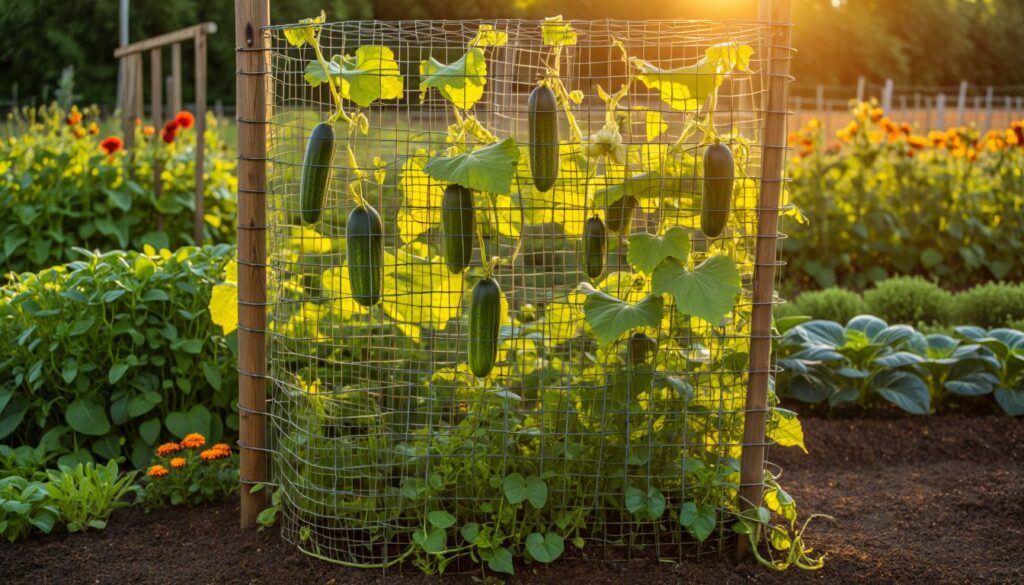
Harvesting cucumbers from a trellis is an easy and enjoyable task. Once the cucumbers have reached maturity, they can be harvested by gently twisting them off the vine or by using a pair of pruning shears. It is important to harvest cucumbers regularly to encourage continued production throughout the growing season.
When harvesting cucumbers, it is important to handle them gently to avoid damaging the fruit. Cucumbers should be harvested when they are firm and have a glossy appearance. Overripe cucumbers can be bitter and have a tough texture. It is best to harvest cucumbers in the morning when the fruit is cool and has a higher moisture content.
It is also important to monitor the growth of the cucumbers on the trellis to ensure that they are not overcrowded. Overcrowding can lead to smaller fruit and can also make it difficult to harvest the cucumbers. Regular pruning of the vines can help to keep the cucumber plants healthy and productive.
Overall, harvesting cucumbers from a trellis is a simple and rewarding task. With proper care and attention, a cucumber trellis can provide a bountiful harvest throughout the growing season.
DIY Cucumber Trellis Projects – How Tall Should a Cucumber Trellis Be?
If you’re looking for an inexpensive way to create a sturdy structure for your cucumber plants, a DIY cucumber trellis is the way to go. There are many different types of trellises you can build, depending on the space you have available and the materials you have on hand.
Building a Simple A-Frame Trellis
One of the easiest and most popular types of cucumber trellises is the A-frame trellis. To build one, you’ll need two long pieces of lumber (such as 2x4s) and a few shorter pieces for crossbars. You’ll also need a drill and some screws.
To create the A-frame shape, simply attach the two long pieces of lumber at the top and angle them outwards towards the ground. Then, attach the shorter crossbars horizontally between the two long pieces. This will create a ladder-like structure that your cucumber plants can climb.
Creating a Sturdy Vertical Trellis – How Tall Should a Cucumber Trellis Be?
If you want a trellis that offers more privacy and support, choose a vertical trellis. Build this type of trellis with cattle panels, which are sturdy wire mesh panels available at most hardware stores.
To build a vertical trellis, simply attach the cattle panel to a sturdy structure (such as a fence or the side of your house) using screws or zip ties. Then, attach some additional crossbars horizontally across the panel to provide support for your cucumber plants.
Repurposing Materials for Trellises
If you want to repurpose materials you already have, you can use many different items to build a cucumber trellis. For example, use an old ladder, a piece of string, or even turn an old privacy screen into a trellis.
To build a trellis using an old ladder, simply lean the ladder against a sturdy structure (such as a fence or the side of your house) and tie your cucumber plants to the rungs using twine or string. To create a string trellis, simply attach some sturdy poles to the ground and run strings vertically between them. Then, tie your cucumber plants to the strings using twine or string.
There are many different types of DIY cucumber trellises you can create, depending on your space and materials. Whether you choose to build an A-frame trellis, a vertical trellis, or repurpose materials you already have on hand, a sturdy trellis will provide support for your cucumber plants and help them grow strong and healthy.
Before You Go – How Tall Should a Cucumber Trellis Be
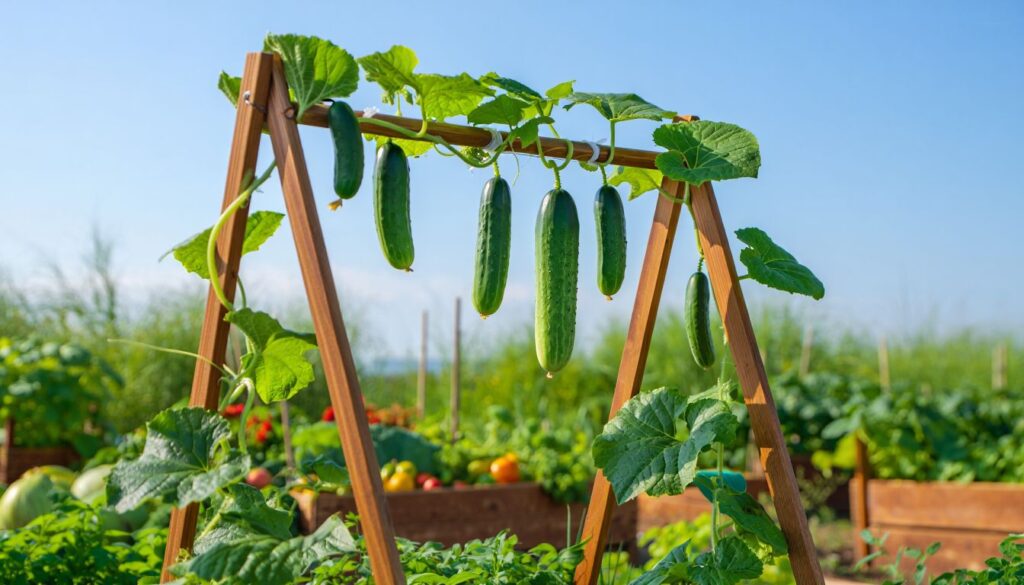
Training cucumbers to climb a trellis not only saves space but also improves air circulation, reduces disease, and makes harvesting easier. Whether you use wood, wire, or repurposed materials, a sturdy trellis transforms your garden into a more productive and organized space.
Before you go, remember to position your trellis in full sun, secure it firmly in the ground, and guide young vines gently as they grow. With regular care and support, your cucumbers will thrive vertically, producing cleaner, straighter fruits and freeing up valuable garden real estate. A cucumber trellis is more than a structure, but a smart strategy for healthier plants and better yields.
Don’t forget to add theherbprof.com homepage to your favourites so you don’t miss out on future articles!
References – How Tall Should a Cucumber Trellis Be?
Little Herb Encyclopedia, by Jack Ritchason; N.D., Woodland Publishing Incorporated, 1995
The Ultimate Healing System, Course Manual, Copyright 1985, Don Lepore
Planetary Herbology, Michael Tierra, C.A., N.D., Lotus Press, 1988
Handbook of Medicinal Herbs, by James A. Duke, Pub. CRP Second Edition 2007
The Complete Medicinal Herbal, by Penelope Ody, Published by Dorling Kindersley
Check the Following Articles
How Long Will Butternut Squash Keep?
Getting Rid of Crabgrass: Top Lush Lawn Methods Now
How to Plant Creeping Thyme? A Step-by-Step Guide
Frequently Asked Questions – How Tall Should a Cucumber Trellis Be?
What are the ideal dimensions for a cucumber trellis in a raised bed garden?
The dimensions of a cucumber trellis in a raised bed garden vary with the cucumber variety and available space. Build a trellis at least 6 to 8 feet tall so the vines climb and spread without crowding. Make the trellis at least 2 feet wide to give the cucumber plants enough room to grow.
Can cucumbers be grown vertically in pots, and if so, what trellis size is recommended?
Gardeners can grow cucumbers vertically in pots. The trellis size depends on the pot and the cucumber variety. Use a trellis at least 4 feet tall when growing cucumbers in pots.
What materials are most suitable for constructing a durable and effective cucumber trellis?
Wood, bamboo, and metal work best for constructing a durable and effective cucumber trellis. These materials provide strength and support the weight of cucumber plants. Gardeners can also use nylon netting or wire mesh to hold the vines.
Are there any advantages to using a bamboo trellis for cucumber plants?
Bamboo trellises offer several advantages for cucumber plants. Bamboo grows as a renewable resource that is eco-friendly and biodegradable. It feels lightweight, works easily, and costs little. Bamboo trellises also give cucumber vines natural and attractive support.
What design considerations should be taken into account when creating a DIY cucumber trellis?
When you create a DIY cucumber trellis, consider the plant size, available space, and chosen materials. Build the trellis sturdy enough to support the plants and design it for easy harvesting. Make sure the trellis looks appealing and fits the overall garden design.
Does the height of a cucumber trellis affect the yield and health of the plants?
The height of a cucumber trellis directly affects plant yield and health. A short trellis crowds the vines and limits growth, reducing yield. An overly tall trellis makes harvesting difficult and stresses the plants. Choose a trellis height that matches the cucumber variety and available space.