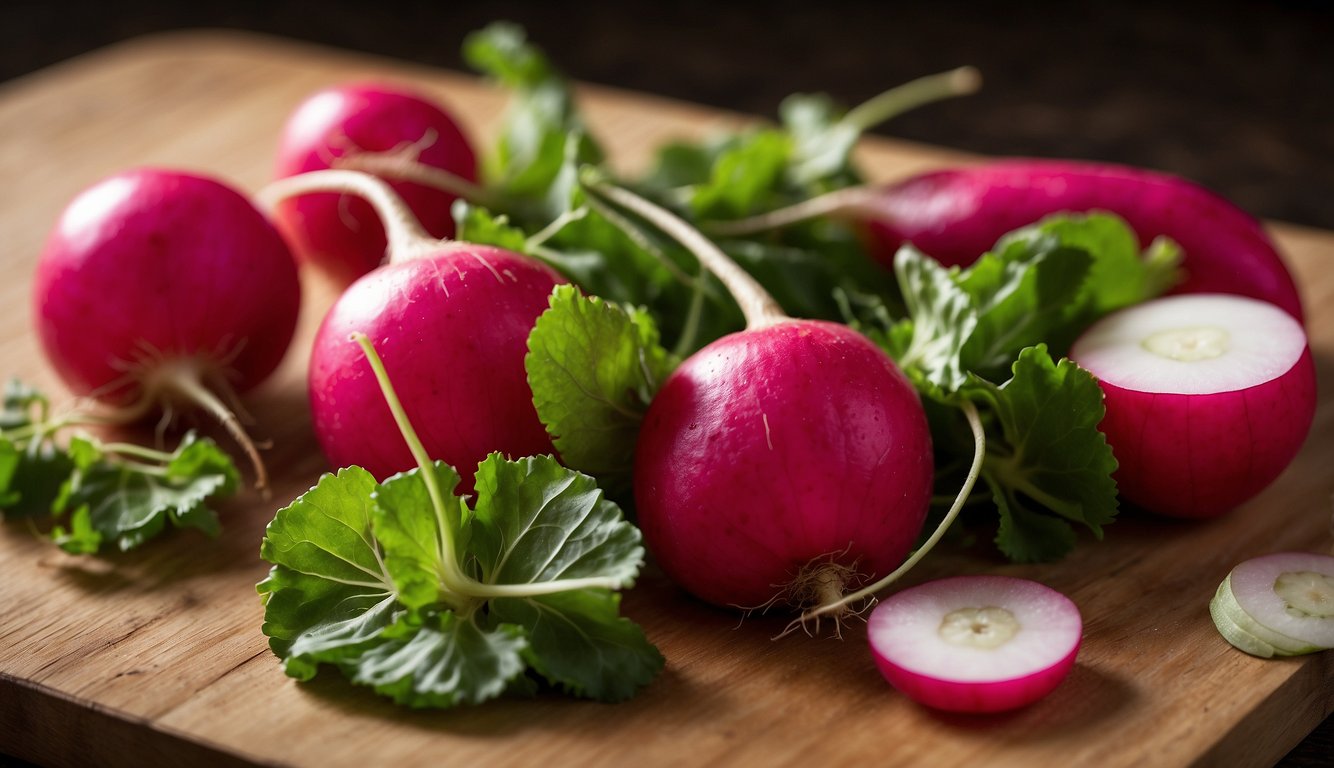
Radishes are flavorful and versatile, available in many different varieties. Kinds of Radishes: A Comprehensive Guide highlights just how diverse these root vegetables can be. From the crisp, mild daikon to the vibrant and spicy Easter Egg, there is a type of radish to suit every palate. As someone who enjoys both gardening and cooking, I’ve always been intrigued by the wide range of radishes and the unique tastes and textures they offer.
One of the most popular types of radish is the Cherry Belle radish, which is bright red color and has a crisp texture and slightly spicy flavor. This radish is perfect for adding a pop of color and flavor to salads, sandwiches, and tacos. Another popular variety is the French Breakfast radish, which is elongated and has a mild, sweet flavor. This radish is often served with butter and salt as a breakfast or snack in France.
Whether you are a fan of spicy or mild flavors, there is a radish variety out there for you to enjoy. In this article, I will explore some of the most popular types of radishes and share tips on how to grow and prepare them. Join me on a journey through the world of radishes and discover new ways to incorporate this delicious vegetable into your meals.
Radish Varieties
As a lover of radishes, I have grown many different varieties over the years. In this section, I will share some information about the most popular radish varieties, including their colors, shapes, and sizes.
Red Radishes
Red radishes are the most common type of radish found in grocery stores. Cherry Belle is a popular variety that is round and bright red. It has a slightly spicy flavor and a crisp texture. French Breakfast radishes are oblong and have a red top that fades to white at the bottom. They have a mild flavor and a crunchy texture.
White Radishes
White radishes are milder in flavor than red radishes. Daikon radish is a popular variety that is long and white. It has a mild flavor and a crunchy texture. White Icicle is another variety that is long and white. It has a pungent flavor and is often used in salads.
Black Radishes
Black radishes have black skin and white flesh. It is often used in Mexican cuisine and is great for pickling. Black Spanish is a popular variety that has a sharp flavor.
Other Colors – Kinds of Radishes: A Comprehensive Guide
Radishes come in a variety of colors, including purple, yellow, and green. Watermelon radishes are a popular variety that is green on the outside and has a bright pink interior. They have a sweet flavor and are great in salads.
Heirloom Varieties
Heirloom radish varieties are becoming more popular as people look for unique and flavorful options. German Giant is a popular heirloom variety that is large and has a mild flavor. Easter Egg radishes come in a variety of colors, including pink, purple, and white. They have a mild flavor and are great for snacking.
Overall, there are many different radish varieties to choose from, each with its unique flavor and texture. Whether you prefer a spicy red radish or a mild white radish, there is a variety out there for everyone.
Culinary Uses – Kinds of Radishes: A Comprehensive Guide
Radishes are a versatile vegetable that can be consumed in various ways. Here are some of the most popular culinary uses of radishes.
Raw Consumption
Radishes have a crisp and crunchy texture with a slightly spicy flavor. They are often consumed raw in salads or as a garnish for dishes. French breakfast radishes, in particular, have a mild flavor that makes them perfect for snacking.
Cooking Methods
Radishes can also be cooked in various ways. Roasting radishes bring out their sweetness and mellows down their spiciness. Sautéed radishes are a great addition to stir-fries, while braised radishes make a delicious side dish.
Pickling and Preserving
Pickling and preserving radishes is a great way to extend their shelf life and add flavor to dishes. Quick pickled radishes can be used as a topping for tacos or sandwiches. Marinated radishes are a great addition to salads, and they can also be used as a garnish for avocado toast.
Dishes and Pairings
Radishes can be used in various dishes, from salads to dips. They pair well with avocado, feta cheese, and hummus. Radish slices can also be used as a topping for toast, adding a crunchy texture to the dish.
Overall, radishes are a versatile and nutritious vegetable that can be consumed in various ways. Whether raw, cooked, pickled, or used in dishes, radishes add flavor and texture to any meal.
Flavor Profiles
Radishes come in a variety of flavors, ranging from mild and sweet to peppery and pungent. In this section, I will explore the different flavor profiles of radishes and provide some examples of each.
Mild and Sweet – Kinds of Radishes: A Comprehensive Guide
Some radishes have a mild flavor with a slightly sweet taste. The Cherry Belle radish is a popular variety that is known for its mild flavor and crisp texture. This type of radish is commonly used in salads and as a garnish for sandwiches and other dishes. Another variety that has a mild flavor is the Daikon radish. This type of radish is often used in Asian cuisine and has a mild, slightly sweet taste that pairs well with other flavors.
Peppery and Pungent
If you’re looking for a radish with a bit more kick, then you’ll want to try one with a peppery or pungent flavor. The French Breakfast radish is a popular variety that has a spicy flavor and a long, thin shape. This type of radish is often used in salads and as a garnish for dishes that need a little extra flavor. Another radish with a peppery flavor is the Watermelon radish. This type of radish has a bright pink interior and a spicy, peppery taste that pairs well with other flavors.
Unique Flavors
Some radishes deliver unique flavors that differ from the typical radish taste. For example, the Black Spanish radish offers a strong, earthy flavor and often appears in Mexican cuisine. This radish also provides high levels of antioxidants and other health benefits. Another distinctive variety, the Horseradish, delivers a strong, pungent flavor and frequently enhances sauces and condiments.
Overall, radish flavor profiles vary widely depending on the variety and preparation. You can enjoy mild and sweet tastes or spicy, pungent flavors, and every palate can find a radish to savor.
Growing Radishes – Kinds of Radishes: A Comprehensive Guide
Radishes make a great vegetable to grow because they cultivate easily and mature in a short season. In this section, I cover garden cultivation, container gardening, and harvest and storage.
Garden Cultivation
When you grow radishes in a garden, choose a sunny spot that receives at least six hours of sun daily. Radishes thrive in well‑draining soil rich in organic matter. Prepare the soil by loosening it to a depth of at least 6 inches and clearing away rocks or debris. Plant radish seeds about 1/2 inch deep and 1 inch apart in rows spaced 12 inches apart. Water the seeds regularly, but avoid overwatering, since excess water can split the roots.
Container Gardening – Kinds of Radishes: A Comprehensive Guide
You can also grow radishes in containers, which works well if you have limited space or poor soil quality. Choose a pot at least 6 inches deep with drainage holes. Fill it with a well‑draining potting mix rich in organic matter. Plant radish seeds about 1/2 inch deep and 1 inch apart in the container. Place the container in a sunny spot that receives at least six hours of sun daily. Water the seeds regularly, but avoid overwatering to prevent root splitting.
Harvest and Storage
Harvest radishes when they reach the size of a large marble, usually 3–4 weeks after planting. Pull them gently from the ground by the leaves. If the leaves resist, loosen the soil around the radish with a garden fork. Store harvested radishes in the refrigerator for up to a week. Remove the leaves before storage, since they draw moisture from the roots and make them soft.
Nutritional Information – Kinds of Radishes: A Comprehensive Guide

I always recommend radishes as part of a healthy diet. These root vegetables deliver low calories and high nutrients, making them an excellent choice for anyone who wants to maintain a healthy weight and lifestyle.
One of the most significant nutritional benefits of radishes comes from their high vitamin C content. One cup of sliced radishes provides almost 30% of the recommended daily intake of vitamin C. This essential nutrient strengthens the immune system and supports healthy skin.
You can eat radishes entirely, including their greens. These greens supply vitamins A, C, and K, along with calcium and iron. You can enjoy them raw or cooked, and they add flavor and nutrition to salads, soups, and stews.
Radishes also provide dietary fiber in addition to their vitamin content. One cup of sliced radishes contains almost 2 grams of fiber, which promotes healthy digestion and helps you feel full and satisfied.
Radishes make a nutritious and delicious addition to any diet. Whether you eat them raw or cooked, their high vitamin and fiber content supports a healthy lifestyle.
Radish Selection and Storage
Choosing Quality Radishes – Kinds of Radishes: A Comprehensive Guide
When selecting radishes, look for smooth, unblemished skin and bright red color. The texture should be firm and crisp, with a white flesh that is not spongy. Avoid radishes that are soft, wilted, or have brown spots.
If you are looking for a specific type of radish, such as the Black Spanish radish or the Cherry Belle radish, check the produce section of your local grocery store or farmers market. Different types of radishes have unique flavors and textures that can add variety to your meals.
Storage Tips
To keep radishes fresh, remove the greens and place the radishes in a plastic bag in the refrigerator. Store the greens separately in a plastic bag with a damp paper towel to preserve their freshness.
For a longer shelf life, slice the radishes and place them in a container of cold water in the refrigerator. This method maintains their crisp texture and keeps them fresh for up to a week.
If you harvest more radishes than you can eat, pickle them for later use. Pickled radishes add a tangy crunch to sandwiches, salads, and tacos.
By following these simple storage tips, you extend the freshness and crispness of radishes, allowing you to enjoy their unique flavor and texture in many dishes.
Cultural Significance – Kinds of Radishes: A Comprehensive Guide
Radishes have grown and nourished people for thousands of years, with their cultural significance shifting across societies and regions. In ancient Egypt, people valued radishes so highly that they used them as currency. In China, farmers have cultivated radishes for over 2,000 years, and cooks continue to use them as key ingredients in traditional dishes.
One variety of radish that carries particular cultural significance is Raphanus sativus, or the “Lady Slipper” radish. Growers named this variety after its unique shape, which resembles a woman’s slipper. Korean cuisine features it often, especially pickled and served with rice dishes. People also associate the Lady Slipper radish with good luck and give it as a gift during the Korean New Year.
Another radish variety with cultural importance is the Chinese Rose radish. Gardeners admire its beautiful pink color, and chefs use it as a decorative garnish in Chinese cuisine. Practitioners of traditional Chinese medicine also rely on it to treat a variety of ailments, believing in its medicinal properties.
Radishes have shaped many cultures throughout history. People have used them as currency, cooked them into traditional dishes, and displayed them as decorative garnishes. In every role, radishes have left a lasting mark on the culinary and cultural landscape of societies worldwide.
Before You Go – Kinds of Radishes: A Comprehensive Guide

Radishes may be small, but they bring big flavor, color, and crunch to the table. From the peppery bite of classic red radishes to the striking hues of watermelon and daikon varieties, these root vegetables prove that diversity in the garden leads to excitement in the kitchen.
Before you go, remember that radishes grow quickly, making them perfect for beginner gardeners and seasoned growers alike. Whether you enjoy them raw in salads, pickled for tangy snacks, or roasted for a mellow sweetness, radishes offer endless possibilities. Plant a mix of varieties, and you’ll discover just how versatile and rewarding these cool‑looking vegetables can be.
Don’t forget to add theherbprof.com homepage to your favourites so you don’t miss out on future articles!
References – Kinds of Radishes: A Comprehensive Guide
Little Herb Encyclopedia, by Jack Ritchason; N.D., Woodland Publishing Incorporated, 1995
The Ultimate Healing System, Course Manual, Copyright 1985, Don Lepore
Planetary Herbology, Michael Tierra, C.A., N.D., Lotus Press, 1988
Handbook of Medicinal Herbs, by James A. Duke, Pub. CRP Second Edition 2007
The Complete Medicinal Herbal, by Penelope Ody, Published by Dorling Kindersley
Check the Following Articles
All Types of Weed List: A Guide to Cannabis Strains
Healthiest Vegetables to Grow in Your Garden
How to Pick a Pineapple: Tips from a Fruit Expert
How to Grow Pineapple from the Top: A Step-by-Step Guide
Frequently Asked Questions – Kinds of Radishes: A Comprehensive Guide
What are the different varieties of radishes available?
Gardeners grow many types of radishes, each with unique flavor and appearance. Popular varieties include Cherry Belle, French Breakfast, Black Spanish, Watermelon, and Daikon. These radishes differ in size, shape, and color, and you can enjoy them in many ways.
Which radish varieties are best suited for raw consumption?
You can eat radishes raw or cooked, but some varieties taste best raw. Cherry Belle, French Breakfast, Watermelon, and Easter Egg radishes offer mild, sweet flavors and crisp textures. They work perfectly in salads, sandwiches, and as snacks.
Can you provide a list of radish types accompanied by images?
You can find many radish types, each with a distinct appearance and flavor. For a comprehensive list with images, check this source.
What are the names of large radish varieties?
Large radish varieties include Daikon, Watermelon, Black Spanish, and China Rose. These radishes grow up to 18 inches long and often appear in Asian cuisine.
How do watermelon radishes differ from other types?
Watermelon radishes belong to the winter radish group and display a vibrant pink interior. Unlike spicier, pungent radishes, watermelon radishes deliver a mild, sweet flavor that suits salads and other raw dishes.
Which radishes have a reputation for being the sweetest?
French Breakfast and Cherry Belle radishes earn recognition for their sweet, mild flavor. They combine crisp texture with a slightly peppery taste, making them popular choices for salads and raw preparations.