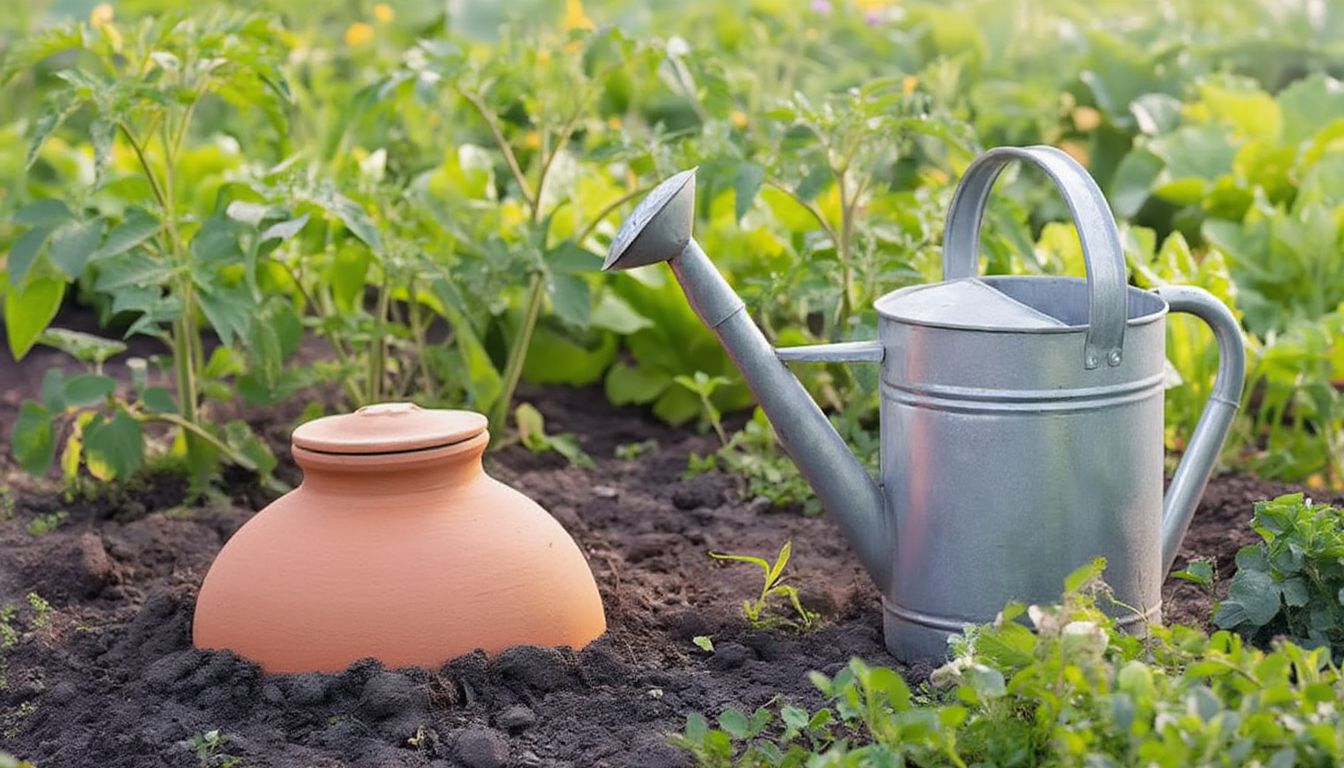
I recently discovered an ancient technique for watering plants that’s been around for over 4000 years – Ollas irrigation. To begin with, this method uses unglazed clay pots to irrigate plants. It’s an efficient way to conserve water while keeping your plants healthy and hydrated.
Olla irrigation is a low-tech self-watering system that is easy to make and maintain, making it a great option for both novice and experienced gardeners. The basic premise of olla irrigation is that the water slowly leaches out of the clay pot and reaches the roots of the plant. This method is much more efficient than traditional watering methods, as it reduces water loss due to evaporation and runoff.
Olla irrigation can help prevent overwatering and underwatering, as the water is released slowly and evenly. This not only saves water but also helps to prevent plant stress and disease. In addition to being an efficient way to water plants, olla irrigation is also a great way to conserve water.
With water becoming an increasingly scarce resource in many parts of the world, it is important to find ways to use it wisely. Olla irrigation can help you do just that, by reducing water waste and ensuring that your plants get the water they need to thrive.
Understanding Ollas Irrigation
History and Origin
I have always felt fascinated by ancient irrigation techniques, and olla irrigation stands out as no exception. People have practiced this method for over 4000 years, and records show it originated in China and North Africa.
The word “olla” comes from Spanish and means “pot,” which fits perfectly since ollas are unglazed clay pots that gardeners bury in the soil to water plants. Ancient farmers relied heavily on ollas because they irrigated crops effectively in arid regions. Communities also used them in places where water was scarce or unreliable.
Today, olla irrigation is gaining popularity among gardeners who are looking for a sustainable and water-efficient way to irrigate their plants.
Principles of Ollas
The basic principle of olla irrigation works simply. Gardeners bury ollas in the soil and fill them with water. The porous, unglazed clay walls let water seep slowly into the surrounding soil. This process creates a moisture gradient, with the soil closest to the olla staying moist and the soil farther away drying gradually.
The key to successful olla irrigation lies in maintaining consistent soil moisture tension. Gardeners must keep the soil from becoming too wet or too dry. Overly wet soil rots plant roots, while overly dry soil causes plants to wilt and die.
Olla irrigation offers gardeners a low-tech and low-cost method of watering. They can make or buy ollas easily, and the pots demand very little maintenance. Ollas conserve water by hydrating only the soil around them, so gardeners avoid wasting water through runoff or evaporation.
Benefits of Ollas Irrigation
I have found that olla irrigation is a highly effective way to water my plants. Here are a few benefits of using olla irrigation in your garden.
Water Efficiency
Olla irrigation is an incredibly water-efficient method of watering plants. The olla is buried in the soil, and the water slowly seeps out of the unglazed clay pot, directly to the roots of the plants.
This means that there is minimal evaporation and water loss, as the water is delivered directly to where it is needed. As a result, olla irrigation can save up to 90% of the water used in traditional irrigation systems.
Root Health
Olla irrigation is also beneficial for the health of plant roots. The consistent water supply provided by the olla allows plants to develop deep, strong roots. This not only helps the plants to absorb nutrients more efficiently, but it also makes them more resistant to drought and other stresses.
Weed Reduction
Another benefit of olla irrigation is that it can help to reduce weed growth. Traditional irrigation systems often water the entire garden, which can encourage weed growth. With olla irrigation, however, the water is delivered directly to the roots of the plants, which means there is no excess water to encourage weed growth.
Setting Up an Ollas Irrigation System
When setting up an olla irrigation system, there are two key things to consider: choosing the right ollas and the installation process.
Choosing the Right Ollas
Choosing the right ollas ensures your garden receives the right amount of water. The size of your garden or raised bed determines how many ollas you need. When you select ollas, consider both the size and shape of your garden or raised bed.
Gardeners most often use terracotta pots as ollas for irrigation. These pots stay porous and let water seep through their walls into the soil. When you select terracotta pots, check that they include a drainage hole at the bottom so water does not pool inside.
Installation Process
The installation process for olla irrigation is relatively simple. Here’s a step-by-step guide to get you started:
- Bury the pot: Bury the olla in the soil at a depth that is appropriate for the size of your garden or raised bed. The neck of the pot should be above ground level.
- Cork: Cover the neck of the pot with a cork to prevent dirt from getting inside.
- Sealant: Seal the cork with a sealant to prevent water from seeping out.
- Fill with water: Fill the olla with water. The water will slowly seep through the walls of the pot into the soil, providing a steady supply of water to your plants.
- Refill: Check the olla regularly and refill it with water as needed.
By following these simple steps, you can set up an olla irrigation system that will keep your garden or raised bed watered and healthy.
Ollas Irrigation in Different Gardens
I have found that olla irrigation is a versatile and effective way to water plants in different types of gardens. Here are some examples.
Vegetable Gardens
In my in-ground vegetable garden, I have used ollas to water my plants with great success. By burying the ollas in the soil near the plants and filling them with water, I have been able to provide a steady supply of moisture to the roots of my vegetables. This has resulted in healthier plants and a bountiful harvest.
Container Gardening
Olla irrigation is also a great option for container gardening. By placing an olla in a large container and filling it with water, I have been able to provide a consistent source of moisture to my plants without having to water them as frequently. This has been especially helpful during hot and dry weather, when container plants can quickly dry out and become stressed.
Dryland Farming
For gardeners in arid regions, olla irrigation can be a game-changer. By burying ollas in the soil and filling them with water, gardeners can create a microclimate of lush plants in an otherwise dry landscape.
This is known as dryland farming, and it has been practiced for centuries in places like North Africa and the American Southwest. Olla irrigation is a key component of this technique, as it allows for efficient use of water and helps plants thrive in harsh conditions.
Maintaining Your Ollas Irrigation System
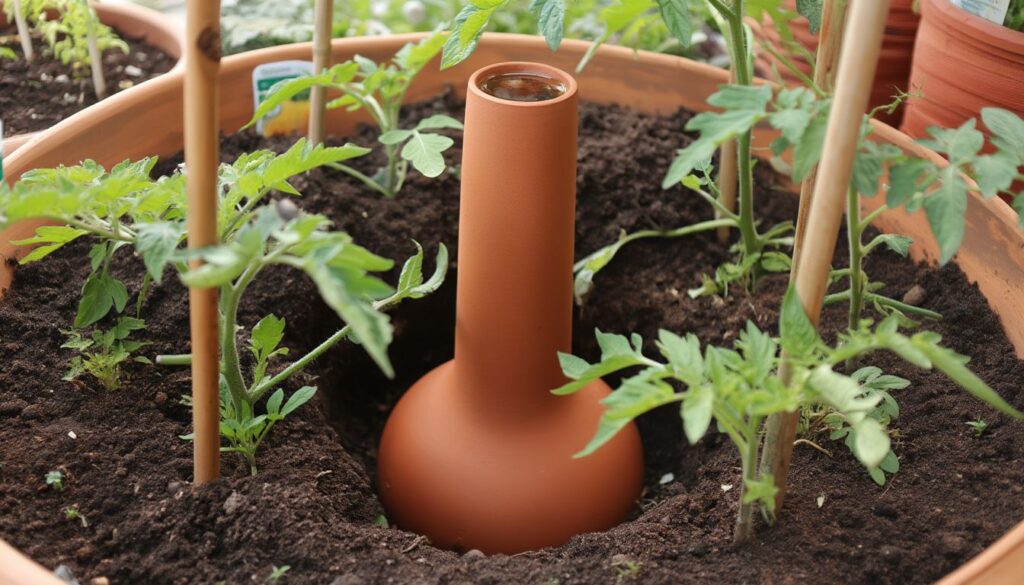
As with any irrigation system, maintaining your olla system is crucial to ensure that it functions properly and provides your plants with the necessary amount of water. Here are some tips to help you maintain your olla irrigation system:
Watering Schedule
One of the most important aspects of maintaining your olla irrigation system is to establish a proper watering schedule. Depending on the type of crops you are growing and the climate you live in, you may need to adjust your watering schedule accordingly. It is recommended to water your ollas once or twice a week, depending on the weather conditions.
Olla Care and Replacement
Regularly inspect your ollas for cracks or leaks because these issues reduce the efficiency of your irrigation system. Replace any olla immediately when you notice damage. Prevent cracking by avoiding extreme temperatures and handling your ollas carefully. In addition to inspecting the ollas, check the mulch around your plants.
Mulch retains moisture in the soil and reduces evaporation, which helps your ollas work more efficiently. If the mulch dries out, add more water to the ollas to keep the soil moist.
Use a meter to monitor the moisture level in the soil around your plants. This tool helps you adjust your watering schedule and ensures that your ollas deliver the right amount of water.
Apply liquid fertilizer to supplement the nutrients in your soil. Stronger, healthier plants respond better to irrigation, which improves the efficiency of your olla system.
When you use DIY ollas, follow the instructions carefully to install and maintain them properly. With consistent care and attention, your olla irrigation system supplies your plants with the water they need to thrive.
Plant Selection for Ollas Irrigation
When selecting plants for olla irrigation, there are a few things to keep in mind. First, it’s important to choose plants that are well-suited to deep watering. Second, you’ll want to select plants that are well-suited to the climate and soil conditions in your area.
Deep Watering for Deep Roots
One of the benefits of olla irrigation is that it promotes deep root growth. This is because the water is delivered directly to the roots of the plant, encouraging them to grow deeper in search of moisture. As a result, it’s important to choose plants that are well-suited to deep watering.
Tomatoes, melons, squash, and young trees are all good candidates for olla irrigation because they have deep root systems. Herbs, greens, grains, and legumes, on the other hand, have shallower root systems and may not be as well-suited to olla irrigation.
Suitable Plants for Ollas
In addition to deep root systems, it’s important to choose plants that are well-suited to the climate and soil conditions in your area.
For example, if you live in a hot, dry climate, you’ll want to choose plants that are drought-tolerant and can withstand high temperatures. Some good options for olla irrigation in hot, dry climates include tomatoes, melons, and squash. These plants are well-suited to the heat and can thrive with consistent, deep watering.
In cooler, wetter climates, you may want to consider herbs, greens, and legumes, which are better-suited to the cooler temperatures and higher moisture levels.
Troubleshooting Common Issues – Ollas Irrigation
As with any irrigation system, ollas can face some common problems. Here are a few tips to help you troubleshoot these issues.
Preventing Algae and Silt
One of the most common problems with ollas is the buildup of algae and silt in the pot. This can clog the pores of the pot, reducing its effectiveness.
To prevent this, I recommend cleaning the pot regularly. You can do this by removing the pot from the soil and scrubbing it with a brush. Be sure to use a non-toxic cleaner, as harsh chemicals can damage the pot and harm your plants.
Another way to prevent algae and silt buildup is to cover the pot with a mesh screen. This will allow water to flow through the pot while keeping debris out. You can also add a layer of gravel or sand to the bottom of the pot to help filter the water.
Managing Insect Populations
Insects can be a problem with any irrigation system, including ollas. To manage insect populations, I recommend covering the pot with a mesh screen. This will prevent insects from laying eggs in the pot or crawling inside.
You can also add a layer of diatomaceous earth to the top of the soil around the pot. This will help deter crawling insects. Another way to manage insect populations is to use companion planting. Some plants, such as marigolds and garlic, are known to repel insects. Planting these around your olla can help keep insects at bay.
Comparing Ollas Irrigation to Other Methods
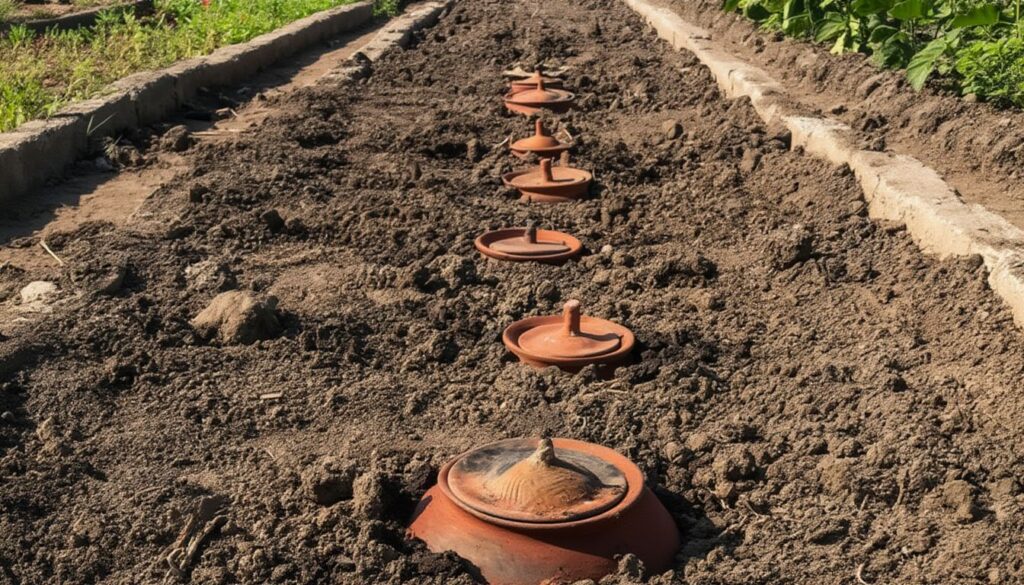
When it comes to irrigating your garden, there are a variety of methods to choose from. In this section, I will compare olla irrigation to two other popular methods: drip irrigation and watering cans.
Ollas vs. Drip Irrigation
Drip irrigation gives gardeners a low-tech, inexpensive way to water plants. Gardeners run a hose from a water source to the garden and attach drip irrigation tape to the hose. They lay the tape along the rows of plants, delivering water directly to the roots.
While drip irrigation works well for some gardeners, it also brings downsides. Setting it up takes time, and dirt can clog the tape, which causes uneven watering.
Olla irrigation, by contrast, offers incredible simplicity. Gardeners bury the olla in the soil and fill it with water. The porous, unglazed pot releases moisture slowly, providing a steady supply of water to the plants.
Ollas and Watering Cans
Watering cans are a classic method of watering plants. They are easy to use and allow you to water plants exactly where you want to. However, they can be time-consuming if you have a large garden.
Olla irrigation is a great alternative to watering cans. It allows you to water your plants without having to spend hours carrying a watering can around your garden. Plus, since the olla delivers water directly to the roots, you can be sure that your plants are getting the moisture they need.
Innovations and DIY Ollas Irrigation
I always look for ways to make my garden more efficient and sustainable. One irrigation technique that has gained popularity in recent years is olla irrigation. Gardeners bury unglazed clay ceramic vessels in the ground and fill them with water. The vessels slowly release moisture into the soil, providing plants with a consistent source of hydration.
Creating Your Own Ollas
One of the great things about olla irrigation is that you can easily create your own ollas at home. All you need is a terra-cotta pot, some cement, and a few basic tools.
Start by plugging the drainage hole in the bottom of the pot with a small piece of cement. Then, mix up a batch of cement and pour it into the pot until it is about two-thirds full. Insert a smaller terra-cotta pot into the cement, making sure it is centered and level. Allow the cement to dry completely before removing the smaller pot. You now have your very own DIY olla!
Advanced Olla Systems
While creating your own ollas is a great way to get started with this irrigation technique, there are also more advanced olla systems available.
For example, some companies sell olla pots that are specifically designed for seedlings or chiles. These pots have a smaller opening at the top, which helps to prevent evaporation and keep the soil moist. Additionally, some olla systems incorporate drip-irrigation hoses, which can be used to water multiple plants at once.
Environmental Impact and Sustainability – Ollas Irrigation
Promoting Biodiversity
As an ancient and sustainable irrigation technique, olla irrigation has a positive impact on the environment by promoting biodiversity.
By using ollas, we can create a diverse ecosystem in our gardens, which in turn helps to maintain the health of the soil and the plants that grow in it. This is especially important for native plant species and heirloom varieties of crops that are adapted to specific environments.
Native Americans have long used ollas to irrigate their crops, and in doing so, they have helped to preserve the biodiversity of their local ecosystems. By using ollas to grow beans, for example, Native Americans were able to cultivate a wide variety of bean species and maintain a healthy soil ecosystem.
Today, organizations like Native Seeds/Search continue to promote the use of ollas as a sustainable irrigation technique for growing heirloom varieties of crops.
Olla Irrigation in Climate Change Adaptation
In addition to promoting biodiversity, olla irrigation is also a sustainable irrigation technique that can help to mitigate the effects of climate change. With its focus on conserving water and reducing runoff, olla irrigation is an effective way to adapt to changing weather patterns and water availability.
Fibrous root systems and woody vegetation are particularly well-suited to olla irrigation, as they can draw water from the porous walls of the ollas and maintain healthy growth even in dry conditions.
By using ollas to irrigate these types of plants, we can help to reduce the amount of water that is lost to evaporation and runoff, and ensure that our gardens remain healthy and productive even in the face of climate change.
Before You Go – Ollas Irrigation
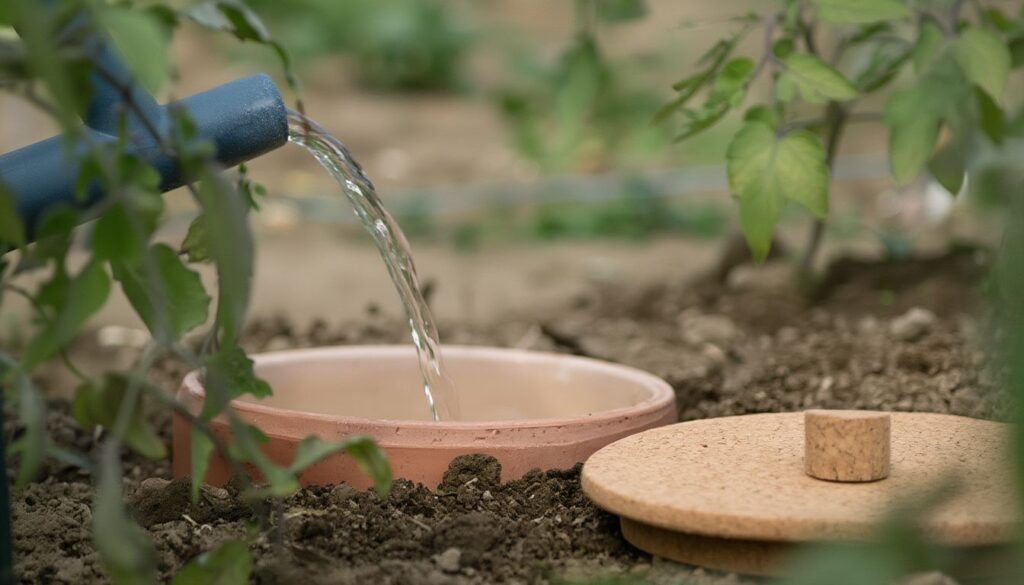
Ollas irrigation offers a simple yet powerful way to conserve water and keep plants healthy. By slowly releasing moisture directly to the roots, these clay pots reduce evaporation, encourage deep root growth, and minimize the need for frequent watering. Gardeners in dry climates especially benefit from this ancient technique, but anyone can use ollas to make their garden more efficient and sustainable.
Before you go, remember that success with ollas comes from thoughtful placement, choosing the right size for your plants, and maintaining them with regular checks. With this low-maintenance system, you can save water, reduce weeds, and enjoy thriving plants, all while practicing an eco-friendly gardening method that has stood the test of time.
Don’t forget to add theherbprof.com homepage to your favourites so you don’t miss out on future articles!
References – Ollas Irrigation
Little Herb Encyclopedia, by Jack Ritchason; N.D., Woodland Publishing Incorporated, 1995
The Ultimate Healing System, Course Manual, Copyright 1985, Don Lepore
Planetary Herbology, Michael Tierra, C.A., N.D., Lotus Press, 1988
Handbook of Medicinal Herbs, by James A. Duke, Pub. CRP Second Edition 2007
The Complete Medicinal Herbal, by Penelope Ody, Published by Dorling Kindersley
Check the Following Articles
Rotten Roots: Causes and How To Solve Them
Can You Grow Blueberries in Containers?
Why Use Raised Garden Beds: All You Need To Know
Jade Pruning: How to Properly Trim Your Jade Plant
Frequently Asked Questions – Ollas Irrigation
How do olla pots improve water efficiency in gardening?
Gardeners improve water efficiency by using olla pots, porous, unglazed clay vessels buried in the soil and filled with water. These pots slowly release moisture through their walls, hydrating the surrounding soil and reaching plant roots directly. This steady watering method delivers the right amount of water and reduces evaporation. Gardeners also water less frequently, making olla pots ideal for dry climates.
What are the benefits of using olla irrigation over traditional watering methods?
Olla irrigation gives gardeners several advantages over traditional watering. The pots minimize evaporation and deliver water directly to plant roots. Gardeners water less often, which makes this method perfect for dry climates. The steady release of water encourages deep root growth and helps plants resist drought. By keeping moisture localized, ollas also limit weed growth. Gardeners save resources with an eco-friendly, low-maintenance, and cost-effective irrigation system.
Can olla irrigation systems be used for large-scale farming?
Gardeners can use olla irrigation for large-scale farming, but the setup requires many pots. Installing them takes time and increases costs. Larger plants need bigger ollas, which adds to the expense and complexity. While possible, this method works best for small-scale gardens.
What materials are best for creating a DIY olla irrigation system?
To build a DIY olla system, use unglazed clay pots, silicone sealant, and tubing. Unglazed pots allow water to seep through the walls. Apply silicone sealant to close the bottom hole and prevent leaks. Use tubing to connect the pots to a water source like a hose or rain barrel.
How does the size of an olla affect its watering radius?
The size of an olla affects its watering radius. A larger olla can water a larger area around it, while a smaller olla can water a smaller area. However, the watering radius also depends on the type of soil and the amount of water in the pot. In general, a 12-inch olla can water a radius of about 12 inches, while a 24-inch olla can water a radius of about 24 inches.
What maintenance is required for an olla irrigation system?
Gardeners maintain olla systems by checking pots for clogs and monitoring water levels. Clean clogged pots with a brush or hose. Inspect tubing regularly for leaks or damage. These simple steps keep the system running efficiently with minimal effort.