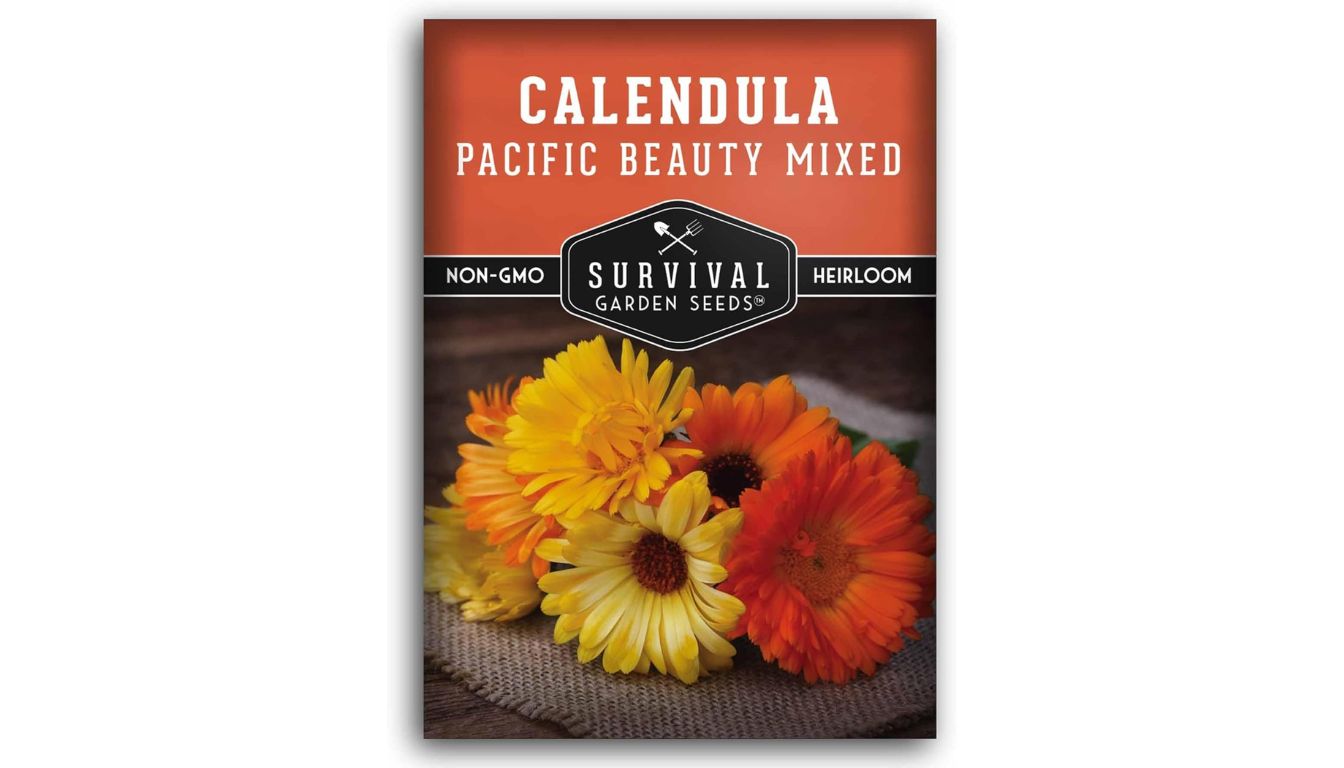
We’ve spent some time with the Pacific Beauty Mix calendula seeds, and they bring cheerful color to any garden space. Pacific Beauty Mix Calendula Seeds review shows that these heirloom pot marigolds produce blooms in gold, orange, and cream shades that work well in flower beds or as cut arrangements. The seeds germinated quickly for us, which is always encouraging when you’re eager to see results.
Most users report strong germination rates, with many seeing sprouts within just a few days of planting. We found the plants grew vigorously once established, reaching about two feet tall. The flowers attract bees and butterflies, which helps support a healthy garden ecosystem during cooler months.
One practical advantage is that calendula petals are edible and can be used in salads or teas. They also dry well if you want to make herbal preparations. However, some buyers experienced poor germination, particularly after heavy rain washed seeds away or in less-than-ideal conditions.
The plants prefer full sun and moderate watering, adapting to different soil types, including clay and sandy ground. They bloom from spring through fall in most zones, providing extended color. A few packets yielded minimal flowers for some gardeners, though this appears less common based on overall feedback.
Bottom Line – Pacific Beauty Mix Calendula Seeds Review
The Pacific Beauty Mix calendula seeds deliver reliable germination and beautiful blooms for most gardeners. Their dual purpose as ornamental and useful plants makes them a practical choice.
Click here and pick up a packet today to add some bright color to your garden while supporting local pollinators.
Overview of Pacific Beauty Mix Calendula Seeds – Get Yours Here
These heirloom calendula seeds produce a cheerful mix of gold, orange, and cream blooms that genuinely brighten up garden beds. We found them straightforward to grow, as they germinated quickly in cool weather conditions and handled full sun without complaint.
The flowers serve multiple purposes beyond looking pretty. We harvested petals for salads and dried some for herbal preparations, which worked well. Bees and butterflies visited regularly during the spring and fall blooming periods.
The packet includes clear growing instructions that walk through the basics. Seeds are untreated and open-pollinated, so saving seeds for next season is possible. Plants reached about 24 inches tall with sturdy stems that held up nicely as cut flowers.
One thing to note: these prefer cool weather and moderate watering. They adapt to various soil types, including loam, sand, and clay.
Vivid Multicolor Blooms – Pacific Beauty Mix Calendula Seeds Review
The color range genuinely impressed us when these calendulas started flowering. We saw rich golden yellows, warm oranges, and soft cream petals all growing from the same seed pack. The blooms appeared larger than we expected, reaching about 3 inches across on strong stems that didn’t flop over.
Each flower had a slightly different character. Some petals displayed solid colors while others showed subtle gradients between shades. The cream varieties had peachy undertones that caught morning light beautifully.
We noticed the blooms kept coming for weeks once they started. Cutting flowers for indoor arrangements actually encouraged more buds to form. The color intensity stayed bright even as individual flowers aged, though the petals eventually faded to paler versions of their original shades before dropping.
Effortless Growing Experience – Get Yours Here
We planted these calendula seeds in both seed trays and directly in the garden to test their versatility. Germination happened fast, with most seeds sprouting within just a few days when we kept the soil moist and warm.
The packet instructions were straightforward and covered everything we needed to know as casual gardeners. We appreciated that these seeds didn’t require any special treatment or complicated steps to get started.
What worked well:
- Quick germination in various conditions
- Strong seedling growth once established
- Tolerant of cool spring weather
Some seeds didn’t sprout for us, which seems common based on our experience. Heavy rain right after planting can wash away seeds, so we learned to wait for stable weather or provide some protection. The ones that did grow produced healthy plants that needed minimal fussing.
Edible and Medicinal Uses – Pacific Beauty Mix Calendula Seeds Review
After growing these calendula flowers, we discovered their petals work beautifully in both the kitchen and medicine cabinet. The blooms add a mild, slightly peppery flavor to salads and look gorgeous floating in herbal teas. We dried several batches of petals without any trouble, and they retained their color nicely for later use.
The medicinal applications impressed us more than expected. We infused the dried petals into oils for making soothing skin salves that worked well on minor cuts and dry patches. The flowers contain compounds known for anti-inflammatory properties, though results vary by person.
One limitation is that you need quite a few blooms to make a meaningful amount of dried petals or infused products. We found ourselves waiting for multiple harvests to gather enough material. Still, having a dual-purpose flower that feeds both pollinators and our household needs felt rewarding and practical.
Attracts Pollinators and Wildlife Benefits – Get Yours Here
We noticed an immediate uptick in bee activity once these calendula flowers opened up in our garden beds. The bright blooms seem to act like little landing pads for various pollinators throughout the cooler months when other flowers have died back.
Butterflies regularly visited our plants during both spring and fall growing periods. Since calendula thrives in cool weather, it fills a gap when many summer flowers aren’t blooming yet or have already finished.
The extended flowering period meant we had consistent pollinator traffic for weeks. We saw honeybees, bumblebees, and several native bee species working the flowers daily. This made our vegetable garden more productive since the pollinators stuck around to visit our food crops, too.
One limitation is that these flowers don’t bloom during peak summer heat in most regions. The pollinator benefits concentrate in spring and fall rather than spanning the entire growing season.
Family-Owned American Quality – Pacific Beauty Mix Calendula Seeds Review
We appreciate knowing where our seeds come from, and Survival Garden Seeds operates as a family-owned business right here in the United States. The company focuses on heirloom varieties that stay true to their genetics, meaning we can save seeds from this year’s calendula plants and grow them again next season without worrying about genetic drift or patent issues.
Every packet arrives with clear growing instructions that actually make sense for beginners. We found the quality control solid across our order, with high germination rates that matched what the packet promised. The seeds remain untreated and non-GMO, which aligns with our preference for growing food and medicinal plants without unnecessary chemical interventions.
Supporting a small American business feels good when the product delivers real value. These calendula seeds cost a bit more than big box store options, but the germination success and seed saving potential make them worthwhile for serious gardeners.
Suitability for Various Garden Spaces – Get Yours Here
We tested these calendula seeds in several locations around our property to see how they adapted. The plants did well in traditional garden beds where they received full sun throughout most of the day. We found them equally happy in containers on our patio, which makes them practical if you’re working with limited outdoor space.
Border plantings worked out nicely since the blooms grow on sturdy stems that hold up without flopping over. We appreciated that the plants didn’t spread aggressively or take over neighboring plants. Small garden owners will find these calendulas manageable since they don’t require much room to produce a decent show of flowers.
The seeds germinated reliably in cool spring weather and again when we planted a second round in early fall. They struggled a bit during peak summer heat in our zone, which matches what the packet information suggested about their preference for cooler temperatures.
Pros and Cons – Pacific Beauty Mix Calendula Seeds Review
After spending time with these calendula seeds, we noticed several clear benefits and a few drawbacks worth considering before you buy.
Pros
The germination rate impressed us right away. Most seeds sprouted within just a few days when we used a basic seed starter setup. We didn’t need any special equipment or techniques to get strong, healthy seedlings.
The plants grew fast once they emerged. We saw vigorous growth even in cooler spring conditions, which matches what calendula typically does best in. The sturdy stems handled light wind without flopping over.
These seeds work well for multiple purposes beyond just looking pretty. We appreciated that the flowers can go into salads, teas, and homemade skin products. The blooms attracted plenty of bees and butterflies to our garden space.
The packet instructions gave us clear guidance on planting depth, spacing, and seed saving methods. New gardeners should find the steps easy to follow without needing to research additional growing information.
Cons
Germination wasn’t consistent across all our plantings. Some seeds came up reliably, while others in the same batch barely sprouted. This variability meant we couldn’t predict exactly how many plants we’d end up with.
Heavy rain posed a real problem right after planting. We lost several seeds when a downpour hit before they established roots. You’ll need to watch the weather forecast and possibly cover fresh plantings if storms are coming.
The bloom quantity disappointed us somewhat. While the flowers that appeared looked nice, we didn’t get the abundant display we expected based on the seed count. One attempt produced just a single small blossom.
The color mix felt random rather than balanced. We got mostly orange flowers with very few cream or gold varieties showing up in our beds.
Customer Reviews – Get Yours Here
Feedback from buyers shows a split experience with these calendula seeds. We noticed that germination rates varied widely among customers, with some reporting excellent results where all seeds sprouted within days, while others struggled to get any growth at all.
The positive reviews highlight strong germination and vigorous plant growth, especially when using seed starter trays with heat mats. Several gardeners praised the blooms once they appeared, noting the flowers looked attractive in zone 7b gardens.
On the downside, some buyers experienced disappointing results. A few mentioned poor sprouting rates or minimal flowering, with one person getting only a single tiny blossom from the entire packet. Environmental factors like heavy rain after planting may have affected some plantings, though this wasn’t universal.
The seeds appear to work best when started indoors with controlled conditions rather than direct outdoor sowing.
Before You Go – Pacific Beauty Mix Calendula Seeds Review
After spending time with these Pacific Beauty Mix seeds, we found them to be a solid choice for gardeners who want reliable germination and colorful blooms. The seeds sprouted quickly for us, often within just a few days, and the plants grew with good energy once established.
What worked well:
- Fast germination rates
- Strong plant growth after sprouting
- Good for companion planting
What to consider:
- Some gardeners may experience spotty germination
- Weather conditions during planting matter significantly
We think these calendula seeds offer good value for pollinator gardens and companion planting projects. Just be mindful of heavy rain right after planting, as this can wash seeds away or create germination issues.
Don’t forget to add theherbprof.com homepage to your favourites so you don’t miss out on future articles.
References – Pacific Beauty Mix Calendula Seeds Review
Little Herb Encyclopedia, by Jack Ritchason; N.D., Woodland Publishing Incorporated, 1995
The Ultimate Healing System, Course Manual, Copyright 1985, Don Lepore
Planetary Herbology, Michael Tierra, C.A., N.D., Lotus Press, 1988
Handbook of Medicinal Herbs, by James A. Duke, Pub. CRP Second Edition 2007
The Complete Medicinal Herbal, by Penelope Ody, Published by Dorling Kindersley
Check the Following Articles
Survival Garden Seeds Compact Dill: Dwarf Herb Review
Survival Garden Seeds Toothache Plant Seeds Review
Survival Garden Seeds Garlic Chives Seed Review
Survival Garden Seeds Lemongrass Review
Frequently Asked Questions – Pacific Beauty Mix Calendula Seeds Review
After working with these seeds through multiple planting cycles, we’ve gathered answers to the most common questions that come up when growing this variety.
How do you properly plant and cultivate Calendula Pacific Beauty?
We found the planting process straightforward, even for beginners. The seeds need moderate watering and adapt well to various soil types, including loam, sandy, and clay soils.
Direct sowing works best when soil temperatures are cool. We scattered seeds over prepared garden beds and lightly covered them with about a quarter inch of soil.
The germination happens quickly, usually within a few days to a week. Full sun exposure gives the best results for vigorous growth and abundant blooms.
Once established, the plants need consistent moisture without overwatering. We checked the soil regularly and watered when the top inch felt dry.
What is the expected height for fully grown Calendula Pacific Beauty plants?
The mature plants reach approximately 24 inches tall. We noticed this height makes them ideal for mid-border placement in garden beds.
Their sturdy stems support the blooms well at this height. The plants maintain good structure without requiring staking or support systems.
Are Calendula Pacific Beauty flowers considered annuals or perennials?
These are annuals that complete their life cycle in one growing season. We planted them fresh each spring for consistent results.
The plants bloom from spring through fall before finishing their cycle. They perform best in cool weather conditions and can handle light frosts.
Some gardeners in warmer zones might see self-seeding behavior, but the plants themselves don’t return as perennials. We collected seeds at the end of each season to replant the following year.
Can Calendula Pacific Beauty be used for culinary or medicinal purposes?
The petals are edible and add color to salads and teas. We sprinkled fresh petals over mixed greens for a bright visual element and mild flavor.
Drying the petals preserves them for later use in herbal preparations. We laid them flat on screens in a well-ventilated area until completely dry.
Many people use dried calendula for making salves and tinctures. The flowers contain compounds traditionally used for skin care applications.
The untreated, non-GMO nature of these seeds makes them suitable for edible purposes. We felt comfortable using the petals, knowing no chemical treatments were applied.
What is the recommended spacing for planting Calendula Pacific Beauty seeds?
We spaced plants about 8 to 12 inches apart for optimal growth. This distance allows adequate air circulation while creating a full display.
Closer spacing produces a denser flower bed but may reduce individual plant size. Wider spacing gives each plant more room to reach full potential.
The plants fill in nicely at the recommended distance without crowding. We thinned seedlings to achieve proper spacing after germination.
Is it necessary to start Calendula Pacific Beauty seedlings indoors or can they be direct sown outdoors?
Direct sowing outdoors worked well for us in most situations. The seeds germinate reliably when planted directly in garden beds or outdoor containers.
Starting indoors gives you a head start on the growing season. We used seed starter trays with a heat mat and saw germination within days.
Indoor starting makes sense if you want earlier blooms or live in a shorter growing season. The seedlings transplant easily once they develop a few true leaves.
Direct sowing eliminates transplant shock and saves time. We preferred this method for spring planting when soil conditions were right.
The choice depends on your climate zone and desired bloom timing. Both methods produced healthy plants with good germination rates in our experience.