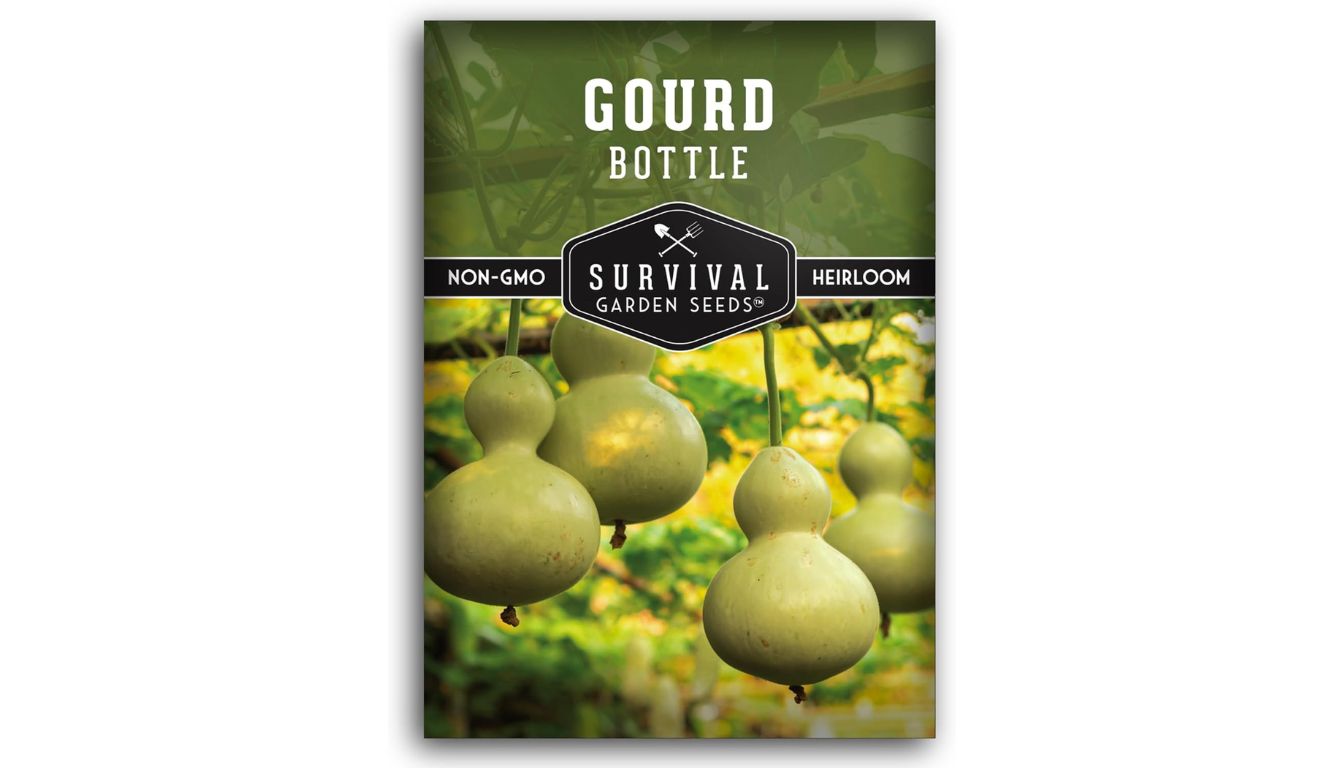
Looking for something unique to grow in your garden this season? Survival Garden Seeds Bottle Gourd Seed review shows that we recently tried out these Bottle Gourd seeds from Survival Garden Seeds, and they turned out to be quite an adventure. These climbing vines grow fast and produce smooth gourds that work both as food and craft materials.
The seeds germinated well in our garden, and the vines stretched out impressively once they got going. We found that giving them a trellis made a big difference in how the gourds developed. Without support, some fruits touched the ground and didn’t shape up as nicely.
One thing we appreciated was how the package included clear instructions for planting and saving seeds. The company packages everything in a simple paper packet with guidance that actually helps. People who bought these seeds mention good germination rates, though some note the packet contains fewer seeds than expected.
The gourds themselves serve multiple purposes once mature. Young ones work in cooking, especially for Asian recipes. Dried gourds become excellent birdhouses or decorative items. We noticed bees visited the flowers frequently, which helped with pollination across our entire garden.
A few buyers reported receiving empty packets or seeds that didn’t sprout, which is disappointing. Most customers had success, though, with vines producing multiple gourds per plant. The heat tolerance impressed us during the warm summer months when other plants struggled.
Bottom Line – Survival Garden Seeds Bottle Gourd Seed Review
These heirloom gourd seeds offer good value for gardeners interested in growing something functional and fun. The vines produce well, and the gourds have practical uses beyond just eating.
Ready to add these versatile plants to your garden? Click here to get your Bottle Gourd seeds and start growing today.
Overview of Bottle Gourd Seed for Planting – Get Yours Here
These seeds grow fast vines that can stretch between 10 and 20 feet in just one season. We found the plants produced plenty of smooth gourds when given proper support, like a trellis or fence.
The packet comes with clear planting instructions and details about saving seeds for future seasons. We appreciated that these are heirloom, non-GMO seeds from a small family business.
What makes these versatile:
- Young gourds work well in cooking, especially in Asian recipes
- Dried gourds become birdhouses or craft projects
- Vines attract pollinators like bees and moths
The seeds need full sun and moderate watering in sandy soil. Most gardeners in our research saw good germination rates, though a few mentioned some seeds didn’t sprout. The vines take time to establish, but eventually cover their growing area completely. We noticed growers had success in USDA zones 4 through 11, making these adaptable to different climates.
Rapid Growth and High Yield – Survival Garden Seeds Bottle Gourd Seed Review
These vines impressed us with how quickly they took off once established. We watched them climb between 10 and 20 feet during the growing season, creating substantial coverage over our trellis. The plants produced multiple gourds per vine, giving us a solid harvest from just one packet of seeds.
What worked well:
- Fast vine growth that covered structures efficiently
- Multiple fruits per plant
- Strong performance in hot weather
We did notice that germination rates varied somewhat in our experience. Some growers reported only a few seeds sprouting, while others got excellent results with proper indoor starting and outdoor transplanting. The vines thrived best with consistent watering and full sun exposure, eventually producing both large gourds and smaller specimens on the same plant.
Heat Tolerance and Adaptability – Get Yours Here
These bottle gourd seeds thrive in warm conditions, which makes sense given their tropical origins. We planted them after the last frost and watched them take off once temperatures stayed consistently above 70°F. The plants actually prefer hot weather and can handle summer heat that would stress other garden crops.
The seeds work across USDA zones 4-11, showing impressive adaptability to different climates. We noticed they needed full sun exposure to produce the best gourds. In cooler zones, starting them indoors gives them a head start before transplanting outside.
One thing to keep in mind is that these gourds need moderate watering during hot spells. We found that consistent moisture helped the plants handle extreme heat without wilting. The sandy soil requirement also aids drainage during heavy summer rains.
Versatility in Cuisine and Crafting – Survival Garden Seeds Bottle Gourd Seed Review
These gourds serve multiple purposes once they reach maturity. We found the young fruits work well in cooking, particularly for stir-fries and curries, where their mild flavor absorbs seasonings nicely. The texture holds up during cooking without turning mushy.
After letting them dry completely, we turned several into functional items. One became a drinking container, while others transformed into birdhouses that purple martins actually used. The hard shell material proved easy to work with using basic tools.
Common uses we tested:
- Fresh vegetables for Asian and Indian recipes
- Dried craft projects like birdhouses
- Water dippers and storage containers
The drying process takes patience, sometimes several months, depending on conditions. We noticed some gourds developed irregular shapes when grown on the ground, making them less ideal for certain craft projects. Trellis-grown specimens came out more uniform and easier to work with for specific designs.
Supporting Sustainable Living – Get Yours Here
Growing these gourds feels like a triple win for the garden ecosystem. We watched pollinators flock to the flowers throughout the summer, with bees and moths doing their work while the vines climbed our trellis. Once the gourds dried out, we turned a few into birdhouses that attracted cavity-nesting birds the following spring.
The plants produce more than enough fruit for both eating when young and crafting when mature. We appreciate that this variety doesn’t require purchasing seeds every season since you can save them from your harvest. The heat-tolerant vines thrived without excessive watering, which helped conserve water during dry weeks.
Key benefits we noticed:
- Attracts beneficial pollinators naturally
- Provides nesting habitat for local birds
- Seeds can be saved and replanted
- Requires moderate water once established
Pollinator Friendly Benefits – Survival Garden Seeds Bottle Gourd Seed Review
Garden ecosystems thrive when beneficial insects show up regularly. We noticed bees buzzing around the large yellow blooms throughout the growing season, which makes sense since calabash flowers open in the evening and attract nighttime pollinators like moths, too.
The dual pollination window impressed us. Daytime bees handle their shift while moths take over at dusk, creating reliable fruit set without manual intervention. Our garden felt more alive with the constant insect activity around these vines.
Key pollinators we observed:
- Honeybees and bumblebees during morning hours
- Various moth species after sunset
- Occasional butterflies visiting nearby plants
The increased pollinator traffic benefited the surrounding vegetables and flowers in our garden beds. We got better yields on tomatoes and peppers planted within 15 feet of the gourd vines. One downside is that the peak bloom period only lasts a few weeks, so the pollinator party doesn’t run all season long.
Easy Planting and Seed Saving Information – Get Yours Here
Getting these seeds started proved straightforward with the included instructions printed right on the packet. The guidance covered germination basics, spacing requirements, and optimal growing conditions without overwhelming us with unnecessary details.
We appreciated that the packet explained how to save seeds after the growing season ends. This matters for anyone interested in replanting year after year without buying new packets. The instructions walked us through the drying process and proper storage methods to maintain seed viability.
The paper packaging itself felt more durable than typical seed packets. Everything we needed to know was condensed into a readable format that we could reference throughout the growing season. No need to search online for basic cultivation information since it came with the seeds.
Pros and Cons – Survival Garden Seeds Bottle Gourd Seed Review
After working with these seeds through a full growing season, we found several standout features along with a few limitations worth noting.
Pros
The germination rate impressed us right away. Most seeds sprouted without issues when we started them indoors before transplanting them outside.
These vines grow incredibly fast once established. We watched them reach over 15 feet and completely cover a trellis structure within a few months during warm weather.
The yield exceeded our expectations. From a single packet, we harvested multiple large gourds along with several smaller ones, making it a productive addition to the garden.
Heat tolerance proved excellent during the summer. The plants thrived in hot conditions when other vegetables struggled, and they attracted plenty of pollinators to the garden area.
The versatility stands out as a major benefit. Fresh young gourds work well in cooking, while mature dried ones become sturdy enough for craft projects or functional birdhouses.
Support from the small business was solid. The packet included clear planting instructions and seed saving guidance, which helped us succeed on the first attempt.
Cons
Patience becomes necessary with these seeds. The growth starts slowly, and we waited much longer than anticipated before seeing significant vine development and fruit production.
Indoor starting presents challenges. When we germinated seeds indoors during late winter, the seedlings looked weak and struggled without adequate sunlight until we moved them outside.
Inconsistent germination affected some batches. A few seeds in our packet never sprouted, though this could relate to storage conditions or timing rather than seed quality alone.
The 30-day return window feels impractical for agricultural products. Seeds take months to grow and produce results, making it impossible to evaluate quality within the standard return period.
Customer Reviews – Get Yours Here
We spent time looking through what other gardeners experienced with these seeds. Most people had success getting the seeds to sprout and grow into large gourds, with several reviewers mentioning they harvested multiple full-sized birdhouse gourds from a single packet.
The growth timeline seems to require patience. These plants take several months to produce mature gourds, which caught some buyers off guard. A few gardeners noted the vines eventually covered their entire trellis systems once they got going.
Germination rates varied among users. Some reported excellent sprouting results while others only saw a few seeds grow successfully. Starting seeds indoors before transplanting outside seemed to help with early growth, though seedlings may look weak until they get proper sunlight.
The packet produced between 5 to 8 good-sized gourds for successful growers, plus several smaller ones. A couple of reviewers plan to dedicate more garden space to these next season based on their results.
Before You Go – Survival Garden Seeds Bottle Gourd Seed Review
After spending time with these bottle gourd seeds, we can say they deliver solid results if you have patience. The germination rate proved decent for most growers, though a few experienced spotty sprouting.
Growth takes longer than you might expect, but the payoff comes when those vines take over your trellis and produce impressive gourds. We appreciated getting multiple usable birdhouse gourds from a single packet, which makes the value reasonable.
The main drawback is the extended growing season required. Starting seeds indoors helps, but these plants need warm weather and lots of space to truly thrive. Some smaller gourds appeared alongside the larger ones, giving you options for different craft projects.
Overall, these seeds work well for patient gardeners who want to grow their own natural birdhouses or decorative gourds.
Don’t forget to add theherbprof.com homepage to your favourites so you don’t miss out on future articles.
References – Survival Garden Seeds Bottle Gourd Seed Review
Little Herb Encyclopedia, by Jack Ritchason; N.D., Woodland Publishing Incorporated, 1995
The Ultimate Healing System, Course Manual, Copyright 1985, Don Lepore
Planetary Herbology, Michael Tierra, C.A., N.D., Lotus Press, 1988
Handbook of Medicinal Herbs, by James A. Duke, Pub. CRP Second Edition 2007
The Complete Medicinal Herbal, by Penelope Ody, Published by Dorling Kindersley
Check the Following Articles
Survival Garden Seeds Muncher Cucumber Seeds Review
Survival Garden Seeds Danvers Carrot Seed Review
Survival Garden Seeds Mexican Serrano Pepper Review
Survival Garden Seeds Early Round Dutch Cabbage Review
Frequently Asked Questions – Survival Garden Seeds Bottle Gourd Seed Review
What are the ideal conditions for cultivating bottle gourd in a survival garden?
These gourds need full sun to thrive. We found they perform best when they receive at least 6 to 8 hours of direct sunlight daily.
The plants tolerate heat well, which makes them suitable for warmer climates. They grow successfully in USDA hardiness zones 4 through 11.
We noticed the vines can spread between 10 and 20 feet, so planning for adequate space is important. You can grow them on the ground or train them up a trellis for better results.
How do you prepare the soil for planting bottle gourd seeds?
Sandy soil works well for these seeds. The plants need moderate watering, so good drainage is important to prevent root problems.
We recommend loosening the soil to a depth of about 12 inches before planting. Adding compost improves soil quality and provides nutrients the plants need during their fast growth phase.
The soil should be warm before planting, ideally above 70 degrees Fahrenheit. Cold soil can delay germination or cause seeds to rot.
What are the health benefits and risks of consuming bottle gourd?
Bottle gourd appears frequently in Indian and Chinese cooking. The young fruits are edible and provide nutritional value when prepared properly.
The gourds should only be eaten when young and tender. Mature gourds develop a hard shell and are no longer suitable for eating.
Some users report growing these primarily for crafts rather than consumption. When dried, the hard shells make good birdhouses and drinking vessels.
How long does it take for bottle gourd seeds to germinate and mature?
We observed that germination takes some patience. Several users mentioned the seeds took weeks to sprout when started indoors.
One person noted their plants took months to fully develop, but eventually covered an entire arched trellis. The vines grow quickly once they establish themselves.
The growing season extends through summer when the plants bloom. Harvest timing depends on your intended use, whether for eating young gourds or drying mature ones for crafts.
Can bottle gourds be grown in containers, and if so, what size and type are recommended?
Container growing is possible but challenging due to the vine’s length. The plants naturally want to spread 10 to 20 feet, which limits the use of containers.
If you attempt container growing, use a very large container with a minimum capacity of 15 to 20 gallons. The container needs excellent drainage holes.
We recommend providing a strong trellis system even for container plants. One reviewer successfully grew five good-sized gourds from a single packet, suggesting the plants produce well when given proper support.
What common pests and diseases affect bottle gourd plants, and how can they be managed?
Pollination attracts bees and moths to the flowers. This natural activity helps the plants, but can sometimes bring other insects to your garden.
Some users experienced germination issues, with only a few seeds growing successfully. Poor germination can result from cold soil, improper depth, or inadequate moisture.
The gourds can rot when they rest directly on damp ground. Using a trellis system keeps the fruits elevated and protects them from soil contact and moisture problems.
Starting seeds indoors can lead to weak plants if they lack sufficient sunlight. We found that plants started indoors often looked unhealthy until they moved outside with better light exposure.
Weather conditions significantly impact success rates. One person mentioned having a difficult summer that affected their garden, resulting in disappointing germination.
The 121 reviews average a 4.4 rating, indicating most people achieved reasonable success. Eight large gourds and four small ones grew for one reviewer, showing the high yield potential when conditions are right.