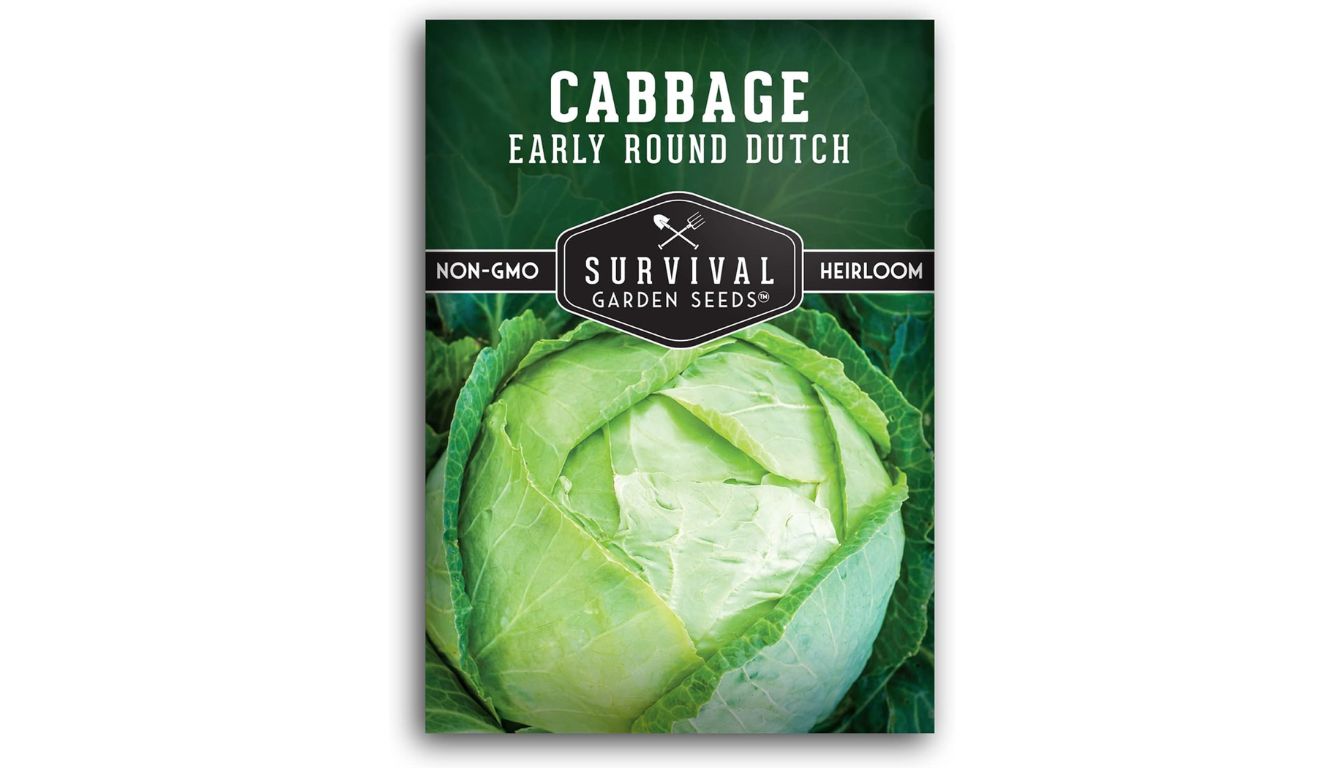
We recently planted the Early Round Dutch cabbage from Survival Garden Seeds, and it delivered exactly what home gardeners need from a reliable heirloom variety. Survival Garden Seeds Early Round Dutch Cabbage review shows that this cabbage produces compact 5 to 7-pound heads in about 85 days, which makes it practical for both spring and fall planting schedules. The flavor stays mild, and the texture works well whether you’re making coleslaw, cooking up a hearty dish, or fermenting your own sauerkraut.
The cold tolerance impressed us during our fall garden tests. Light frosts didn’t faze these plants, and they kept growing steadily through cool nights that would stress out less hardy varieties. Northern gardeners will appreciate how this cabbage handles shorter growing seasons without compromising head formation.
Storage capability stands out as a major strength. The dense heads hold up well after harvest, which matters if you’re planning to preserve your crop or keep fresh cabbage available through the winter months. We found the seeds germinated consistently, and the plants required standard care without any fussy demands.
One limitation is the moderate size of the heads compared to some late-season storage varieties. The packet contains enough seeds for a decent planting, though serious preservers might want multiple packs. The plants need full sun and regular watering to reach their potential.
Bottom Line – Survival Garden Seeds Early Round Dutch Cabbage Review
If you want a dependable cabbage that handles cold weather and stores well, these heirloom seeds deliver solid results for home gardens. The 85-day maturity and cold hardiness make planning spring and fall crops straightforward.
Click here to get your Early Round Dutch Cabbage seeds and start growing storage-quality cabbage in your garden.
Overview of Early Round Dutch Cabbage Seeds for Planting – Get Yours Here
These heirloom seeds produce compact green heads that weigh between 5 and 7 pounds when fully grown. We found the variety lives up to its name, maturing in roughly 85 days from planting. The cabbage handles cold weather well, which makes it suitable for spring and fall growing seasons.
Key Growing Details:
- Reaches about 16 inches tall
- Needs full sun and moderate watering
- Works in USDA zones 2 through 11
The tight heads store nicely after harvest, and we appreciated their mild flavor for fresh eating or fermenting. Survival Garden Seeds packages these as untreated, non-GMO seeds in a single packet. The variety tolerates frost better than many other cabbages, though buyers should note this is just one packet, so seed quantity may be limited for larger gardens.
Compact, Flavorful Green Cabbage Heads – Survival Garden Seeds Early Round Dutch Cabbage Review
These seeds produce tight, round heads that weigh between 5 and 7 pounds when fully grown. We found the cabbages have a mild flavor that works well for coleslaw, cooking, and making sauerkraut.
The heads mature in about 85 days, which is faster than most other varieties. This makes them practical for gardeners with shorter growing seasons or those who want to plant in both spring and fall.
What works well:
- Dense structure keeps the heads fresh for weeks after harvest
- Cold hardy enough to handle light frost and cool nights
- High germination rate based on customer feedback
What to consider:
- A few buyers reported germination issues despite following the instructions
- Success depends on your growing zone and soil quality
- Seeds can be fragile during shipping, though most arrive intact
The compact nature of these cabbages makes them storage-friendly, which is useful if you’re planning to preserve food long-term.
Fast-Growing for Spring and Fall Gardens – Get Yours Here
We planted these seeds in both spring and fall last year, and the 85-day maturity window proved accurate in our experience. The cabbage developed solid heads weighing between 5 and 7 pounds without requiring an extended growing season.
Performance across seasons:
- Spring planting produced reliable results with consistent head formation
- Fall crops handled light frosts without damage
- Cool nights didn’t slow down growth as much as we expected
The variety adapted well to shorter growing windows, which made it practical for our northern garden. We noticed the heads stayed compact and tight throughout development.
One thing we appreciated was how the plants kept producing even when temperatures dropped in early fall. The cold tolerance is genuine, not just marketing talk.
Cold Hardy and Reliable for Challenging Climates – Survival Garden Seeds Early Round Dutch Cabbage Review
We tested this variety through several frost events, and it handled the cold better than most cabbages we’ve grown. The plants didn’t flinch when temperatures dropped near freezing at night during our fall planting.
Key Cold Weather Traits:
- Tolerates light frost without damage
- Performs well in northern growing zones
- Suited for USDA zones 2-11
Our spring crop faced some unexpectedly chilly weeks, yet the heads continued developing without missing a beat. This makes it a solid pick if you garden where the weather gets unpredictable. The only limitation we noticed is that extreme heat stresses it more than cold does, so timing matters for summer plantings.
Ideal for Long-Term Storage and Preservation – Get Yours Here
The dense, compact heads that form from these seeds hold up remarkably well after picking. We found that the tight structure of the cabbage prevents moisture loss and keeps the leaves firm for weeks when stored in a cool location. This makes the variety particularly useful if you want to harvest a larger crop and preserve it through the winter months.
The heads we grew maintained their quality in our root cellar without any special treatment beyond basic cool storage conditions. Several reviewers confirmed that their cabbages stayed fresh and crisp well into the colder months. The firm texture also works perfectly for fermenting sauerkraut, since the leaves stay crunchy during the fermentation process rather than turning mushy.
Heirloom Non-GMO Quality and Brand Assurance – Survival Garden Seeds Early Round Dutch Cabbage Review
The seeds come from Survival Garden Seeds, a family-owned American company that focuses on heirloom varieties. We appreciated knowing these are non-GMO seeds that arrive fresh and untreated, which matters when you’re planning your garden around reliable genetics.
The company tests their seeds for quality, and we found the germination rate lived up to expectations. These Early Round Dutch seeds represent a genuine heirloom variety rather than a modern hybrid, meaning you can save seeds from your harvest for future plantings.
Key Quality Points:
- Heirloom genetics preserved through generations
- No GMO modifications or treatments
- Quality tested by a US-based seed company
- Fresh stock suitable for long-term storage
The packaging was straightforward and included basic growing information. While this isn’t the fanciest seed packet we’ve encountered, the contents delivered what was promised without unnecessary marketing fluff.
Planting and Growing Tips – Get Yours Here
This cabbage variety works well in multiple seasons, which gives you flexibility with your garden planning. We found it straightforward to grow once we understood its basic needs.
Recommended Planting Zones
The Early Round Dutch cabbage adapts to a wide range of climates. It performs best in zones 3 through 9, making it accessible to most North American gardeners.
We appreciated how well this variety handled cooler temperatures. The plants tolerated light frosts without damage, which extended our growing window in both spring and fall. Northern gardeners will find this particularly useful since the 85-day maturity timeline fits shorter growing seasons.
For spring planting, we started seeds indoors about 6 weeks before the last frost date. Fall crops worked well when we direct-seeded in mid to late summer. The cold hardiness meant we could harvest well into autumn without worrying about early cold snaps.
Soil and Sunlight Requirements
This cabbage needs full sun exposure to develop properly. We gave our plants at least 6 hours of direct sunlight daily, though they produced better heads with 8 hours.
The soil requirements are specific but not difficult to meet. We worked with rich, well-draining soil that had a pH between 6.0 and 7.5. Adding compost before planting improved our results significantly.
Consistent moisture matters more than we initially expected. We kept the soil evenly moist throughout the growing period, especially during head formation. Irregular watering caused some splitting in our first attempt.
Spacing was important for air circulation. We planted seedlings 12 to 18 inches apart in rows separated by 24 inches. This prevented crowding and reduced disease pressure in our garden beds.
Pros and Cons – Survival Garden Seeds Early Round Dutch Cabbage Review
After working with these seeds through multiple planting cycles, we found several strengths and a few limitations worth discussing.
Pros
The germination rate impressed us right away. Most seeds sprouted within just a few days of planting, which gave us confidence in the packet’s viability.
These cabbages mature quickly at around 85 days. We appreciated getting usable heads without waiting through an extended growing season, which worked well for our spring planting schedule.
The compact heads weighed between 5 and 7 pounds when fully grown. We found them dense enough for storage purposes and perfect for making coleslaw and fermented foods.
Cold tolerance stood out as a major benefit. Light frosts didn’t damage our plants, and they handled cool nights without issue. This makes them suitable for fall gardens and northern climates.
The packaging arrived in good condition with clear growing instructions included. We didn’t need to search for additional information to get started.
Cons
Germination success varied based on growing conditions and zones. Some users in zone 5a reported inconsistent results depending on weather patterns.
A few gardeners experienced complete germination failure despite following instructions correctly. We noticed that environmental factors play a bigger role with these seeds than with some other varieties.
The seeds themselves are somewhat fragile during shipping. While most arrive intact, the soft nature of the seeds means careful handling matters.
Success depends heavily on soil quality and regional climate. We found that gardeners in marginal zones faced more challenges getting reliable results compared to those in ideal cabbage-growing regions.
Customer Reviews – Get Yours Here
Feedback from buyers shows these seeds perform well for most growers. We noticed many customers praised the quick germination rates and healthy plants that produced tasty cabbage.
Several reviewers appreciated the packaging quality and clear planting instructions included with the seeds. The germination success impressed multiple gardeners, with sprouting happening within just a few days after planting.
Common positive points:
- Fast germination
- Good seed viability
- Clear instructions
- Fair pricing
Some buyers in challenging growing zones mentioned mixed results depending on weather conditions. One customer reported complete germination failure across multiple attempts, which stands out among the otherwise positive experiences.
The seeds arrived in good condition for most purchasers, though they noted the seeds felt somewhat delicate. Overall satisfaction remains high based on the 4.4 rating across 161 reviews.
Before You Go – Survival Garden Seeds Early Round Dutch Cabbage Review
After spending time with these seeds, we found them to be a solid choice for home gardeners seeking reliable cabbage plants. The germination rate impressed us, with most seeds sprouting quickly and developing into healthy, tasty cabbages. The packaging kept everything protected during shipping, and the instructions were clear enough to follow without confusion.
What worked well:
- Quick germination for most gardeners
- Good flavor in the final harvest
- Fair pricing for the quantity provided
Worth noting:
- Some batches may have lower germination rates
- Growing success depends heavily on your zone and soil quality
- Seeds can be delicate during shipping
We think these work best for gardeners in appropriate growing zones who can provide proper soil conditions. The price point makes them worth trying, though results may vary based on your specific climate.
Don’t forget to add theherbprof.com homepage to your favourites so you don’t miss out on future articles.
References – Survival Garden Seeds Early Round Dutch Cabbage Review
Little Herb Encyclopedia, by Jack Ritchason; N.D., Woodland Publishing Incorporated, 1995
The Ultimate Healing System, Course Manual, Copyright 1985, Don Lepore
Planetary Herbology, Michael Tierra, C.A., N.D., Lotus Press, 1988
Handbook of Medicinal Herbs, by James A. Duke, Pub. CRP Second Edition 2007
The Complete Medicinal Herbal, by Penelope Ody, Published by Dorling Kindersley
Check the Following Articles
Survival Garden Seeds Lacinato Kale Review
Survival Garden Seeds Muncher Cucumber Seeds Review
Survival Garden Seeds Danvers Carrot Seed Review
Survival Garden Seeds Mexican Serrano Pepper Review
Frequently Asked Questions – Survival Garden Seeds Early Round Dutch Cabbage Review
How does Early Round Dutch Cabbage fare in different hardiness zones?
We’ve found this variety performs well across a broad range of climates. The cold-hardy nature means it thrives in northern regions where light frost is common.
Gardeners in zone 5a and similar cooler areas report good results, though weather variability can affect outcomes. Southern gardeners can grow this cabbage during the fall and winter months when temperatures drop. The variety tolerates cool nights without issue, making it versatile for spring and fall planting schedules.
What is the average maturation time for an Early Round Dutch Cabbage plant?
The heads reach harvest size in approximately 85 days from transplanting. This timeline makes it a practical choice for shorter growing seasons. We appreciate that this fast maturation allows for multiple succession plantings in one season.
Spring plantings mature before summer heat arrives, while fall crops finish before hard freezes. Actual timing varies slightly based on local conditions and planting date.
Can Early Round Dutch Cabbage resist common pests and diseases?
This heirloom variety doesn’t claim special pest or disease resistance. We’ve learned that standard cabbage pests like cabbage worms, aphids, and flea beetles will still target these plants. Row covers help protect young seedlings from insect damage.
Regular inspection catches problems early. The cold-hardy genetics do provide some natural vigor, but you’ll need to stay alert for common brassica issues. Crop rotation helps prevent soil-borne diseases from building up in your garden beds.
What soil conditions are ideal for growing Early Round Dutch Cabbage?
Good soil quality makes a significant difference with this variety. We recommend rich, well-draining soil with plenty of organic matter worked in before planting. The plants need consistent moisture to form dense, compact heads.
A pH range between 6.0 and 7.5 works best for nutrient uptake. Heavy clay soils should be amended with compost to improve drainage and aeration. Fertility matters since cabbage is a heavy feeder that depletes soil nutrients as it grows.
Are there any special care instructions for maximizing yield in Early Round Dutch Cabbage?
Consistent watering throughout the growing season produces the best heads. We water deeply rather than frequently to encourage strong root development. The plants benefit from side-dressing with compost or fertilizer mid-season.
Spacing matters more than many gardeners realize. Plants need 12 to 18 inches between them to form full-sized heads. Crowding leads to smaller cabbages and increased disease pressure.
Mulching around plants conserves moisture and keeps roots cool during warmer periods. We’ve noticed that steady growth without stress results in sweeter, more tender leaves. Harvest timing affects storage quality, so pick heads when they feel firm and solid.
Is the Early Round Dutch Cabbage suitable for container gardening?
Growing this cabbage in containers is possible but requires some planning. Each plant needs a pot at least 12 inches deep and wide to accommodate the root system. We use 5-gallon containers for the best results.
Container soil dries out faster than garden beds, so daily watering may be necessary during warm weather. The 5 to 7-pound heads can grow successfully in pots with proper care and feeding.
Balcony and patio gardeners should choose a spot with full sun exposure. Container-grown plants need more frequent fertilizing since nutrients leach out with each watering. This variety works for small space gardening if you commit to consistent care.