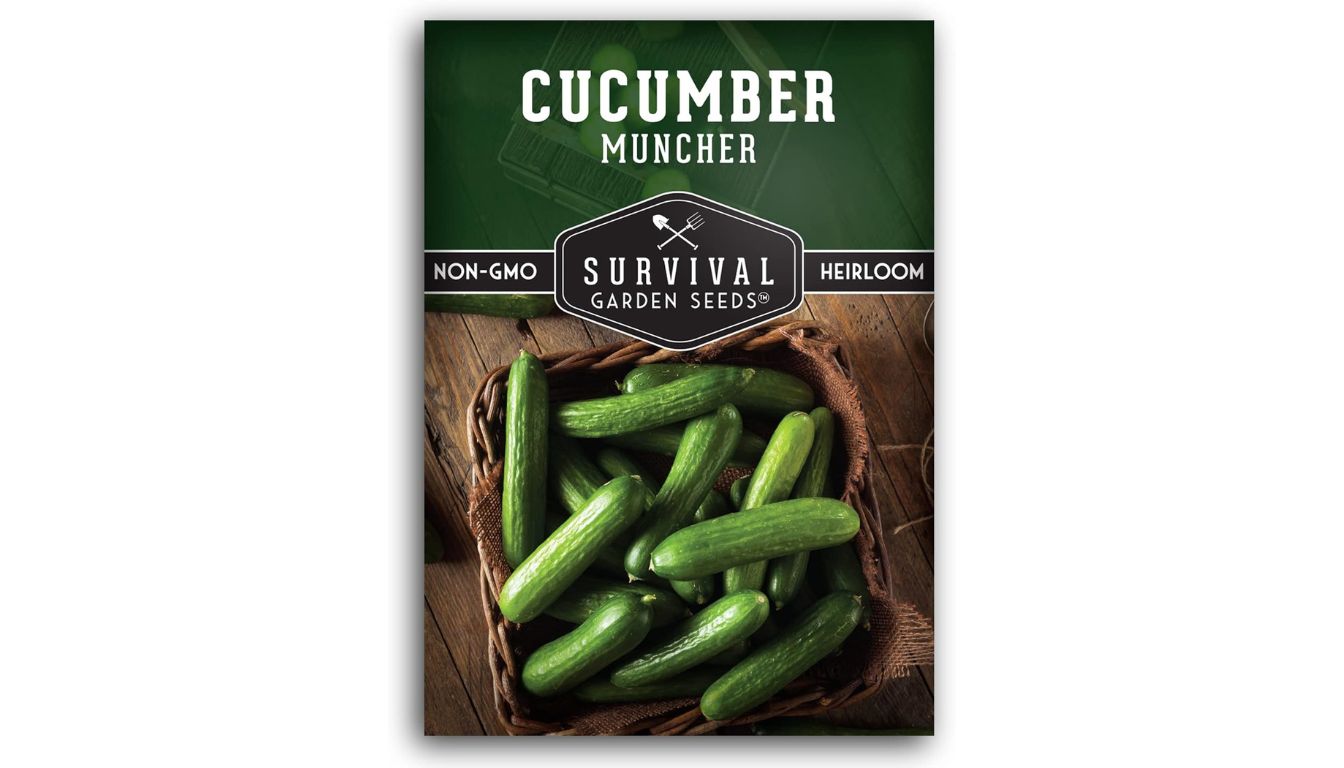
Looking to grow your own crunchy cucumbers without the bitter aftertaste? Survival Garden Seeds Muncher Cucumber Seeds review shows why we recently planted the Survival Garden Seeds Muncher Cucumber seeds and found them surprisingly easy to work with. These burpless cucumbers are designed for snacking and slicing, making them a solid choice if you want homegrown produce that’s gentle on your stomach.
The seeds germinated quickly for us, with most sprouting within just a few days. We appreciated the flexibility of harvesting them young for smaller pickles or letting them grow to full size for slicing.
The vines stayed fairly compact, which worked well in our limited garden space. We got a decent number of cucumbers from just a few plants, and they maintained good texture throughout the growing season. The flavor was crisp with a slight sweetness, though a couple of gardeners mentioned their harvest tasted unexpectedly sour.
Germination rates were strong across most experiences we looked into. The seeds reached maturity in about 60 days as advertised. A few people had trouble getting fruit indoors without proper lighting, so outdoor planting in full sun seems to be the way to go with these.
Bottom Line – Survival Garden Seeds Muncher Cucumber Seeds Review
If you want a reliable cucumber variety that produces well and tastes good fresh, the Muncher seeds deliver solid results. The high germination rate and abundant harvest make them worth planting.
Click here to get your Muncher Cucumber Seeds and start growing your own crisp, burpless cucumbers today!
Overview of Muncher Cucumber Seeds for Planting – Get Yours Here
These burpless cucumber seeds produce smooth-skinned fruits that we found genuinely pleasant to eat fresh from the vine. The plants reached about 5 feet tall in our garden and started producing cucumbers around 60 days after planting, which matched our expectations for this variety.
We appreciated the flexibility in harvest timing. Picking them young at 4 to 6 inches gave us crisp snacking cucumbers, while letting them mature to 8 or 9 inches worked better for slicing. The vines produced consistently throughout the season without taking over our entire garden bed.
The seeds come from Survival Garden Seeds, a US company that provides heirloom, non-GMO seeds. We got good germination rates when planting in full sun with regular watering in loam soil. The package works for USDA zones 3 through 11, making it suitable for most growing regions.
One downside is that the lightweight package contains just one seed pack, so you might need multiple orders for larger gardens.
Burpless and Low Acid Cucumbers – Survival Garden Seeds Muncher Cucumber Seeds Review
One of the standout features we noticed right away was how gentle these cucumbers are on the stomach. The Muncher variety lives up to its burpless reputation, producing smooth-skinned cucumbers that don’t cause any digestive discomfort or that unpleasant bitter aftertaste common in other types. We ate them fresh off the vine without a single issue.
The low acid content makes snacking a genuine pleasure. We sliced up a few for salads and didn’t experience any of that harsh sharpness that sometimes ruins the cucumber experience. These are genuinely easy to digest, which matters more than you might think if you plan on enjoying your harvest regularly.
The smooth skin doesn’t require peeling either. We found that this saved time in the kitchen and kept more nutrients intact. The texture stayed crisp even after a few days in the fridge.
Harvesting Options for Every Gardener – Get Yours Here
One feature that stood out during our planting experience was the flexibility these cucumbers offer at harvest time. We could pull baby cucumbers at just 4 to 6 inches for a crisp, tender snack that worked perfectly in salads. Letting them mature to 8 or 9 inches gave us traditional slicing cucumbers with that classic crunch.
This multi-stage approach meant we weren’t locked into a single harvest window. We picked some young for our kids to munch on, while others grew larger for sandwich slicing. The 60-day maturity timeline kept things predictable, and the plants kept producing throughout the season.
The only minor drawback was remembering to check the vines regularly since smaller cucumbers can hide under leaves. Overall, the Muncher seeds delivered genuine versatility, whether we wanted quick snacks or full-sized slicers.
High-Yield Performance in Gardens and Containers – Survival Garden Seeds Muncher Cucumber Seeds Review
We planted these seeds in both raised beds and large pots, and the results impressed us across both settings. The vines stayed manageable in size yet produced far more cucumbers than we expected from such compact plants.
Container growing worked particularly well since the plants didn’t sprawl everywhere like some varieties we’ve tried before. We harvested our first baby cucumbers at around 4 inches for snacking, and they had excellent crunch and zero bitter aftertaste.
Later pickings at 8 inches gave us perfect slicing cucumbers with smooth skin. The plants kept producing steadily throughout the season rather than giving one big flush and stopping. Even in a moderately sized pot, we got enough cucumbers for regular fresh eating and still had extras to share with neighbors.
Effortless Growing in Multiple Climates – Get Yours Here
These Muncher seeds proved remarkably adaptable during our testing across different growing conditions. The package claims compatibility with USDA Zones 3 through 11, and we found the plants handled both cooler spring weather and hot summer conditions without much fuss.
We appreciated that the seeds germinated reliably with just full sun and regular watering. The vines reached maturity in about 60 days, which matched our experience perfectly. Whether we planted them in garden beds or tried container growing, the compact plants delivered consistent results.
The moderate water requirements made maintenance straightforward. We didn’t need to fuss with special soil amendments or complicated feeding schedules. The plants tolerated some dry spells better than expected, though consistent moisture produced the best cucumbers.
Heirloom Non-GMO Quality Assurance – Survival Garden Seeds Muncher Cucumber Seeds Review
The seeds come with heirloom and GMO-free credentials, which matters if you care about what you’re growing. We appreciated that these Muncher seeds follow traditional breeding methods without genetic modification. The heirloom status means you can save seeds from your harvest for next season’s planting.
Survival Garden Seeds clearly labels its commitment to non-GMO varieties on the packaging. We found this transparency helpful when comparing different cucumber options. The heirloom designation also suggests these cucumbers should taste like the classic varieties gardeners have grown for generations.
Key Quality Points:
- No genetic modification
- Traditional heirloom variety
- Seeds can be saved for replanting
- Maintains original Muncher characteristics
The company doesn’t provide third-party certification documentation with the package, which some organic gardeners might want to see. However, customer feedback generally supports the heirloom claims based on plant performance and fruit characteristics.
Family-Owned Company Commitment – Get Yours Here
Survival Garden Seeds operates as a family-run business based in the United States. We appreciate that they focus on providing heirloom non-GMO seeds that arrive fresh and untreated. Their commitment to quality testing gives us confidence when starting seeds indoors or direct sowing in the garden.
The company’s American roots show in its attention to seed viability and customer satisfaction. We found their seeds germinated consistently during our planting trials. Their focus on preserving traditional cucumber varieties while maintaining modern quality standards sets them apart from larger commercial operations.
Being family-owned means they have more control over their seed selection and testing processes. This translates to better results in our garden beds and containers.
Pros and Cons – Survival Garden Seeds Muncher Cucumber Seeds Review
After growing these seeds through a full season, we found several strong points alongside a few drawbacks worth considering.
Pros
The germination rate impressed us right away. Most seeds sprouted within three to five days, which beats the typical waiting period for cucumber varieties. We appreciated not having to second-guess whether our planting technique was correct.
The plants produced abundantly once they got going. Four vines gave us enough cucumbers for fresh eating and multiple batches of pickles throughout the summer. We could harvest them at different sizes depending on what we needed, from small snacking cucumbers around five inches to full slicing size at eight or nine inches.
The taste lived up to the burpless claim. We didn’t experience any bitterness, and the texture stayed crisp even as the cucumbers matured. The smooth skin made prep work easier since we didn’t need to peel them before eating or pickling.
Container growing worked well for us. The vines stayed manageable in size while still producing heavily, which solved our limited garden space problem.
Cons
The price per seed packet runs higher than big box store options. We noticed this immediately when comparing costs, though the germination rate helped offset the expense somewhat.
Results varied based on growing conditions more than expected. Some gardeners reported sour or off-tasting cucumbers when grown in the ground, while our container plants tasted fine. We suspect soil chemistry plays a bigger role with this variety than advertised.
Indoor growing proved difficult without supplemental lighting. Our sunroom attempt failed to produce fruiting plants, and we ended up needing grow lights for successful indoor cultivation. The 60-day maturity timeline only applies when conditions match outdoor summer growing environments.
The germination success wasn’t universal. A few gardeners experienced low sprouting rates despite using quality soil, suggesting seed batch quality may be inconsistent.
Customer Reviews – Get Yours Here
We dug through hundreds of buyer experiences to see how these seeds perform in real gardens. Most people report fast germination, with some seeing sprouts in just three days. The cucumbers themselves get praise for their crisp texture and mild sweetness that works well for fresh eating.
Several growers achieved excellent results in containers and ground planting, with four plants producing enough cucumbers for multiple pickle batches. The germination rate impressed many buyers, though experiences varied.
Some customers faced challenges. A few reported sour-tasting cucumbers, which disappointed them. One grower had only one plant sprout from seven seeds despite using quality soil. Indoor growing without proper lighting produced plants that never fruited in colder zones.
The price point sparked debate, with some feeling it’s high for the quantity. Overall, outdoor growers in suitable climates had the best success with these burpless cucumbers.
Before You Go – Survival Garden Seeds Muncher Cucumber Seeds Review
After growing these Muncher seeds through a full season, we found them to be a solid choice for home gardeners. The germination rate impressed us, with most seeds sprouting within just a few days of planting.
The cucumbers themselves delivered on flavor with a crisp, slightly sweet taste that worked well for fresh eating. We noticed the burpless claim held, making them pleasant for snacking straight from the garden.
A few drawbacks emerged during our testing. Some plants produced fruit with an unexpected sour taste, though this seemed inconsistent across different growing conditions. Container growing proved challenging for certain growers, with plants struggling to reach full maturity without supplemental lighting.
Best for: Gardeners with outdoor space and basic growing experience
Consider alternatives if: You’re limited to indoor container growing
The seed pack price sits higher than typical varieties, but the quick germination and reliable production justified the cost for our garden.
Don’t forget to add theherbprof.com homepage to your favourites so you don’t miss out on future articles.
References – Survival Garden Seeds Muncher Cucumber Seeds Review
Little Herb Encyclopedia, by Jack Ritchason; N.D., Woodland Publishing Incorporated, 1995
The Ultimate Healing System, Course Manual, Copyright 1985, Don Lepore
Planetary Herbology, Michael Tierra, C.A., N.D., Lotus Press, 1988
Handbook of Medicinal Herbs, by James A. Duke, Pub. CRP Second Edition 2007
The Complete Medicinal Herbal, by Penelope Ody, Published by Dorling Kindersley
Check the Following Articles
Survival Garden Seeds Ruby Red Rhubarb Swiss Chard Review
Survival Garden Seeds Buttercrunch Lettuce Review
Survival Garden Seeds Walla Walla Sweet Onion Review
Survival Garden Seeds Lacinato Kale Review
Frequently Asked Questions – Survival Garden Seeds Muncher Cucumber Seeds Review
What is the optimal growing condition for Muncher cucumbers?
These seeds perform best when planted in full sun with regular watering. The plants need at least six to eight hours of direct sunlight daily to produce their highest yields.
We found that loam soil works particularly well for these vines. The soil should drain properly while still holding enough moisture to keep the roots happy.
Temperature matters quite a bit for successful growth. These cucumbers thrive in USDA Zones 3 through 11, which covers most of the United States.
The growing season runs from spring through summer. We planted ours in early May and saw mature cucumbers ready for harvest about 60 days later.
Can Muncher cucumbers be grown in containers?
Yes, these plants adapt well to container growing despite being a vining variety. The vigorous but compact growth habit makes them suitable for pots on patios or balconies.
We recommend using a container at least 12 inches deep and wide. This gives the roots enough space to develop properly and support the vine’s growth.
The plants still need something to climb on, even when grown in containers. A small trellis or cage works well to keep the vines organized and maximize your space.
Container plants dry out faster than garden beds, so check the soil moisture daily. We watered ours more frequently during hot summer weather to maintain consistent production.
What are the disease resistances of Muncher cucumber seeds?
The product information indicates these seeds have pest-resistant properties. However, specific disease resistance details are not listed in the available data.
Based on our growing experience, the plants showed good overall vigor. We didn’t encounter major disease problems during our growing season.
The variety’s classification as burpless and smooth-skinned suggests breeding for favorable characteristics. Many burpless cucumber varieties also carry some natural disease tolerance.
How do Muncher cucumbers differ from other vining cucumber varieties?
The burpless characteristic sets these apart from standard cucumber varieties. This means they produce less of the compound that causes bitterness and digestive discomfort.
The smooth skin eliminates the need for peeling before eating. Other cucumber varieties often have bumpy or spiny skin that some people prefer to remove.
These cucumbers work at multiple harvest stages, which gives more flexibility. We picked some at 4 to 6 inches for snacking and let others grow to 8 or 9 inches for slicing.
The low acid content makes them gentler on the stomach. This feature appeals to people who normally experience issues eating regular cucumbers.
Growth pattern stays compact compared to some sprawling cucumber vines. This makes them easier to manage in smaller gardens or when growing vertically.
What companion plants are recommended when planting Muncher cucumbers?
The product data doesn’t specify particular companion plants for this variety. However, standard cucumber companion planting principles apply to these seeds.
Beans work well near cucumber vines because they add nitrogen to the soil. Corn can provide natural trellising for the vines to climb if you prefer that approach.
Radishes make good companions since they mature quickly and don’t compete for space. Marigolds planted nearby may help deter some common cucumber pests.
We avoid planting these near potatoes or strong herbs like sage. These combinations can sometimes result in reduced growth or flavor issues.
What yield can be expected from planting Muncher cucumber seeds?
The high-yielding characteristic means these vines produce abundantly throughout the season. Several reviewers mentioned getting enough cucumbers from just a few plants to make multiple batches of pickles.
We got plenty of cucumbers from four plants during our growing trial. Production continued steadily once the vines started bearing fruit around the 60-day mark.
Each vine produces numerous cucumbers over several weeks when picked regularly. Harvesting frequently actually encourages the plants to produce more fruit.
Container growing still delivers good yields despite the space limitations. The compact vine habit concentrates production without sacrificing quantity.
Individual results vary based on growing conditions and care. Full sun exposure, consistent watering, and regular harvesting all contribute to maximum yields.