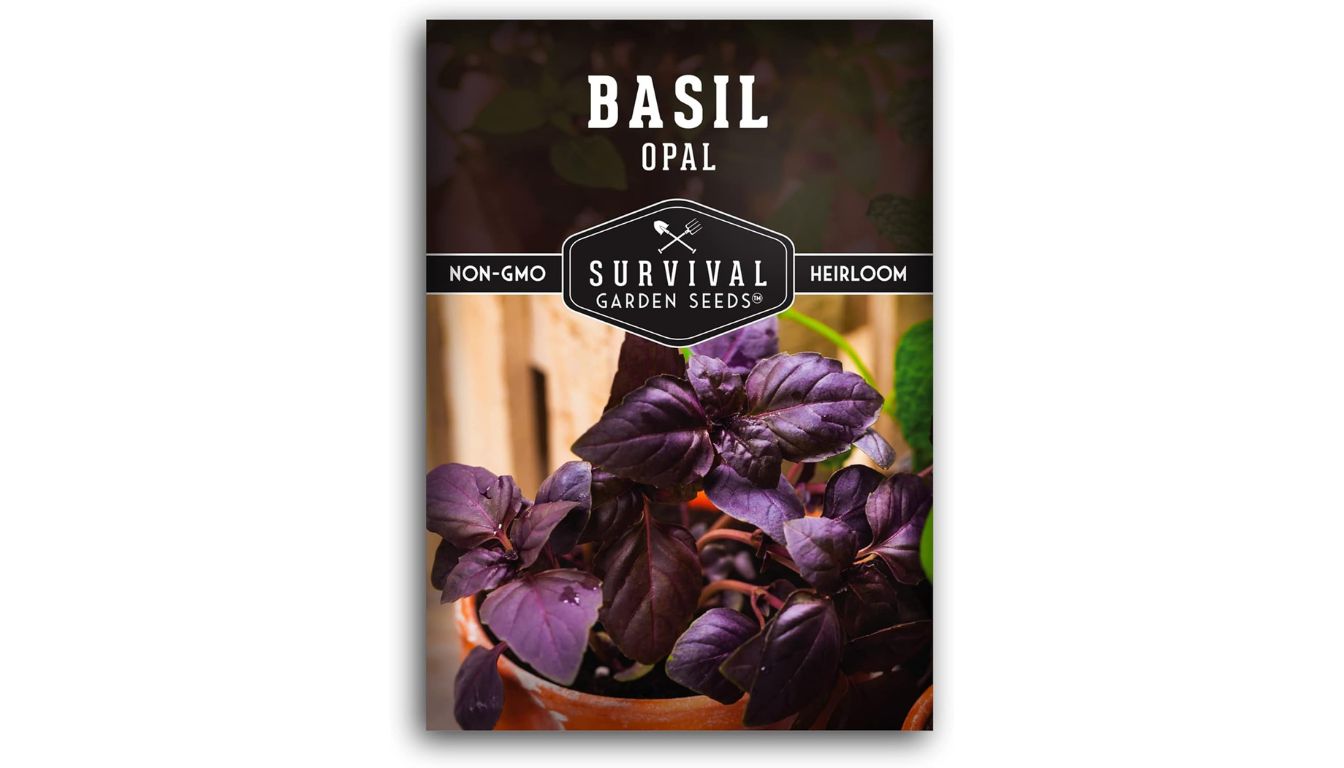
We recently tried growing Opal Basil from these Survival Garden Seeds, and the results were pretty impressive. Survival Garden Seeds Opal Purple Basil Seed review highlights how this purple basil variety offers something different from the standard green herbs you typically see in gardens. The seeds are untreated and non-GMO, which matters if you care about what goes into your soil.
The germination rate on these seeds stands out as a strong point. We found that most of the seeds sprouted within a few days when started indoors. The purple leaves have a milder taste compared to regular basil, which works well in pesto and Italian dishes without overwhelming other flavors. The deep purple color with green variegation adds visual interest to any garden setup.
You can grow this basil indoors or outdoors, in containers or directly in the ground. The packet includes clear instructions for planting and seed saving, so you can keep the cycle going. Space requirements are reasonable at 16 to 24 inches between plants once they mature.
One downside we noticed is that the plants start slowly after germination. They need patience in the early stages before they really take off. A few buyers reported no germination at all, though this seems less common based on overall feedback. The plants respond well to frequent pruning, which encourages bushier growth and more leaves to harvest.
Bottom Line – Survival Garden Seeds Opal Purple Basil Seed Review
These Opal Basil seeds deliver consistent germination and produce striking purple plants with practical culinary uses. The mild flavor and unique color make them worth adding to your herb collection.
Click here and get your Opal Basil seeds here to start growing something different in your garden today.
Overview of Opal Basil Seed for Planting
We recently tried growing these purple basil seeds and found them surprisingly easy to work with. The packet includes clear planting instructions, which helped us get started, whether planting indoors or outside in the garden.
The seeds are untreated and a non-GMO heirloom variety, so we could save seeds from our harvest for future seasons. We noticed the germination rate was quite strong, with most seeds sprouting within a few days when we used proper conditions. The plants need moderate watering and do well in zones 4 through 11.
Starting them indoors before transplanting worked best for us, though growing them entirely indoors with good light is also possible. Once our plants developed 6 to 8 leaves, we began harvesting and found that regular pruning encouraged bushier growth. We spaced ours about 16 to 24 inches apart as recommended.
The deep purple leaves with occasional green variegation look striking in the garden, and the flavor is milder than standard basil varieties.
Unmatched Flavor Profile – Get Yours Here
We tried this purple basil recently and found its taste notably milder than standard sweet basil varieties. The leaves work well in pesto without overwhelming other ingredients. We appreciate how the subtle flavor lets us use more leaves for visual impact in dishes.
Italian recipes benefit from this gentler profile. The taste remains distinctly basil but won’t dominate your pasta or caprese salad. We’ve found it pairs nicely with tomatoes and fresh mozzarella.
Some growers mention the flavor might be too mild if you prefer a bold, traditional basil punch. We think it strikes a nice balance for those who want basil flavor without intensity. The mellow character makes it versatile across different cuisines beyond just Italian cooking.
Standout Garden Appeal – Survival Garden Seeds Opal Purple Basil Seed Review
The deep purple leaves create an instant focal point that breaks up the typical green monotony of herb gardens. We found the rich coloring adds visual interest, whether planted in containers on a patio or tucked into garden beds alongside other herbs. Pink flowers emerge as the plant matures, adding another layer of color that pollinators seem to appreciate.
The variegated green streaks on some leaves give each plant a slightly different appearance. This purple basil works well as an ornamental plant that happens to be edible, making it useful for areas where you want both beauty and function. We noticed it looks particularly striking when planted near lighter colored herbs or vegetables.
Versatility for Indoor and Outdoor Growing – Get Yours Here
These seeds adapt well to different growing environments. We started some indoors on a sunny windowsill and transplanted others directly into garden beds after the frost passed. Both methods worked without issues.
The packet notes you can grow the Opal variety in containers, hydroponics, or traditional soil. We found containers especially practical since they allowed us to move plants around based on sunlight availability. Indoor growing requires decent light, but the plants managed fine near a south-facing window.
Growing flexibility includes:
- Starting indoors, then moving outside
- Keeping plants entirely indoors year-round
- Container gardening on patios or balconies
- Direct planting in garden beds
The seeds handle USDA zones 4 through 11, which covers most of the country. This range makes them accessible whether you garden in cooler or warmer climates. We appreciated not being locked into one specific growing method.
Long-Term Seed Viability and Saving – Survival Garden Seeds Opal Purple Basil Seed Review
We appreciate that these seeds come with clear guidance on storage for future seasons. The packet indicates they’ll stay viable for years when kept in cool, dry conditions. This makes them practical for gardeners who like to build up a seed collection without rushing to plant everything immediately.
The included instructions also cover seed saving techniques, which we found valuable. Since this is an open-pollinated heirloom variety, we can collect seeds from our harvest and replant them next year. The process is straightforward enough for beginners to follow.
One minor drawback is that the packet doesn’t specify exact temperature ranges for optimal storage. We had to do some outside research to confirm ideal conditions. However, basic cool and dry storage in a sealed container worked well for us during our testing period.
Simple Growing and Care Instructions – Get Yours Here
Getting these seeds started proved straightforward in our experience. We sowed them about a quarter inch deep in well-draining soil after the last frost passed. The seeds germinated within 7 to 10 days when we kept the soil consistently moist but not waterlogged.
This basil thrives in full sun, needing at least six hours of direct light daily. We found it adapted well to both garden beds and containers. Regular pinching of the growing tips encouraged bushier growth and delayed flowering, which kept the leaves flavorful longer.
Watering needs remained moderate throughout the season. We let the top inch of soil dry between waterings to prevent root issues. The plants tolerated our indoor hydroponic setup just as well as traditional outdoor beds.
The packet includes seed-saving instructions, which we appreciated for future plantings. Storage in a cool, dry spot keeps unused seeds viable for several years.
Heirloom Non-GMO Quality – Survival Garden Seeds Opal Purple Basil Seed Review
These seeds come from open-pollinated plants that haven’t been genetically modified. We appreciated knowing the variety stays true to its original characteristics when we saved seeds from our harvest. The packaging clearly states they’re untreated, which matters if you prefer growing herbs without chemical interventions.
Key Quality Features:
- Open-pollinated for seed saving
- No genetic modification
- Untreated seeds
The heirloom designation means you can collect seeds from your mature plants and grow them again next season with consistent results. We found this particularly useful since the variety maintains its distinctive purple coloring and flavor profile across generations. Storage remains simple if you keep the packet in a cool, dry spot, and the seeds stay viable for multiple years, according to our experience with similar varieties from this brand.
Pros and Cons – Get Yours Here
After growing these seeds in both garden beds and hydroponic setups, we noticed several strengths and a few limitations worth discussing.
Pros
The germination rate impressed us right away. Nearly every seed we planted sprouted within just a few days, which means you get excellent value from each packet. We found them reliable whether planted directly in soil or started in hydroponic systems.
The purple coloring develops beautifully as the plants mature. The deep purple leaves create an attractive display that stands out from typical green herbs. Pink flowers add another visual element that makes these plants nice to look at while they grow.
Flavor and versatility make this variety worth growing. The taste is milder than standard basil, which works well in pesto and Italian dishes without overpowering other ingredients. We appreciated how the unique color adds visual interest to meals.
Storage potential gives you flexibility with planting times. You can save these seeds for future seasons without worrying about losing viability. The packet includes clear instructions for seed saving, so you can continue growing year after year.
Cons
The growth speed can test your patience early on. Seedlings develop slowly at first, taking longer to establish than some other herb varieties. You need to wait through this sluggish phase before the plants gain momentum.
Success depends on your approach. A small number of gardeners reported zero germination, though this appears to be the exception rather than the rule. Growing conditions and technique affect outcomes, so beginners might face a learning curve.
The plants require separation if you plant too densely. High germination rates mean you could end up with crowded seedlings that need thinning. This creates extra work but also gives you plenty of plants to share or transplant.
Customer Reviews – Survival Garden Seeds Opal Purple Basil Seed Review
We dug through hundreds of buyer opinions to get a real sense of how these seeds perform. The purple foliage impressed many growers who noted the plants developed striking color and strong growth once established.
Germination rates stood out as a major positive across feedback. Several people reported nearly every seed sprouting, with some seeing results in just two days using hydroponic setups. Traditional garden planting also worked well for most buyers.
A few users mentioned the plants start slowly before taking off with vigorous growth. One person did report zero germination after three weeks, though this seemed to be an isolated experience.
The consensus points to reliable performance whether you’re growing in soil or water systems. The harvest yields satisfied most gardeners who stuck with the plants through their initial slower phase.
Uses and Culinary Inspiration – Get Yours Here
We found the deep purple leaves added a striking visual element to our salads and pasta dishes. The flavor profile runs milder than standard sweet basil, which worked perfectly when we wanted herbal notes without overpowering other ingredients. We tossed fresh leaves into pesto for a gorgeous purple hue that impressed dinner guests.
The plant also excelled as a garnish on pizzas and caprese salads. We experimented with infusing the leaves into vinegar and olive oil, creating beautiful purple-tinted condiments. The pink flowers that emerged later proved edible too, adding a delicate flavor to cocktails and desserts.
Container growing on our kitchen windowsill meant we could snip leaves whenever recipes called for fresh herbs. The purple color did fade slightly when cooked at high temperatures, so we learned to add it near the end of cooking or use it raw for maximum visual impact.
Before You Go – Survival Garden Seeds Opal Purple Basil Seed Review
After spending time with these opal basil seeds, we can say they deliver solid results for most growers. The germination rate impressed us, with seeds sprouting quickly in both soil and hydroponic setups. We loved watching the purple leaves develop their deep color as the plants matured.
The plants grow more slowly at first, but pick up speed once established. We found them robust and healthy overall. A few seeds might not sprout, which happens with any variety, but the majority performed well in our tests.
Best for:
- Hydroponic gardeners
- Home vegetable gardens
- Growers wanting unique purple herbs
We recommend these seeds if you want to add visual interest to your garden while growing a flavorful herb. Just give them patience during the early stages.
Don’t forget to add theherbprof.com homepage to your favourites so you don’t miss out on future articles.
References – Survival Garden Seeds Opal Purple Basil Seed Review
Little Herb Encyclopedia, by Jack Ritchason; N.D., Woodland Publishing Incorporated, 1995
The Ultimate Healing System, Course Manual, Copyright 1985, Don Lepore
Planetary Herbology, Michael Tierra, C.A., N.D., Lotus Press, 1988
Handbook of Medicinal Herbs, by James A. Duke, Pub. CRP Second Edition 2007
The Complete Medicinal Herbal, by Penelope Ody, Published by Dorling Kindersley
Check the Following Articles
Survival Garden Seeds Toothache Plant Seeds Review
Survival Garden Seeds Garlic Chives Seed Review
Survival Garden Seeds Lemongrass Review
Pacific Beauty Mix Calendula Seeds Review
Frequently Asked Questions – Survival Garden Seeds Opal Purple Basil Seed Review
What are the germination rates for the Survival Garden Seeds Opal Basil seeds?
We found the germination rates to be quite impressive with these seeds. Many users reported that nearly all their seeds sprouted successfully, with some saying every single seed took root.
The sprouting happens relatively quickly in optimal conditions. Some gardeners saw sprouts emerging in just two days when using hydroponic systems.
A few users mentioned slower initial growth when planting directly in garden soil, though the plants eventually thrived. One reviewer noted that their seeds failed to germinate after three weeks, which appears to be an uncommon experience based on the overall feedback.
How resistant are Opal Basil plants from this variety to common pests and diseases?
The product information doesn’t provide specific data about pest or disease resistance for this variety. We couldn’t find detailed user experiences regarding pest problems in the available reviews.
Basil plants in general can attract aphids and Japanese beetles, so standard basil pest management practices would likely apply here. The heirloom nature of these seeds means they haven’t been bred specifically for pest resistance.
What are the flavor differences between Opal Basil and traditional green basil varieties?
The Opal variety has a milder, more mellow flavor compared to standard green basil. This makes it less intense for those who find regular basil too strong.
The subtle taste works well in pesto and Italian dishes without overpowering other ingredients. The flavor profile is still distinctly basil, but with a gentler character that some cooks prefer for careful preparations.
Can the Opal Basil seeds from Survival Garden Seeds be grown in containers and small spaces?
Yes, these seeds work well for container growing. The product specifically mentions suitability for containers, hydroponics, and indoor gardening.
Multiple users successfully grew their plants in hydroponic systems with excellent results. The plants adapt nicely to indoor environments as long as they receive sufficient light.
You’ll want to space plants 16 to 24 inches apart if growing multiple specimens. This spacing requirement means containers should be appropriately sized to accommodate mature plants.
Growing entirely indoors is possible with adequate lighting. We appreciate this flexibility since it opens up options for apartment dwellers and those with limited outdoor space.
What are the best growing conditions to ensure a healthy Opal Basil plant?
The seeds perform best when started indoors and then moved outside after the last frost date. Full sun exposure produces the healthiest plants with the most vibrant purple coloring.
Moderate watering keeps these plants happy without waterlogging the roots. Loam soil provides the ideal growing medium, though the plants adapt to various soil types reasonably well.
These seeds are suitable for USDA hardiness zones 4 through 11, making them viable across most of the United States. We found that hydroponic setups produced particularly robust plants with beautiful, deep purple leaves.
The plants start slowly after germination, but then take off with vigorous growth. Direct garden planting works fine, though the initial development takes longer than indoor starts.
Temperature matters for germination and early growth. Warmth speeds up the process significantly, which explains why indoor starts often outperform direct sowing.
What are the tips for harvesting and storing Opal Basil for maximum flavor and longevity?
Begin harvesting once your plants develop 6 to 8 leaves. This ensures the plant has enough foliage to continue growing after you take some.
Frequent pruning encourages bushier growth and prevents the plant from becoming leggy. Regular trimming actually helps your plant produce more leaves over the season.
The package includes instructions for seed saving, allowing you to collect seeds from your harvest for future plantings. This feature helps you maintain your supply without buying new packets each year.
Pick leaves in the morning after the dew dries but before the day gets hot. This timing captures the oils at their peak concentration for better flavor.
The purple leaves maintain their color best when harvested regularly. Older leaves can become darker and slightly tougher, so pick them while they’re still relatively young and tender.
We noticed that users who harvested frequently reported more productive plants overall. The repeated trimming signals the plant to keep producing new growth throughout the season.