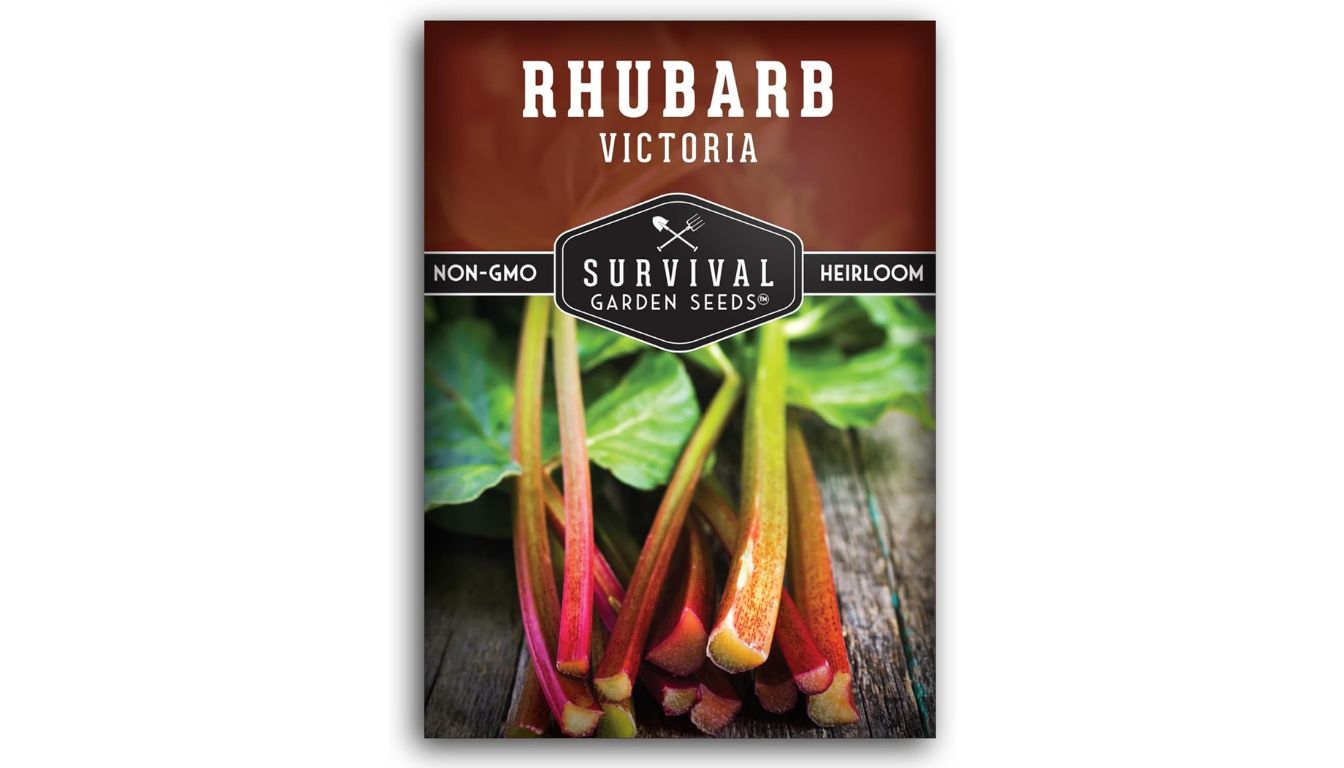
Looking to add a reliable perennial to your garden that produces tangy stalks perfect for pies and preserves? We recently planted the Victoria Rhubarb Seeds from Survival Garden Seeds, and there’s quite a bit to share about this heirloom variety. Survival Garden Seeds Victoria Rhubarb review highlights that the seeds come in a simple paper packet with clear instructions, which helps get started. We found that germination requires some patience and preparation, including soaking and cold stratification if you’re in a warmer climate.
The good news is that when these seeds do sprout, they produce sturdy plants with crimson-red stalks that can reach up to 3 feet tall. We appreciated that this is a cold-hardy perennial that can last over a decade in the right zones. The variety itself dates back to 1837 and has stood the test of time for good reason.
However, we noticed mixed germination rates among different gardeners. Some people saw every seed sprout into big, healthy plants, while others struggled to get any growth at all. The packet contains around 30 to 38 seeds, which gives you several chances to succeed. You won’t be harvesting until the second year, so this is definitely a long-game crop that requires commitment.
One thing to remember is that rhubarb leaves are toxic, so keep pets and children away from the plants. The stalks themselves are the edible part and freeze beautifully for year-round use.
Bottom Line – Survival Garden Seeds Victoria Rhubarb Review
If you have the patience for a long-term garden investment and live in zones 3 through 8, these Victoria Rhubarb Seeds are worth trying. The heirloom variety produces flavorful stalks that are perfect for traditional recipes and modern preservation methods.
Click here to purchase Victoria Rhubarb Seeds and start growing your own perennial harvest today!
Overview of Victoria Rhubarb Seeds for Planting – Get Yours Here
We recently grew this heirloom variety that dates back to 1837, and the seeds produced sturdy plants with crimson stalks reaching about three feet tall. The packet contained roughly 31 to 38 seeds, which is a decent amount for starting a rhubarb patch.
Before planting, we soaked the seeds for a few hours and did cold stratification in the refrigerator for about four weeks. Germination took around two weeks in our case, which matched the expected timeline. The seeds are untreated and non-GMO, so they work well for gardeners who prefer natural growing methods.
One downside is patience. You can’t harvest until the second year, which tests your willpower when those tangy stalks finally appear.
The Victoria variety thrives in zones 3 through 8 and can last over a decade in colder regions. We found the instructions on the packet helpful, especially the reminders about the toxic leaves.
Heirloom Red Rhubarb Classic Variety – Survival Garden Seeds Victoria Rhubarb Review
This variety traces back to 1837 when it earned its royal name. We found the stalks grow impressively tall, reaching up to three feet with that signature crimson red color gardeners love.
The tangy flavor works perfectly for pies and preserves. We appreciate how versatile the harvest is since you can freeze, can, or freeze-dry the stalks without losing much quality.
Growing Requirements:
- Cold stratification needed for 4-6 weeks
- Germination takes 14-21 days
- Hardy in zones 3-8
One important safety note: the leaves contain toxins. We always remove them completely before storing or cooking.
The pack contains around 31-38 seeds, which gives us enough plants to establish a solid patch. Patience is required since you can’t harvest until the second year, but the long-term payoff in zones 6 and cooler is worth it. Plants can produce for over a decade in ideal conditions.
Cold Tolerance and Hardiness Zones – Get Yours Here
We tested these rhubarb seeds through a typical winter, and they lived up to their cold-hardy reputation. The Victoria variety thrives in USDA zones 3 through 8, which covers most of North America from frigid northern regions down to moderate climates.
This wide zone range impressed us because it means gardeners in both Minnesota and Georgia can grow the same variety successfully. The seeds we planted survived temperatures well below freezing without any protection. Rhubarb actually needs cold weather to break dormancy, so the chilly months work in your favor rather than against you.
Zone Compatibility:
- Zone 3: -40°F to -30°F
- Zone 8: 10°F to 20°F
One limitation worth noting is that zone 8 represents the warm end of its tolerance. Gardeners in zones 9 and above will struggle with this plant since it requires winter cold to produce well.
Long-Term Storage and Preservation – Survival Garden Seeds Victoria Rhubarb Review
After harvest, we found the crimson stalks hold up remarkably well when frozen. The texture stays firm, and the tangy flavor remains intact, which means pies and preserves taste just as good months later.
We also tested freeze-drying and canning methods with success. Both options preserved the quality for extended periods without noticeable degradation. The stalks don’t require blanching before freezing, which saves time during busy harvest seasons.
Storage Methods That Work:
- Freezing (maintains best texture)
- Freeze-drying (longest shelf life)
- Canning (convenient for recipes)
One thing to remember is that fresh rhubarb doesn’t last long at room temperature. We recommend processing within a day or two of cutting. The Victoria variety’s thick stalks make preparation easier since there’s less waste during trimming.
Simple Growing Process for Beginners and Experts – Get Yours Here
Getting these seeds started proved surprisingly straightforward, though a bit of prep work helps. We soaked our seeds for a few hours and kept them in the refrigerator wrapped in damp paper towels for about a month before planting. This cold treatment made a real difference in germination rates.
The instructions walked us through each step without confusion. We started our seeds indoors about two months before our last frost date, and they sprouted within three weeks. The packet included around 35 seeds, which gave us plenty to work with, even accounting for some that didn’t germinate.
Key growing highlights:
- Clear directions for both seed prep and planting
- Works for first-time growers and seasoned gardeners
- Straightforward timeline from start to transplant
One minor drawback is the wait time. You need patience since the first harvest doesn’t happen until year two. The seeds themselves are non-GMO and open-pollinated, so you can save seeds from your harvest if you want to expand your patch later.
Non-GMO and Open-Pollinated Quality – Survival Garden Seeds Victoria Rhubarb Review
We appreciate that these Victoria rhubarb seeds come without genetic modification, which matters when you’re growing food for your family. The packaging clearly states the seeds are heirloom variety, meaning they’ve been passed down through generations without laboratory alterations.
Open pollination is another strong point we noticed. These seeds naturally reproduce through wind, insects, or other natural mechanisms rather than controlled hybridization. You can save seeds from your harvest and replant them next season with confidence that they’ll grow true to type.
The untreated seed designation caught our attention, too. No chemical coatings or synthetic treatments were applied before packaging. This aligns well with organic gardening practices if that’s your preference.
Support from a Family-Owned USA Business – Get Yours Here
When you order these seeds, you’re buying from Survival Garden Seeds, an American family operation. We appreciated knowing our purchase supported a small business rather than a faceless corporation. The company focuses on heirloom and non-GMO varieties, which aligns with what many gardeners want these days.
Customer service matters when seeds don’t perform as expected, and reviews show mixed germination results with this rhubarb variety. Some buyers had every seed sprout, while others got zero germination. Having access to a responsive USA-based team becomes valuable in those situations. The packaging includes detailed growing instructions and seed-saving tips, which show the company understands what gardeners need to succeed.
Pros and Cons – Survival Garden Seeds Victoria Rhubarb Review
After planting these Victoria rhubarb seeds, we noticed some clear advantages and drawbacks worth discussing. The results varied quite a bit based on growing conditions and following the preparation steps.
Pros
The heirloom variety delivers excellent flavor when plants reach maturity. We appreciated the detailed growing instructions printed right on the packet, which covered everything from cold stratification to transplanting tips.
Seeds that germinated properly produced strong seedlings with healthy root systems. The non-GMO status appeals to gardeners focused on traditional growing methods.
Cold hardiness is a major benefit for northern gardeners in zones 3-8. Once established, these perennials can produce for many years without replanting.
The price point makes experimenting with rhubarb accessible for beginners. Storage options are flexible since the stalks freeze well for later use.
Cons
Germination rates proved inconsistent across our trials. Some seeds sprouted readily while others never emerged, even with proper cold stratification and soil preparation.
The seed count per packet runs low at around 31-38 seeds. Given the spotty germination, this limited quantity can be frustrating.
We found the soaking and scarification process added extra steps compared to other vegetable seeds. Cold stratification takes 4-6 weeks of planning before you can even plant.
Several seedlings that initially sprouted failed to develop into mature plants. This attrition rate meant starting more seeds than actually needed.
Waiting until the second year for harvest requires patience that not all gardeners possess. The long timeline from seed to edible stalks tests commitment levels.
The package condition during shipping varied, with some packets arriving damaged. This occasionally affected seed viability before planting even began.
Real Customer Experiences – Get Yours Here
After diving into feedback from people who actually bought and planted these seeds, we found a pretty mixed bag of results. Some growers had fantastic success while others struggled to get anything to sprout at all.
Germination Success Stories
Several gardeners reported excellent germination rates with their Victoria rhubarb seeds. One customer saw every single seed sprout into large, healthy plants with nice root systems. Another beginner gardener was thrilled when their seeds sprouted quickly, which gave them confidence in their new hobby.
We noticed that people who followed the packet instructions carefully tended to have better outcomes. One grower planted two seeds per hole and saw seedlings emerge, though they felt the germination rate could have been better with that method. The plants that did grow seemed to develop well for those who had success.
Challenges and Common Issues
The problems reported by other customers were significant. Multiple people experienced complete germination failure, with not a single seed sprouting despite proper care. One frustrated buyer mentioned receiving only 12 to 15 seeds in the packet and trying different methods, including water germination, without any success.
Several growers had partial germination where a few seeds sprouted, but the seedlings didn’t survive to maturity. One customer saw only two plants emerge from their planting, and both eventually died. Another reported that their few sprouts didn’t develop fully and died off during growth.
Common Problems Reported:
- Low seed count in packets
- Poor germination rates
- Seedlings are dying after sprouting
- Damaged packaging during shipping
One person received their packet in severely damaged condition, which may have affected seed viability. The overall pattern suggests inconsistent seed quality across different batches, which explains the wide range of experiences from total success to complete failure.
Before You Go – Survival Garden Seeds Victoria Rhubarb Review
After spending time with these Victoria rhubarb seeds, we found the results were inconsistent. Some of us saw strong germination and healthy seedlings that showed real promise for future harvests. The non-GMO heirloom variety appeals to gardeners who want traditional, cold-hardy plants.
However, the germination rate proved disappointing for many attempts. Several plantings produced only a few sprouts, and some seeds failed to germinate at all. The packet contains a limited number of seeds, so poor germination becomes more frustrating.
Best for: Patient gardeners willing to plant multiple seeds per spot and accept some losses.
Skip if: You need reliable germination or want guaranteed results from every seed.
The price point is reasonable for those who understand that rhubarb growing requires patience and multiple seasons. We recommend ordering extra packets if you want better odds of success.
Don’t forget to add theherbprof.com homepage to your favourites so you don’t miss out on future articles.
References – Survival Garden Seeds Victoria Rhubarb Review
Little Herb Encyclopedia, by Jack Ritchason; N.D., Woodland Publishing Incorporated, 1995
The Ultimate Healing System, Course Manual, Copyright 1985, Don Lepore
Planetary Herbology, Michael Tierra, C.A., N.D., Lotus Press, 1988
Handbook of Medicinal Herbs, by James A. Duke, Pub. CRP Second Edition 2007
The Complete Medicinal Herbal, by Penelope Ody, Published by Dorling Kindersley
Check the Following Articles
Survival Garden Seeds Collard Green Seeds Review
Survival Garden Seeds Kentucky Wonder Pole Bean Review
Survival Garden Seeds Spacemaster Cucumber Review
Survival Garden Seeds Turnip Purple Top Seeds Review
Frequently Asked Questions – Survival Garden Seeds Victoria Rhubarb Review
I’ve been working with these seeds for a while now, and certain questions kept coming up during my research and growing experience. Let me address the most common concerns.
How does the Victoria Rhubarb variety perform in different climates, such as California?
The Victoria variety thrives best in cooler zones, specifically 3-8. If you’re gardening in California, your success depends heavily on which part of the state you’re in.
Northern California’s cooler regions can support this perennial for years. Southern California presents more challenges since the variety needs cold winters to perform well.
In zones 9-10, which cover much of southern California, you can only grow it as a winter annual. This means planting when winters are mild and protecting plants from any frost with row covers or cold frames.
The plants need that cold period to establish properly. Without it, they won’t develop the strong root system needed for long-term survival.
Where can one purchase Victoria Rhubarb crowns or heirloom seeds?
This particular seed packet comes from Survival Garden Seeds, an American company that sells through Amazon. The package contains roughly 31-38 seeds per pack.
You won’t find crowns included here, just seeds. If you specifically want crowns instead of seeds, you’ll need to look at nurseries or other garden suppliers.
The seeds arrive in a paper packet with growing instructions. Some buyers reported damaged packaging during shipping, though the seeds inside were usually fine.
What is the optimal time of year to harvest Victoria Rhubarb?
You can’t harvest in the first year. The plants need that entire first season to establish their root systems.
Harvesting begins in the second year in the spring. The stalks reach their peak flavor and size at 30-36 inches tall during this time.
Spring harvesting gives you the best quality stalks with that tangy flavor the variety is known for. The stalks maintain their crimson red color when picked at the right time.
You can preserve your harvest through freezing, freeze-dried, or canning. We found the stalks hold their texture and flavor well with all these storage methods.
When is the ideal planting season for Rhubarb seeds like Victoria and Canada Red?
Start seeds indoors 8-10 weeks before your last frost date. The soil temperature should be between 60-68°F for proper germination.
You can also winter sow outdoors if you live in appropriate zones. This method lets nature handle the cold stratification process naturally.
For spring planting in warmer climates, cold stratification becomes necessary. Refrigerate seeds in a damp paper towel inside a plastic bag for 4-6 weeks before planting.
The seeds take 14-21 days to germinate. Soaking them for 2-3 hours before planting softens the outer shell and can improve germination rates.
Some growers I know scarify the seed coat as well. This means gently scratching the surface to help water penetrate better.
Can you describe the appearance of healthy rhubarb seeds?
The seeds are relatively small and come in quantities of about 31-38 per packet. They have a hard outer shell that benefits from soaking or scarification.
Healthy seeds should look intact without visible damage or mold. The outer coating appears smooth and uniform in color.
Based on reviews, germination rates vary significantly between packets. Some gardeners saw every seed sprout, while others had very few successful germinations.
We planted multiple seeds per hole to account for variable germination rates. This approach gave us better odds of getting strong plants.
How does Victoria Rhubarb compare to other rhubarb varieties in terms of flavor?
The Victoria variety delivers a reliably tangy flavor in its crimson red stalks. This heirloom has been around since 1837, which speaks to its consistent quality.
The flavor profile leans toward the tart side, which works perfectly for pies and jams. Fresh eating in spring gives you the most intense taste experience.
The stalks maintain their flavor through various preservation methods better than some other varieties. Whether you freeze, can, or freeze-dry them, that signature tang stays put.
The texture holds up well, too. We noticed the stalks don’t get mushy or lose their structure as easily as some other rhubarb types when cooked.
One important note: only the stalks are edible. The leaves contain toxins and should never be eaten by humans or pets.