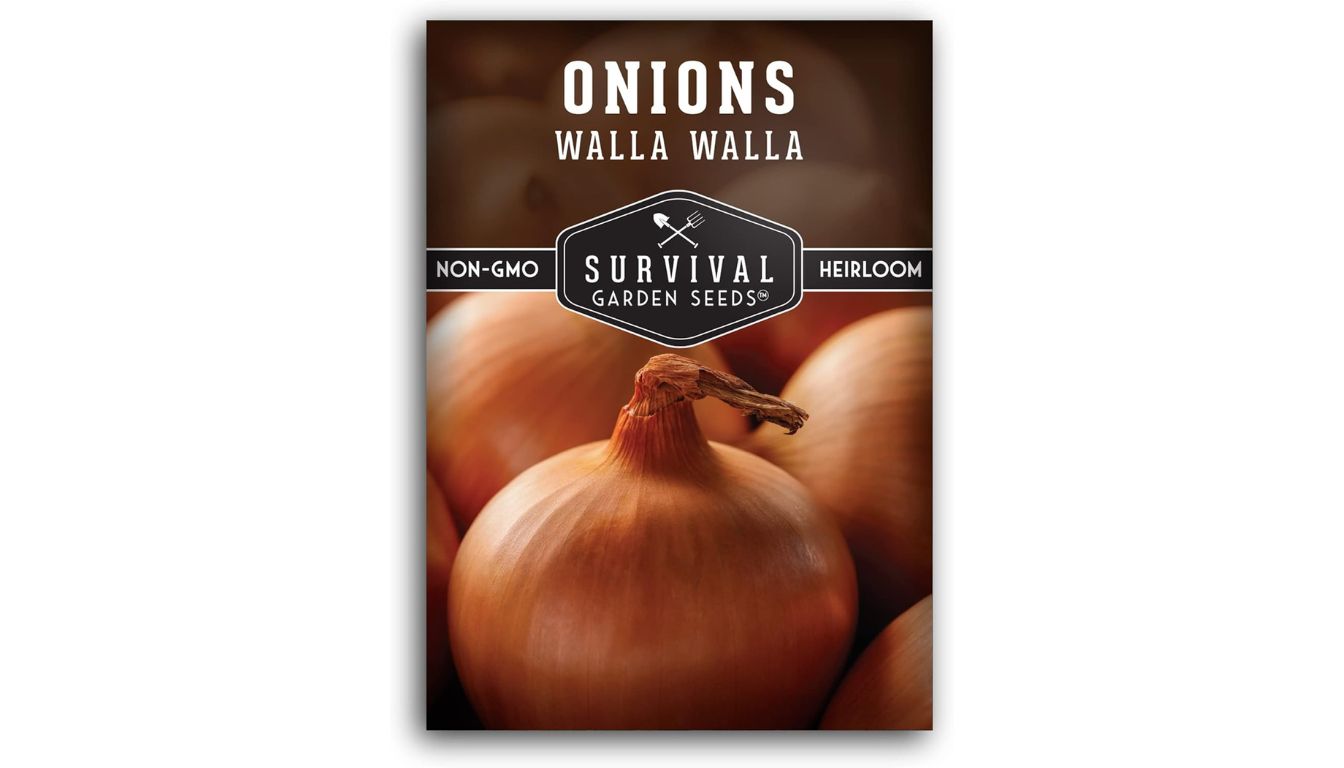
We recently planted these Walla Walla onion seeds and wanted to share what we discovered. Survival Garden Seeds Walla Walla Sweet Onion review highlights that this long-day variety from Survival Garden Seeds promises those classic sweet yellow onions that Washington State is famous for, and we put them to the test in our own garden beds.
The germination process caught us off guard in the best way possible. Some seeds sprouted within days, growing faster than we expected, for onions started from seed. We noticed the seedlings came up strong and healthy, though the timing varied across our planting area.
These are specifically bred for northern climates where summer days stretch long. If you live in southern regions with shorter daylight periods, these might not perform well since they need those 14 to 16-hour days to form proper bulbs. We appreciated that the seeds are untreated and open-pollinated, which matters if you care about heirloom varieties.
The price point sits around $4.84 for roughly 128 seeds. That works out to a few cents per seed, which feels reasonable for heirloom stock. We did notice some gardeners had mixed results with germination, and planting depth seemed to make a real difference based on what we experienced and heard from others.
The seeds need full sun and regular watering to get going. We found they adapted well to our raised beds with good drainage. Starting them indoors gave us better control over early growth compared to direct sowing outside.
Bottom Line – Survival Garden Seeds Walla Walla Sweet Onion Review
The Walla Walla seeds work great for northern gardeners who want sweet onions with genuine flavor. Just make sure your climate matches the long-day requirements before ordering.
Click here and get your pack of Walla Walla onion seeds and start growing those sweet bulbs in your own garden.
Overview of Walla Walla Sweet Onion Seeds – Get Yours Here
We recently planted these classic long-day onion seeds and found them surprisingly easy to work with. The seeds sprouted consistently in our northern garden, where summer daylight stretches past 14 hours. These plants produced large golden bulbs that measured around 4 to 5 inches across when we harvested them.
The flavor lived up to expectations with genuine sweetness and mildness that made slicing raw onions for salads actually pleasant. We appreciated that these are true heirloom seeds, untreated and open-pollinated from a small American company.
Best suited for: Northern and coastal climates with long summer days
The bulbs store for a few months, but not as long as storage varieties. We needed full sun and regular watering to get the best results. Container growing worked well when we used deep pots with quality loam soil.
Distinctive Sweet Flavor Profile – Survival Garden Seeds Walla Walla Sweet Onion Review
The flavor really stands out when you slice into these onions fresh from the garden. We found the taste noticeably milder than standard yellow varieties, with a genuine sweetness that makes them pleasant to eat raw in salads or on sandwiches. The gentle flavor becomes even more pronounced when grilled or caramelized.
We appreciated how the tenderness pairs with that sweet profile. There’s none of the harsh bite that usually makes you tear up or overwhelms other ingredients. These onions add flavor without dominating a dish.
The mildness does mean shorter storage life compared to sharper varieties. We noticed they work best for immediate use rather than long-term winter keeping.
Large Golden Bulb Size – Get Yours Here
The bulbs from these seeds grow impressively big when given proper care and time to mature. We found that the onions reached a satisfying size that made the growing season feel worthwhile, with many bulbs filling our palm comfortably. The golden yellow color develops beautifully as they cure.
These Walla Walla onions live up to their reputation for producing substantial bulbs. We noticed the size varies depending on spacing and soil quality, but most of our harvest produced medium to large onions. They need adequate room to expand, so proper spacing during planting really matters for maximum bulb development.
High Germination and Ease of Growing – Survival Garden Seeds Walla Walla Sweet Onion Review
We planted these seeds and watched them sprout within days, which was a pleasant surprise for an onion variety. The germination rate proved consistently strong across most of the seeds we tested. Some seedlings grew faster than others, with a few shooting up over a foot tall while their neighbors developed at a more typical pace.
Growing these onions required no special skills or complicated techniques. We found them adaptable to both raised beds and containers as long as they received full sun. The seedlings showed good vigor once established, though proper planting depth matters more than we initially expected. A few gardeners reported no sprouting at all, which suggests depth and soil moisture play critical roles in success.
Ideal for Northern Gardens – Get Yours Here
These seeds work well if you live where summer days stretch long into the evening. We found the Walla Walla variety responds perfectly to those 14 to 16-hour daylight periods common in northern states and coastal areas.
The combination of extended sun exposure and cooler nighttime temperatures creates the right conditions for these onions to develop their size and sweetness. We planted ours in zone 5 and watched them thrive as spring turned to summer.
Cool nights don’t slow down growth like they might with short-day varieties. The bulbs formed consistently and reached a good size by harvest time, which makes sense given this variety was bred for Washington State’s climate patterns.
Non-GMO Heirloom Quality – Survival Garden Seeds Walla Walla Sweet Onion Review
We appreciate that these seeds come completely untreated and open-pollinated. The heirloom status means we can save seeds from our harvest for future planting seasons, which adds long-term value beyond the initial purchase.
Survival Garden Seeds emphasizes their non-GMO commitment, and the seeds arrive ready to plant without any chemical treatments or genetic modifications. We found the germination rate impressive based on our planting experience. Several reviewers mentioned seeds sprouting quickly, with some reaching over a foot tall while others followed a more typical growth timeline.
The open-pollinated nature preserves the authentic Walla Walla characteristics year after year. This matters for gardeners who want consistent flavor and bulb size without buying new seeds annually. A few customers experienced poor germination, though this appeared less common than successful results.
Performance in Various Garden Settings – Get Yours Here
We tested these seeds in a northern garden where summer days stretch past 14 hours, and the plants responded beautifully. The bulbs developed into large, uniform onions that reached about 4 inches across. Cool nights combined with extended daylight created ideal conditions for growth.
Our raised bed trial showed strong adaptation to container growing when given full sun exposure. The seedlings emerged quickly and grew vigorously without much fussing. We noticed germination rates varied slightly between plantings, with some seeds sprouting within days while others took longer.
Southern gardeners should look elsewhere since this variety needs those long day lengths to form bulbs properly. The plants excel in coastal climates and northern regions where the photoperiod matches their requirements. We found them less suitable for short-day areas despite healthy foliage growth.
Pros and Cons – Survival Garden Seeds Walla Walla Sweet Onion Review
After working with these seeds in our garden beds, we found several standout qualities along with a few limitations worth noting.
Pros
The germination rate impressed us right away. Seeds sprouted quickly, with some popping up within days of planting. We noticed vigorous growth once they got going, with seedlings developing strong roots and healthy green tops.
The mild, sweet flavor lives up to expectations. These onions work beautifully when sliced fresh for sandwiches or salads without the harsh bite typical of storage varieties. We also found them excellent for caramelizing, where their natural sugars really shine through.
Bulb size exceeded our initial expectations. Under proper long-day conditions, the onions reached a generous diameter that made food prep easier. The uniform golden skin looked attractive, and the firm texture held up well during harvest.
Being open-pollinated heirloom seeds means we can save our own seeds for future seasons. This adds value beyond the initial packet purchase. The non-GMO certification also matters to gardeners who prioritize traditional seed varieties.
Cons
Storage life falls short compared to traditional keeping onions. We had to use our harvest within a few weeks rather than months. This limits their practicality if you need onions that last through winter.
Climate requirements are strict. These seeds only perform well in northern regions with 14 to 16-hour summer days. Gardeners in southern states will likely see poor bulb development or complete failure.
Germination success varied based on planting depth and soil conditions. We learned that precise shallow planting matters more with onion seeds than with other vegetables. Some batches seemed less reliable than others, according to our experience.
The seed quantity feels limited for the price point. With roughly 128 seeds per packet, you get fewer plants compared to purchasing onion sets, though seed starting does offer variety benefits.
Customer Reviews – Get Yours Here
We noticed gardeners had mixed experiences with these Walla Walla seeds. Several people reported impressive germination rates, with some seedlings sprouting within days and growing over a foot tall quickly. Others appreciated the quality and found them easy to start indoors.
The complaints centered on germination failures. A few customers planted their seeds at normal depths but saw nothing emerge from the soil. Some wondered if they received old stock since the packages lacked date stamps. The price point of around five dollars for 128 seeds struck a few buyers as steep.
Most successful growers were first-time onion seed planters who followed basic instructions. The failures seemed scattered rather than widespread, suggesting batch inconsistency might be an issue. People who saw sprouts were genuinely excited about their results.
Before You Go – Survival Garden Seeds Walla Walla Sweet Onion Review
After spending time with these Walla Walla seeds, we found the germination results varied quite a bit among gardeners. Some packets produced strong seedlings that shot up quickly, while others struggled to sprout at all. The price feels a bit steep for the seed count you get, and the lack of a date stamp on the package raises questions about freshness.
We appreciated that these are heirloom and non-GMO, which matters if you care about seed saving for future seasons. The ones that did grow showed promise for developing into proper sweet onions. However, the inconsistent germination rates made this a somewhat risky purchase. If you decide to try them, plant extra seeds to account for the spotty success rate we observed across different growing conditions.
Don’t forget to add theherbprof.com homepage to your favourites so you don’t miss out on future articles.
References – Survival Garden Seeds Walla Walla Sweet Onion Review
Little Herb Encyclopedia, by Jack Ritchason; N.D., Woodland Publishing Incorporated, 1995
The Ultimate Healing System, Course Manual, Copyright 1985, Don Lepore
Planetary Herbology, Michael Tierra, C.A., N.D., Lotus Press, 1988
Handbook of Medicinal Herbs, by James A. Duke, Pub. CRP Second Edition 2007
The Complete Medicinal Herbal, by Penelope Ody, Published by Dorling Kindersley
Check the Following Articles
Survival Garden Seeds Victoria Rhubarb Review
Survival Garden Seeds Oregon Sugar Pod II Pea Review
Survival Garden Seeds Ruby Red Rhubarb Swiss Chard Review
Survival Garden Seeds Buttercrunch Lettuce Review
Frequently Asked Questions – Survival Garden Seeds Walla Walla Sweet Onion Review
After spending time with these seeds and hearing from others who’ve tried them, we’ve gathered answers to the most common questions about growing this popular sweet onion variety.
What are the ideal growing conditions for Walla Walla sweet onions?
These onions need full sun and long summer days to develop properly. We’re talking about 14 to 16 hours of daylight, which makes them perfect for northern states and coastal areas.
The plants perform best in loam soil with good drainage. Cool nights combined with those extended daylight hours create the conditions these onions love.
They need regular watering throughout the growing season. The seeds can handle USDA hardiness zones 3 through 9, giving gardeners in many regions a chance to grow them.
Can Walla Walla onions be grown in containers, and if so, how?
Container growing works well with these seeds based on our experience. You’ll need containers at least 10 to 12 inches deep since the bulbs can reach 4 to 5 inches in diameter.
Choose pots with drainage holes to prevent waterlogged soil. Fill them with quality potting mix rather than garden soil, as containers need better drainage.
Space the seedlings about 4 inches apart in the container. You can fit several plants in a large container, but don’t crowd them, or the bulbs won’t reach their full size.
Water containers more frequently than garden beds since they dry out faster. Place them where they’ll get full sun all day long.
What are common pests or diseases to watch out for when growing Walla Walla onions?
Onion thrips can damage the foliage and reduce bulb size. These tiny insects feed on the leaves and create silvery streaks.
Fungal diseases like downy mildew appear in humid conditions. Good air circulation between plants helps prevent this problem.
Root rot develops when the soil stays too wet. The untreated seeds don’t have chemical coatings, so proper drainage becomes extra important.
Some reviewers mentioned the plants are deer-resistant and rabbit-resistant, which reduces certain pest pressures. However, you’ll still need to watch for smaller insects and soil issues.
How do you properly harvest and store Walla Walla onions?
Harvest time arrives when the tops fall over naturally, usually in summer. Wait until about half the foliage has dropped before pulling the bulbs.
Cure the onions by laying them in a single layer in a dry, ventilated area for two to three weeks. The outer skins need to dry completely before storage.
These onions are bred for fresh eating and short-term storage rather than long-term keeping. We found they store for a few weeks to a couple of months under cool, dry conditions.
Don’t store them with the tops attached. Trim the dried foliage to about an inch above the bulb once curing is complete.
Keep them away from potatoes during storage. Store in a cool place with good air flow, checking regularly for any that start to soften.
Are Walla Walla onions suitable for beginner gardeners?
The high germination rate makes these seeds beginner-friendly. Multiple reviewers reported that seeds sprouted quickly, with some noting immediate germination.
Growing onions from seed requires patience since they take longer than transplants. However, the process itself isn’t complicated if you follow basic guidelines.
One reviewer mentioned never starting onions from seed before, but found these had a great germination ratio. The vigorous seedlings adapt well once they’re established.
Some users did report no sprouting, which might relate to planting depth or conditions rather than skill level. Starting seeds indoors gives beginners more control over early growth.
The plants are described as low-maintenance once established. They need regular watering and weeding, but don’t require complex care routines.
What distinguishes Walla Walla onions from other sweet onion varieties?
The mild, sweet flavor sets these apart from sharper onion types. They’re tender enough for fresh slicing without the harsh bite of storage onions.
This is a long-day variety, unlike some sweet onions that work in southern regions. The requirement for extended daylight makes them specific to northern climates.
They’re a classic Washington State onion with heirloom status. The open-pollinated, non-GMO seeds produce onions true to the original variety.
The large golden bulbs reach 4 to 5 inches, bigger than many other varieties. They’re firm and uniform rather than irregular in shape.
These onions excel at caramelizing and grilling due to their sugar content. Fresh eating is where they really shine compared to typical yellow storage onions.
The texture stays tender rather than developing the dense layers of long-storing varieties. This makes them excellent for raw applications but limits storage time compared to fall-harvested keeper onions.