
The Herb Prof Team researches and writes our herbal guides, drawing on published research, traditional herbal references, and hands-on growing experience.
Mint uses go well beyond a garnish on your plate. This versatile herb earns a place in the kitchen, the medicine cabinet, and the cleaning cupboard alike, here are seven ways to put it to work.
1. Fresh Mint in Recipes
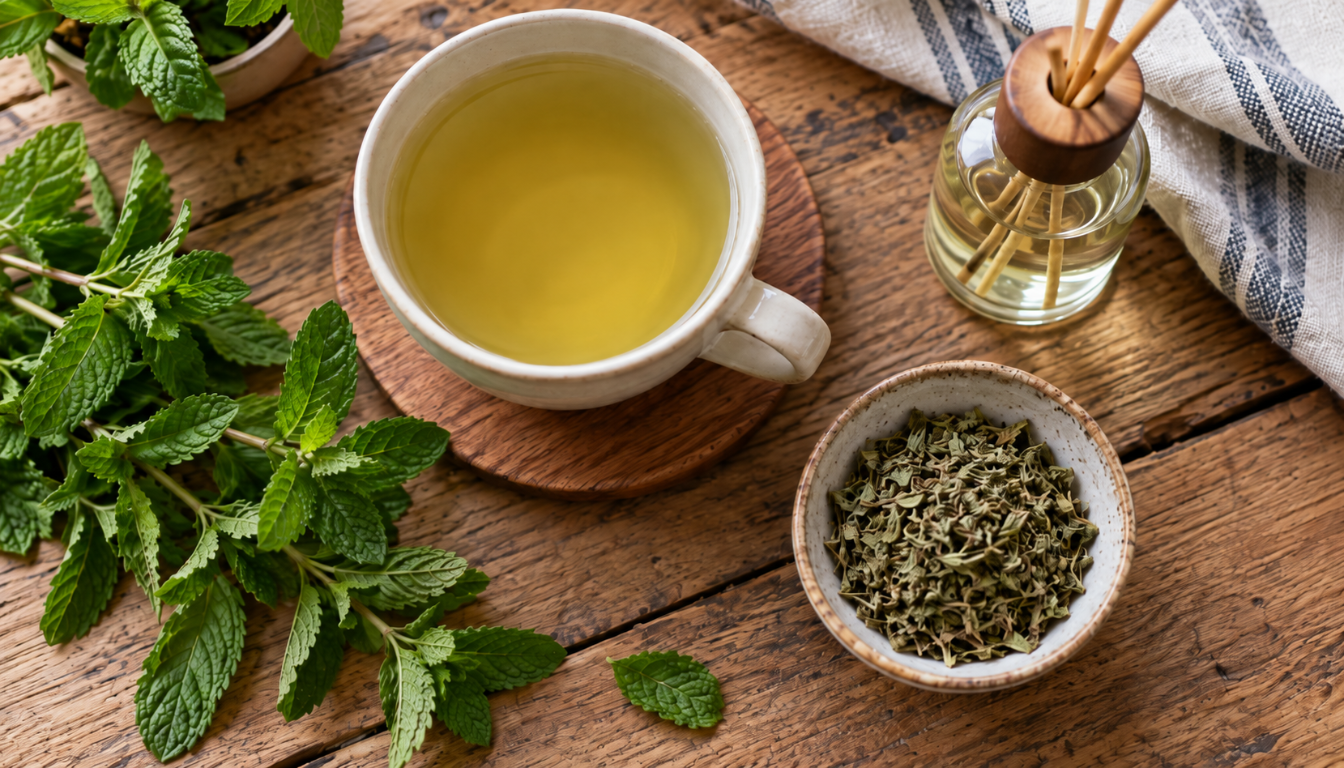
Fresh mint brings a vibrant, cooling brightness to salads, sauces, and desserts. It pairs particularly well with peas, cucumber, and yogurt-based dishes, and is a defining ingredient in Middle Eastern dishes like tabbouleh. A few torn leaves stirred into whipped cream or sprinkled over chocolate desserts adds a fresh contrast to rich flavors. And, of course, mint tea remains one of the simplest and most reliable ways to use it.
2. Dried Mint for Flavoring
Dried mint has a more concentrated, earthier flavor than fresh. It works well in spice blends like za’atar, or for seasoning meats and stews, particularly lamb. It also holds up in baked goods, a small amount added to cookies or brownies gives an unexpected twist. A little goes a long way, though.
3. Mint for Digestive Comfort
Mint, and peppermint in particular, has real research behind its traditional use for digestive discomfort. Its main active compound, menthol, has been shown in laboratory and clinical research to relax smooth muscle in the digestive tract. It does this by blocking calcium channels, the proposed mechanism behind peppermint’s traditional use for bloating, cramping, and general digestive discomfort.
One caveat worth knowing: that same relaxing effect can also loosen the lower esophageal sphincter. That’s the muscle that keeps stomach acid from moving back up into the esophagus. For some people, this means mint can trigger or worsen heartburn rather than ease it, particularly after a large meal. If you have frequent acid reflux, it’s worth paying attention to how mint affects you personally. Asking a doctor before relying on it regularly is a reasonable step too.
4. Mint Essential Oil for a Fresh Atmosphere
A few drops of mint essential oil in a diffuser adds a burst of freshness to a room. It can also help mask stale odors. It pairs well with citrus oils for a brighter blend, or with lavender for something more calming. As with any essential oil, keep diffusers out of reach of pets and young children. Dilute properly before any skin contact.
5. Mint Uses in Aromatherapy
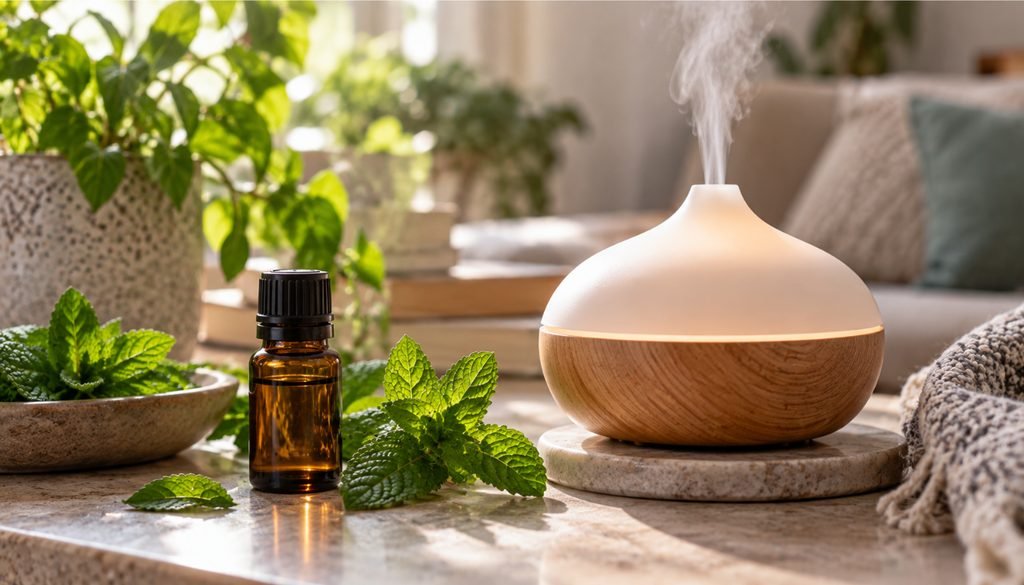
Many people find inhaling mint’s scent refreshing and invigorating, a quick way to feel more alert during a midday slump or a study session. Diluted mint oil is also sometimes used in massage for its cooling sensation. These are sensory, comfort-based uses rather than clinically proven treatments, worth enjoying for what they are without overstating what they do.
6. Mint as a Natural Pest Deterrent
Many gardeners report that ants and spiders avoid areas with a strong mint scent, and growing mint near doorways or windows is a common, low-effort way to try to discourage them. A simple spray, made by steeping fresh or dried mint in water and straining it, is easy to make at home. Results vary and mint isn’t a substitute for targeted pest control if you have an actual infestation, but it’s a reasonable, low-cost thing to try.
7. Mint Uses for Freshening Your Home
A bowl of fresh mint leaves adds a pleasant scent and a bit of greenery to a room. Simmering mint in water on the stove works as a simple, natural air freshener, and diffusing mint essential oil offers the same effect with less effort.
Before You Go – Creative Uses for Mint
Mint earns its versatility honestly, useful in the kitchen, genuinely backed by research for digestive comfort in moderation, and handy around the house besides. Keep expectations realistic where health benefits are concerned, and enjoy the rest for what it is: a simple, good-smelling, good-tasting herb worth having on hand.
This article is for general educational purposes only and is not medical advice. Always talk to a doctor before using any herb to address a health concern, especially if you’re pregnant, nursing, managing a health condition, or taking medication.
Sources
- Amato, A., et al. “Effects of menthol on circular smooth muscle of human colon: analysis of the mechanism of action,” PubMed: read the study
- “The mechanism of action of peppermint oil on gastrointestinal smooth muscle,” Gastroenterology: read the study
References – Creative Uses for Mint
Little Herb Encyclopedia, by Jack Ritchason; N.D., Woodland Publishing Incorporated, 1995
The Ultimate Healing System, Course Manual, Copyright 1985, Don LeporePlanetary Herbology, Michael Tierra, C.A., N.D., Lotus Press, 1988
Handbook of Medicinal Herbs, by James A. Duke, Pub. CRP Second Edition 2007
The Complete Medicinal Herbal, by Penelope Ody, Published by Dorling Kindersley
Related Articles
Organic Ashwagandha Review: Top Stress Relief?
Benefits of Wheatgrass for Better Health and Vitality
How to Grow Lettuce: Tips for Fresh Home Gardening
Frequently Asked Questions – Creative Uses for Mint
What culinary uses does mint have?
Mint works well in salads, sauces, desserts, and drinks, and is a key ingredient in dishes like tabbouleh. Fresh mint has a brighter flavor, while dried mint is more concentrated and holds up well in cooked dishes like stews and baked goods.
How can mint help with digestive discomfort?
Menthol, mint’s main active compound, has research support for relaxing digestive tract smooth muscle, which may ease bloating and cramping. That said, the same mechanism can worsen heartburn for some people, so it isn’t the right fit for everyone.
What are mint’s aromatherapy uses?
Mint’s scent is widely considered refreshing and invigorating, and many people use it in diffusers or diluted in massage oil. These are comfort-based, sensory uses rather than clinically proven treatments.
Does mint really repel pests?
Many gardeners report success using mint to discourage ants and spiders, though results vary and there’s limited rigorous research on the method’s effectiveness. It’s a reasonable, low-cost thing to try, not a guaranteed fix for a real infestation.
How can I use mint around the house?
Fresh mint leaves in a bowl, mint simmered on the stove, or mint essential oil in a diffuser are all simple ways to freshen a room naturally.