
The Herb Prof Team researches and writes our herbal guides, drawing on published research, traditional herbal references, and hands-on growing experience.
Growing peppermint indoors follows the same basic care as any mint variety, peppermint and spearmint are the two most common choices. For container size, watering, light, propagation, and troubleshooting, see our complete guide to growing mint indoors. This page covers the few things worth knowing that are specific to peppermint.
Quick Ways to Identify Peppermint
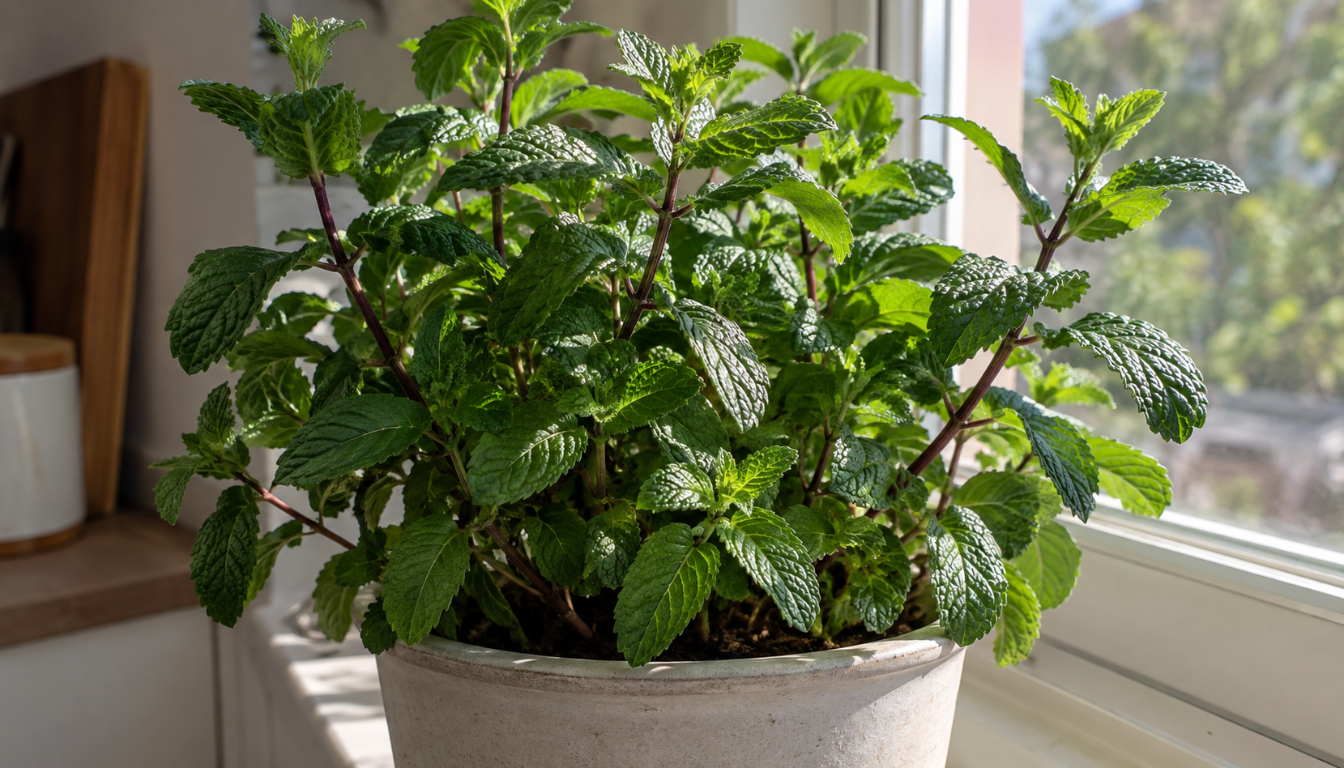
Peppermint typically has purplish-tinted stems and darker green leaves, compared to spearmint’s green stems and lighter foliage. Crushing a leaf is the clearest test. Peppermint has a sharp, cooling menthol scent, quite different from spearmint’s sweeter, warmer aroma. For a full breakdown of the flavor chemistry and growing differences, see our dedicated spearmint vs peppermint comparison guide.
Growing Peppermint Indoors from Cuttings
Peppermint (Mentha × piperita) is a sterile hybrid, a natural cross between watermint and spearmint. That means it doesn’t produce viable seed, so it can only be grown from cuttings or division, never reliably from seed. If you see peppermint seeds for sale, know that plants grown from them may not come true to the parent plant’s flavor or characteristics. Our propagating mint guide covers the cutting process in full.
Growing Tendency
Peppermint generally prefers cooler, more consistently moist conditions than spearmint, and is a bit less tolerant of heat and inconsistent watering. It’s still a genuinely easy indoor herb, the main challenge is its vigorous growth habit, not keeping it alive.
Best Uses for Peppermint
Peppermint’s sharp, cooling menthol flavor makes it a natural fit for:
- Tea
- Desserts and chocolate pairings
- Cocktails and drinks where a bold, cooling flavor is wanted
- Aromatherapy and diffusers, for its strong, invigorating scent
Harvesting
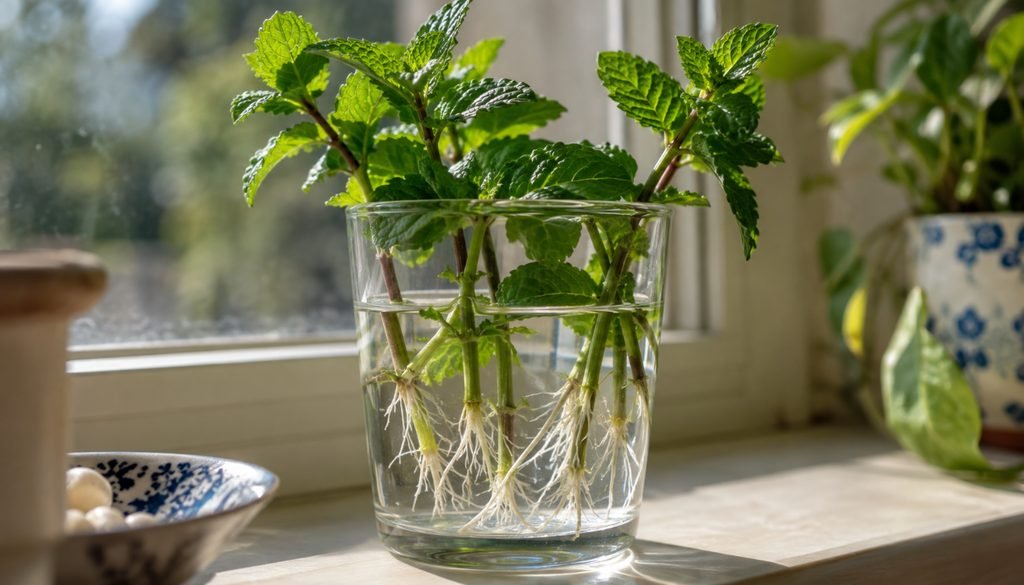
Follow the same general harvesting approach covered in our full growing guide, snip stems just above a leaf node rather than pulling leaves individually. Peppermint’s essential oils are most concentrated in the morning, after any dew has dried but before the day heats up, so an early harvest gives you the strongest, most cooling flavor. Harvesting just before the plant starts to flower also tends to yield the most potent leaves.
Before You Go – Growing Peppermint Indoors
Growing peppermint indoors takes the same basic care as any mint. The main things worth knowing specifically about peppermint are that it can only be started from cuttings or division, not seed, and it prefers slightly cooler, more consistent moisture than some other mint varieties. For the full growing guide, propagating instructions, and troubleshooting, see our complete guide to growing mint indoors and our propagating mint from cuttings guide.
References – Growing Peppermint Indoors
Little Herb Encyclopedia, by Jack Ritchason; N.D., Woodland Publishing Incorporated, 1995
The Ultimate Healing System, Course Manual, Copyright 1985, Don Lepore
Planetary Herbology, Michael Tierra, C.A., N.D., Lotus Press, 1988
Handbook of Medicinal Herbs, by James A. Duke, Pub. CRP Second Edition 2007
The Complete Medicinal Herbal, by Penelope Ody, Published by Dorling Kindersley
Related Articles
How to Grow Mint Indoors: The Complete Guide
Propagating Mint from Cuttings: A Complete Guide
Frequently Asked Questions – Growing Peppermint Indoors
Can I grow peppermint from seed?
Not reliably. Peppermint is a sterile hybrid and doesn’t produce true seed, so cuttings or division are the only dependable way to propagate it. Plants grown from peppermint seed packets may not match the parent plant’s characteristics.
How do I know if I have peppermint or another mint variety?
Peppermint typically has purplish-tinted stems and darker leaves. Crushing a leaf helps too, peppermint has a sharp, cooling menthol scent that’s noticeably different from spearmint’s sweeter aroma. For a full comparison, see our spearmint vs peppermint guide.
Does peppermint need different care than other mint varieties?
Not dramatically, but it prefers cooler, more consistently moist conditions than spearmint, and is a bit less forgiving of heat or inconsistent watering. Otherwise, its day-to-day care follows the same basics as any mint.
What’s the best use for peppermint in the kitchen?
Its bold, cooling flavor suits tea, desserts, and anything where a strong minty punch is the point. For a full breakdown of peppermint’s best uses versus spearmint’s, see our comparison guide.