
Paul Johnston is the founder and master herbalist of The Herb Prof, with decades of clinical experience in naturopathic medicine, herbal remedies, detoxification and holistic wellness. After overcoming his own serious health challenges, he now dedicates himself to helping others reclaim their health naturally.
Watering mint plants is essential for keeping them healthy and encouraging strong growth. As an experienced gardener, I’ve learned just how important proper watering techniques are. In this article, I’ll share my tips and personal experiences on how to water mint plants effectively.
Mint plants require consistent moisture to thrive, but overwatering can be just as harmful as underwatering. Finding the right balance can be tricky, especially if you are a beginner. In this article, I will provide you with tips and tricks on how to water mint plants, including how often to water them and how much water they need. By following these guidelines, you can ensure that your mint plants stay healthy and produce flavorful leaves for you to enjoy.
Understanding Mint Plants
Mint plants are a popular herb that is used in many dishes and drinks. They are easy to grow, low-maintenance, and have a refreshing aroma and taste. In this section, I will discuss the characteristics of mint plants and the different varieties of mint.
Characteristics of Mint
Mint plants are known for their square stems, opposite leaves, and small flowers. They belong to the family Lamiaceae and the genus Mentha. Mint plants can grow up to 3 feet tall and spread out quickly, making them ideal for ground cover.
Mint plants prefer moist soil and partial shade. They can tolerate a wide range of soil types and pH levels, but they do not like to be in standing water. Overwatering can lead to root rot and other fungal diseases, so it’s important to water them properly.
Mint Varieties
There are many different varieties of mint, each with its unique characteristics and flavor profile. Some of the most common varieties of mint include:
- Spearmint: This is the most common variety of mint and is used in many culinary applications, including teas, sauces, and desserts. It has a sweet, refreshing flavor and aroma.
- Peppermint: This variety of mint has a stronger, more intense flavor than spearmint. It is often used in candies, gum, and toothpaste.
- Apple mint: This variety of mint has a fruity, apple-like flavor and aroma. It is often used in salads, drinks, and desserts.
- Chocolate mint: This variety of mint has a sweet, chocolate-like flavor and aroma. It is often used in desserts and hot chocolate.
Understanding the characteristics and varieties of mint plants is important for proper care and cultivation. By providing the right conditions and selecting the right variety, you can enjoy fresh, flavorful mint all year round.
Basics of Watering Mint Plants
As a plant that loves moisture, watering mint plants is essential to keep them healthy and thriving. In this section, I will cover the basics of watering mint plants, including their watering needs and signs of overwatering and underwatering.
Watering Needs
Mint plants require consistent moisture to grow well. As a general rule, water your mint plant until the soil is moist to a depth of at least 6 inches. However, it’s important not to overwater your mint plant, as this can lead to root rot and other fungal diseases.
When growing mint in the ground, water the plant two to three times a week during warm weather. Check the soil, and if the top few inches are dry, then give the plant a deep and thorough soak. When growing mint in containers, check the moisture level in the pot frequently. An indoor mint plant with well-draining growing media should be watered moderately 1-2 times per week, year-round.
It’s also important to water your mint plant in the morning to give it a good start before the hot summer day. This will help prevent the plant from wilting during the day.
Signs of Overwatering and Underwatering
Overwatering your mint plant can lead to root rot and other fungal diseases. Signs of overwatering include yellowing leaves, wilting leaves, and a mushy stem. If you notice any of these signs, reduce the frequency of watering and make sure the plant is in well-draining soil.
Underwatering your mint plant can cause the leaves to wilt and turn brown. The soil may also pull away from the edges of the container. If you notice any of these signs, increase the frequency of watering and make sure the soil is moist to a depth of at least 6 inches.
Watering mint plants is essential to keep them healthy and thriving. Water your mint plant until the soil is moist to a depth of at least 6 inches, and avoid overwatering to prevent root rot and other fungal diseases. Check the moisture level in the pot frequently when growing mint in containers, and water your mint plant in the morning to give it a good start before the hot summer day. Keep an eye out for signs of overwatering and underwatering, and adjust your watering frequency accordingly.
Soil and Pot Requirements
Choosing the Right Soil
When it comes to growing mint, the type of soil you use is crucial. Mint plants prefer moist soil that is rich in organic matter. A good compost mix is ideal for mint plants. The compost mix should be well-draining to prevent water from accumulating around the roots, which can lead to root rot. It’s important to note that mint plants do not do well in heavy clay soils, so it’s best to avoid them.
Selecting the Appropriate Container
Selecting the right container is also important when it comes to growing mint plants. The container should have adequate drainage holes to prevent excess water from accumulating around the roots. If the container does not have drainage holes, it’s important to drill some in the bottom of the container before planting your mint.
Mint plants have shallow roots, so a container that is at least 6 inches deep is sufficient. However, if you plan on growing multiple mint plants in the same container, a larger container is recommended.
When it comes to choosing a pot, it’s important to choose one that is made of a material that can withstand moisture. Plastic and glazed ceramic pots are great options for growing mint plants. They are lightweight, durable, and retain moisture well. Terra cotta pots are also a good option, but they tend to dry out quickly, so it’s important to keep an eye on the soil moisture levels.
When growing mint plants, it’s important to choose well-draining soil that is rich in organic matter. The container should have adequate drainage holes and be made of a material that can withstand moisture. By following these guidelines, you’ll be on your way to growing healthy and thriving mint plants.
Watering Techniques
How Often to Water Mint
As a general rule, mint plants require consistent moisture, but not waterlogged soil. The frequency of watering depends on various factors such as the weather, the size of the container or pot, and the type of soil. When growing mint in the ground, it is recommended to water it two to three times a week during warm weather. If the top few inches of soil are dry, then give the plant a deep and thorough soak. On the other hand, when growing mint in containers, check the moisture level in the pot frequently.
Methods of Watering
There are two primary methods of watering mint plants: top watering and bottom watering. Top watering involves using a watering can to apply water directly to the soil surface. This method is suitable for mature mint plants where the roots are well-established.
However, it is important to avoid watering the leaves, as this can lead to fungal diseases. Bottom watering, on the other hand, involves placing the container in a tray filled with water, allowing the soil to absorb water from the bottom up. This method is ideal for newly planted mint seedlings as it helps to prevent overwatering and ensures that the roots are adequately hydrated.
The watering needs of mint plants depend on various factors, and it is important to monitor the soil moisture level to avoid over- or under-watering. When in doubt, it is better to underwater than overwater mint plants. Remember to use the appropriate watering method depending on the maturity of the plant and the type of container.
Environmental Factors Affecting Watering
As a mint plant owner, I know that watering is one of the most important aspects of keeping my mint plants healthy. However, the frequency of watering depends on several environmental factors, including weather, climate, sunlight, and temperature. In this section, I will discuss how these factors affect the watering of mint plants.
Weather and Climate Influence
The weather and climate play a crucial role in determining the watering needs of mint plants. In hot weather, mint plants tend to dry out more quickly and require more frequent watering. On the other hand, in cooler weather, mint plants require less watering as the soil retains moisture for a longer time.
Moreover, the climate of the region where the mint is grown also affects the watering frequency. In dry climates, mint plants require more watering, while in humid climates, they require less watering. Therefore, it is essential to consider the weather and climate of your region when determining the watering needs of your mint plant.
Sunlight and Temperature Considerations
Sunlight and temperature are two other critical factors that affect the watering needs of mint plants. Mint plants require partial shade to full sun, but they can also grow in direct sunlight. However, in hot weather, direct sunlight can cause the soil to dry out more quickly, leading to more frequent watering.
On the other hand, in cooler weather, mint plants require less watering as the soil retains moisture for a longer time. Therefore, it is essential to consider the temperature and sunlight exposure when determining the watering needs of your mint plant.
Environmental factors such as weather, climate, sunlight, and temperature play a vital role in determining the watering needs of mint plants. By considering these factors, you can ensure that your mint plants receive the optimal amount of water to grow healthy and strong.
Caring for Mint Plants
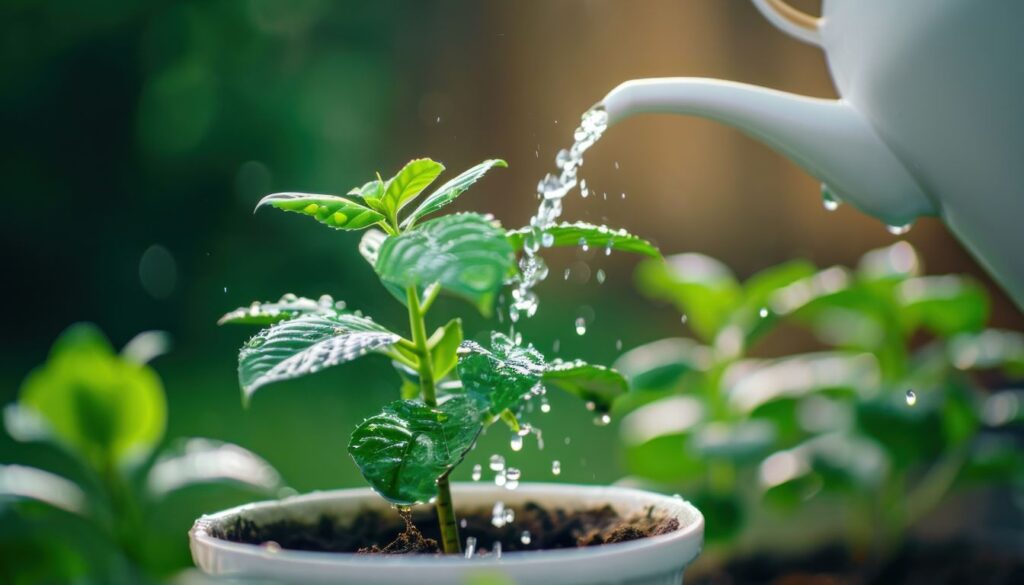
As someone who has grown mint plants both indoors and outdoors, I have learned a lot about how to properly care for these aromatic herbs. Proper care is essential to prevent common diseases and ensure that your mint plants thrive.
Preventing Common Diseases
One of the most common diseases that affects mint plants is root rot. This is caused by overwatering and poor drainage. To prevent root rot, make sure that your mint plants are planted in well-draining soil or containers. If you are growing mint indoors, be sure to use a pot with drainage holes and a saucer to catch excess water.
Another disease that can affect mint plants is rust. This is a fungal disease that causes orange or brown spots on the leaves. To prevent rust, make sure that your mint plants are not overcrowded and that they have good air circulation. If you notice signs of rust, remove the affected leaves and treat the plant with a fungicide.
Fertilization and Mulching
Mint plants require regular fertilization to ensure healthy growth. You can fertilize your mint plants with an all-purpose fertilizer every four to six weeks during the growing season. Be sure to follow the instructions on the fertilizer package for best results.
Mulching is also important for mint plants, as it helps to retain moisture in the soil and prevent weeds. You can use a variety of materials for mulching, including compost, straw, or shredded leaves. Apply a layer of mulch around the base of your mint plants, being careful not to cover the stems.
By following these simple tips, you can ensure that your mint plants stay healthy and vibrant. Whether you are growing mint indoors or outdoors, proper care is essential to prevent diseases and ensure a bountiful harvest.
Advanced Mint Plant Care
As an experienced gardener, I have learned advanced techniques for nurturing mint plants. In this section, I will share tips on propagation and repotting, along with harvesting and culinary uses.
Propagation and Repotting
You can easily propagate mint plants from stem cuttings or runners. Cut a stem from an established plant, remove the lower leaves, and place it in a container with moist soil. After a few weeks, the cutting develops roots, and you can transplant it into a larger pot or directly into the ground.
When you repot mint plants, choose a container at least 6 inches deep and wide. Mint plants grow with shallow roots, but they spread quickly and need plenty of space. Use a high-quality potting mix that contains peat moss to help retain moisture.
Harvesting and Culinary Uses
Mint serves as a versatile herb for many culinary dishes, from salads to desserts. Harvest mint by cutting the stems just above a set of leaves. This method encourages new growth and prevents the plant from becoming too woody.
When you use mint in recipes, rinse the leaves thoroughly and remove any tough stems. Pair mint with fruits such as strawberries and watermelon, or use it to flavor drinks like mojitos and iced tea.
By applying these advanced mint care techniques, you increase your yield and enjoy the benefits of fresh mint in your culinary creations.
Watering Mint Plants
Mint thrives in consistently moist soil, so regular watering plays a key role in keeping the plants healthy. Unlike some herbs that prefer drier conditions, mint enjoys a steady supply of water. Aim to water deeply enough to reach the roots, ensuring the soil stays evenly moist without becoming soggy.
During hot or dry weather, increase the frequency of watering to prevent the soil from drying out. Container-grown mint often needs more attention, as pots lose moisture faster than garden beds. Check the soil regularly by touching the top layer; if it feels dry, it’s time to water.
Overwatering can harm mint by causing root rot, so balance is essential. Provide good drainage to allow excess water to escape, and avoid leaving the soil waterlogged. By monitoring moisture levels and adjusting your watering routine, you’ll encourage lush, vibrant mint plants that grow vigorously throughout the season.
Before You Go – Watering Mint Plants

Watering mint plants may seem simple, but consistency makes all the difference. Mint thrives in evenly moist soil, so keeping a close eye on moisture levels ensures healthy growth and prevents stress.
Before you leave, remember that balance matters. Too little water can dry out the roots, while too much can lead to rot. Adjust your watering routine based on the season, weather, and whether your mint grows in containers or garden beds.
By giving your mint the right amount of water, you encourage lush foliage, vibrant flavor, and a steady supply of fresh leaves. With attentive care, your mint plants will reward you with vigorous growth and endless culinary possibilities.
Don’t forget to add theherbprof.com homepage to your favourites so you don’t miss out on future articles!
References – Watering Mint Plants
Little Herb Encyclopedia, by Jack Ritchason; N.D., Woodland Publishing Incorporated, 1995
The Ultimate Healing System, Course Manual, Copyright 1985, Don Lepore
Planetary Herbology, Michael Tierra, C.A., N.D., Lotus Press, 1988
Handbook of Medicinal Herbs, by James A. Duke, Pub. CRP Second Edition 2007
The Complete Medicinal Herbal, by Penelope Ody, Published by Dorling Kindersley
Check the Following Article
Fast-Growing Privacy Hedges: Best Options for Your Yard
Frequently Asked Questions – Watering Mint Plants
How often should mint plants be watered when grown in pots?
When you grow mint in pots, the frequency of watering depends on factors such as pot size, soil type, and environment. As a general rule, water mint plants once every few days. Keep the soil moist but avoid waterlogging, since excess water causes root rot.
What is the ideal frequency to water mint plants indoors?
Mint plants grown indoors need less water than those outdoors because indoor air is usually drier. Water indoor mint plants twice a week. Keep the soil moist without letting it become waterlogged to prevent root rot.
How much water is required by a mint plant daily?
The amount of water a mint plant needs depends on its size, soil type, and environment. As a general guideline, give the plant about 1 inch of water per week. Maintain moist soil but avoid waterlogging to protect the roots.
What are the sunlight and soil moisture preferences for mint plants?
Mint plants thrive in partial shade to full sun. They grow best in well-draining soil that stays moist but not waterlogged. Monitor soil moisture regularly to keep conditions balanced.
What are the best practices to ensure a mint plant remains healthy?
To keep mint healthy, provide the right balance of sunlight, water, and nutrients. Grow mint in partial shade to full sun, and use well-draining soil that stays moist but not soggy. Fertilize regularly and prune the plant to encourage bushier growth.
Can mint plants be successfully grown in water only, and if so, how?
You can grow mint in water if you follow a few steps. Cut a stem from the plant and remove the lower leaves. Place the cutting in a glass of water, submerging the bottom of the stem. Change the water every few days. After a few weeks, roots will grow. Once the roots reach about 2 inches long, transplant the cutting into soil.