
The Herb Prof Team researches and writes our herbal guides, drawing on published research, traditional herbal references, and hands-on growing experience.
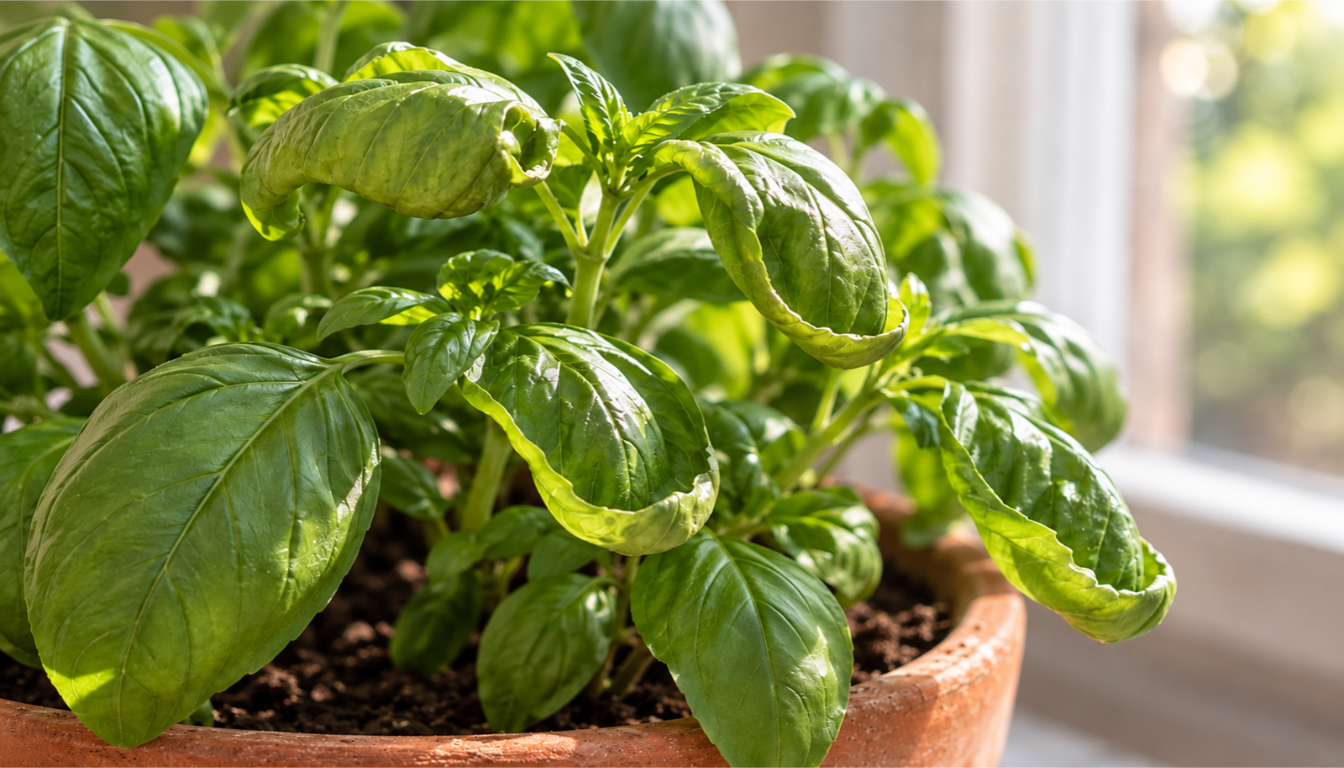
Basil leaves curling is usually a sign of stress, and most causes are fixable. Watering problems, heat, and pests account for most cases. A couple of diseases cause it too, and those can’t be cured. This guide helps you work out which cause you’re dealing with and what to do about it. It also covers how to revive wilted basil, whether it’s a plant in soil or a bunch from the store.
Basil Leaves Curling: Quick Diagnosis
| What you see | Likely cause | What to do |
|---|---|---|
| Leaves limp and curling, soil dry | Underwatering or heat | Water deeply, and shade the plant from harsh afternoon sun |
| Leaves drooping and yellowing, soil soggy | Overwatering or poor drainage | Let the soil dry out, and improve drainage |
| Curled or distorted leaves, tiny insects or stickiness underneath | Aphids, spider mites, or thrips | Spray with water, then use insecticidal soap or neem |
| Yellow patches bounded by veins, gray-purple fuzz underneath | Downy mildew | No cure. Harvest healthy leaves and remove the plant |
| Sudden wilting, stunting, brown streaks inside the stem | Fusarium wilt | No cure. Remove the plant and the soil |
| Dark or discolored leaves after a cold night | Cold damage | Move the plant to a warmer spot |
Watering and Soil
Water causes more basil trouble than anything else. If the soil is dry, the leaves cup or droop, and a deep watering usually fixes it. If the soil is soggy, roots can rot, and the leaves wilt and yellow.
Check the soil before you water. Water when the top inch feels dry, and water the soil, not the leaves, because wet leaves invite disease. Make sure the pot has drainage holes. If the plant is overwatered, let the soil dry out, or repot it into fresh soil.
Heat, Sun, and Cold
Basil grows best in full sun and warmth, with at least six hours of light. However, extreme afternoon heat can make leaves cup and wilt. In very hot weather, afternoon shade and consistent watering help.
Cold is a separate problem. Penn State Extension notes that temperatures below 40°F discolor basil leaves, and frost kills the plant. Bring potted basil indoors on cold nights.
Pests That Make Basil Leaves Curl
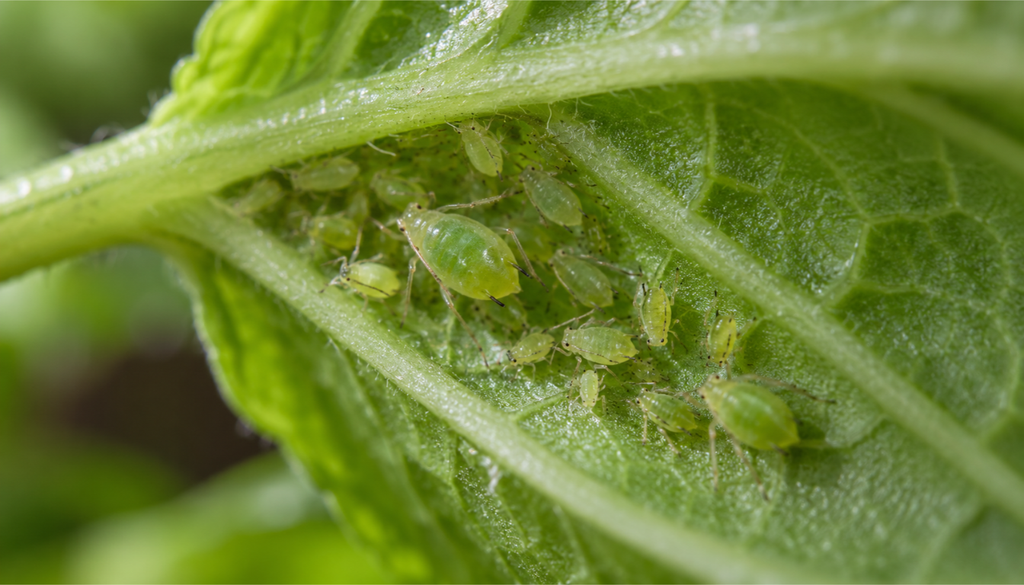
Aphids, spider mites, and thrips suck sap from the leaves, which distorts and curls them. Look at the undersides of leaves for tiny insects, fine webbing, or a sticky residue.
Start with the simplest fix:
- Snip off badly curled leaves first. Insecticidal soap only works on insects it touches, and aphids hiding inside curled leaves won’t be reached.
- Spray the plant with a strong jet of water, especially the undersides. This knocks many pests off.
- If they return, use insecticidal soap, or a neem-based spray. Both are listed by Clemson Extension for aphids, spider mites, and thrips.
- Spray in the early evening, and coat both sides of the leaves.
- Repeat every 4 to 7 days if needed, since soap leaves no lasting protection.
Diseases That Cause Curling
Downy mildew is the most serious. Leaves turn yellow in patches bounded by the veins, then brown, curl, and wilt. A gray-purple fuzz grows on the undersides. There is no known cure, and University of Wisconsin Extension doesn’t recommend fungicides for home gardens. Harvest any healthy leaves, then remove the plant and put it in the trash. Sweet basil is the most susceptible type, while purple, Thai, and lemon basil are less so. Keeping leaves dry and spacing plants for airflow helps prevent it.
Fusarium wilt is a soilborne fungus. A plant can grow normally until it’s 6 to 12 inches tall, then stunt and suddenly wilt. Cut the stem open, and you’ll see brown streaks inside. There is no cure. Remove the plant right away and don’t compost it. The fungus can survive in soil for years, so discard the potting soil and clean the container. Fusarium-resistant sweet basil varieties exist.
How to Revive Wilted Basil
A wilted plant in soil:
- Check the soil. If it’s dry, water deeply. If it’s soggy, let it dry and improve drainage.
- Remove yellow, brown, or crispy leaves, since they won’t recover.
- Move the plant out of harsh midday sun while it recovers.
- Give it time. If the plant keeps declining, check for the diseases above, because those can’t be revived.
Cut basil from the store or garden:
- Trim the stem ends, and stand the stems in a jar with a couple of inches of water.
- Keep the jar at room temperature, away from direct sun. Some cooks loosely cover the leaves with a plastic bag.
- Change the water every couple of days.
- If you use a soak, use cool tap water for about 15 minutes, then pat the leaves dry. Many guides suggest ice water for herbs, but basil is cold-sensitive, so skip the ice.
Leaves that are slimy, blackened, or moldy can’t be saved. If leaves are only limp, you can still cook with them or freeze them. See our guide on how to freeze basil.
How to Prevent Curling and Wilting
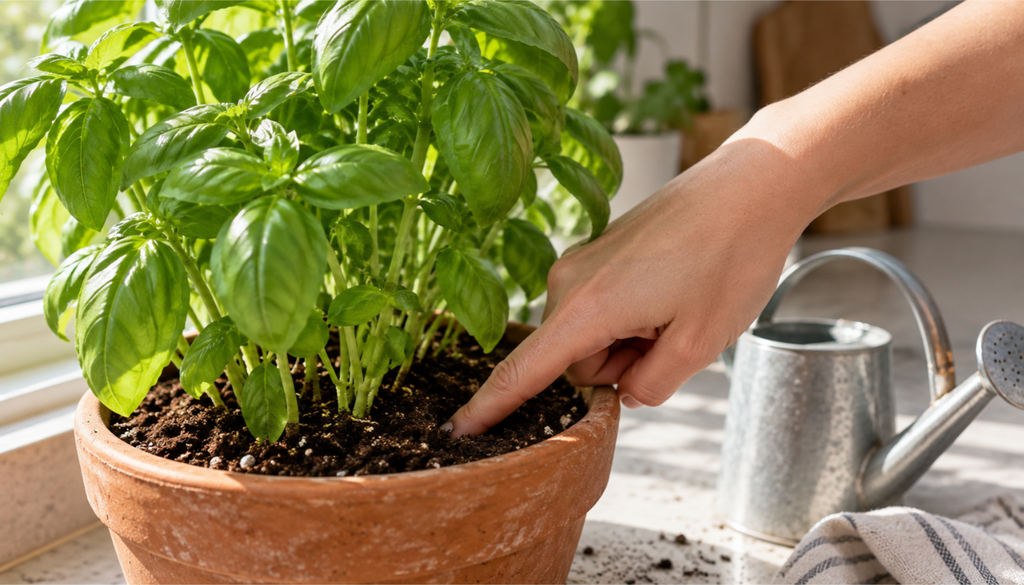
- Check the soil before every watering, and water the soil, not the leaves.
- Plant basil in well-draining soil, in a pot with drainage holes.
- Give it at least six hours of sun, with afternoon shade in extreme heat.
- Space plants so air can move between them.
- Check the undersides of leaves for pests every week.
- Harvest regularly. Our guide on how to harvest basil covers how to pinch and prune.
- Protect it from cold nights.
- Choose Thai, lemon, or purple basil, or resistant varieties, if downy mildew or Fusarium is a problem in your area.
Is Curled Basil Safe to Eat?
Leaves curled from watering or heat stress are safe to eat, though they may taste less fresh. Wash leaves from plants that had pests. Throw out any leaves with fuzzy gray-purple growth, mold, black spots, or slime.
Before You Go – Basil Leaves Curling
Basil leaves curling looks alarming, but it’s often fixable. Check the soil first, then the leaf undersides, and match what you see to the diagnosis table. Watering, heat, and pests have simple fixes. Downy mildew and Fusarium wilt don’t, so remove those plants quickly and save the healthy leaves. For more on keeping basil productive, see our how to grow basil guide.
References – Basil Leaves Curling
Little Herb Encyclopedia, by Jack Ritchason; N.D., Woodland Publishing Incorporated, 1995
The Ultimate Healing System, Course Manual, Copyright 1985, Don Lepore
Planetary Herbology, Michael Tierra, C.A., N.D., Lotus Press, 1988
Handbook of Medicinal Herbs, by James A. Duke, Pub. CRP Second Edition 2007
The Complete Medicinal Herbal, by Penelope Ody, Published by Dorling Kindersley
Sources
- Clemson Home & Garden Information Center, basil fact sheet (pests, cultural control): hgic.clemson.edu
- University of Wisconsin Extension, downy mildew of basil: extension.wisc.edu
- UMass Amherst Extension, downy mildew of basil: umass.edu
- Ask Extension, suspected Fusarium wilt in sweet basil: ask.extension.org
- Penn State Extension, “Basil, A Summer Favorite”: extension.psu.edu
- Colorado State Extension, insecticidal soap: colostate.edu
Related Articles
Bugs Eating My Cucumber Plants: Causes and Solutions
Caring for a Meyer Lemon Tree: Tips and Tricks
How Long Does It Take for Compost to Break Down?
Can You Grow a Banana Tree from a Banana?
Frequently Asked Questions – Basil Leaves Curling
Why are my basil leaves curling?
The most common causes are underwatering, overwatering, heat, and pests like aphids and spider mites. Check the soil first, then the undersides of the leaves. Disease is less common but more serious.
What does it mean if basil leaves are curling downward?
Downward curling and drooping usually point to thirst or heat, though soggy soil can cause it too. Feel the soil before you water.
Why are my basil leaves bumpy or wrinkled?
Pests like aphids, thrips, and spider mites can distort leaves. Stress from heat or irregular watering can too. Look at the undersides for insects.
Can wilted basil recover?
Yes, if the cause is water or heat. A plant with downy mildew or Fusarium wilt can’t recover, so remove it.
How do I revive basil from the store?
Trim the stems and stand them in a jar of water at room temperature. A short soak in cool water also helps. Skip ice water, since basil is cold-sensitive.
Is it safe to eat basil leaves that have curled?
Yes, if they’re curled from watering or heat. Throw out leaves with fuzzy growth, mold, black spots, or slime.