
The Herb Prof Team researches and writes our herbal guides, drawing on published research, traditional herbal references, and hands-on growing experience.
Brown leaves on cucumber plants are a common issue many gardeners face. As a gardener, I’ve experienced this frustration. Brown leaves can signal various problems, including disease, pests, and environmental factors.
One of the most common causes is a fungal disease called gummy stem blight. This disease is caused by the Didymella bryoniae fungus and can cause leaves to turn brown and eventually kill the entire plant. Another common cause of brown leaves is poor soil conditions. If the soil is lacking in nutrients or is not sterilized, cucumber plants can become vulnerable to diseases, which can cause mottled leaves and stem rot.
It’s important to identify the cause of brown leaves on cucumber plants to properly treat the issue. In this article, I will explore the various causes and provide tips on how to prevent and treat this problem. By understanding the root cause of the issue, you can take the necessary steps to ensure a healthy and thriving cucumber plant.
Understanding Brown Leaves on Cucumber Plants
It can be concerning to see brown leaves on your cucumber plants. This is a sign that something is not right with your plant, and it is important to identify the cause and take action to correct the problem. In this section, I will discuss the common causes of brown leaves on cucumber plants and what you can do to prevent them.
Causes of Brown Leaves on Cucumber Plants
Lack of Water
One of the most common causes of brown leaves on cucumber plants is a lack of water.
Cucumber require consistent moisture to thrive, and if they do not receive enough water, their leaves can turn brown and dry out. To prevent this, make sure to water your cucumber plants regularly and deeply, especially during hot and dry weather.
Fungal Infections
Fungal infections can also cause brown leaves on cucumber plants. These infections can damage the leaf tissues, causing them to turn brown and dry out. To prevent fungal infections, make sure to space your cucumber plants properly to ensure good air circulation, avoid overhead watering, and remove any infected leaves immediately.
Pests
Pests such as cucumber beetles can also cause brown leaves on cucumber plants. These pests can chew on the leaves, leaving behind brown, skeletonized patches. To control cucumber beetles, you can handpick them and their larvae from the plants or use organic pest control methods such as neem oil or insecticidal soap.
Common Causes Of Brown Leaves on Cucumber Plants
Cucumber plants are known for their green leaves, but when they start to turn brown, it is a sign that something is wrong. There are several reasons why cucumber leaves may turn brown, including fungal diseases, bacterial infections, pest infestations, and environmental stress.
Fungal Diseases
Fungal diseases are a common cause of brown leaves on cucumber plants. These diseases can cause yellow spots, brown spots, and other discolorations on the leaves. Some of the most common fungal diseases that affect cucumber plants include anthracnose, mildew, and downy mildew. Powdery mildew is another fungal disease that can cause brown leaves on cucumber plants.
Brown Leaves on Cucumber Plants – Bacterial Infections
Bacterial infections can also cause brown leaves on cucumber plants. Bacterial wilt, bacterial leaf spot, and angular leaf spot are all bacterial diseases that can affect cucumber plants. These diseases can cause the leaves to turn brown and wilt.
Pest Infestations
Pest infestations can also cause brown leaves on cucumber plants. Cucumber beetles, spider mites, aphids, and other insects can all damage cucumber plants and cause the leaves to turn brown. Cucumber beetles are a particularly common pest that can cause brown leaves on cucumber plants.
Environmental Stress
Environmental stress can also cause brown leaves on cucumber plants. High humidity, wet weather, drought, poor soil conditions, overwatering, underwatering, and insufficient light can all stress cucumber plants and cause the leaves to turn brown. Temperature fluctuations can also stress cucumber plants and cause the leaves to turn brown.
Prevention and Treatment Strategies
I have learned that prevention and treatment strategies are essential in managing brown leaves on cucumber plants. In this section, I will share some of the cultural practices, chemical treatments, and biological controls that I have found effective in preventing and treating brown leaves on cucumber plants.
Cultural Practices
Cultural practices are the first line of defense against brown leaves on cucumber plants. Good soil conditions, proper watering practices, and good air circulation can help prevent fungal diseases and bacterial infections.
Fungal diseases such as downy mildew can cause yellow or green angular spots on the underside of cucumber leaves, while bacterial infections can cause brown spots on cucumber leaves. To prevent these diseases, I recommend the following cultural practices:
- Maintain good soil conditions by adding compost and other organic matter to the soil.
- Water at the base of the plant to avoid overhead watering that can spread fungal diseases.
- Maintain good air circulation around the plants by spacing them properly.
Chemical Treatments
Chemical treatments such as fungicides and pesticides can be used to prevent and treat brown leaves on cucumber plants. Fungicides can be used to prevent fungal diseases, while pesticides can be used to prevent pest infestations that can cause brown spots on cucumber leaves.
Copper fungicides are effective against downy mildew, while neem oil can be used to prevent pest infestations. When using chemical treatments, it is important to follow the instructions on the label and use them as directed.
Biological Controls
Biological controls, such as resistant cucumber varieties and crop rotation, can be used to prevent and treat brown leaves on cucumber plants. Resistant cucumber varieties are available that are resistant to fungal diseases and bacterial infections. Crop rotation can also be used to prevent the buildup of soil-borne diseases.
For example, if you grow cucumbers in a greenhouse one year, you can grow them outdoors the next year to prevent the buildup of soil-borne diseases.
Identifying and Diagnosing Plant Health
It is essential to know how to identify and diagnose plant health problems. The earlier you can detect an issue, the better chance you have of treating it and saving your plant. In this section, I will discuss some common visual symptoms of plant health problems and laboratory testing that can help identify the root cause of the issue.
Visual Symptoms
Cucumber plants are susceptible to various diseases that can cause brown leaves, yellow leaves, necrotic spots, and dry and brittle leaves. One of the most common visual symptoms is brown leaves, which can be caused by a fungal infection, bacterial infection, or cucumber mosaic virus.
Fungi and bacteria can also cause yellow halo spots on cucumber leaves. Colletotrichum orbiculare and Peronospora cubensis are two common fungi that cause necrotic spots on cucumber leaves. These spots can be difficult to detect, and it is essential to inspect the leaves thoroughly.
Laboratory Testing
If you are unsure of the root cause of the issue, laboratory testing can help to diagnose the problem. A lab test can help diagnose a variety of diseases that cause brown spots on cucumber leaves, including anthracnose, cucumber mosaic virus, bacterial wilt, Alternaria leaf spot, and bacterial leaf spot.
It is important to collect samples of the affected leaves and send them to a reputable lab for testing. The lab will perform various tests to identify the pathogen responsible for the issue. Once you have identified the problem, you can take the necessary steps to treat your plant and prevent the issue from spreading.
Nutrient Management and Soil Health
As a cucumber plant grows, it requires a lot of nutrients to produce healthy leaves and fruit. Nutrient deficiencies can cause brown leaves on cucumber plants, so it’s important to ensure that the soil is rich in the nutrients cucumbers need.
One way to manage soil health is to conduct a soil test to determine if the soil has any nutrient deficiencies. If the soil is lacking in nutrients, then it may be necessary to amend the soil. For example, adding compost or organic fertilizer can help improve soil quality and provide the necessary nutrients to the plant.
Overwatering can also lead to nutrient deficiencies and brown leaves on cucumber plants. When cucumbers are overwatered, the soil becomes waterlogged, which can prevent the plant from absorbing nutrients properly. It’s important to ensure that the soil is well-draining to prevent overwatering and root rot.
In addition to nutrient deficiencies and overwatering, poor soil quality can also cause brown leaves on cucumber plants. Imbalanced pH levels, compacted soil, and lack of aeration can all affect the overall health of the plant. By ensuring that the soil is well-draining, properly aerated, and has the right pH level, you can help prevent brown leaves on cucumber plants.
Selecting the Right Cucumber Varieties
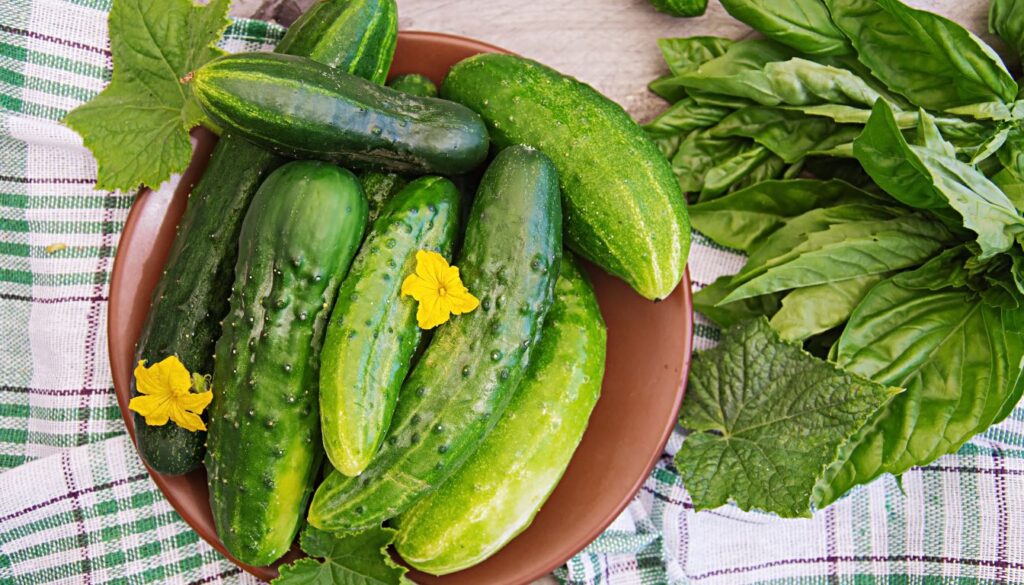
Selecting the right cucumber varieties is crucial in preventing brown leaves on cucumber plants. There are many varieties of cucumbers available in the market, and each has its unique characteristics. When selecting cucumber varieties, it is essential to consider the cucumber plant’s growth habit, fruit size, and disease resistance.
Cucumber plants can be bush or vining types. Bush cucumbers are more compact and ideal for small gardens or containers. On the other hand, vining cucumbers require more space and are perfect for larger gardens.
Fruit size is another important factor to consider when selecting cucumber varieties. Some cucumbers produce small fruits, while others produce larger fruits. It is essential to choose a cucumber variety that produces fruits of the desired size. Moreover, different varieties of cucumbers have varying resistance to diseases such as downy mildew and mosaic virus.
Some of the most resistant cucumber varieties include Russian brown, Itachi cucumbers, and honey plus. These varieties are less vulnerable to common plant diseases and are therefore ideal for preventing brown leaves on cucumber plants. It is also important to ensure that the stem of the cucumber plant is strong enough to support the weight of the fruit.
Optimizing Water and Light Conditions
As a cucumber plant grows, it requires optimal water and light conditions to prevent brown leaves. One of the main reasons cucumber leaves turn brown is due to over-watering. When the soil is too moist, it can lead to the development of grey mold, which can cause the leaves to turn brown and die. Therefore, it is important to ensure that the soil is moist but not waterlogged.
To optimize water conditions, I recommend watering the cucumber plants deeply once or twice a week, depending on the climate and soil conditions. It is also important to water the plants in the morning, as this allows the leaves to dry out during the day and reduces the risk of disease.
Avoid watering the leaves directly, as this can lead to moisture buildup and increase the risk of fungal infections. In addition to water, light is also essential for cucumber plant growth and health.
Cucumber plants require at least six hours of direct sunlight each day to perform photosynthesis effectively. When the cucumber plant is deprived of adequate light, the leaves can respond by turning brown. Therefore, it is important to ensure that the plants are placed in an area with ample sunlight.
To optimize light conditions, I recommend planting the cucumber plants in an area with good drainage and ample sunlight. Cucumber plants also require adequate space for growth, so ensure that the mature leaves have enough diameter to grow without being crowded. If the plants are grown indoors, consider using artificial light sources to supplement natural sunlight.
Monitoring and Regular Maintenance
It is essential to monitor your cucumber plants regularly to prevent brown leaves. One of the main causes of brown spots on cucumber leaves is a lack of water. Therefore, it is crucial to water your plants regularly and ensure that the soil is moist but not waterlogged. Overwatering can lead to root rot, which can cause brown leaves.
Maintaining good air circulation around your cucumber plants is also essential. Poor air circulation can cause humidity to build up, which can lead to fungal diseases that cause brown spots on cucumber leaves. To ensure good air circulation, you can space your plants adequately and remove any weeds or debris that may be blocking airflow.
Pest control is another crucial aspect of monitoring and regular maintenance. Pests such as spider mites and cucumber beetles can cause brown spots on cucumber leaves by feeding on the leaves. To prevent pests, you can use insecticidal soap or neem oil.
In addition to monitoring water, air circulation, and pests, it is crucial to monitor your plants for nutrient deficiencies. Lack of essential nutrients, particularly magnesium and nitrogen, can cause leaf browning. Ensure your plants receive a balanced fertilizer and amend the soil if necessary.
Before You Go – Brown Leaves on Cucumber Plants
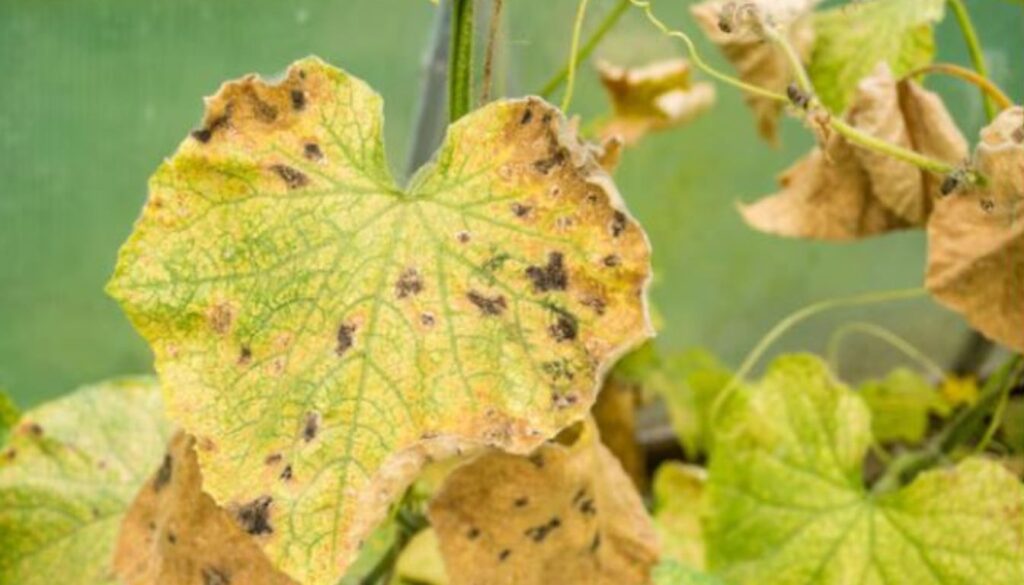
Brown leaves on cucumber plants can signal a range of issues from watering mistakes and nutrient imbalances to pests or disease. By identifying the cause early and adjusting your care routine, you give your plants the best chance to recover and thrive.
Keep a close eye on leaf color, texture, and overall plant health. Regular monitoring, proper spacing, and consistent watering go a long way in preventing problems before they start. With a little attention and care, your cucumber plants can bounce back and produce a healthy, abundant harvest.
Dont forget to add theherbprof.com homepage to your favourites so you dont miss out on future articles!
References – Brown Leaves on Cucumber Plants
Little Herb Encyclopedia, by Jack Ritchason; N.D., Woodland Publishing Incorporated, 1995
The Ultimate Healing System, Course Manual, Copyright 1985, Don Lepore
Planetary Herbology, Michael Tierra, C.A., N.D., Lotus Press, 1988
Handbook of Medicinal Herbs, by James A. Duke, Pub. CRP Second Edition 2007
The Complete Medicinal Herbal, by Penelope Ody, Published by Dorling Kindersley
Check the Following Articles
Growing Coffee Plants Indoors: All You Need To Know
How to Dry Tomato Seeds? A Step-by-Step Guide
Frequently Asked Questions – Brown Leaves on Cucumber Plants
Why are the edges of my cucumber leaves turning brown?
Several factors can cause cucumber leaf edges to turn brown. A lack of water often dries out the leaves, since cucumber plants need consistent moisture to thrive. Overwatering can also damage the plant by leading to root rot. When roots rot, they can’t absorb water properly, and the leaves dry out and turn brown.
What causes brown spots?
Fungal diseases such as downy mildew and powdery mildew often create brown spots on cucumber leaves and fruit. These infections also make leaves wilt and turn yellow. Bacterial diseases, including bacterial wilt and angular leaf spot, produce similar symptoms by spreading brown spots and weakening the plant.
How can one identify and manage common diseases in cucumber plants?
To identify common cucumber diseases, watch for brown spots on leaves and fruit, yellowing and wilting foliage, or powdery and fuzzy growth on the leaves. Manage these problems by rotating crops, watering and fertilizing properly, and removing infected plant material before the disease spreads.
What are the signs of overwatering in cucumber plants?
Overwatering harms cucumber plants as much as underwatering. Signs include yellowing leaves, wilting, and brown spots. Excess water often causes root rot, which turns roots mushy and brown. Prevent overwatering by using well‑draining soil and keeping plants out of standing water.
Is it advisable to remove leaves with brown spots from cucumber plants?
Yes, gardeners should remove leaves with brown spots because they often signal disease. Removing infected leaves helps stop the spread to healthy parts of the plant. However, avoid removing too many leaves at once, since stripping the plant can stress it and reduce fruit production.
How can I prevent my cucumber leaves from turning yellow and developing brown patches?
Prevent yellowing and brown patches by practicing good cultural care. Provide consistent water and nutrients, and grow cucumbers in well‑draining soil. Control pests such as aphids and spider mites, since they damage leaves and cause discoloration. Rotate crops regularly and remove infected plant material to keep diseases from spreading.