
The Herb Prof Team researches and writes our herbal guides, drawing on published research, traditional herbal references, and hands-on growing experience.
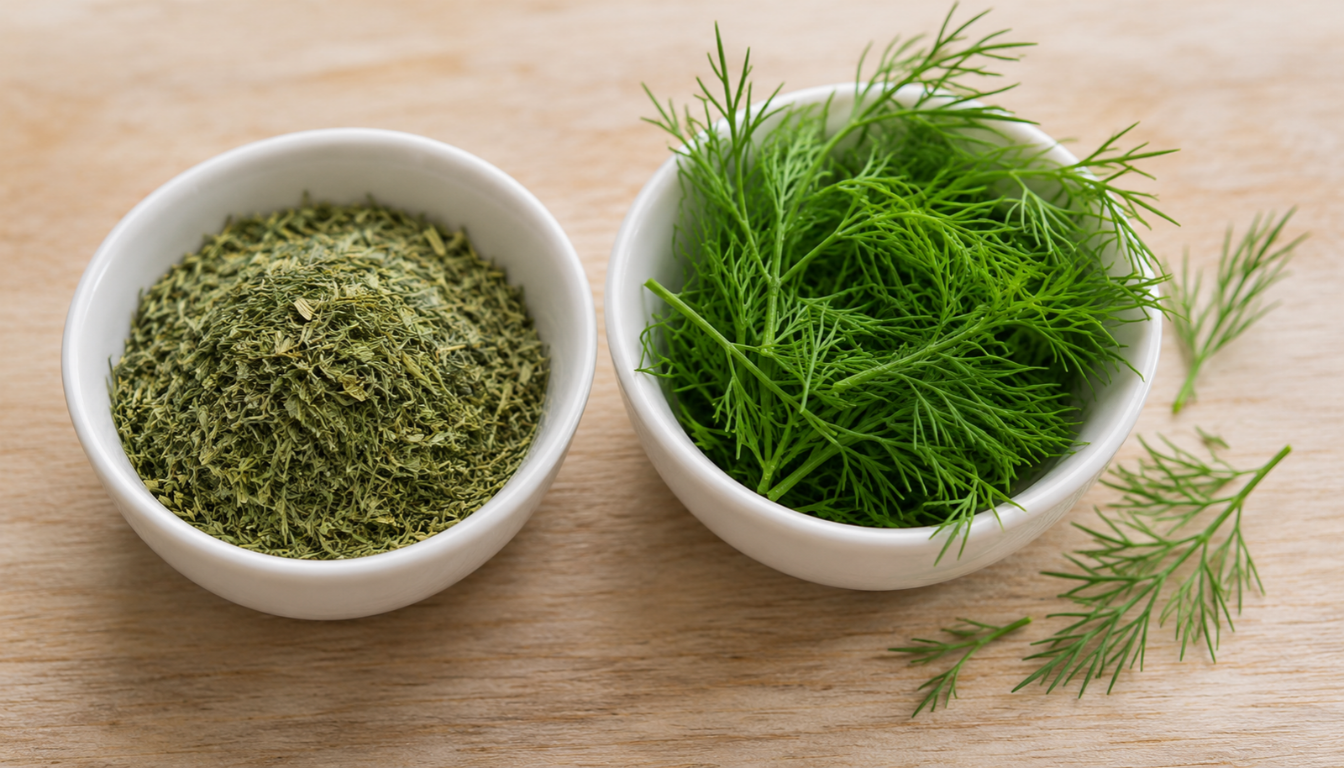
Dried dill and dill weed are the same thing in most kitchens. Both are the leaves of the dill plant, and a spice jar labelled “dill weed” holds those leaves dried. Dill seed is a separate ingredient with a different flavour.
This guide explains what the labels mean, how dill seed differs, how much dried dill replaces fresh, and how to store it.
Dried Dill and Dill Weed: What the Labels Mean
“Dill weed” is the name for the leaves of the dill plant (Anethum graveolens). McCormick, a major spice brand, describes its dill weed as “the dried feathery leaves of the dill plant.” So if a recipe calls for dill weed and you hold a jar of dried dill, you have the right ingredient. Brands name their products differently, so check that the label says dill leaves and not dill seed.
Fresh dill is the same leaves before drying. Penn State Extension says dill weed is best used fresh, “as its flavor is lost upon drying or freezing.” University of Minnesota Extension agrees that dill loses its flavour quickly. It adds that drying loses most of the flavour, although the colour usually stays bright. As a result, a jar of dried dill tastes milder than fresh leaves.
Dill Weed vs Dill Seed
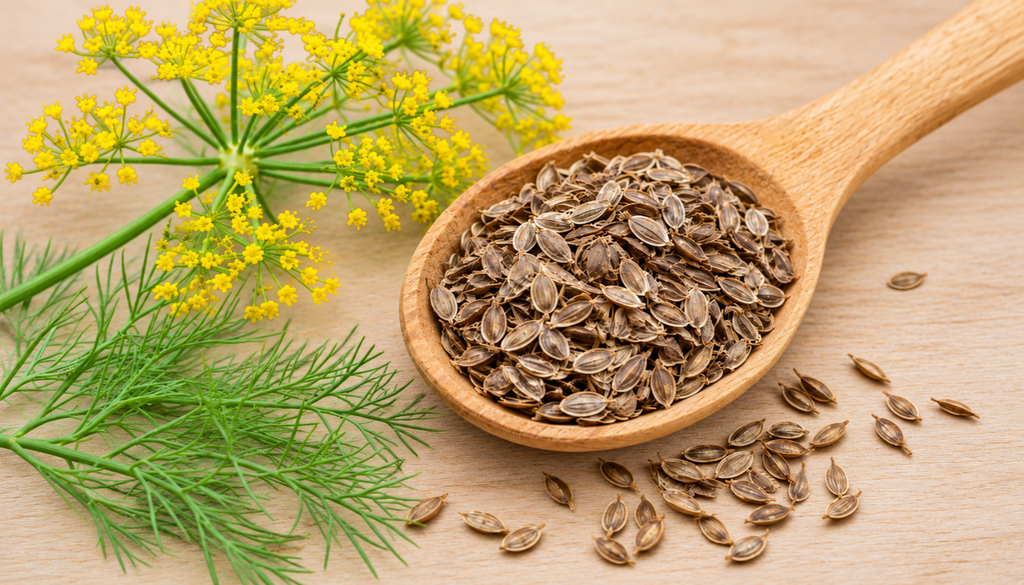
Dill seed is the other part of the plant, and it is a different ingredient. Penn State Extension says dill seeds “are more pungent and are the primary flavoring in dill pickles.” McCormick describes the seed as having “a more caraway-like flavor profile.” The leaves suit fish, meat, eggs, vegetables, salads and soups, according to Penn State.
Because the seed is stronger and tastes different, treat it as its own ingredient instead of a swap for the leaves. University of Minnesota Extension adds that pickling jars often hold whole flower heads and leaves together.
How Much Dried Dill Replaces Fresh Dill Weed
Use less dried dill than fresh. Penn State Extension says dried herbs are three to four times stronger than fresh ones, and that one tablespoon of fresh herbs equals one teaspoon of dried. McCormick gives the same ratio for dill: one tablespoon of finely chopped fresh dill for every one teaspoon of dried dill weed.
McCormick also says dill weed suits cold dishes and quick-cooking recipes, because long cooking can diminish its delicate oils.
Storing Dried Dill and Dill Weed
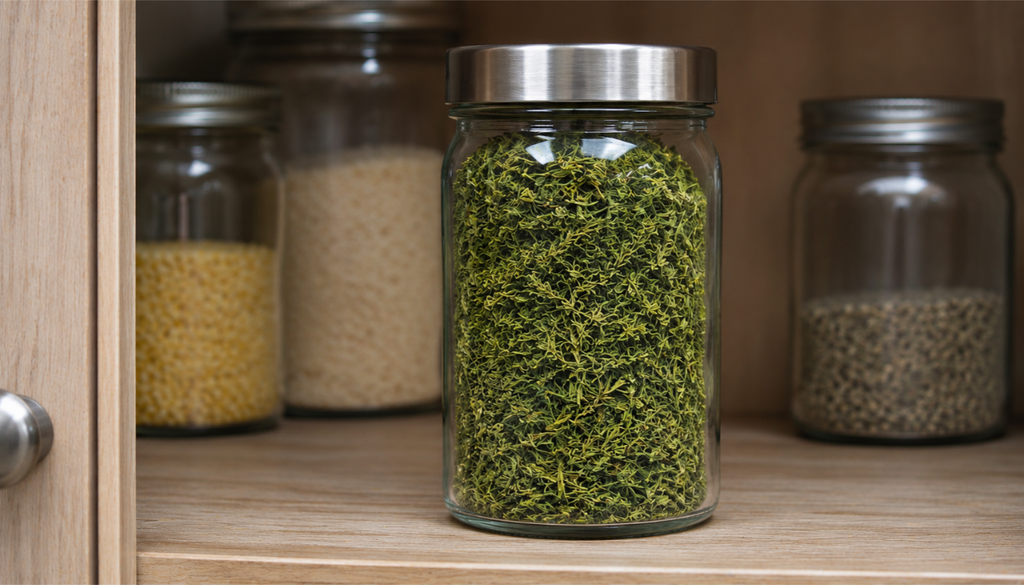
Penn State Extension says to keep dried herbs and seeds in airtight containers in a cool, dry, dark place, away from moisture. It also says to keep them away from the stove, the sink and the windowsill. Most dried herbs keep well for about one year, according to Penn State. That figure is for dried herbs in general, and Penn State does not give a separate one for dill.
Dill seed keeps for up to a year in airtight containers away from heat and bright light, says University of Minnesota Extension. Fresh leaves keep only briefly in the refrigerator, according to Penn State. It also warns that dill weed loses its flavour when frozen, so freezing is not a good way to save it.
Growing Your Own Dill
Dill is a tender annual in the carrot family, says University of Minnesota Extension. Penn State Extension describes it as a cool-season annual whose seedlings can withstand minor frost. Dill does not transplant easily, so sow the seeds where the plants will grow.
You can cut dill weed at any time before the plant flowers, according to Penn State. If you also want seed, harvest the seeds just as they turn brown in summer. To dry the leaves at home, University of Minnesota Extension says to hang the plant upside down in a warm, breezy spot out of direct sun. Expect some flavour loss, as noted above.
For the full steps, read our guide to growing dill for your garden and kitchen. If your plant is struggling, see how to revive a dill plant.
Before You Go
Dried dill and dill weed are usually the same leaves, so use the one-to-three ratio when you swap fresh for dried. Keep dill seed for pickling and other recipes that call for it. If you grow your own, our dill growing guide covers the rest.
References – Are Dried Dill And Dill Weed The Same?
Little Herb Encyclopedia, by Jack Ritchason; N.D., Woodland Publishing Incorporated, 1995
The Ultimate Healing System, Course Manual, Copyright 1985, Don Lepore
Planetary Herbology, Michael Tierra, C.A., N.D., Lotus Press, 1988
Handbook of Medicinal Herbs, by James A. Duke, Pub. CRP Second Edition 2007
The Complete Medicinal Herbal, by Penelope Ody, Published by Dorling Kindersley
Sources
- Penn State Extension, Herb Garden Plants: Dill
- Penn State Extension, Preserving Herbs by Drying
- University of Minnesota Extension, Growing Dill in Home Gardens
- McCormick, Dill Weed
Related Articles
Easiest Trees to Grow from Cuttings: Tips and Tricks
Repotting Aloe Vera Plants Indoors: A Beginner’s Guide
Avocado Tree Not Producing Fruit: Causes and Solutions
Can Rabbits Eat Limes? How To Feed Your Bunny
Frequently Asked Questions – Are Dried Dill And Dill Weed The Same?
Are dried dill and dill weed the same?
Usually, yes. Dill weed is the leaf of the dill plant, and McCormick sells its dried dill leaves under that name. Check the label, because brands name products differently.
Can I use dill seed instead of dill weed?
Not as an equal swap. Penn State Extension and McCormick both describe the seed as stronger, so the taste will change.
How much dried dill equals fresh dill?
One teaspoon of dried dill for one tablespoon of fresh, according to Penn State Extension and McCormick.
How long does dried dill last?
Penn State Extension says most dried herbs keep well for about one year when stored airtight in a cool, dry, dark place.