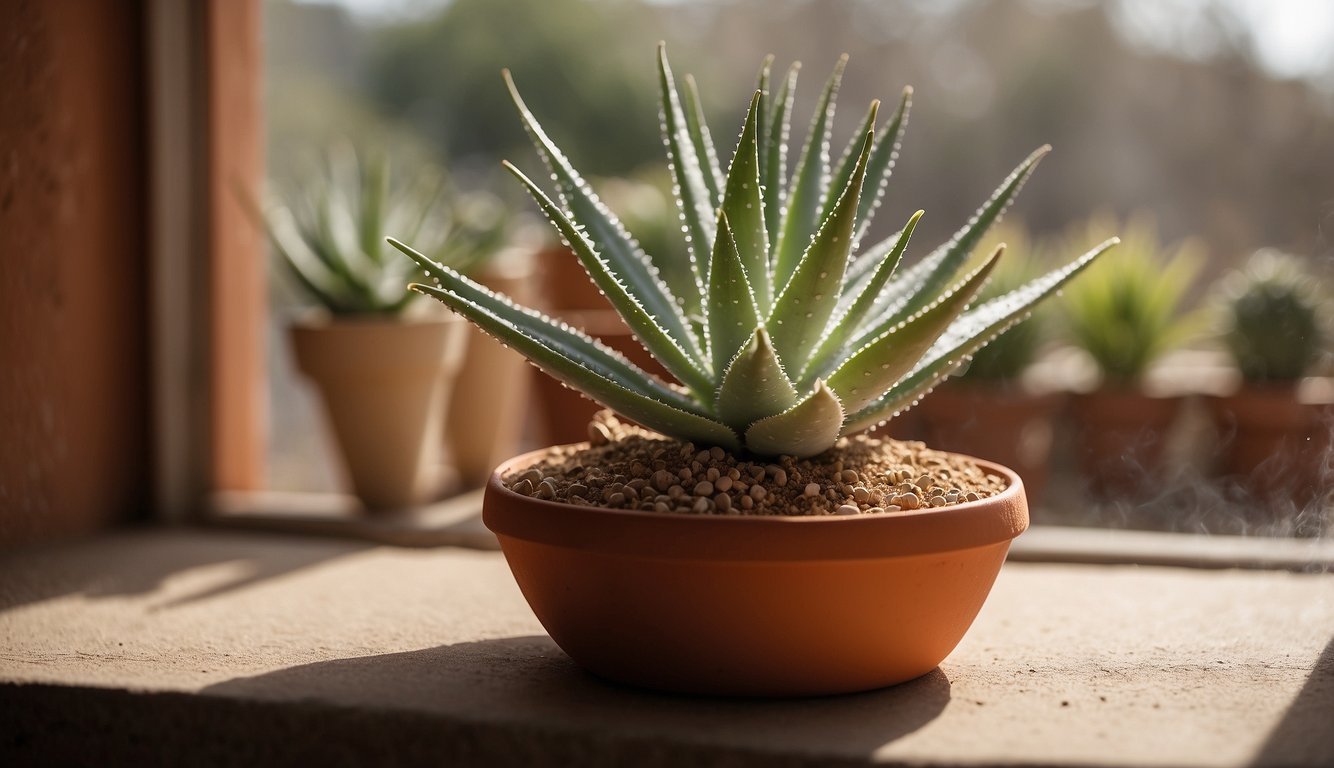
As an avid gardener and plant enthusiast, I’ve come to appreciate the unique beauty and benefits of growing aloe vera. This succulent plant is not only easy to care for, but it also has a wide range of medicinal uses. However, to ensure your aloe vera thrives and produces the best results, it’s important to choose the right soil.
When it comes to selecting the best soil for aloe vera, there are a few key factors to consider. Firstly, aloe vera plants require well-draining soil that is not too heavy or compact. This is because the plant’s roots are shallow and can easily rot if they are exposed to too much moisture. Additionally, aloe vera prefers slightly alkaline soil with a pH level between 7.0 and 8.5.
There are many different types of soil mixes available on the market, each with its own unique benefits and drawbacks. Some gardeners prefer to make their own soil mix using a combination of ingredients such as sand, perlite, and peat moss. Others opt for pre-mixed soils that are specifically designed for succulent plants like aloe vera.
In the following sections, we will explore some of the best soil options for aloe vera and how to choose the right one for your plant.
Understanding Aloe Vera
Origins and Characteristics
As a succulent plant, aloe vera is known for its healing properties. The gel inside its leaves has been used for centuries to treat burns, cuts, and other skin conditions. Aloe vera is a perennial plant that originated in the Arabian Peninsula, but it is now grown all over the world for its medicinal and aesthetic value.
Aloe vera plants are easy to care for, making them a popular choice for indoor and outdoor gardens. They prefer dry soil and plenty of sunlight, but they can also tolerate low light conditions. Aloe vera plants have thick, fleshy leaves that store water and nutrients, which allows them to survive in arid environments.
Common Aloe Vera Issues
One of the most common issues with aloe vera plants is root rot caused by overwatering. When the soil is too wet, the roots can become waterlogged and start to rot. This can lead to fungal growth and other diseases that can harm the plant. To prevent root rot, it is important to let the soil dry out completely between waterings and to avoid watering the leaves or stem directly.
Another common issue with aloe vera plants is brown leaf tips, which can be caused by a fungal infection or soft rot. Mealybugs can also infest aloe vera plants, causing damage to the leaves and stem.
To prevent these issues, it is important to keep the plant in a well-ventilated area and to avoid overcrowding. Regularly inspecting the plant for signs of disease or pests can also help prevent problems from occurring.
Ideal Soil Composition for Aloe Vera
As an experienced gardener, I know that the right soil composition is crucial for the healthy growth of any plant. Aloe vera is no exception. In fact, this succulent plant requires specific soil conditions to thrive. In this section, I will discuss the ideal soil composition for aloe vera.
Key Components of Aloe Soil
The ideal soil for aloe vera should have good drainage and be well-aerated. This means that the soil should contain a mixture of coarse sand, perlite, pumice, gravel, and bark. These non-absorbent components help to increase soil drainage and aeration.
Additionally, a small amount of compost or coconut coir can be added to the soil to improve its water-holding capacity.
Soil Texture and Drainage
The texture of the soil plays an important role in aloe vera care. Aloe plants grow best in sandy, well-draining soil. Add coarse sand or pine bark to improve drainage. Remember that aloe vera plants face a high risk of root rot, so you must provide good drainage. Ensure proper drainage by using a pot with holes at the bottom.
Potting and Repotting Aloe Vera
As a plant lover, I understand the importance of choosing the right pot and soil for your aloe vera plant. In this section, I will share some tips on potting and repotting aloe vera.
Choosing the Right Pot
When choosing a pot for your aloe vera plant, it’s important to consider the size and material of the pot. Aloe vera plants prefer well-draining soil, so it’s essential to choose a pot with drainage holes. Terra-cotta pots are a great choice as they allow air to circulate through the soil and help prevent overwatering.
The size of the pot is also important. Aloe vera plants prefer to be slightly root-bound, so it’s best to choose a pot that is only one size larger than their current pot. This will prevent the plant from being too wet and help promote healthy root growth.
Repotting Techniques
If your aloe vera plant has outgrown its current pot or the soil is depleted, it’s time to repot. Repotting should be done in the spring or summer when the plant is actively growing. To repot your aloe vera plant, first, choose a new pot that is only one size larger than the current pot.
Next, remove the plant from its current pot and gently loosen the roots. If the roots are tightly bound, you can use gardening gloves to help loosen them. Fill the new pot with a well-draining potting mix, such as Rosy aloe vera soil, and center the plant in the pot.
Fill the pot with soil, covering the stem and leaving about an inch of space at the top. Water the plant thoroughly and place it in indirect sunlight. Avoid watering the plant for the first week after repotting to allow the roots to settle in the new soil.
Watering and Nutrients
Watering Schedule
As a succulent, an aloe vera plants do not require frequent watering. Overwatering can lead to root rot and other issues, so it is important to allow the soil to dry out completely between waterings. I typically water my aloe vera plant once every two to three weeks during the growing season (spring and summer) and once a month during the dormant season (fall and winter).
When watering aloe vera, it is important to avoid using tap water, which can contain chlorine and other chemicals that are harmful to the plant. Instead, try using rainwater or filtered water. If you do use tap water, allow it to sit out overnight before watering to allow the chlorine to dissipate.
Fertilizing Aloe Vera
Aloe vera plants do not require a lot of fertilizer, but they do need some nutrients to thrive. I recommend using a light fertilizer, such as a 10-10-10 or 14-14-14 formula, once a month during the growing season. Be sure to dilute the fertilizer to half strength before applying it to the soil.
In addition to fertilizer, aloe vera plants benefit from organic matter in the soil. Adding compost or other organic materials to the soil can help provide the plant with the nutrients it needs to grow and thrive.
Environmental Conditions
As a houseplant, aloe vera is a succulent that thrives in dry conditions. However, it still requires proper environmental conditions to grow healthy and strong. In this section, I will discuss the sunlight and temperature, humidity, and aeration requirements for aloe vera.
Sunlight and Temperature
Aloe vera prefers bright, indirect sunlight. It can also tolerate full sun, but too much direct sunlight can burn its leaves. Therefore, it is best to place the plant near a southern window that receives plenty of light but is not exposed to direct sunlight for extended periods.
In terms of temperature, aloe vera prefers warm temperatures between 60°F and 85°F (15°C and 29°C). It can tolerate cooler temperatures, but it may not grow as well. If the temperature drops below 40°F (4°C), it can cause damage to the plant.
Humidity and Aeration
Aloe vera does not require high humidity levels, but it still needs some moisture in the air. It can tolerate low humidity levels, but it may grow slowly or develop brown tips on its leaves. To increase humidity levels, you can place a tray of water near the plant or use a humidifier.
Aeration is also essential for aloe vera. The plant requires well-draining soil and a pot with drainage holes to prevent water from accumulating in the roots. Additionally, placing the plant near vents or fans can help improve air circulation and prevent stagnant air.
Soil pH and Amendments
Understanding pH Levels
The pH level of the soil is one of the most important factors to consider when growing aloe vera. Aloe vera prefers a slightly acidic soil that hovers around 6.0 on the pH scale [1]. The pH scale runs from 0 to 14, with 7 being considered neutral. Soil that is too acidic or too alkaline can lead to poor growth and even death of the plant.
It is important to test the pH level of your soil before planting aloe vera. You can purchase a pH testing kit at your local garden center or online. If your soil is too acidic, you can add lime to raise the pH level. If your soil is too alkaline, you can add peat moss to lower the pH level [2].
Amending Soil for Aloe
In addition to adjusting the pH level of the soil, you can also amend the soil to make it more suitable for aloe vera. A good succulent soil mix should be well-draining and have a light, fluffy texture that allows water to freely flow through [3]. Aloe vera does best in soil with a neutral to slightly alkaline pH (7.0 to 8.5) [4].
One option for amending soil for aloe vera is to use a commercial succulent soil mix, such as Miracle-Gro Succulent Potting Mix [5]. Another option is to create your own aloe vera soil blend using a mix of grit, sand, and peat moss [6]. Some gardeners also recommend using akadama, a type of Japanese volcanic clay, in their aloe vera soil mix [1].
When creating your own aloe vera soil mix recipe, it is important to ensure that the soil is well-draining and has a neutral to slightly alkaline pH. You can add perlite, sand, or grit to improve drainage and texture. You can also add organic matter, such as compost or worm castings, to improve soil fertility [2].
Propagation and Pruning
Propagating Aloe Vera
Propagating aloe vera is relatively easy, and it can be done in several ways. One of the most common methods is through offsets, which are small plantlets that grow from the base of the parent plant. These offsets can be removed and replanted to produce new plants.
To do this, I first remove the parent plant from its pot and gently separate the offsets from the main plant. I then plant each offset in a small pot with well-draining soil, water it lightly, and place it in a bright, indirect light.
Another method of propagation is through cuttings. To do this, I take a healthy leaf from the parent plant and cut it at an angle to remove a section of the leaf. I then let the cut end dry for a day or two before planting it in well-draining soil. It is important to keep the soil moist but not wet during the rooting process, which can take several weeks.
Pruning Techniques
Pruning is an important aspect of aloe vera care, as it helps to keep the plant healthy and looking its best. I typically prune my aloe vera plant once or twice a year, depending on its growth rate. When pruning, I focus on removing any dead or damaged leaves, as well as any offsets that are taking up too much space in the pot.
To prune the plant, I first sterilize my pruning tools to prevent the spread of disease. I then carefully remove any damaged or dead leaves, cutting them as close to the base of the plant as possible. If any offsets are growing too close to the parent plant, I remove them and plant them separately. It is important to avoid over-pruning the plant, as this can weaken it and make it more susceptible to disease.
Preventing Common Pests and Diseases
As with any plant, aloe vera faces pests and diseases. With proper care and attention, you can prevent these issues. In this section, I discuss common pests and diseases that affect aloe vera plants and explain how to stop them.
Pest Management
Mealybugs rank among the most common pests that attack aloe vera plants. These small, white insects feed on the plant’s sap and cause stunted growth and yellowing leaves.
Keep your aloe vera plant clean and free of debris to stop mealybugs from infesting it. Regularly wipe the leaves with a damp cloth to remove any mealybugs you find.
Use a natural insecticide to keep mealybugs away. Neem oil works well because it is non-toxic and safe for aloe vera plants. Mix a few drops of neem oil with water and spray the solution on the plant to repel mealybugs.
Aloe vera plants also attract other pests such as aphids and spider mites. Maintain plant health and nourishment to prevent these pests. Provide a well-draining soil mix and plenty of sunlight to strengthen the plant.
Before You Go – Best Soil for Aloe Vera
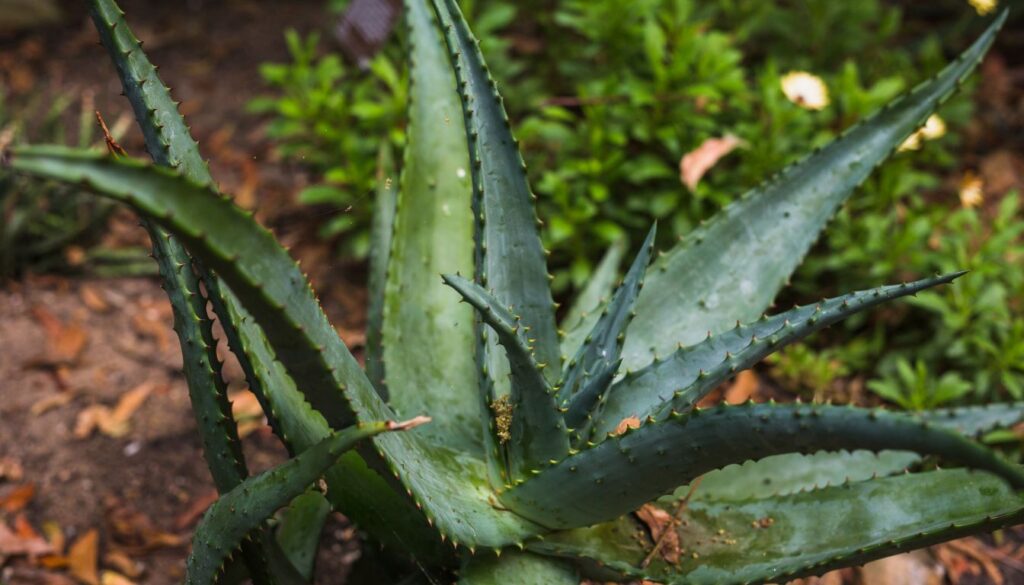
Aloe vera thrives in well-draining soil that mimics its native desert environment. Whether you’re growing it indoors or outdoors, choosing the right soil mix, typically a blend of sand, perlite, and cactus potting soil, helps prevent root rot and supports healthy growth.
Before you go, remember that aloe vera prefers dry conditions and dislikes soggy roots. Always use containers with drainage holes, avoid overwatering, and refresh the soil every couple of years to maintain its vitality. With the right foundation, your aloe plant will reward you with lush leaves and soothing gel for seasons to come.
Don’t forget to add theherbprof.com homepage to your favourites so you don’t miss out on future articles!
References – Best Soil for Aloe Vera
Little Herb Encyclopedia, by Jack Ritchason; N.D., Woodland Publishing Incorporated, 1995
The Ultimate Healing System, Course Manual, Copyright 1985, Don Lepore
Planetary Herbology, Michael Tierra, C.A., N.D., Lotus Press, 1988
Handbook of Medicinal Herbs, by James A. Duke, Pub. CRP Second Edition 2007
The Complete Medicinal Herbal, by Penelope Ody, Published by Dorling Kindersley
Check the Following Articles
Black Spots on Radishes: All The Causes and Prevention
Are Eggplant Flowers Edible? You Are About To Find Out
Meyer Lemon Tree Yellow Leaves: How To Solve It?
Are Peppers Perennial? The Lifespan of Pepper Plants
Frequently Asked Questions – Best Soil for Aloe Vera
What type of soil mix is ideal for potting aloe vera plants?
The ideal soil mix for potting aloe vera plants drains well and allows proper air circulation. Because aloe vera plants grow in arid regions, they need soil that stays loose and lets water drain quickly. Mix cactus soil, perlite, and sand to create excellent drainage while still retaining some moisture.
How does the indoor soil composition of aloe vera differ from that of the outdoor?
Indoor soil composition for Aloe vera mirrors outdoor soil composition. However, indoor soil often requires extra organic matter to supply nutrients for the plant. Keep indoor soil well-draining, since excess moisture causes root rot.
What are the necessary components for creating a suitable aloe vera soil mix?
A suitable aloe vera soil mix combines cactus soil, perlite, and sand. These components ensure excellent drainage while holding enough moisture for healthy growth. Add organic matter, such as compost, to provide nutrients for the plant.
Is it necessary to add rocks or gravel to the bottom of the pot for aloe vera?
You don’t need to add rocks or gravel to the bottom of the pot for aloe vera. Adding these materials can block drainage and create waterlogged soil. Instead, use a well-draining soil mix and choose a pot with adequate drainage holes.
What are the consequences of using regular potting soil for aloe vera?
Regular potting soil often becomes too dense and fails to drain properly. Dense soil causes root rot and other problems that damage the plant. It also lacks the nutrients aloe vera plants need to thrive.
How often should aloe vera plants be repotted, and what soil should be used?
Repot aloe vera plants every 2–3 years or when they outgrow their current pot. Use a well-draining soil mix that promotes air circulation. Combine cactus soil, perlite, and sand for the best results. Add compost or other organic matter to supply nutrients during repotting.