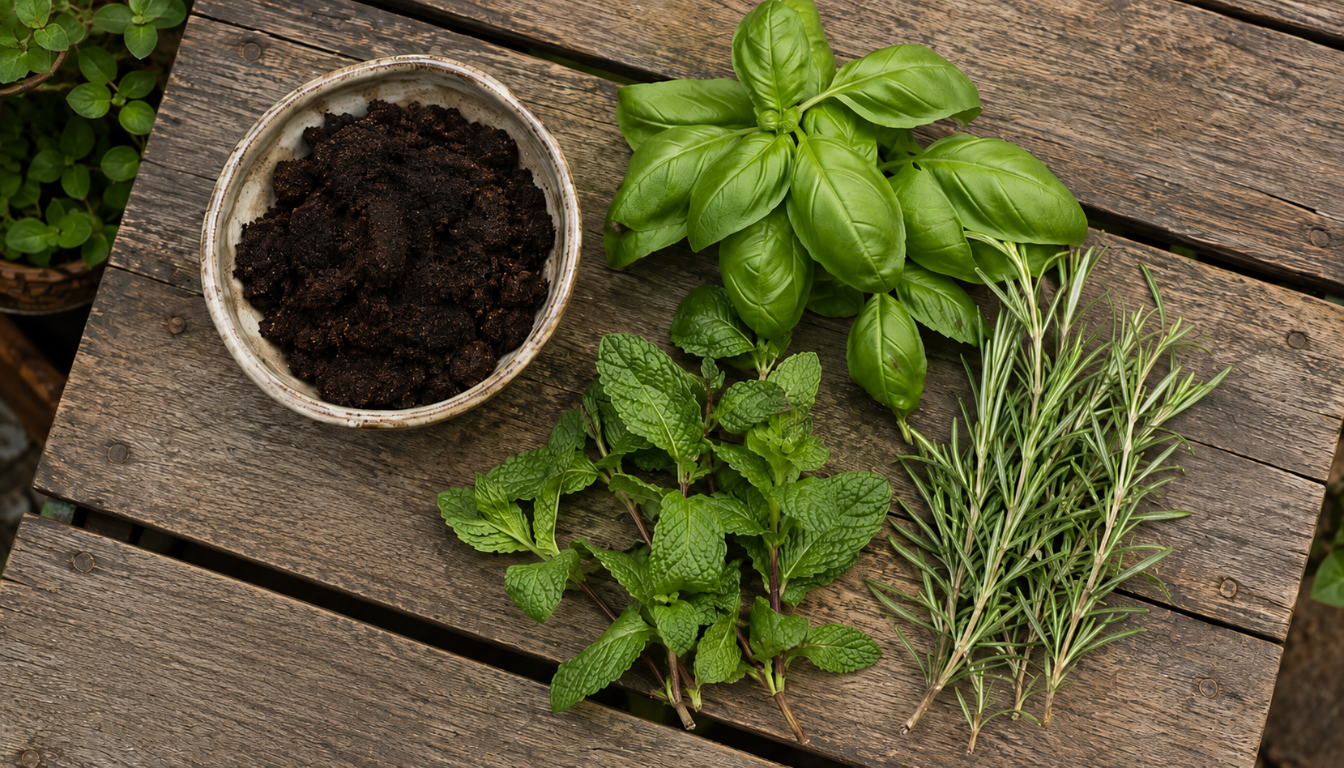

The Herb Prof Team researches and writes our herbal guides, drawing on published research, traditional herbal references, and hands-on growing experience.
Using coffee grounds for herb garden pests is one of the most talked-about natural pest-control methods in home gardening. But does it actually work? If you grow your own medicinal herbs, you’ve probably run into the usual culprits: slugs, snails, ants, and the occasional aphid colony, all while not wanting to reach for synthetic pesticides on plants you’re going to steep in tea or infuse into a tincture. This guide breaks down what coffee grounds actually do, what they don’t, and which herbs benefit most.
What Coffee Grounds Actually Do (and Don’t Do)
Most articles on this topic blur together two very different methods, so it’s worth separating them clearly:
Dry, spent coffee grounds sprinkled around plants
This is the most common method, and it’s also the weakest one. Spent (already-brewed) grounds have released most of their caffeine into the coffee itself, leaving relatively little behind. The abrasive texture may create a mild, temporary barrier effect against slugs and snails, but a Washington State University Extension review of the science found no published evidence that coffee grounds repel or kill garden pests when used this way. The popular “sprinkle it around your plants” advice is largely garden folklore, not tested fact.
A caffeine solution soil drench
USDA Agricultural Research Service scientists found that a 1–2% caffeine solution applied as a soil drench caused slugs to leave treated soil, with high mortality from caffeine toxicity; a 2% solution applied to orchid growing medium killed 95% of snails tested, outperforming a common commercial bait (Oregon State University Extension, citing the original USDA/ARS research).
For ants, the evidence is anecdotal rather than research-backed. Many gardeners report ants avoiding coffee-ground barriers, and it’s plausible given caffeine’s known effects on other insects, but I couldn’t trace this specific claim to a verifiable primary study the way the slug/snail research is documented. Treat it as a low-cost thing worth trying, not a proven method.
Bottom line for herb growers
Dry grounds sprinkled around your basil aren’t doing much heavy lifting against pests. Treat that as a soil amendment first, mild deterrent second. If slug/snail pressure is a real problem in your herb bed, a diluted caffeine solution (from strong, unsweetened brewed coffee, not sprinkled grounds) has better evidence behind it. Though it should be used with care around edible herbs, and diatomaceous earth remains the more predictable option for consistent results.
Herbs That Benefit Most
Coffee grounds work best around herbs that tolerate slightly acidic, nitrogen-rich soil:
- Basil – appreciates the nitrogen boost and the grounds’ moisture retention
- Mint – vigorous grower that can handle the added acidity well
- Parsley – benefits from the organic matter as it decomposes
- Cilantro – similar profile to parsley, tolerates mild acidity
Use caution or skip entirely with:
- Rosemary, lavender, and thyme – these Mediterranean herbs prefer alkaline, well-draining soil, and regular coffee ground application can push the pH in the wrong direction over time
- Sage – similarly prefers a more neutral-to-alkaline soil than coffee grounds tend to create with repeated use
How to Use Coffee Grounds Around Herbs
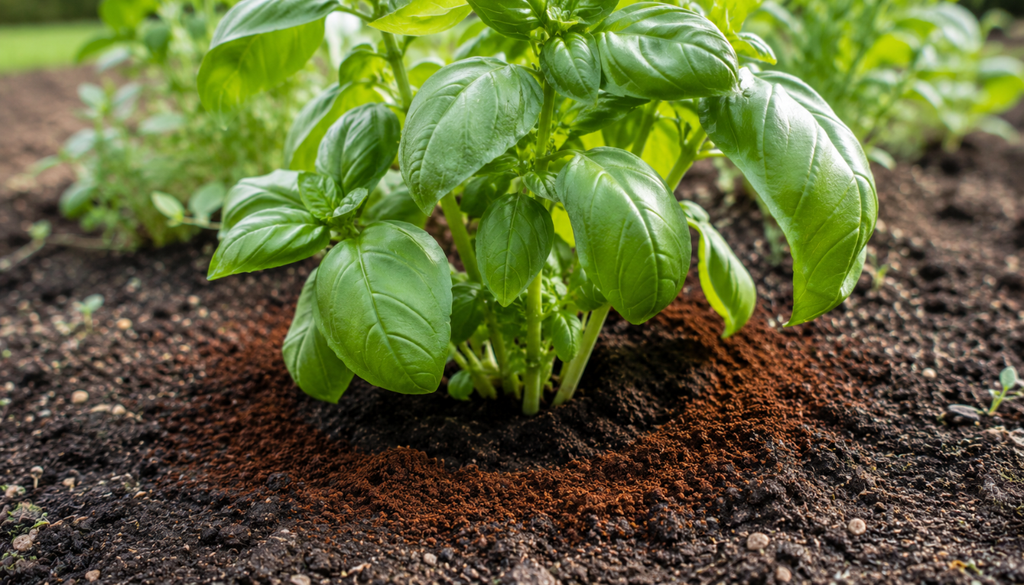
Getting the technique right matters more than the coffee grounds themselves. Used incorrectly, they can do more harm than good. Here’s how to apply them safely:
1. Dry Them First: Wet, clumped coffee grounds can develop mold and actually attract fungus gnats, the opposite of what you want. Spread used grounds on a tray and let them air-dry for a day or two before applying.
2. Use a Thin Ring, Not a Thick Layer: A thin ring of dried grounds around the base of a plant is more effective as a slug/snail deterrent than a thick mat, which can compact and block water absorption into the soil.
3. Mix Into Compost Rather Than Applying Heavily and Directly: For most herbs, working coffee grounds into your compost pile (rather than applying them thick and direct) gives you the soil-health benefits without the risk of over-acidifying the immediate root zone.
4. Reapply After Rain: Coffee grounds lose their (already modest) deterrent texture once they get wet and compact, so reapplication after heavy rain is necessary if you’re using them actively for pest deterrence.
5. Test Your Soil pH Periodically: If you’re applying coffee grounds regularly to a bed with pH-sensitive herbs nearby, an inexpensive soil pH test kit will tell you if you’re drifting too acidic before it becomes a problem.
A More Realistic Pest-Management Approach
For herb growers who want a more dependable line of defense than coffee grounds alone, consider combining them with:
- Diatomaceous earth – more consistently effective against crawling pests like slugs and snails
- Companion planting – herbs like chives and garlic planted alongside more pest-prone crops can help deter certain insects
- Handpicking – for slugs and snails specifically, an evening check with a flashlight is often more effective than any powder or grounds
Coffee grounds are best thought of as a low-cost, sustainable addition to your herb garden’s pest strategy, and a genuinely useful soil amendment, rather than a standalone solution.
A note on results: coffee grounds are part of a broader pest-management approach for a home herb garden. Results vary by climate, soil, and pest pressure so treat this as one tool among several, not a guaranteed fix.
References – Coffee Grounds for Herb Garden Pests
- Hollingsworth, R.G., Armstrong, J.W., and Campbell, E. “Caffeine as a Novel Toxicant for Slugs and Snails.” Nature, 2002 – research summary
- Oregon State University Extension Service, “Coffee grounds boost soil health – and help control slugs,” citing the original USDA Agricultural Research Service findings – read the article
- Science News, “Slugging It Out with Caffeine,” coverage of the original ARS research – read the article
- Washington State University Extension, “Using Coffee Grounds in Gardens and Landscapes” – read the publication
Related Articles
Pros and Cons of Salvia: A Comprehensive Overview
Do Rabbits Eat Rhubarb? What Every Owner Should Know
Grow Carrots in a Bag: An Efficient Guide for Beginners
How to Successfully Grow Mint Leaves Indoors?
Frequently Asked Questions – Coffee Grounds for Herb Garden Pests
Do coffee grounds keep all garden pests away?
No. For the common method of sprinkling dry grounds, a Washington State University Extension review found no published evidence they repel or kill garden pests at all. The one method with real research support is a diluted caffeine soil drench, not dry grounds (see above). Even that is mainly effective against slugs and snails, not flying insects or larger pests like deer and rabbits.
Can I use coffee grounds on every herb in my garden?
Not without some caution. Herbs that prefer acidic-to-neutral, nitrogen-rich soil (basil, mint, parsley) generally do well. Mediterranean herbs that prefer alkaline, well-draining conditions (rosemary, lavender, thyme, sage) can be negatively affected by regular, heavy coffee ground application over time.
How often should I apply coffee grounds around my herbs?
Light, occasional application (working them into compost or a thin top-dressing every few weeks) is generally safer than frequent heavy application, which risks over-acidifying the soil.
Is it better to use fresh or used coffee grounds?
For soil amendment purposes, used, dried grounds are generally recommended, fresh grounds are more acidic and more likely to mold or clump when applied directly to soil. For pest deterrence specifically, note that fresh grounds retain more caffeine than spent ones, though most gardeners still use spent grounds since that’s what’s actually available at home.
Does the “sprinkle coffee grounds around your plants” method actually work?
Not really, according to the science. A Washington State University Extension review found no published evidence supporting this common method. The research support that does exist is for a diluted caffeine solution soil drench, not dry sprinkled grounds (see the research note above). Dry grounds are still worth using, just mainly as a soil amendment rather than a primary pest-control method.