
The Herb Prof Team researches and writes our herbal guides, drawing on published research, traditional herbal references, and hands-on growing experience.
Knowing how to freeze basil lets you save a big harvest before it wilts or the first cold snap ends the season. Fresh basil keeps only a few days, but frozen basil keeps for months. Much of the flavor holds up, though the texture softens, so frozen basil works best in cooked dishes. Freezing also cuts waste and gives you ready-to-use portions.
This guide covers three simple methods, how long frozen basil lasts, and one food safety rule about freezing basil in oil.
Before You Freeze Basil
Start with healthy leaves, and skip any that are wilted, brown, or damaged, since they freeze with less flavor. Harvest in the morning, once the dew has dried. Our guide on [how to harvest basil] explains where to cut. Then prep the leaves:
- Pick the leaves off the stems and discard any woody pieces.
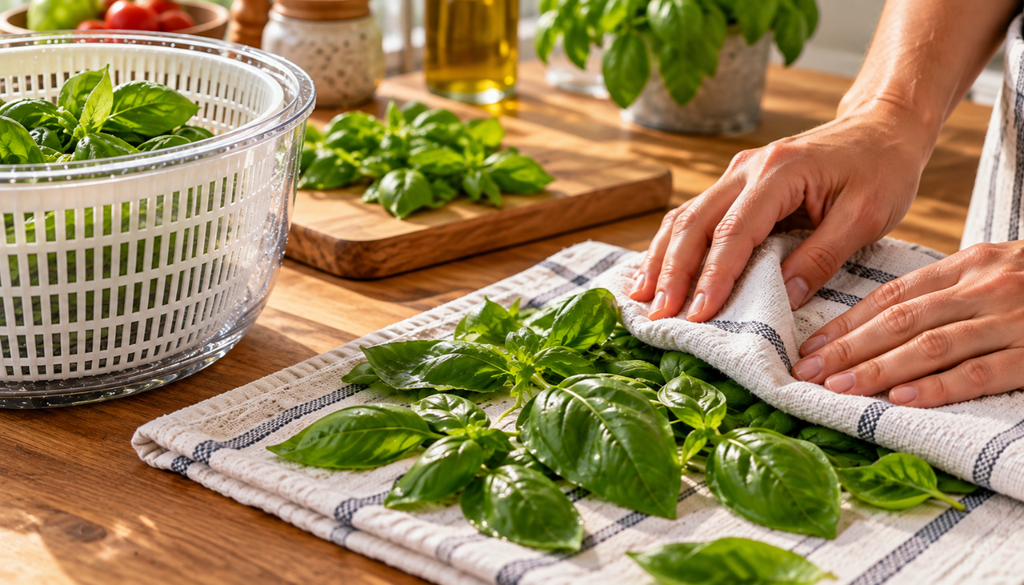
- Rinse the leaves gently in cold water.
- Pat them completely dry with a clean towel, or use a salad spinner.
Extra water leads to ice crystals and clumped, watery leaves.
How to Freeze Basil in Ice Cube Trays
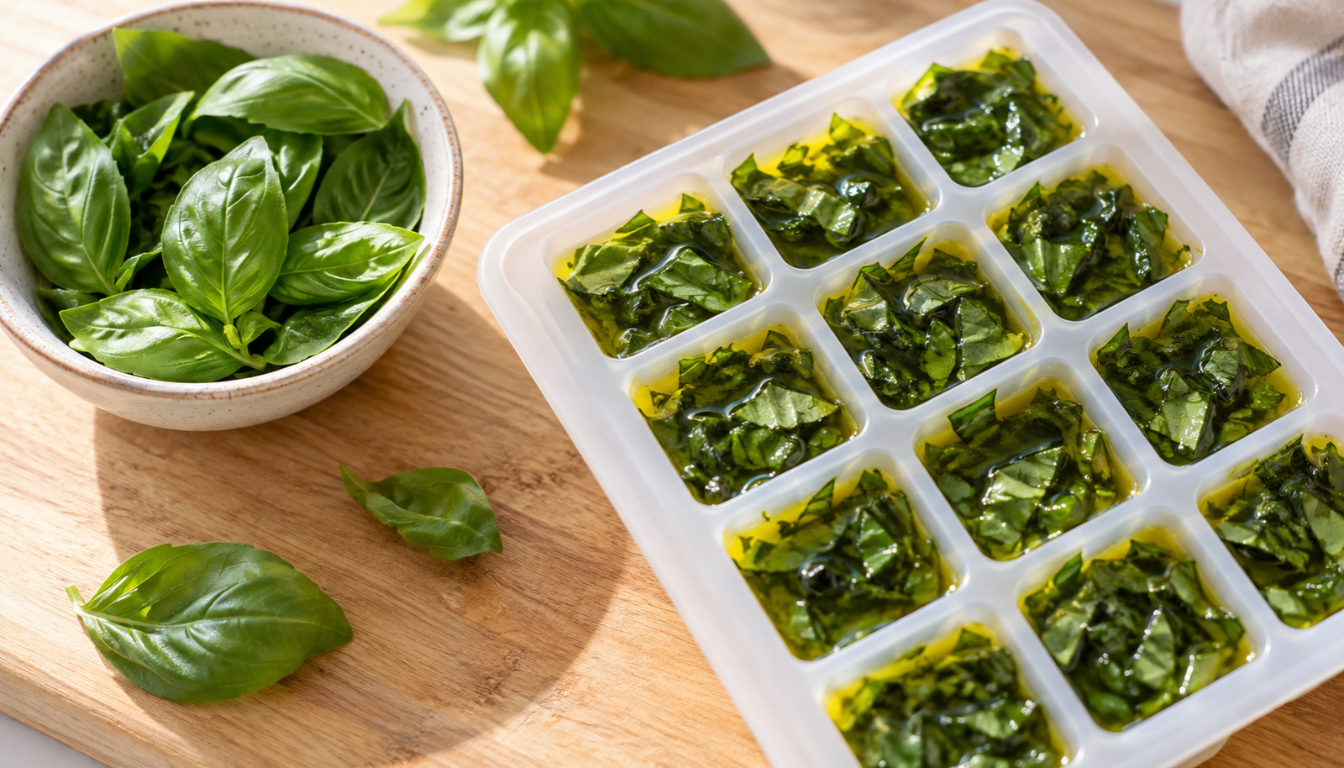
Ice cubes are the easiest method for cooking. Each cube is a ready-to-use portion.
- Chop the dry leaves by hand, or pulse them briefly in a food processor. Avoid turning them into a paste, which bruises the leaves.
- Pack the chopped basil lightly into an ice cube tray, about a tablespoon per section. Leave a little room at the top, since overfilling makes a mess and freezes unevenly.
- Cover the basil with olive oil or water. Broth also works.
- Freeze until solid, several hours or overnight.
- Pop the cubes out and store them in an airtight freezer bag or container. Label it with the date.
Oil cubes work well for sautéing and pasta sauces. Water cubes suit soups and stews.
For puree cubes, blend the leaves with a little olive oil until smooth, pour the mixture into the tray, and freeze as above. Blending bruises the leaves, so the puree may darken, but it works well in sauces and soups. Puree in oil follows the same safety rule below: keep it frozen.
A Food Safety Rule for Basil in Oil
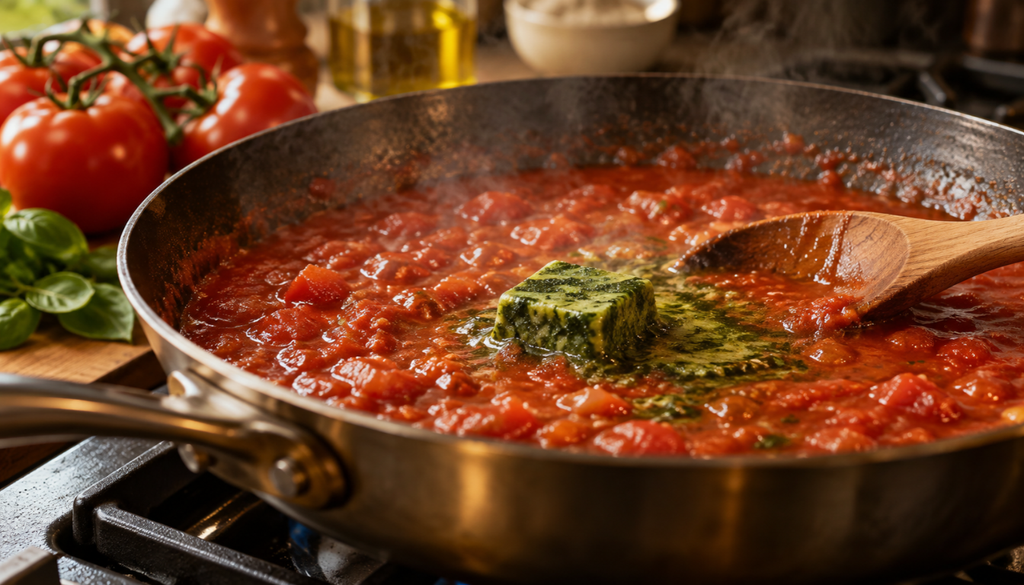
Basil in oil is safe as long as it stays frozen. Fresh herbs in oil can grow the bacteria that cause botulism if they sit at room temperature or stay refrigerated too long. Oregon State University Extension says fresh herbs in oil should be kept in the refrigerator and used within 4 days, or frozen for long-term storage. Take out only the cubes you need, and don’t leave thawed cubes at room temperature.
How to Freeze Whole Basil Leaves
Whole leaves are the quickest method and need no extra ingredients.
- Lay the dry leaves in a single layer on a parchment-lined baking sheet, so they don’t touch.
- Freeze until solid.
- Transfer the leaves to a freezer bag and press out as much air as you can.
- Label the bag with the date.
Unblanched leaves lose some of their bright green color in the freezer, but they still taste good. For best quality, use them within about 3 months.
How to Freeze Basil with Blanching
Blanching helps frozen basil keep a brighter green color. It’s a quality step, not a safety step, so you can skip it.
- Bring a pot of water to a boil, and prepare a bowl of ice water.
- Dip a few stems or leaves in the boiling water for just 3 to 4 seconds. Leave them longer and they turn mushy or brown.
- Move them straight to the ice water for about 30 seconds.
- Lift them out, shake off the water, and pat them completely dry.
- Roll the leaves in parchment paper or freezer wrap, then place them in a freezer bag. Press out the air.
- Label the bag and use it within about 3 months.
Which Method Should You Use?
| Method | Best for | Best quality |
|---|---|---|
| Ice cubes (oil or water) | Cooking: soups, sauces, sautés | About 3 to 6 months |
| Whole leaves | Speed, no extra ingredients | About 3 months |
| Blanched leaves | Brighter green color | About 3 months |
Frozen basil stays safe much longer if your freezer holds 0°F (-18°C), but flavor and color fade over time.
How to Use Frozen Basil
You don’t need to thaw frozen basil. Drop cubes or leaves straight into hot dishes like pasta sauce, soup, stew, or sautéed vegetables. Frozen basil suits cooked dishes better than salads or garnishes, because the texture softens and the fresh aroma fades.
Common Mistakes to Avoid
- Freezing wilted, brown, or damaged leaves
- Skipping the rinse and dry steps, which leaves dirt and extra ice crystals
- Overfilling ice cube trays
- Forgetting to label bags with the date
- Leaving basil in oil at room temperature or in the refrigerator for days
- Expecting frozen basil to work as a fresh garnish
Other Ways to Preserve Basil
If you have more basil than freezer space, you have other options. Fresh stems keep for a few days to a week in a jar of water at room temperature, as covered in our [harvest guide].
You can also dry basil. Spread the leaves on a wire-mesh tray in a shady, dry, well-ventilated spot. Penn State Extension advises against hanging basil in bundles, since the leaves dry slowly and can mold. See our guide on [drying herbs in the oven] for another option.
Pesto also freezes well in ice cube trays. If you keep pesto in the refrigerator instead, use it within 4 days.
Before You Go – How to Freeze Basil
Freezing basil is one of the easiest ways to keep summer flavor going. Dry the leaves well, pick the method that suits your cooking, and keep any basil in oil frozen. Use frozen basil in cooked dishes, and label every bag with the date, so you use it while the flavor is at its best.
References – How to Freeze Basil
Little Herb Encyclopedia, by Jack Ritchason; N.D., Woodland Publishing Incorporated, 1995
The Ultimate Healing System, Course Manual, Copyright 1985, Don Lepore
Planetary Herbology, Michael Tierra, C.A., N.D., Lotus Press, 1988
Handbook of Medicinal Herbs, by James A. Duke, Pub. CRP Second Edition 2007
The Complete Medicinal Herbal, by Penelope Ody, Published by Dorling Kindersley
Sources
- Oregon State University Extension, “Herbs and Vegetables in Oil”: https://extension.oregonstate.edu/catalog/pub/sp-50-701-herbs-vegetables-oil
- Penn State Extension, “Herb Garden Plants: Basil”: https://extension.psu.edu/herb-garden-plants-basil
- Food Network, “How to Preserve Basil”: https://www.foodnetwork.com/how-to/packages/food-network-essentials/how-to-preserve-basil
Related Articles
Aloe Vera Hair Mask: Ultimate Guide to Transform Your Hair
Discover the Remarkable Health Benefits of Goldenrod
Perennial Verbena: A Low-Maintenance Garden Favorite
Frequently Asked Questions – How to Freeze Basil
What is the best way to freeze basil?
Ice cube trays are the easiest method for cooking, because each cube is a ready-to-use portion. Whole leaves are the quickest, and blanching gives the brightest color. All three work, so choose based on how you cook.
Do I need to blanch basil before freezing?
No. Blanching helps the leaves keep a brighter green color, but it’s optional. Unblanched basil looks a little duller after freezing but still tastes good.
How long does frozen basil last?
For best quality, use frozen basil within about 3 to 6 months. It stays safe much longer in a freezer held at 0°F, but flavor and color fade over time.
Can I freeze basil in olive oil?
Yes, as long as it stays frozen. Fresh herbs in oil can grow botulism bacteria if stored at room temperature. Oregon State University Extension says refrigerated herbs in oil should be used within 4 days.
Does frozen basil taste like fresh basil?
Not quite. It keeps much of its flavor, but the fresh aroma fades and the texture softens. Use it in cooked dishes rather than as a garnish.
Should I wash basil before freezing it?
Yes. Rinse the leaves gently in cold water, then dry them completely. Extra water leads to ice crystals and clumped, watery leaves.