
The Herb Prof Team researches and writes our herbal guides, drawing on published research, traditional herbal references, and hands-on growing experience.
Learning how to grow basil indoors keeps fresh leaves on your counter through winter. However, the challenge is light. Basil is a warm-weather herb, and short winter days rarely give it enough. Indoor basil also tastes a little milder than basil grown outdoors, according to Iowa State Extension. This guide covers light, soil, watering, growing in water, and how to keep store-bought basil alive.
What Indoor Basil Needs at a Glance
| Need | What basil wants |
|---|---|
| Light | A south or west window with 6 to 8 hours of sun, or a grow light for 12 to 16 hours |
| Warmth | About 65 to 80°F, and never below about 50°F at night |
| Pot | Drainage holes, and enough room for roots |
| Water | When the top inch of soil feels dry |
| Feeding | Light, since too much nitrogen affects flavor |
Seeds, Seedlings, or Cuttings?
You have three easy ways to start basil indoors.
- Seeds: Sow them about 1/8 to 1/4 inch deep in a pot of moist potting mix, and keep them warm. Then give seedlings bright light, so they don’t grow lanky.
- Cuttings: Basil cuttings root easily in water, according to Penn State Extension. See our guide on [how to harvest basil] for the steps.
- A garden plant: Before frost, dig up a healthy plant with as much of its root system as you can, and pot it in a container large enough to hold it.
Light: Windows and Grow Lights
Light is the main reason indoor basil struggles. Choose a south or west-facing window, since basil needs at least six hours of sun. In winter, even that often isn’t enough, and extension guidance recommends supplemental light when days are short.
Fortunately, a grow light fixes it. A full-spectrum LED or a fluorescent light works well. Most herb guides suggest keeping lights on for 12 to 16 hours a day and placing them about 6 to 12 inches above the plants, though the right distance depends on the fixture, so check the manufacturer’s advice. Also, use a plug-in timer, so you don’t have to think about it.
Pots, Soil, and Drainage
Use a pot with drainage holes, and fill it with a quality potting mix. Soggy roots cause more trouble than anything else, and root rot from poor drainage is one of the biggest threats to basil. Penn State Extension reports a plentiful harvest from a pot about a foot wide, two feet long, and 8 inches deep, so bigger is better.
Watering and Feeding Indoor Basil
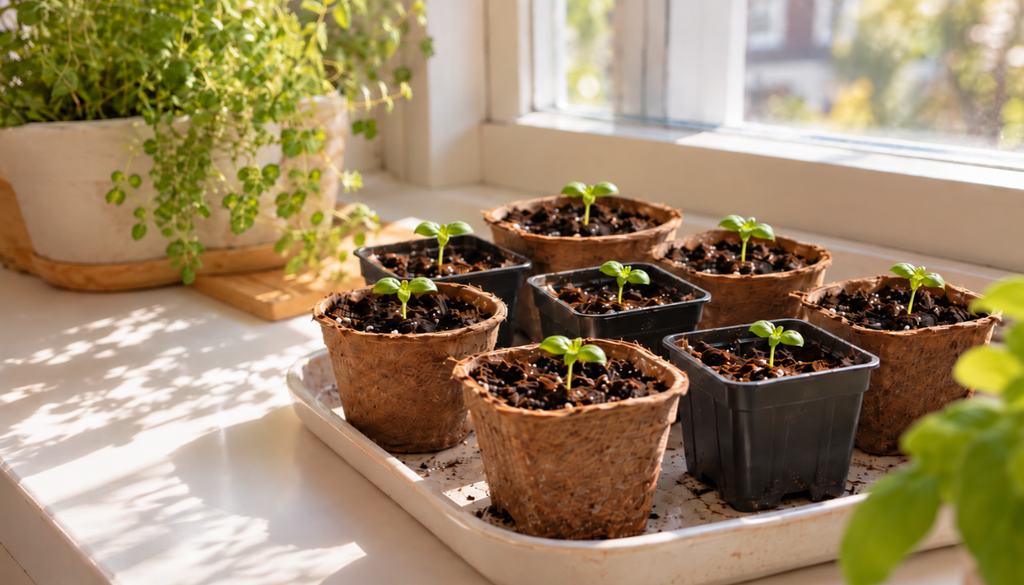
Check the soil before you water, and water when the top inch feels dry. In addition, indoor basil in a cool or dim room needs water less often than basil on a hot, sunny sill. Water the soil, not the leaves, because wet leaves invite disease.
Also, go easy on fertilizer. Iowa State Extension warns that too much nitrogen affects flavor. A light feeding with a balanced fertilizer is enough.
Temperature and Drafts
Basil likes warmth. Aim for about 65 to 80°F during the day, and keep it above about 50°F at night. Penn State Extension notes that temperatures below 40°F discolor basil leaves. Therefore, in winter, move plants away from cold glass at night, and keep them out of drafts.
Pinching and Harvesting Indoors
In fact, pinching works indoors just as it does outdoors. Pinch or cut just above a leaf node, take no more than about a third of the plant at a time, and pinch off flower buds, because flavor declines after bloom. Our guide on [how to harvest basil] covers the details. Because plants usually decline once they flower, so start fresh seeds or cuttings every few months for a steady supply.
Common Problems With Indoor Basil
| Problem | Likely cause | What to do |
|---|---|---|
| Tall, pale, sparse growth | Not enough light | Move it to a brighter window, or add a grow light |
| Yellowing, drooping leaves | Overwatering or poor drainage | Let the soil dry, and check the drainage holes |
| Sticky or distorted leaves, tiny insects | Aphids, spider mites, or whiteflies | Spray with water, then use insecticidal soap or neem |
| Curling or wilting | Water, heat, pests, or disease | See our guide on [basil leaves curling and wilting] |
Clemson Extension lists insecticidal soap and neem for aphids and spider mites, and notes that reducing leaf wetness helps prevent disease.
How to Grow Basil Indoors in Water (Hydroponics)
Hydroponics means growing plants in water with dissolved nutrients, with no soil. Basil takes to it well. In fact, you can start with something as simple as a jar.
- Cuttings in water: Stems root in plain water, as Penn State Extension notes. Plain water has no minerals, though, so for long-term growth, either pot the cutting into soil or add a diluted hydroponic nutrient.
- Simple systems: Beginners do best with a Kratky jar or a deep water culture bucket. Plants sit in net pots in a growing medium like rockwool or clay pebbles, with the roots in the nutrient solution.
- The numbers: Most hydroponic basil guides recommend a solution pH of about 5.5 to 6.5, an EC (nutrient strength) around 1.0 to 1.6 mS/cm, and 14 to 16 hours of strong light. Keep the water about 65 to 75°F, since warm reservoirs invite root rot.
- Upkeep: Use an opaque container, change the solution every one to two weeks, and prune regularly.
Wash your basil before you eat it, however you grow it.
What to Do With Grocery Store Basil
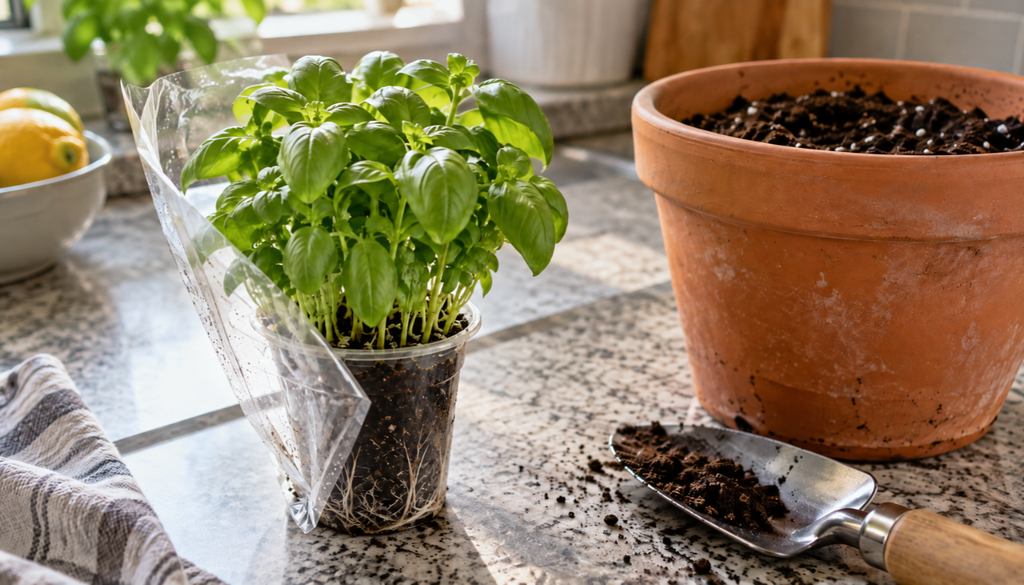
Potted “living” basil: Many store-bought basil plants are grown hydroponically, with a dense cluster of seedlings in a tiny container. They’re grown for short-term use, and one gardener reports they decline within a couple of weeks if left as is. To keep one going:
- First, check it for pests and fuzzy growth before you bring it near other plants.
- Next, remove the plastic sleeve. Gently open or snip the small container, and avoid tearing the roots.
- Then plant the whole cluster in a larger pot of potting mix, and water it in. Or rinse the roots and set it in a net pot in a water system.
- Finally, pinch the stems back to harvest. Pinching delays flowering by weeks.
Cut basil from a bunch: Stand the stems in a jar of water. Roots usually appear in one to two weeks. After that, pot them up, or feed them hydroponic nutrients.
Starting from seed instead helps you avoid bringing pests or diseases home from the store.
Before You Go – How to Grow Basil Indoors
Overall, indoor basil needs three things: light, warmth, and good drainage. Give it a south window, or a grow light for 12 to 16 hours, and keep the soil evenly moist but never soggy. Pinch it often, and replace plants every few months. If you’d rather skip soil, a jar of cuttings or a simple water system works too. For more on herbs, see our growing medicinal herbs guide.
References – How to Grow Basil Indoors
Little Herb Encyclopedia, by Jack Ritchason; N.D., Woodland Publishing Incorporated, 1995
The Ultimate Healing System, Course Manual, Copyright 1985, Don Lepore
Planetary Herbology, Michael Tierra, C.A., N.D., Lotus Press, 1988
Handbook of Medicinal Herbs, by James A. Duke, Pub. CRP Second Edition 2007
The Complete Medicinal Herbal, by Penelope Ody, Published by Dorling Kindersley
Sources
- Penn State Extension, “Basil, A Summer Favorite”: extension.psu.edu
- Iowa State University Extension, “Growing Basil in the Home Garden”: extension.iastate.edu
- Clemson Home & Garden Information Center, basil fact sheet: hgic.clemson.edu
- PBS, “Year-Round Gardening: Growing Herbs Indoors” (light, temperature, drainage): pbs.org
- Urban Harvest Lab, hydroponic basil EC, pH, and light (general guidance): urbanharvestlab.com
- Creative Savv, caring for a grocery store hydroponic basil plant (one gardener’s method): creativesavv.com
Related Articles
Tips and Tricks To Cold Herbal – Growing Herbs in Winter
Growing Herbs in Kitchen: A Fresh and Flavorful Cooking
Herb Gardening For Beginners: Tricks for a Successful Start
Frequently Asked Questions – How to Grow Basil Indoors
How much light does basil need indoors?
Basil needs at least six hours of sun from a south or west window. Under a grow light, most herb guides suggest 12 to 16 hours a day.
Can I grow basil indoors in winter?
Yes. A grow light usually makes the difference, since winter days are short.
Why is my indoor basil leggy?
Usually not enough light. In that case, move it to a brighter window or add a grow light, and pinch it regularly.
How often should I water indoor basil?
Water when the top inch of soil feels dry. Cooler, dimmer rooms need water less often than hot, sunny ones.
Can I grow basil in water?
Yes. Cuttings root easily in water. For long-term growth, add a diluted hydroponic nutrient or pot them into soil.
How do I keep grocery store basil alive?
Move it into a bigger pot of potting mix, or into a water system, and pinch the stems back to harvest.
Does indoor basil taste as good as outdoor basil?
Slightly milder, according to Iowa State Extension. More light and regular pinching help.