
The Herb Prof Team researches and writes our herbal guides, drawing on published research, traditional herbal references, and hands-on growing experience.
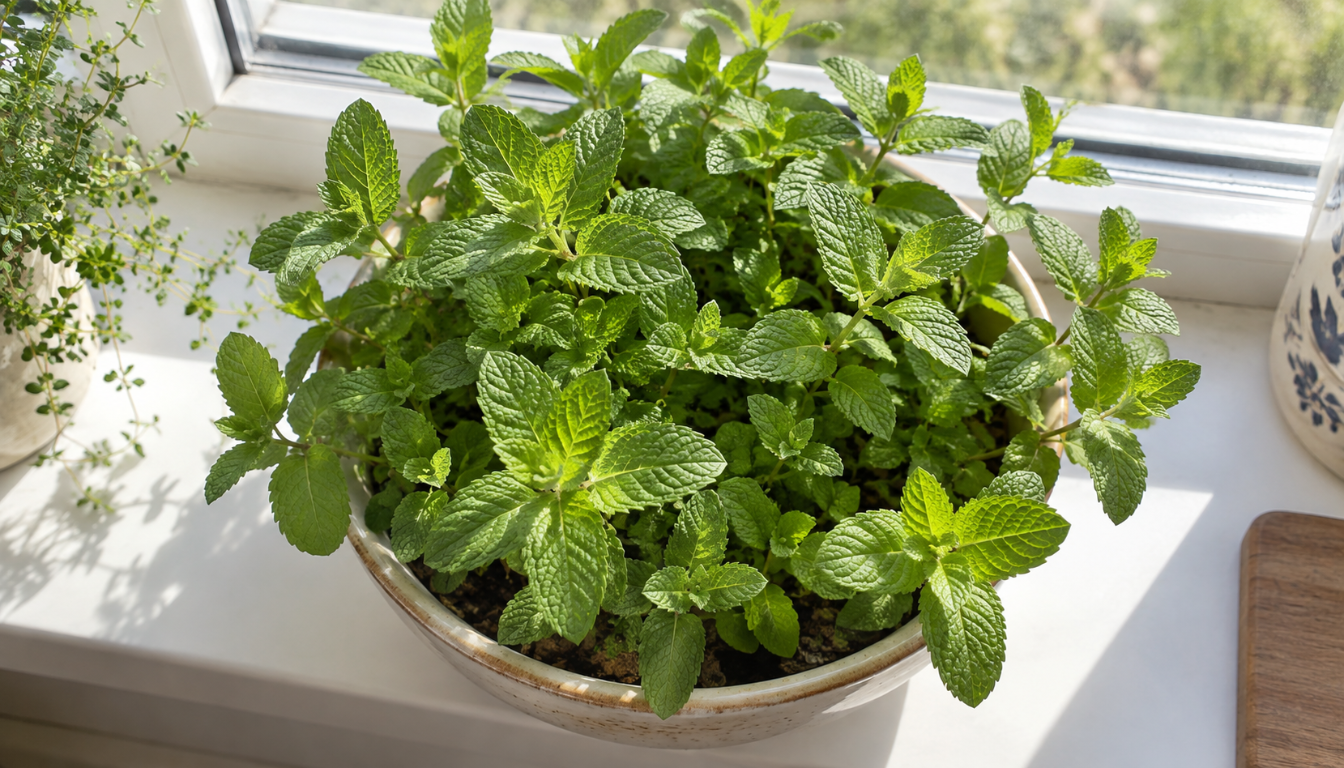
Mint is one of the easiest herbs to grow indoors, and there’s a good practical reason to keep it in a container in the first place. This is a plant that spreads aggressively by underground runners, and left unchecked in an outdoor bed, it will take over. Growing mint indoors, or in any contained pot, solves that problem while giving you fresh leaves for tea, cooking, and garnishes year round.
This guide covers everything you need for healthy indoor mint. That includes container and soil, light and humidity, watering, feeding, common problems, and how to keep it thriving long term.
Choosing a Container
Mint’s spreading root system needs room. A pot at least 8 to 12 inches deep and similarly wide gives the roots enough space without becoming unwieldy on a windowsill. Width matters as much as depth, mint spreads sideways through rhizomes, so a wide, shallow container often works better than a narrow, deep one.
Make sure whatever you choose has drainage holes. Mint likes consistently moist soil, but sitting in waterlogged soil invites root rot fast. A saucer underneath catches runoff without leaving the pot sitting in standing water.
A practical note on pot material: unglazed terracotta wicks moisture out of the soil faster than plastic or glazed ceramic. Since mint wants to stay reliably moist, plastic or glazed ceramic is generally the better choice indoors. That’s the opposite of the usual “terracotta breathes better” advice you’ll hear for most other houseplants.
Soil and Planting
Use a good-quality, well-draining potting mix rather than garden soil, which compacts in containers and drains poorly. Mint isn’t a particularly demanding feeder and doesn’t need heavily amended soil to start, a standard all-purpose potting mix works fine.
You have three practical starting points:
- A nursery starter plant, the fastest route to a full pot
- Seeds, which take a few weeks to germinate and a few months to reach a usable harvest
- Cuttings from an existing plant, the cheapest and often fastest method (see our dedicated propagating guide for the full process)
Light Requirements
Mint does best with bright, indirect light, a spot near a south or east-facing window usually works well. It can tolerate some direct morning sun, but intense afternoon sun through a window can scorch leaves, especially in summer.
If natural light is limited, a basic grow light on a 12 to 15 hour daily cycle is an easy substitute and keeps growth steady through winter months when window light is weaker.
Watering and Humidity
Water when the top inch of soil feels dry to the touch, rather than on a fixed schedule. The right frequency depends on your pot size, light levels, and home’s humidity. As a general guide, indoor mint often needs water roughly twice a week, but check the soil directly instead of guessing by the calendar.
Mint appreciates higher humidity than the average home provides, especially during winter heating season. Misting the leaves lightly between waterings helps, as does grouping it with other plants or setting the pot on a pebble tray with water underneath. Just make sure the pot itself isn’t sitting directly in the water.
Feeding
Mint isn’t a heavy feeder, but an occasional boost helps sustain vigorous growth in a container, where nutrients deplete faster than in open ground. A balanced, diluted liquid fertilizer every 4 to 6 weeks during the growing season is generally enough. Skip feeding in winter, when growth naturally slows.
Common Problems
Root rot: The most common issue with indoor mint, almost always caused by overwatering or poor drainage. Prevent it with well-draining soil, a pot with real drainage holes, and by not letting the pot sit in standing water.
Rust: A fungal disease showing up as orange or brown spots on leaves, usually encouraged by poor air circulation and overcrowding. Remove affected leaves promptly and improve airflow around the plant; a fungicide may be necessary for a persistent case.
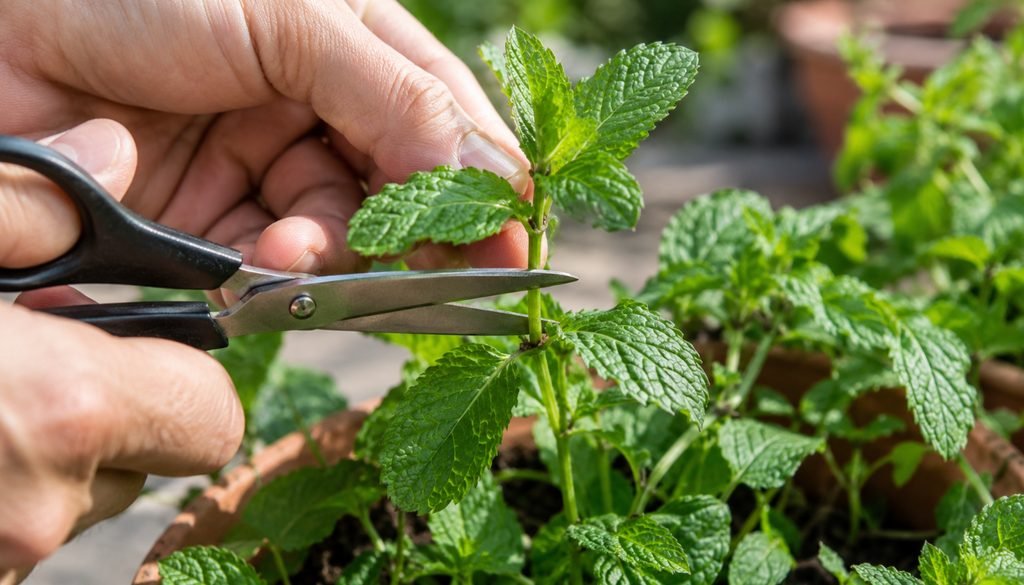
Leggy growth: Indoor mint can stretch and get leggy without enough light. Regular pruning, snipping stems back to just above a leaf node, encourages bushier, fuller growth rather than a few long, sparse stems.
Pests: Spider mites and aphids occasionally show up on indoor mint. Check the undersides of leaves periodically and treat early with insecticidal soap if you spot anything.
Repotting and Dividing
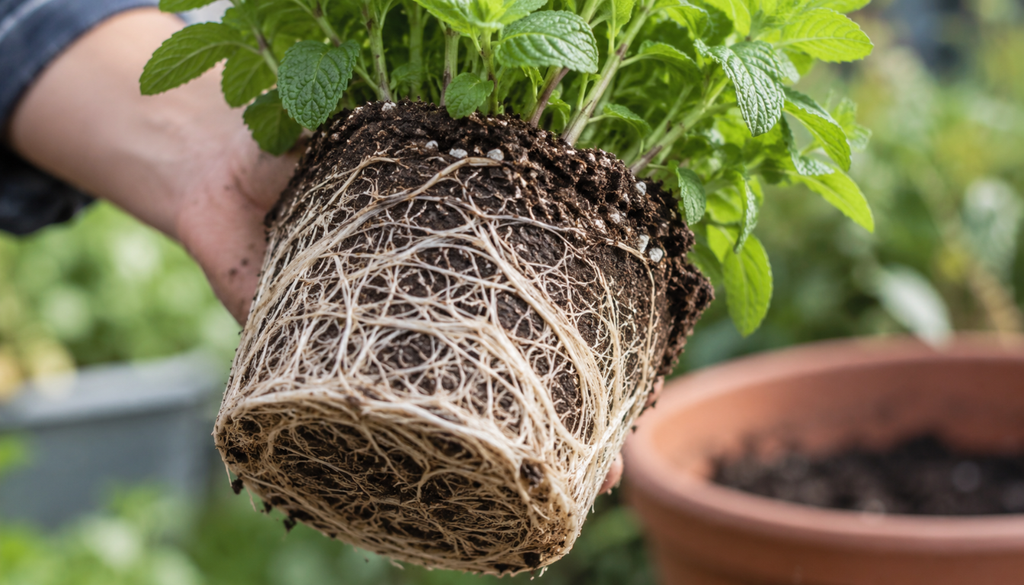
Mint’s vigorous rhizome growth means it reliably outgrows its container. This isn’t an occasional maintenance task you can skip, it’s a near-certainty for a plant this vigorous. Most indoor mint needs repotting or dividing roughly every 1 to 3 years, sometimes sooner for fast-growing varieties in ideal conditions.
Signs it’s time to repot:
- Roots visibly circling the inside of the pot or emerging from drainage holes
- The center of the plant dying back or thinning, with new growth only around the edges
- Growth slowing noticeably despite otherwise good care
- Soil drying out much faster than it used to between waterings
How to do it: Early spring, just before active growth resumes, is the best time. Remove the plant from its pot and inspect the root ball. If it’s densely tangled, you can either move it into a slightly larger pot with fresh potting mix, or divide it into two or three separate sections and start fresh pots with each. Dividing is also a practical way to multiply your plants or share cuttings. Water thoroughly after repotting, and hold off on fertilizing for the first few weeks to let the roots settle.
Harvesting
Once a plant is established, usually after a few months of steady growth, you can start harvesting regularly. Snip stems just above a leaf node rather than pulling leaves individually. This encourages the plant to branch out and produce more growth rather than getting leggy. Regular light harvesting actually keeps the plant healthier than letting it grow unchecked.
Popular Mint Varieties for Indoor Growing
Mint isn’t just one plant. Peppermint and spearmint are the two most common culinary varieties, and while their basic care needs are nearly identical to what’s covered above, they differ in flavor and best use:
- Peppermint has a sharper, more menthol-forward flavor, often preferred for tea and desserts
- Spearmint is milder and sweeter, common in savory cooking, mojitos, and Middle Eastern dishes like tabbouleh
If you’re growing a specific variety, our dedicated guides cover peppermint-specific and spearmint-specific care in more depth.
Before You Go – How to Grow Mint Indoors
Mint is about as forgiving as indoor herbs get, its real challenge isn’t keeping it alive, it’s keeping up with how much it wants to grow. Get the container size, light, and watering right, and you’ll likely be dividing plants to give away long before you have any trouble growing enough for yourself.
If you’re starting from a cutting rather than a nursery plant, our propagating guide walks through that process step by step. Growing mint alongside other herbs? Check our companion planting guide to see what pairs well with it. And if you’ve settled on a specific variety, our peppermint and spearmint guides go deeper on their individual care and best uses.
References – How to Grow Mint Indoors
Little Herb Encyclopedia, by Jack Ritchason; N.D., Woodland Publishing Incorporated, 1995
The Ultimate Healing System, Course Manual, Copyright 1985, Don Lepore
Planetary Herbology, Michael Tierra, C.A., N.D., Lotus Press, 1988
Handbook of Medicinal Herbs, by James A. Duke, Pub. CRP Second Edition 2007
The Complete Medicinal Herbal, by Penelope Ody, Published by Dorling Kindersley
Related Articles
Pros and Cons of Salvia: A Comprehensive Overview
Do Rabbits Eat Rhubarb? What Every Owner Should Know
Grow Carrots in a Bag: An Efficient Guide for Beginners
Frequently Asked Questions – How to Grow Mint Indoors
How deep does a container need to be to grow mint indoors?
Aim for at least 8 to 12 inches deep and similarly wide. Mint’s spreading root system benefits more from width than extra depth.
How often should I water indoor mint?
Check the soil rather than watering on a fixed schedule. Water when the top inch feels dry, which often works out to roughly twice a week indoors. This varies with light, pot size, and home humidity though, so check the soil directly rather than relying on a fixed schedule.
Can I grow mint indoors year round?
Yes. With consistent light, either a bright window or a grow light, and steady watering, mint can be harvested indoors throughout the year. That includes winter, when outdoor growing isn’t an option in most climates.
Why is my indoor mint plant getting leggy and sparse?
This usually points to insufficient light. Move it to a brighter spot or add a grow light, and prune regularly to encourage bushier growth rather than a few long, thin stems.
How often does indoor mint need repotting?
Roughly every 1 to 3 years for most indoor mint, though fast-growing varieties in ideal conditions may need it sooner. Watch for roots circling the pot, dieback in the center of the plant, or growth slowing down, all signs it’s time.
Is mint difficult to grow indoors compared to other herbs?
No, mint is one of the more forgiving herbs for indoor growing. Its main challenge is its vigorous spreading habit, which is actually less of a problem in a container than it would be in an open garden bed.