
The Herb Prof Team researches and writes our herbal guides, drawing on published research, traditional herbal references, and hands-on growing experience.
Propagating mint from cuttings is one of the easiest and fastest ways to grow your collection. It’s cheaper and quicker than starting from seed. A single healthy plant can give you several new starts, whether you’re expanding your own collection or sharing cuttings with someone else. This guide covers two reliable methods, water propagation and direct soil propagation, along with timing, aftercare, and common problems.
When to Take Cuttings
Late spring to early summer is the ideal window, when the parent plant is in active, healthy growth and hasn’t yet started flowering. Cuttings taken from a stressed, diseased, or flowering plant root less reliably, so start with a plant that’s clearly thriving.
Taking the Cutting
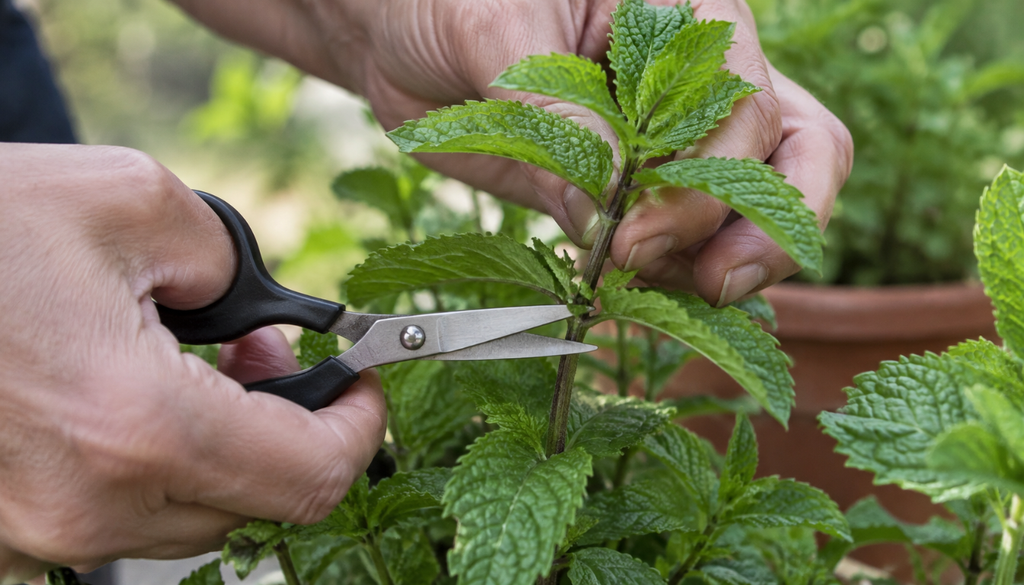
- Choose a healthy stem. Look for green, non-woody growth without flowers, roughly 4 to 6 inches long.
- Cut just below a node. A node is the point where leaves attach to the stem. This is where new roots will form, so the cut needs to be close to it.
- Strip the lower leaves. Remove leaves from the bottom half of the cutting. Any leaves left underwater or buried in soil will rot rather than help the cutting.
Method 1: Propagating Mint in Water
This is the simpler, more forgiving method, and a good choice if you want to actually watch the roots develop.
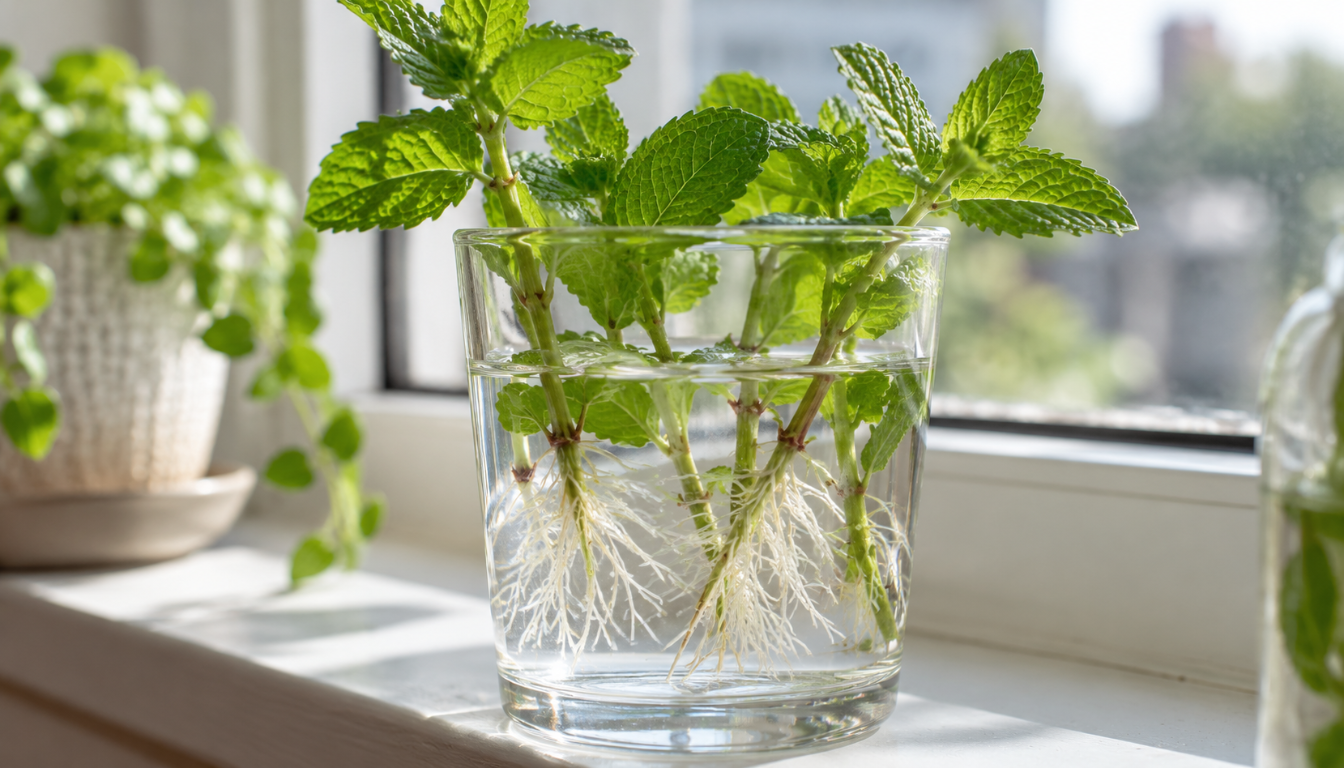
- Place the stripped cutting in a glass of water. Make sure the bare lower section is submerged and the remaining leaves stay above the waterline.
- Set the glass somewhere bright with indirect light, direct sun can overheat the water and stress the cutting.
- Change the water every 2 to 3 days to keep it fresh and prevent bacterial buildup, which can rot the stem before it roots.
- Roots typically begin appearing within about a week. They’re usually ready for potting once they reach an inch or two long, generally around the two-week mark.
- Once roots are established, transplant into potting soil. Keep it consistently moist for the first week or two while it adjusts to soil.
Method 2: Propagating Mint in Soil
This method skips the water stage entirely and tends to produce a sturdier root system, though it’s slightly less forgiving since you can’t see what’s happening underground.
- Dip the cut end in rooting hormone (optional, but it improves success rates, especially for less experienced growers).
- Plant the cutting directly into moist, well-draining potting soil, burying the stripped section.
- Keep the soil consistently moist and the cutting in a warm, humid spot until roots establish, typically 2 to 3 weeks.
- A clear plastic bag or humidity dome loosely placed over the cutting helps retain moisture during this period. Just make sure it’s not sealed airtight.
Aftercare for New Plants
Once your cutting has rooted and is growing in its permanent pot, treat it the same as an established mint plant: bright, indirect light, soil kept consistently moist but not waterlogged, and a diluted liquid fertilizer every few weeks once new growth is clearly underway. For full ongoing care details, including container size, watering, and common problems, see our complete guide to growing mint indoors.
Common Problems
Cutting turns black or mushy: Almost always rot from water that wasn’t changed often enough, or from leaves left submerged. Start a new cutting with fresh water and make sure no leaves are underwater this time.
No roots after 3+ weeks: The cutting may not have been taken from healthy enough growth, or conditions were too cold. Try again with a fresh cutting from actively growing stem, in a warmer spot.
Roots form but the plant wilts after transplanting: Some shock is normal for the first few days. Keep the soil consistently moist and out of direct sun during this adjustment period, it usually recovers within a week.
Can You Propagate Mint from a Grocery Store Bunch?
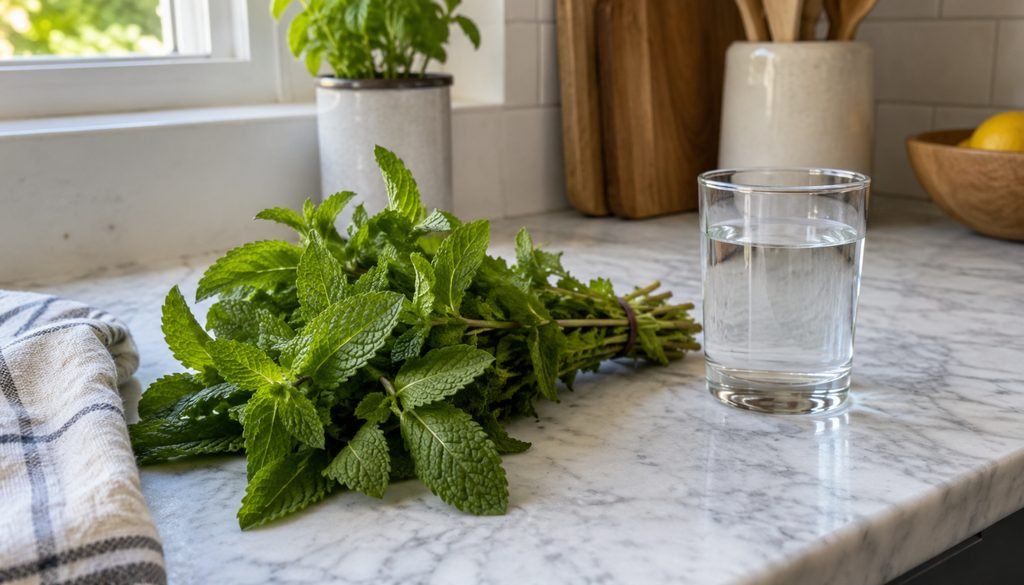
Yes, and it works well. A fresh bunch of mint from the produce section can go straight into either the water or soil method above, you don’t need cuttings from a live plant to get started.
A few practical differences worth knowing:
- Pick the freshest-looking bunch, firm stems and vibrant green leaves, avoiding anything wilted, slimy, or with a musty smell.
- Organic is worth choosing if available, since you’re rooting the actual stem in water or soil, and conventionally grown bunches may carry pesticide residue on the part you’re propagating.
- Success rates run a bit lower than cuttings from a living plant, since grocery store mint has already been cut and handled. Using your freshest, firmest stems first, and skipping any that look limp, improves your odds.
Otherwise, the process is identical: trim the stems, strip the lower leaves, and follow either the water or soil method above.
Before You Go – Propagating Mint From Cuttings
Propagating mint is about as beginner-friendly as plant propagation gets, both methods above have a high success rate even for first-timers. Once you’ve got the hang of it, a single mint plant can keep you in an endless supply of new starts.
For full care once your cutting is established, see our complete guide to growing mint indoors. It also covers repotting mature plants down the line.
References – Propagating Mint From Cuttings
Little Herb Encyclopedia, by Jack Ritchason; N.D., Woodland Publishing Incorporated, 1995
The Ultimate Healing System, Course Manual, Copyright 1985, Don Lepore
Planetary Herbology, Michael Tierra, C.A., N.D., Lotus Press, 1988
Handbook of Medicinal Herbs, by James A. Duke, Pub. CRP Second Edition 2007
The Complete Medicinal Herbal, by Penelope Ody, Published by Dorling Kindersley
Related Articles
Do Cucumbers Need a Trellis? Growing Cucumbers Vertically
Coffee Compost: Turning Your Used Grounds into Rich Soil
Frequently Asked Questions – Propagating Mint From Cuttings
Which propagation method works better, water or soil?
Both are reliable. Water propagation lets you see root development directly, which some growers find easier to judge. Soil propagation tends to produce a sturdier root system from the start, since the roots never have to adjust from water to soil. Either is a good choice.
How long does it take for a mint cutting to root?
Roughly 1 to 3 weeks depending on the method and conditions. Water propagation often shows visible roots within a week. Soil propagation typically takes 2 to 3 weeks before roots grow in enough to notice growth above the soil.
Do I need rooting hormone to propagate mint?
No, mint roots easily without it, but a rooting hormone dip can improve success rates and speed things up slightly, particularly for soil propagation. It’s optional, not necessary.
Can I propagate mint any time of year?
Late spring to early summer gives the best results, when the parent plant is in active growth. It’s possible at other times, especially if you’re growing indoors under consistent light. Success rates tend to be lower outside the plant’s natural active growing period, though.
Why did my mint cutting turn black and mushy?
This is almost always rot, usually because you didn’t change the water often enough, or because leaves sat submerged and began decaying. Start fresh with a new cutting, change the water every 2 to 3 days, and make sure only the bare stem is underwater.