
The Herb Prof Team researches and writes our herbal guides, drawing on published research, traditional herbal references, and hands-on growing experience.
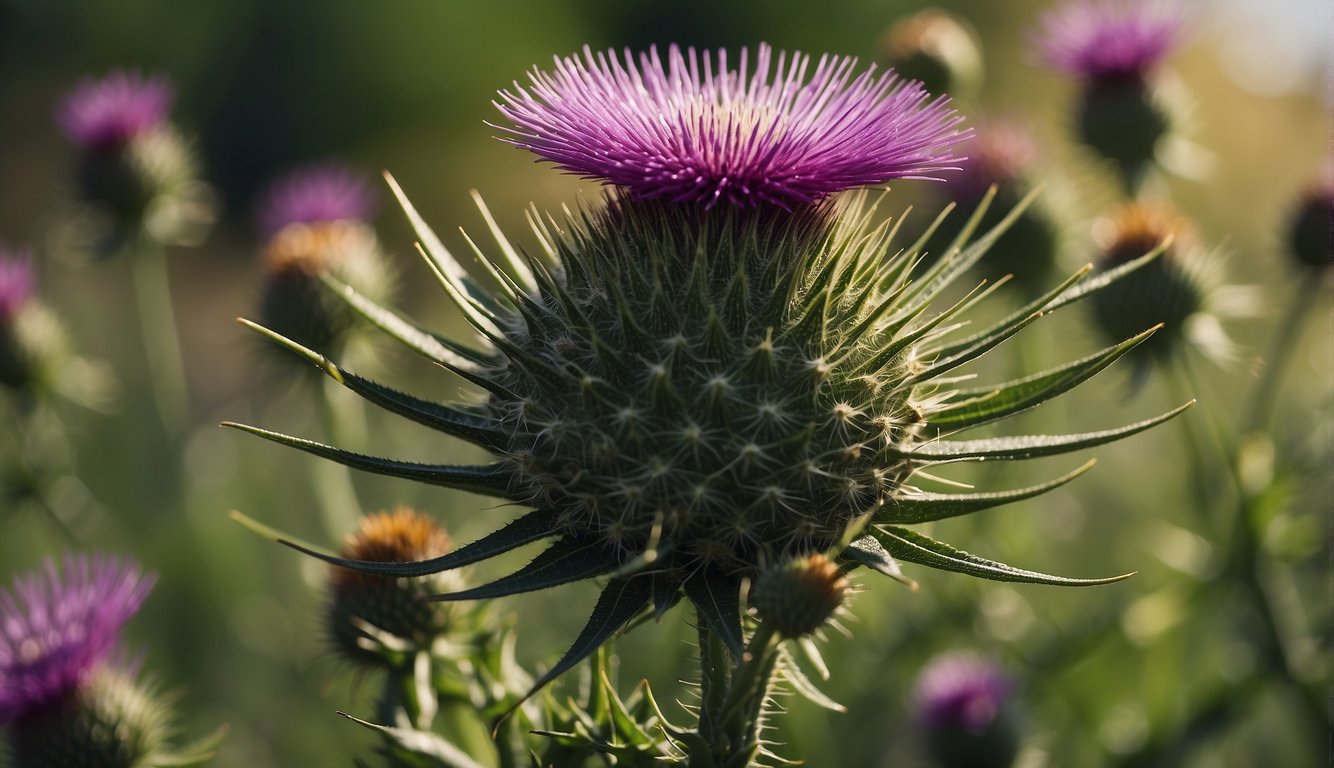
Milk thistle benefits are mainly linked to its long traditional use for liver and gallbladder health and to its active complex, silymarin. In addition, Milk thistle (Silybum marianum) is a spiky, purple‑flowering plant from the Mediterranean region, and silymarin combines flavonolignans with antioxidant and anti‑inflammatory properties that may help protect liver cells from toxins and oxidative stress.
Modern research suggests that standardized milk thistle extracts could offer modest benefits in some chronic liver conditions and may also influence blood sugar, cholesterol, and inflammation, although results are mixed and it is not a cure for liver disease.
What Is Milk Thistle?
Milk thistle is a member of the Asteraceae (daisy) family, native to the Mediterranean but now naturalized in many parts of the world. It grows up to about 2–3 meters, with large, pale‑veined leaves and distinctive purple flower heads.
Active Components: Silymarin and More
The seeds (fruits) of milk thistle contain silymarin, a mixture of flavonolignans such as silybin, silydianin and silychristin. Silymarin appears to:
- Act as a direct antioxidant and increase the body’s own antioxidant defenses
- Help stabilize liver cell membranes and reduce toxin uptake
- Support protein synthesis and liver cell regeneration in experimental models
Milk thistle products are usually standardized extracts of the seeds, delivered as capsules, tablets, tinctures or teas. Standardization (for example, 70–80% silymarin) makes dosing more predictable.
Primary Milk Thistle Benefits
Liver protection and chronic liver disease
Traditional uses include fatty liver, hepatitis, cirrhosis, and protection against environmental toxins. More importantly, modern research suggests that standardized silymarin extracts may offer modest support in some of these conditions, although results are mixed.
For example, preclinical and clinical data suggest that silymarin can:
- Reduce oxidative stress and inflammation in liver tissue
- Stabilize hepatocyte membranes and limit toxin entry
- Support regeneration of liver cells in some settings
However, large trials in chronic hepatitis C and other advanced liver diseases have shown mixed or limited benefits on hard outcomes, even when liver enzymes improve. Current expert opinion is that milk thistle can be supportive, but it does not replace standard medical treatment for liver disease.
Antioxidant effects and reduced oxidative stress
Oxidative stress contributes to the progression of many chronic conditions, including liver disease, cardiovascular disease and diabetes. Silymarin:
- Directly scavenges reactive oxygen species (ROS)
- Increases cellular antioxidant enzymes such as superoxide dismutase and glutathione peroxidase
- Helps maintain glutathione levels in the liver and blood
These actions underpin milk thistle’s reputation as a “natural detoxifier”, although detoxification still fundamentally depends on liver function, diet, and overall health, not on a single herb.
Anti‑inflammatory properties
Chronic, low‑grade inflammation is a key driver of many modern diseases. Experimental and early clinical data indicate that silymarin can:
- Reduce pro‑inflammatory cytokines
- Inhibit some inflammatory signaling pathways
- Decrease markers of oxidative and inflammatory stress in metabolic syndrome and liver disease
These anti‑inflammatory effects are promising, but evidence is not yet strong enough to recommend milk thistle as a stand‑alone anti‑inflammatory treatment.
Potential anti‑cancer effects (early evidence)
Laboratory and animal studies suggest that silymarin may:
- Slow the growth of certain tumor cells
- Enhance apoptosis (programmed cell death) in some cancer models
- Reduce therapy‑related liver toxicity in some experimental settings
However, human data are limited and mixed. At present, milk thistle should be seen, at most, as a possible supportive agent under specialist guidance in oncology, not as a primary anti‑cancer therapy.
Milk Thistle and Metabolic Health

Diabetes and blood sugar control
Several small clinical trials and reviews suggest that standardized silymarin extracts may modestly improve:
- Fasting blood glucose
- HbA1c (long‑term blood sugar)
- Insulin resistance indices in type 2 diabetes and metabolic syndrome
In one trial, silymarin supplementation reduced fasting glucose, HbA1c, total cholesterol, LDL cholesterol and triglycerides in people with type 2 diabetes compared with placebo. Therefore, these results are encouraging but not definitive, and larger, high‑quality trials are still needed.
Milk thistle may therefore be considered as a supportive adjunct in metabolic care. Nonetheless, it should never replace diet, exercise, weight management or prescribed diabetes medications.
Cholesterol and cardiovascular health
Some human studies and reviews report that milk thistle extracts can slightly reduce:
- Total cholesterol
- LDL (“bad”) cholesterol
- Triglycerides
Antioxidant and anti‑inflammatory effects may also indirectly benefit cardiovascular health. However, changes in lipids are generally modest and should be viewed as a potential bonus rather than a primary reason to use milk thistle.
Other Potential Benefits
Beyond liver and metabolic effects, several other potential milk thistle benefits are being explored, although most of the evidence here is early or experimental.
Bone health (early data)
Animal and laboratory studies suggest that silymarin may encourage bone formation and reduce bone breakdown, possibly by influencing bone‑forming cells and bone mineralization. Human data are very limited, so it is too early to recommend milk thistle specifically for osteoporosis prevention, but this is an area of active research.
Skin and acne
Because of its antioxidant and anti‑inflammatory effects, milk thistle has been investigated for skin conditions, including acne and photoaging. Some small studies and topical formulations show reduced oxidative stress and inflammation in the skin, but clinical evidence is still sparse. At present, it may be viewed as a supportive measure alongside conventional skin care.
Digestive system and gallbladder support
Traditional use includes support for digestion, mild indigestion and gallbladder function. By enhancing bile production and flow, milk thistle may help some people with fat digestion and feelings of post‑meal heaviness, particularly when combined with other bitter herbs such as dandelion and artichoke.
Milk Thistle in Special Populations
Pregnancy and breastfeeding
Evidence on milk thistle use in pregnancy and breastfeeding is very limited. Although some experimental data do not show major toxicity, authoritative sources recommend avoiding milk thistle supplements during pregnancy and lactation unless specifically advised by a clinician. Safety cannot be assumed in these groups.
Older adults
Milk thistle is sometimes used by older adults concerned about fatty liver, polypharmacy and oxidative stress. Potential benefits must be balanced with a higher likelihood of:
- Multiple concurrent medications (raising interaction risks)
- Underlying liver, kidney or cardiovascular conditions
- Increased sensitivity to side effects
Older adults should always discuss milk thistle with their physician or pharmacist before starting it, and begin at lower doses with careful monitoring.
Safety, Side Effects and Interactions
Common adverse effects
Taken at typical oral doses, standardized milk thistle extracts are generally considered safe for most adults. Reported side effects include:
- Mild gastrointestinal symptoms (nausea, bloating, diarrhea or constipation)
- Headache
- Itching or mild skin reactions in some individuals
Most side effects are mild and transient. Persistent or severe symptoms should prompt stopping the supplement and consulting a healthcare professional.
Allergies
Milk thistle is in the Asteraceae (daisy) family, along with ragweed, marigold and chrysanthemum. People who are allergic to these plants may have a higher risk of allergic reactions to milk thistle, including rare but serious reactions such as anaphylaxis.
There is also concern that milk thistle might affect estrogen‑related pathways, so people with hormone‑sensitive conditions such as certain breast, uterine or ovarian cancers, endometriosis or uterine fibroids should avoid it unless an oncology or gynecology specialist explicitly approves its use.
Drug interactions
Milk thistle can influence liver enzymes and transporters involved in drug metabolism, particularly cytochrome P450 3A4 (CYP3A4) and some UGT pathways. This means it may increase or decrease blood levels of certain medications, including:
- Some statins
- Certain oral antidiabetic drugs
- Blood thinners
- Immunosuppressants and some chemotherapy agents
- Some antidepressants and antianxiety medications
Because interaction patterns are complex, anyone taking regular prescription medicines should not start milk thistle without checking with their doctor or pharmacist.
How to Use Milk Thistle
Forms and typical doses
Milk thistle is available as:
- Standardized capsules or tablets
- Liquid extracts and tinctures
- Teas made from seeds or above‑ground parts (much milder)
Many clinical studies use standardized extracts providing roughly 140–210 mg of silymarin two or three times per day (total 280–630 mg daily). Exact dosing should follow product labels and be adapted case‑by‑case with a healthcare professional, especially in people with chronic disease.
Choosing a quality supplement
When selecting a milk thistle product, look for:
- Clear standardization (for example, “70–80% silymarin”)
- cGMP manufacturing and, ideally, third‑party testing
- Minimal unnecessary fillers and clear labeling
- A reputable brand with transparent quality information
In particular, people with complex health conditions, multiple medications, or a history of significant allergies should only use milk thistle under professional guidance.
Milk Thistle and Mushroom Poisoning
Milk thistle (specifically silibinin, a major silymarin component) has been used intravenously in some European settings as part of the management of poisoning by death cap mushroom (Amanita phalloides). Experimental and clinical experience suggests it may help block toxin uptake into liver cells and reduce liver damage when given promptly.
This use is highly specialized and not a home remedy. Anyone with suspected mushroom poisoning requires emergency medical care; over‑the‑counter milk thistle products are not adequate treatment.
Milk Thistle and Traditional Medicine
Milk thistle has a long history in European herbalism as a remedy for “congested” livers, gallbladder issues and general liver weakness. It also appears in some traditional Chinese and other herbal systems under names like “holy thistle,” often associated with purification or protection.
Today, milk thistle occupies an interesting space: it is one of the most researched herbal liver supports, with clear biochemical effects, yet still limited, inconsistent clinical benefits in serious liver disease. As such, it is best viewed as a bridge between traditional practice and modern complementary care.
How Milk Thistle Fits Into Your Health Plan
Taken together, these milk thistle benefits fit best into a broader health plan rather than standing alone.
Used thoughtfully, milk thistle can:
- Provide antioxidant and mild anti‑inflammatory support
- Help protect liver cells from some forms of stress and toxins
- Offer modest benefits in certain metabolic and liver‑related contexts
It works best as part of a broader strategy that includes:
- Limiting alcohol and avoiding unnecessary hepatotoxic substances
- Following a balanced diet rich in vegetables, fiber and healthy fats
- Managing weight, blood sugar and blood pressure
- Staying physically active
- Working closely with your healthcare team for any diagnosed liver or metabolic condition
For more focused guidance on specific preparations, you can explore our detailed pieces on milk thistle tea, milk thistle tincture, and milk thistle supplements for liver detox, which show how this herb can be used in different forms within a coherent, evidence‑aware approach to liver support.
Before You Go – Milk Thistle Benefits

Milk thistle can be a useful herb to explore if your goal is gentle liver support, antioxidant protection, or a more evidence-aware approach to metabolic health. Still, the research is mixed in several areas, so it makes most sense as a supportive tool rather than a cure or a substitute for medical care.
If you want to explore practical ways to use this herb, our guide to milk thistle tea explains how to make it, when it may help, and who should be cautious. For a stronger homemade preparation, the milk thistle tincture recipe walks through a simple step-by-step method. And if you prefer ready-made options, our review of milk thistle supplements for liver detox compares popular products and what to look for on the label.
Used thoughtfully, milk thistle fits best into a bigger health plan that includes a balanced diet, healthy weight, moderate alcohol intake, movement, and regular medical follow-up when needed.
Selected Studies and Articles
https://www.ncbi.nlm.nih.gov/pmc/articles/PMC7255183/https://pubmed.ncbi.nlm.nih.gov/19839067/
https://www.ncbi.nlm.nih.gov/pmc/articles/PMC9588316/
Milk thistle benefits and side effects in fatty liver disease (consumer summary)
Milk thistle overview and safety: Mayo Clinic monograph
References – Milk Thistle Benefits
Little Herb Encyclopedia, by Jack Ritchason; N.D., Woodland Publishing Incorporated, 1995
The Ultimate Healing System, Course Manual, Copyright 1985, Don Lepore
Planetary Herbology, Michael Tierra, C.A., N.D., Lotus Press, 1988
Handbook of Medicinal Herbs, by James A. Duke, Pub. CRP Second Edition 2007
The Complete Medicinal Herbal, by Penelope Ody, Published by Dorling Kindersley
Related Articles
Milk Thistle Supplements for Liver Detox: Top Options
Biblical Myrrh: The Ancient Resin with Modern Benefits
Milk Thistle Tea: Benefits, Detox Uses, and Simple Recipes
Milk Thistle Tincture Recipe: A Simple and Effective Guide
Frequently Asked Questions – Milk Thistle Benefits
How does milk thistle support liver health?
Milk thistle’s main active complex, silymarin, appears to help protect liver cells through antioxidant, anti-inflammatory, and membrane-stabilizing effects. It may also support liver cell regeneration in some contexts, although clinical results are mixed and it does not replace standard treatment for liver disease.
Can milk thistle help with fatty liver?
Some studies suggest that standardized silymarin extracts may improve certain liver enzymes and markers in people with fatty liver disease, but the evidence is not fully consistent. Milk thistle is best viewed as a possible add-on to diet, exercise, weight management, and medical care, not as a stand-alone solution.
Does milk thistle help with blood sugar or diabetes?
Several small trials and reviews suggest that milk thistle may modestly improve fasting glucose, HbA1c, and insulin resistance in people with type 2 diabetes or metabolic syndrome. These findings are promising, but milk thistle should never replace prescribed diabetes treatment.
Can milk thistle lower cholesterol?
Some research suggests that milk thistle extracts may slightly reduce total cholesterol, LDL cholesterol, and triglycerides. These effects are usually modest, so they should be seen as a possible bonus rather than the main reason to use the herb.
Is milk thistle safe to take every day?
Milk thistle is generally considered well-tolerated for most adults when taken in appropriate doses. Even so, daily use should be discussed with a healthcare professional if you have liver disease, take prescription medication, or have a history of significant allergies.
What are the most common side effects of milk thistle?
The most commonly reported side effects are mild digestive symptoms such as nausea, bloating, diarrhea, or constipation, along with occasional headache or skin irritation. People allergic to ragweed, daisies, marigolds, or related plants may be more likely to react to milk thistle.
Does milk thistle interact with medications?
Yes, it can. Milk thistle may influence liver enzymes and drug transport pathways involved in metabolizing certain medicines. That means it may interact with some statins, diabetes medicines, blood thinners, immunosuppressants, chemotherapy agents, and other prescription drugs, so medical advice is important before combining them.
Is milk thistle safe during pregnancy or breastfeeding?
There is not enough high-quality safety evidence to recommend routine use during pregnancy or breastfeeding. Because of that uncertainty, most authoritative sources advise avoiding milk thistle supplements unless a clinician specifically recommends them.
Can milk thistle cure liver disease?
No. Milk thistle may provide supportive benefits in some liver-related conditions, but it is not a cure for hepatitis, cirrhosis, fatty liver disease, or other chronic liver problems. It works best as part of a wider care plan guided by a healthcare professional.