
The Herb Prof Team researches and writes our herbal guides, drawing on published research, traditional herbal references, and hands-on growing experience.
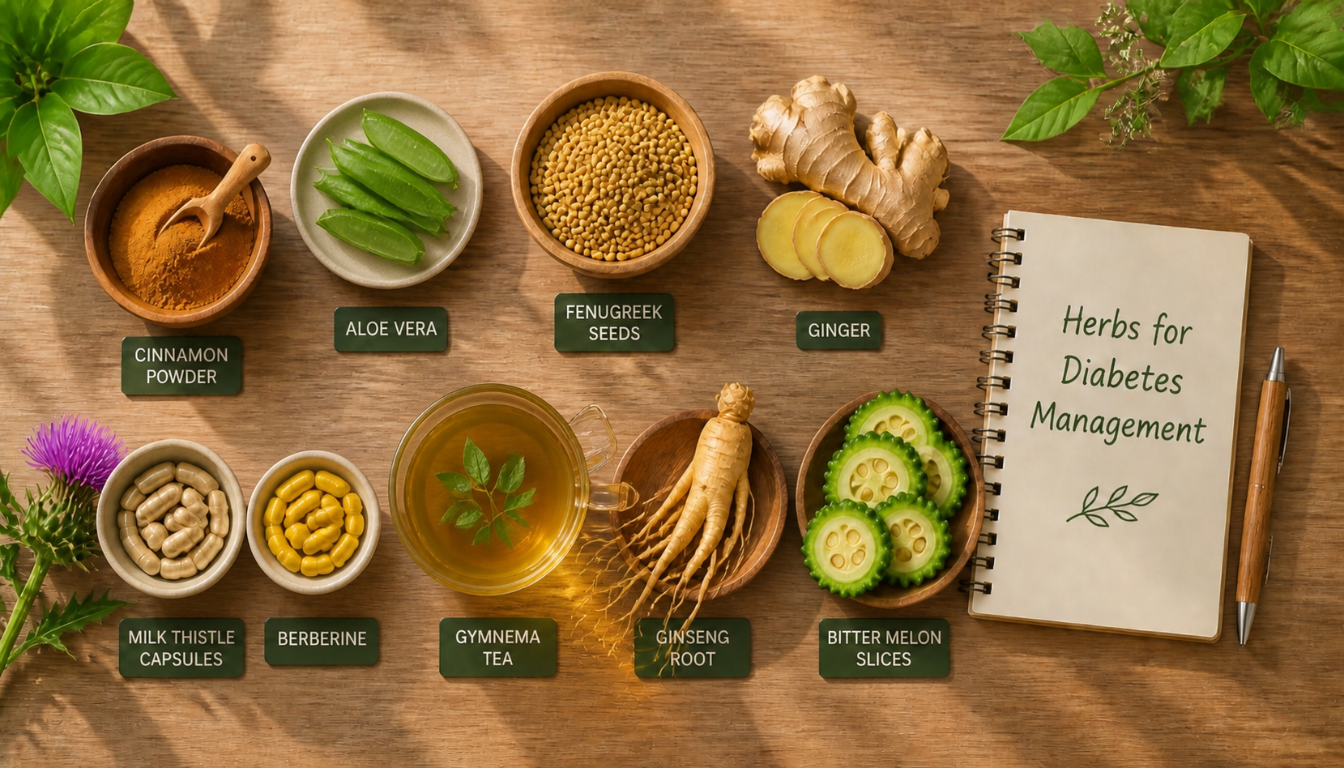
Support your wellness journey with time-tested herbal allies that work alongside conventional diabetes care. From traditional remedies used for centuries to modern scientific research, these herbs offer a natural way to complement diabetes management strategies. They never replace prescribed treatment. By integrating selected herbs into a healthy lifestyle under medical supervision, some people may find it easier to maintain more stable blood sugar levels.
Understanding Type 2 Diabetes
Type 2 diabetes is a long-term condition in which the body does not use insulin properly or does not produce enough of it. This leads to higher-than-normal blood sugar levels. Over time, these levels can damage blood vessels, nerves, and organs if not well managed.
Standard care focuses on diet, physical activity, weight management, and medications prescribed by a healthcare professional. Many people also explore carefully chosen herbs and supplements as an additional layer of support. These are always used alongside, not instead of, their regular treatment plan.
The Role of Herbs and Supplements
Across many traditional systems of medicine, herbs and plant-based preparations have been used to support metabolic health and blood sugar balance. Modern research suggests some herbs may help improve insulin sensitivity and support glucose metabolism. They may also reduce inflammation and oxidative stress, which are both relevant to diabetes. However, responses vary between individuals, and evidence quality is mixed. Herbs can also interact with medications, so they should only be added with your doctor’s knowledge and approval.
1. Aloe Vera: A Natural Blood Sugar Regulator
Antioxidant Properties
Many people know aloe vera for its soothing effects on the skin, but the plant also contains antioxidants that may help neutralize free radicals and reduce oxidative stress. Oxidative stress can contribute to diabetes complications. This antioxidant activity may therefore offer gentle supportive benefits for people living with diabetes.
Possible Effects on Insulin Sensitivity
Some early research suggests aloe vera preparations may modestly improve markers of insulin sensitivity. They may also help fasting blood sugar in certain individuals. These findings are preliminary and do not mean aloe vera can control diabetes on its own, but they do explain why it sometimes appears in complementary care plans.
Research and Safety Considerations
Choose products from reputable manufacturers and avoid very high doses. Discuss use with your healthcare provider, especially if you take blood-sugar–lowering medication, have digestive issues, or are pregnant.
A 2021 overview of systematic reviews found moderate-to-high quality evidence that aloe vera significantly reduces fasting blood glucose (SMD −5.61, p<0.001) and HbA1c (MD −0.95, p=0.02) in people with type 2 diabetes.
Alinejad-Mofrad S et al. (2021). Effectiveness of aloe vera in patients with type 2 Diabetes Mellitus and pre-diabetes: An overview of systematic reviews. Journal of Herbal Medicine
How to Use It
Most research on aloe for blood sugar has used small oral doses of juice or standardized capsules alongside prescribed diabetes medication, not as a stand‑alone treatment. If you and your healthcare provider decide to try internal aloe, stick to food‑like amounts from products labeled for internal use. Monitor your blood sugar more often. Aloe can sometimes amplify the effect of diabetes drugs.
2. Berberine: A Plant Compound Studied for Blood Sugar
How Berberine Works
Berberine is a naturally occurring compound found in plants such as goldenseal and barberry and has long been used in traditional Chinese and Ayurvedic medicine. Research indicates that berberine can activate an enzyme called AMP-activated protein kinase (AMPK), which plays a key role in how the body uses glucose and fats. Through this pathway, berberine may help support healthier blood sugar and lipid profiles in some people.
Insulin Sensitivity and Blood Sugar
Several clinical studies suggest berberine can improve insulin sensitivity and lower fasting blood glucose and HbA1c when used as an adjunct to diet and medication. In some trials, its effects were comparable to standard oral diabetes drugs. Study designs and doses vary, and researchers still need to do more long-term studies.
Clinical Evidence and Safety
Because berberine can influence how the liver processes drugs, it may interact with many medications. These include medicines for diabetes, blood pressure, and cholesterol. It can also cause digestive side effects like nausea, cramping, or constipation in some people. Always work with your doctor or pharmacist to determine whether berberine is appropriate for you and never stop or change prescribed medication without medical guidance.
A 2022 meta-analysis in PubMed found berberine significantly reduced fasting plasma glucose (WMD −0.82 mmol/L), HbA1c (WMD −0.63%), and 2-hour post-meal blood glucose (WMD −1.16 mmol/L) compared to placebo, without increasing hypoglycemia risk.
Xie et al. (2022). Glucose-lowering effect of berberine on type 2 diabetes: A systematic review and meta-analysis. PubMed. PMID: 36467075.
How to Use It
Berberine is usually taken as a standardized supplement, often in divided doses with meals. The right dose and timing depend on your health and the medicines you already use. Because berberine can interact with metformin, blood thinners and some cholesterol drugs, start it only under medical supervision. Your doctor can then watch for side effects and lab changes.
3. Cinnamon: A Familiar Spice with Metabolic Potential
How Cinnamon May Act
Cinnamon contains bioactive compounds that appear to influence insulin receptors and cellular glucose uptake. Laboratory and some clinical studies suggest cinnamon may help the body use insulin more efficiently. It may also modestly improve fasting blood sugar in some people with type 2 diabetes or insulin resistance.
Dosage and Long-term Use
Research trials often use doses ranging from about 1 to 6 grams of cinnamon powder per day, but results are mixed and not all studies show benefit. Cassia cinnamon in large amounts can be high in coumarin, a compound that may stress the liver in susceptible people. It is safer to stay within food-like amounts unless your healthcare provider recommends otherwise. Ceylon (“true”) cinnamon is lower in coumarin and may be a better choice when used regularly.
A 2023 meta-analysis of 24 randomised controlled trials found cinnamon supplementation produced statistically significant reductions in fasting blood sugar (SMD −1.32, p<0.001) and HbA1c (SMD −0.67, p=0.011) in people with type 2 diabetes.
Zare Javid A et al. (2023). The effect of cinnamon supplementation on glycemic control in patients with type 2 diabetes mellitus: An updated systematic review and dose-response meta-analysis of RCTs. Phytotherapy Research.
How to Use It
Cinnamon is easiest to use in food. Adding small amounts to oatmeal, yogurt, smoothies or baked dishes lets you include it regularly without large supplemental doses. Trials have used a wide range of doses, but results are mixed and high intakes of cassia cinnamon can stress the liver. It is safer to stay within culinary amounts unless your healthcare provider advises otherwise and monitors you.
4. Fenugreek: A Fiber-Rich Seed

Blood Sugar and Fiber
Fenugreek seeds are rich in soluble fiber. This fiber forms a gel-like substance in the digestive tract and slows carbohydrate absorption. This slower absorption can help blunt post-meal blood sugar spikes. It may also improve insulin response when used alongside diet and medication.
Evidence and Side Effects
Clinical studies have found that fenugreek may modestly lower fasting glucose and improve certain metabolic markers in people with type 2 diabetes. However, high doses can cause digestive discomfort such as bloating, gas, or diarrhea, and the seeds may interact with blood-thinning medications. Start low, increase gradually if advised, and always clear new supplements with your healthcare provider.
A 2023 systematic review concluded that fenugreek improves overall glycaemic control parameters and lipid profile safely, with combined fenugreek and nutrition therapy showing the strongest blood glucose reductions.
Kim et al. (2023). The Effect of Fenugreek in Type 2 Diabetes and Prediabetes: A Systematic Review. PMC10531284.
How to Use It
Fenugreek seeds can be soaked overnight and blended into smoothies, or lightly toasted and added to curries and savoury dishes, making it easier to benefit from their soluble fibre. Some studies and traditional practice use several grams of seeds per day. Because higher amounts may cause digestive upset and can interact with blood-sugar and blood-thinning medicines, it is best to start with small culinary quantities and increase only if your doctor agrees.
5. Ginger: Anti-Inflammatory Support
Potential Benefits for Blood Sugar
Ginger has a long history in traditional medicine and is widely used for nausea and digestive support. Emerging research suggests ginger may also help modestly lower fasting blood sugar, and it may improve some markers of insulin sensitivity when combined with lifestyle measures. However, evidence is mixed: a 2024 meta-analysis found no significant overall effect on fasting blood glucose or HbA1c from ginger supplementation, and ginger should not be relied upon as a primary blood sugar strategy.
Safety and use
Ginger is generally well tolerated in culinary amounts, though concentrated extracts can cause heartburn or interact with blood-thinning medications in some individuals. If you use capsules or tinctures, choose standardized products from trusted brands and let your healthcare team know, particularly if you take anticoagulant drugs or diabetes medications.
How to Use It
Ginger can be included as fresh or dried spice in cooking, or consumed as tea by steeping fresh slices or using tea bags, which many people find easier to tolerate than capsules. Clinical trials of ginger supplements in type 2 diabetes generally use standardized capsules, but because evidence is still evolving and ginger can interact with blood thinners, you should speak with your healthcare provider before using concentrated supplements and monitor your blood sugar for any changes.
6. Ginseng: Balancing Glucose Regulation
Active Components and Effects
Ginseng contains compounds called ginsenosides. These are believed to influence how the body processes carbohydrates and responds to insulin. Some clinical studies suggest certain types of ginseng may modestly improve post-meal blood sugar and overall glycemic control when added to existing treatment plans.
Evidence and Safety
Results vary by ginseng species, preparation, and dose, and long-term safety data are limited. Ginseng can cause insomnia or nervousness in some people and may interact with blood sugar, blood pressure, and blood-thinning medications. Always consult your doctor before using ginseng, especially if you already take prescription drugs or have cardiovascular conditions.
A randomised controlled trial found Korean red ginseng significantly reduced post-meal plasma glucose by 8–11% and fasting insulin index by 33–38% compared to placebo over 12 weeks, though HbA1c did not change significantly.
Vuksan V et al. (2008). Korean red ginseng (Panax ginseng) improves glucose and insulin regulation in well-controlled, type 2 diabetes: Results of a randomized, double-blind, placebo-controlled study. PubMed. PMID: 16860976.
How to Use It
Ginseng is usually taken as tea, capsules, or liquid extracts, often in the morning or early afternoon to avoid interfering with sleep. Doses in clinical studies vary, so it is safer to choose a standardized product and follow the manufacturer’s instructions. Ask your healthcare provider to check that it does not clash with your diabetes, blood pressure, or blood-thinning medications.
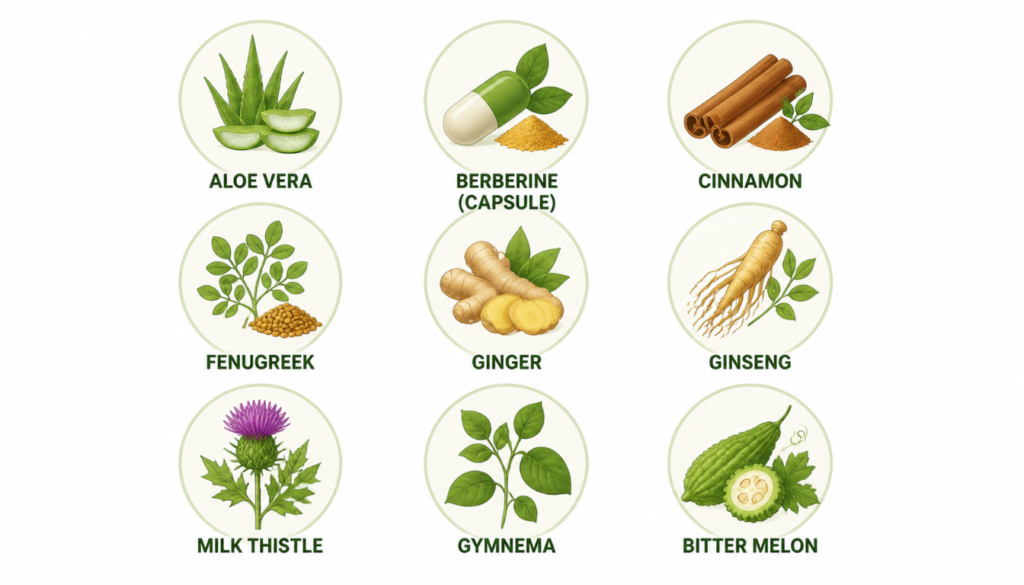
7. Milk Thistle: Liver Support with Possible Metabolic Effects
Antioxidant and Liver-protective Actions
Milk thistle has traditionally been used to support liver health and contains a flavonoid complex known as silymarin. Silymarin has antioxidant and anti-inflammatory properties that may help protect liver cells from damage. This is important because the liver plays a central role in glucose and fat metabolism.
Blood Sugar Research
Some small studies suggest milk thistle may modestly improve fasting blood sugar and certain lipid markers in people with type 2 diabetes. These findings are encouraging but not definitive, and milk thistle should be seen as supportive rather than a primary treatment. As with other herbs, use products from reputable companies and talk with your healthcare provider before adding them, especially if you take liver-acting, hormone, or diabetes medications.
A systematic review and meta-analysis of 5 randomised controlled trials (270 patients) found silymarin administration significantly reduced fasting blood glucose by 26.86 mg/dL and HbA1c by 1.07% compared to placebo in people with type 2 diabetes.
How to Use It
Milk thistle is typically used as a standardized silymarin extract in capsule or tablet form, rather than as a culinary herb. Most of the diabetes-related evidence comes from small or animal studies, and milk thistle can interact with liver-metabolised drugs. It should only be added to your routine after discussing it with your doctor, who can advise on dose and keep an eye on your medications and lab results.
8. Gymnema Sylvestre: The Sugar Destroyer
How Gymnema May Work
Gymnema sylvestre gets its nickname “sugar destroyer” because gymnemic acids can temporarily dull sweetness on the tongue and may reduce sugar absorption in the gut. This combination can help reduce the appeal of sugary foods and blunt post‑meal blood sugar spikes when used alongside diet and medication.
Evidence for Blood Sugar Support
Randomized trials and meta-analyses suggest gymnema supplementation can lower fasting and post‑meal blood glucose. It may also modestly improve HbA1c in people with impaired glucose tolerance or type 2 diabetes. However, study sizes are relatively small, formulations vary, and results should be viewed as supportive evidence rather than proof of a stand‑alone treatment.
A 2021 meta-analysis of 10 studies (419 participants) found Gymnema sylvestre supplementation significantly reduced fasting blood glucose, post-meal blood glucose, and HbA1c compared to baseline. A separate 2021 RCT found that 46.7% of participants with impaired glucose tolerance achieved normal HbA1c values after Gymnema supplementation.
Devi et al. (2021). The effect of Gymnema sylvestre supplementation on glycemic control in type-2 diabetes mellitus: A systematic review and meta-analysis. PubMed. PMID: 34467577.
Davì et al. (2021). Effect of Gymnema sylvestre administration on glycemic control. PubMed. PMID: 32460589.
Typical Forms, Dosing, and Safety
Gymnema is commonly taken as capsules, liquid extracts, or herbal tea, with studied doses often in the range of about 200–400 mg per day of standardized extract. Because it can enhance the effect of blood-sugar–lowering medications and, in theory, increase the risk of hypoglycemia, it should only be used under medical supervision and with regular glucose monitoring.
How to Use It
Standardized gymnema extracts are often taken as capsules or liquid drops shortly before meals, sometimes split into two or three doses per day. Typical studied doses (around 200–400 mg daily of standardized extract) can enhance the effects of diabetes medications. You should only use gymnema under medical supervision, with frequent blood sugar checks and a clear plan for adjusting drugs if your readings change.
9. Bitter Melon: Traditional Blood Sugar Remedy
Traditional Use and Active Compounds
Bitter melon (Momordica charantia) has been used for centuries in traditional Asian, African, and Caribbean medicine to support healthy blood sugar. Its active components, including charantin and related cucurbitane-type triterpenoids, appear to influence glucose metabolism and insulin signaling in laboratory and animal studies.
What Clinical Studies Show
Human trials of bitter melon in type 2 diabetes have shown modest reductions in fasting blood glucose or fructosamine in some studies. Other trials report weaker or inconsistent effects. Overall, reviews and meta-analyses describe the evidence as limited and mixed, with bitter melon generally less effective than standard drugs such as metformin and best viewed as a possible adjunct rather than a replacement.
A 2022 systematic review found bitter melon produced a modest but significant reduction in fasting blood glucose compared to placebo, though effects were weaker than standard diabetes medications and evidence quality was low to moderate.
Reference: Peter EL et al. (2022). Momordica charantia (bitter melon) for type 2 diabetes mellitus: A systematic review and meta-analysis. PubMed. PMID: 35723193.
Ways to Use It and Precautions
Bitter melon can be eaten as a cooked vegetable, juiced, or taken as capsules or liquid extracts. Bitter melon may amplify the effects of diabetes medications and contribute to low blood sugar when combined with drugs or insulin. For that reason, it should always be introduced cautiously and under a healthcare provider’s guidance. It is not recommended as a stand‑alone strategy for managing diabetes.
10. Okra: A Traditional Vegetable with Blood Sugar Benefits
Traditional Use and Active Compounds
Okra (Abelmoschus esculentus) has been used for centuries in traditional medicine across Africa, Asia, and the Middle East as a natural support for blood sugar management. Its blood sugar benefits are primarily attributed to its high content of soluble fibre, polyphenols, flavonoids, and myricetin. These compounds appear to slow glucose absorption in the gut and improve insulin sensitivity at a cellular level.
What Clinical Studies Show
Clinical research on okra is notably strong compared to many other herbal remedies. A double-blind randomised controlled trial of 120 type 2 diabetes patients found that okra whole fruit supplementation (1,000 mg every six hours for eight weeks) significantly reduced fasting blood sugar, post-meal blood sugar, and HbA1c compared to placebo.
A 2023 meta-analysis of clinical trials confirmed that okra supplementation significantly improves glycaemic control in both pre-diabetic and type 2 diabetic patients, with reductions in fasting blood glucose, HbA1c, and markers of insulin resistance, alongside improvements in lipid profile. Evidence quality is considered moderate and results are generally consistent across trials.
Faraji H et al. (2022). Anti-hyperglycemic effect of Abelmoschus esculentus (Okra) on patients with diabetes type 2: a randomized clinical trial. Phytotherapy Research. PMID: 35434945.
Daryabeygi-Khotbehsara R et al. (2023). Okra ameliorates hyperglycaemia in pre-diabetic and type 2 diabetic patients: A systematic review and meta-analysis. Frontiers in Pharmacology.
Safety and Precautions
Okra is generally well tolerated and considered safe when consumed as food or taken as a standardised supplement. It can reduce the absorption of metformin when taken at the same time, so diabetic patients on metformin should space okra consumption and medication by at least two hours. As with any supplement used alongside diabetes medication, discuss use with your healthcare provider and monitor your blood sugar regularly.
How to Use It
Okra is most commonly consumed as a cooked vegetable: stewed, roasted, or added to soups and curries. For therapeutic purposes, studies have used standardised okra powder capsules. Adding fresh or cooked okra regularly to meals is a practical, food-first way to benefit from its fibre and polyphenol content. If you prefer supplements, choose a reputable standardised product and consult your doctor about timing relative to any diabetes medications you take.
11. Fig Leaves: An Ancient Remedy for Blood Sugar
Traditional Use and Active Compounds
Fig leaves (Ficus carica) have been used in traditional medicine across the Mediterranean, Middle East, and North Africa for centuries to support healthy blood sugar levels. The leaves contain a rich array of bioactive compounds including polyphenols, flavonoids, alkaloids, tannins, and terpenoids, which are believed to contribute to their anti-diabetic properties. Unlike the fig fruit, which is high in natural sugars, the leaves contain no significant sugars and are specifically associated with blood glucose regulation rather than culinary use.
What Clinical Studies Show
Human and animal research supports the traditional use of fig leaves for blood sugar management. A clinical trial in insulin-dependent diabetes patients found that a fig leaf decoction taken as a supplement to breakfast significantly reduced post-meal blood glucose (156.6 vs 293.7 mg/dL, p<0.001) and also allowed a 12% reduction in insulin dose compared to the control period.
Laboratory research confirms that fig leaf extracts demonstrate clear hypoglycaemic effects in diabetic animal models, with the mechanism appearing to involve an insulin-like peripheral effect rather than stimulating insulin secretion. A 2023 study confirmed the antioxidant and antidiabetic properties of Ficus carica leaf extracts, identifying their polyphenol and flavonoid content as the key active constituents.
Serraclara A et al. (1998). Hypoglycemic action of an oral fig-leaf decoction in type-I diabetic patients. Diabetes Research and Clinical Practice. PMID: 9597370.
Safety and Precautions
Fig leaves are generally safe when consumed as tea or in small culinary amounts. They can enhance the effects of insulin and blood sugar-lowering medications, which means diabetic patients using insulin or oral hypoglycaemic drugs should only introduce fig leaf preparations under medical supervision and with regular blood sugar monitoring to avoid hypoglycaemia. Some individuals may experience skin sensitivity when handling fresh fig leaves, as the milky sap can cause photosensitivity reactions.
How to Use It
The most practical and traditional way to use fig leaves is as a tea: steep two to three dried fig leaves in hot water for ten minutes and drink alongside or before a meal. Dried fig leaves are widely available online and in health food stores. Fresh fig leaves can also be used to wrap fish or poultry before grilling, which imparts a subtle herbal flavour. Standardised fig leaf extracts in capsule form are less common than other herbal supplements, so tea preparation remains the most accessible option for most people.
Safety Considerations When Using Herbs for Diabetes
Before adding any herb to your diabetes management plan, keep three key safety points in mind:
- Drug interactions:
Herbs such as berberine, ginseng, gymnema, and bitter melon can amplify or interfere with the action of oral diabetes medications and insulin. In some cases this can lead to low or unpredictable blood sugar levels. Review any new supplement with your doctor or pharmacist before starting. - Quality and contamination:
Herbal supplements are not regulated as strictly as prescription medicines, and some products have been found to contain heavy metals, pesticides, or undeclared ingredients. Choose brands that provide third‑party testing or quality certification. - Dosage and monitoring:
Start with conservative doses and increase only if your healthcare provider agrees. Check your blood sugar regularly when trying a new herb so you can identify changes quickly and adjust your treatment plan if needed.
How to Use These Herbs: Forms and Practical Tips
These herbs come in several forms, and the best choice depends on your preferences, budget, and overall routine:
- Teas and infusions (for example, bitter melon or ginger tea).
- Tinctures and liquid extracts (commonly used for ginseng or gymnema).
- Powders (such as cinnamon or fenugreek) added to food.
- Capsules and tablets (especially common for berberine, milk thistle, and standardized extracts).
Whatever form you choose, consistency and medical supervision are more important than taking large doses occasionally. Herbs work best as part of an overall pattern that includes balanced nutrition, regular movement and stress management. They should also sit alongside, not instead of, prescribed diabetes treatment.
Before You Go – Herbs for Diabetes Management
Herbs and supplements can be valuable allies in managing type 2 diabetes, but they are not substitutes for professional medical care. Collaborate with your doctor, diabetes educator, or dietitian to build a plan that integrates conventional treatment, lifestyle changes, and any herbal support you are interested in exploring.
Taking time to research, ask questions, and monitor your response will help you make informed decisions that fit your unique situation. As research continues, clearer guidelines will emerge about which herbs are most effective and who they help most. These findings will also show how best to use them safely alongside standard diabetes care.
References – Herbs for Diabetes Management
Little Herb Encyclopedia, by Jack Ritchason; N.D., Woodland Publishing Incorporated, 1995
The Ultimate Healing System, Course Manual, Copyright 1985, Don Lepore
Planetary Herbology, Michael Tierra, C.A., N.D., Lotus Press, 1988
Handbook of Medicinal Herbs, by James A. Duke, Pub. CRP Second Edition 2007
The Complete Medicinal Herbal, by Penelope Ody, Published by Dorling Kindersley