
The Herb Prof Team researches and writes our herbal guides, drawing on published research, traditional herbal references, and hands-on growing experience.
Black garlic benefits get a lot of attention online, but what does the research actually show? Black garlic is regular garlic that has been aged for weeks under controlled heat and humidity until the cloves turn soft, dark and sweet. In this guide, you will learn how it is made, how it differs from raw garlic, what studies have found so far, and how to use it in the kitchen.
This article is for general information only. It is not medical advice, and black garlic is not a treatment for any condition.
What Is Black Garlic?
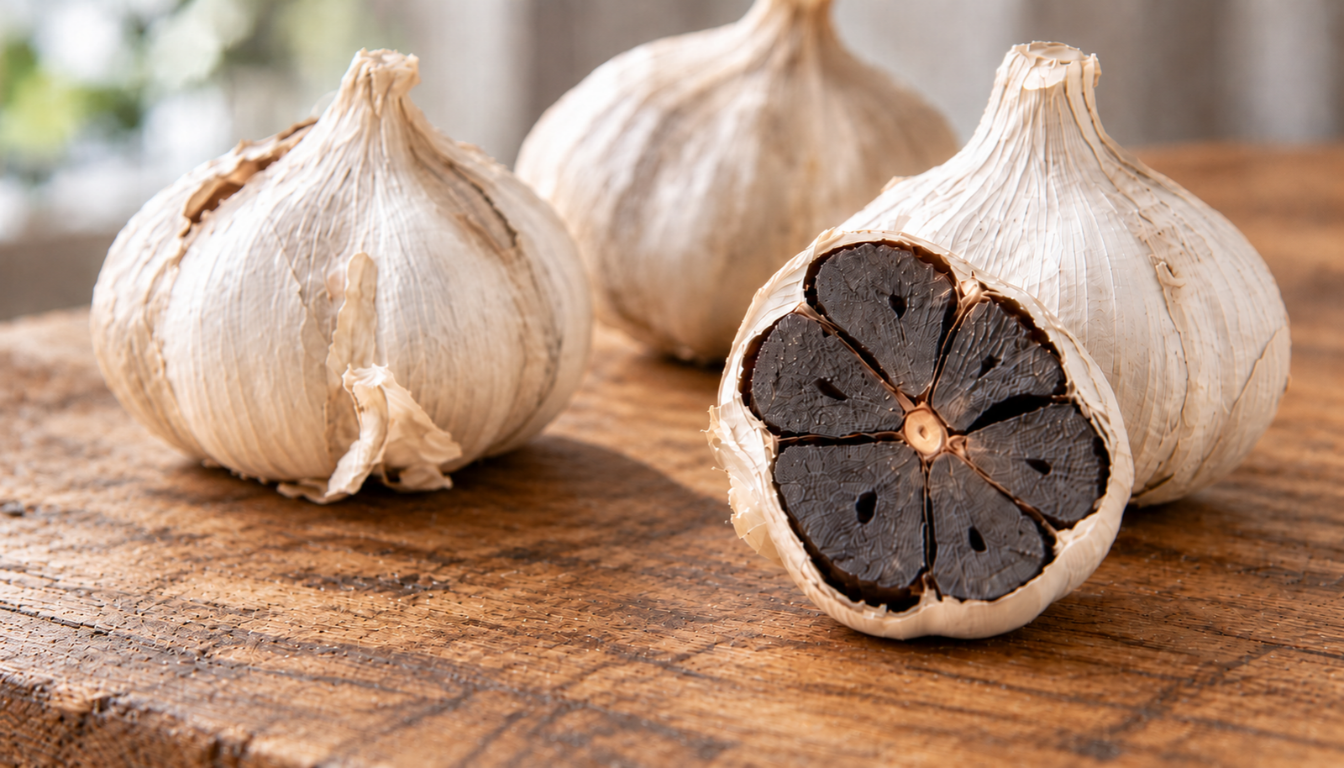
Black garlic is whole garlic bulbs aged under controlled conditions. In other words, it is not a different plant or a genetically modified garlic. The cloves turn black, soft and chewy, and the flavor becomes sweet and savory, with notes often compared to balsamic vinegar, molasses or tamarind. The strong, sharp bite of raw garlic is mostly gone.
Black garlic is often called “fermented garlic,” but this is not quite accurate. According to a published review, it is made through the Maillard reaction, the same browning reaction that happens when food is roasted or toasted.
How Black Garlic Is Made
Producers age whole bulbs at about 60–90°C (140–194°F) and 70–90% humidity. The review notes that there is no single standard method, and that processing can take anywhere from about 10 to 80 days. In general, higher temperatures finish faster, but over-processing can make the product bitter or sour.
During aging, the chemistry of the garlic changes in several ways.
- Allicin falls. For example, heating for 10–15 days reduced allicin by roughly 70–80% in studies cited by the review. That is why black garlic no longer has raw garlic’s sharp smell.
- Other compounds rise. Levels of S-allyl cysteine (SAC), a more stable sulfur compound, generally increase, although reported amounts vary widely between studies.
- Antioxidant content rises. Lab tests report higher levels of phenolic compounds and flavonoids than in fresh garlic.
Is Black Garlic Healthier Than Raw Garlic?
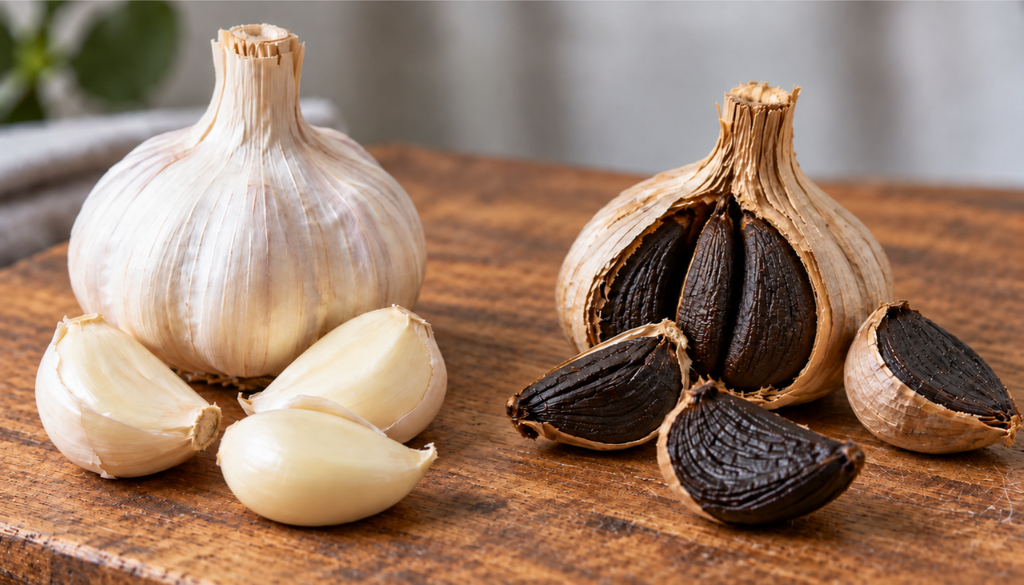
Not necessarily. Black garlic differs chemically from raw garlic, but “different” does not mean “proven healthier.” Laboratory tests do show higher antioxidant activity in black garlic than in fresh garlic. However, antioxidant activity measured in a test tube does not tell you what happens in the body.
Raw garlic also has compounds that black garlic loses, such as allicin. So the two are better thought of as different foods than as better and worse versions of each other.
What Does the Research Say About Black Garlic Benefits?
Most of the research on black garlic comes from laboratory and animal studies. A published review of black garlic’s bioactive compounds states that there is still not enough data to recommend black garlic as a treatment, for example for high blood pressure. Here is how the evidence breaks down.
- Antioxidants. This is the best-supported finding: black garlic shows higher antioxidant activity than fresh garlic in lab tests.
- Heart health. Some human trials have looked at cholesterol, blood pressure and artery health. However, many of them tested aged garlic extract, which is a related product but not the same as eating black garlic cloves. The results should not be assumed to apply to black garlic as a food.
- Blood sugar. The diabetes research in the review comes mainly from animal studies. There is not enough human evidence to say black garlic helps control blood sugar.
- Cancer and brain health. These findings come from laboratory and animal work. They do not show that black garlic prevents or treats cancer, or protects against memory loss or neurodegenerative disease, in people.
In short, black garlic is an interesting food with promising lab results. However, it is not a proven remedy, and it should not replace medical care or prescribed medicine.
Culinary Uses of Black Garlic
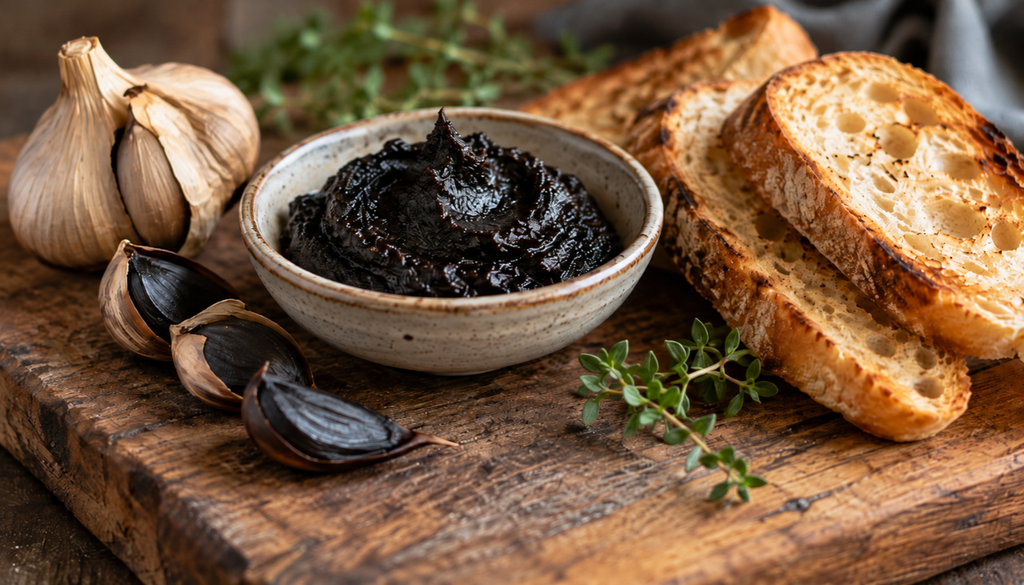
In the kitchen, black garlic is valued for flavor more than for any health claim. Because it is soft and sweet, you can mash it into a paste or slice it thinly.
Savory Dishes
- Marinades and rubs. Mash a few cloves into a marinade for meat, poultry or fish.
- Soups and stews. Stir it in near the end for a deep, savory sweetness.
- Pasta and rice. It pairs well with tomatoes, mushrooms and cheese.
- Vegetables. Toss it with roasted or sautéed vegetables.
Sauces and Dressings
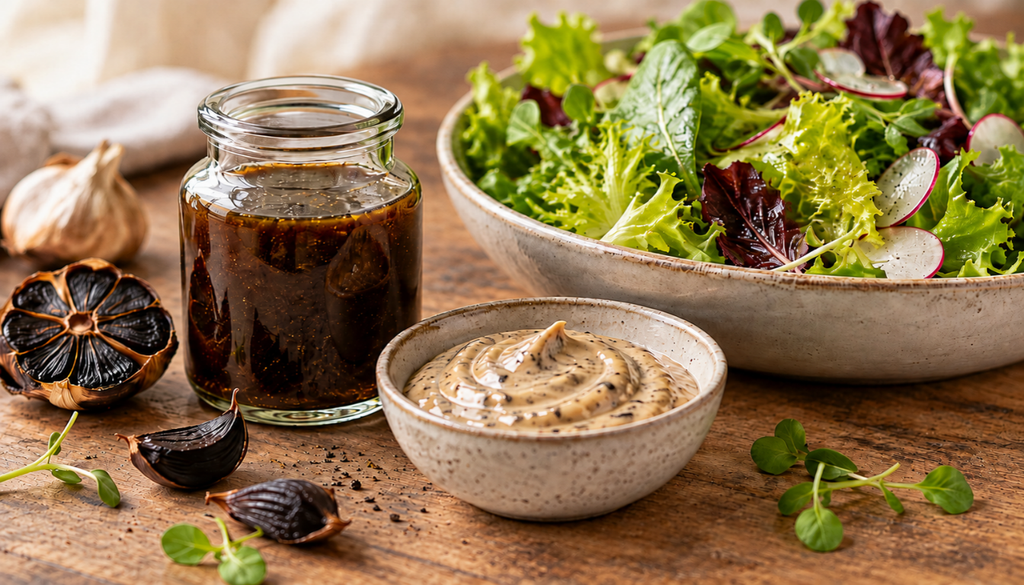
- Black garlic aioli. Blend it with mayonnaise, lemon juice and a pinch of salt.
- Vinaigrette. Combine it with olive oil, balsamic vinegar, Dijon mustard and honey.
- Pesto. Blend it with basil, Parmesan, pine nuts and olive oil.
Sweet Dishes
Because it tastes sweet, chefs also use black garlic in chocolate truffles, caramel sauce and cheesecake. Start with a small amount, because the flavor is strong.
Black Garlic vs. Raw Garlic
| Category | Raw garlic | Black garlic |
|---|---|---|
| Flavor | Sharp, pungent | Sweet, savory, tangy |
| Texture | Firm, crisp | Soft, chewy |
| Smell | Strong | Mild |
| Allicin | Higher | Much lower |
| Best for | Cooking, dressings, dips | Sauces, glazes, finishing |
Storage
Store black garlic in an airtight container in a cool, dry place, and follow the storage instructions on the package. Different producers make black garlic in different ways, so shelf life varies. Discard it if it smells off or shows mold.
Who Should Be Careful
Black garlic is a food, and most people can eat it in normal amounts. Even so, check with your doctor or pharmacist before taking concentrated black garlic or garlic supplements if you:
- Take blood-thinning medicine such as warfarin, aspirin or clopidogrel. Mayo Clinic notes that garlic may raise the risk of bleeding when combined with blood thinners.
- Take other prescription medicine.
- Are pregnant or breastfeeding.
- Have a planned operation.
If you have diabetes, high blood pressure or high cholesterol, keep following your treatment plan. Black garlic should not replace it.
Before You Go – Black Garlic Benefits
Black garlic is a sweet, soft, savory ingredient with interesting chemistry and early research behind it. Enjoy it for its flavor, treat the health research as preliminary, and keep taking any medicine your doctor has prescribed.
References – Black Garlic Benefits
Little Herb Encyclopedia, by Jack Ritchason; N.D., Woodland Publishing Incorporated, 1995
The Ultimate Healing System, Course Manual, Copyright 1985, Don Lepore
Planetary Herbology, Michael Tierra, C.A., N.D., Lotus Press, 1988
Handbook of Medicinal Herbs, by James A. Duke, Pub. CRP Second Edition 2007
The Complete Medicinal Herbal, by Penelope Ody, Published by Dorling Kindersley
Sources
- Molecules. Black garlic and its bioactive compounds on human health diseases: a review. 2021;26(16):5028.
- Mayo Clinic. Herbal supplements and heart medicines may not mix.
Related Articles
19 Fast-Growing Plants for Kids: A Fun Guide
7 Simple Tricks to Grow a Thriving Herb Garden in a Pot
9 Wound Healing Herbs With Medicinal Benefits
5 Essential Perennial Herbs Perfect for Pots
Frequently Asked Questions – Black Garlic Benefits
Is black garlic fermented?
It is often called fermented garlic, but a published review describes it as made through the Maillard reaction, which is a heat-driven browning process.
Does black garlic have probiotics?
There is no good evidence that it does. It is aged at high temperatures, so you should not expect probiotic benefits.
Is black garlic better than raw garlic?
It is different. Black garlic is sweeter and has higher antioxidant activity in lab tests, while raw garlic has more allicin. Neither has been proven to treat a condition.
Can black garlic lower cholesterol or blood pressure?
There is not enough evidence to say so. Some human studies have used aged garlic extract, which is not the same as black garlic. Speak to your doctor about any health concern.
Does black garlic smell?
Much less than raw garlic, because most of the allicin is lost during aging.
How do I use black garlic?
Mash it into sauces, marinades, dressings or pasta, or slice it onto toast and cheese.