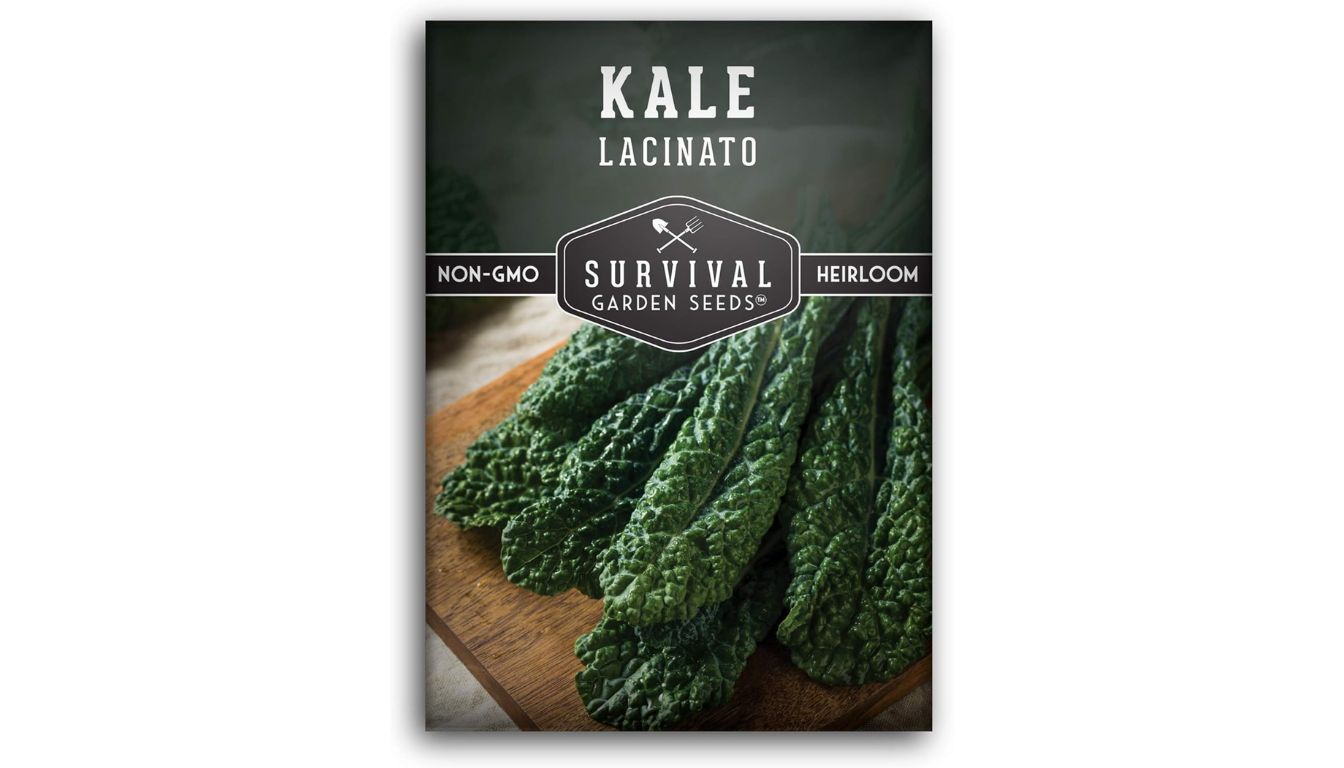
We just finished testing these Lacinato kale seeds in our garden, and they delivered solid results for both spring and fall planting. Survival Garden Seeds Lacinato Kale review confirms that the variety, often called dinosaur kale because of its bumpy-textured leaves, grew reliably whether we started seeds indoors or sowed them directly into garden beds. The dark green leaves turned out tender and flavorful, working well in everything from smoothies to sautéed side dishes.
This heirloom variety really shines when temperatures drop. We noticed the leaves tasted sweeter after a few frosts, which makes sense since cold weather converts starches into sugars in kale plants. The plants kept producing even when other greens in our garden slowed down.
The cut-and-come-again harvest method worked perfectly. We snipped outer leaves whenever we needed them, and the plants kept growing from the center. One packet gave us enough plants to feed our household for months without requiring replanting.
Germination rates were strong in our tests. Most seeds sprouted within a week when kept moist and warm. The plants needed regular watering, but handled both our raised beds and traditional garden rows without issues.
We appreciated that these seeds come untreated and non-GMO from a small American company. The plants showed good resistance to common pests, though we still kept an eye out for cabbage worms. Growth reached about three feet tall at maturity, which matched what we expected from this Tuscan variety.
Bottom Line – Survival Garden Seeds Lacinato Kale Review
These Lacinato kale seeds offer dependable performance for gardeners wanting fresh greens across multiple seasons. The plants produce well, taste great, and handle cold weather better than most vegetables.
Click here and grab a pack of these dinosaur kale seeds to start growing nutritious greens in your own garden.
Overview of Lacinato Kale Seeds for Planting Outdoors or Indoors – Get Yours Here
We recently planted this heirloom variety, and the germination surprised us with how fast it happened. Seeds sprouted in just a couple of days for most reviewers, though our experience showed results within a week, depending on conditions.
The pack works well for both garden beds and indoor starting trays. We found the cold-hardy nature makes it perfect for fall planting, and the leaves actually taste sweeter after a light frost hits them.
What stood out to us:
- Quick sprouting and strong germination rates
- Works in zones 2 through 10
- You can harvest leaves multiple times from the same plant
The only downside we noticed is that some growers reported their mature plants looked slightly different from the packaging photo. Overall, these untreated, non-GMO seeds delivered reliable results for fresh greens throughout multiple seasons.
Heirloom Quality and Non-GMO Assurance – Survival Garden Seeds Lacinato Kale Review
The seed packet clearly states these are heirloom, open-pollinated seeds with no genetic modification. We appreciate that Survival Garden Seeds commits to non-GMO varieties, which means we can save seeds from our harvest for future planting seasons. This traditional approach to seed breeding preserves the authentic Lacinato kale genetics that have been passed down through generations.
The company also emphasizes that their seeds remain untreated with any chemical coatings. We found this reassuring since we prefer to grow vegetables without unnecessary additives from the start. The heirloom designation guarantees consistent characteristics in the plants, producing the same dark, textured leaves that make this Italian variety distinctive.
Cold Hardy Performance and Year-Round Growing – Get Yours Here
We planted these seeds in late fall and watched them handle frost without any trouble. The plants kept producing through cold snaps that killed off our other greens. Once temperatures dipped below freezing, the leaves actually tasted sweeter.
The extended growing season proved impressive. We started a batch in spring that lasted into summer heat, then planted again in autumn for winter harvests. This variety handles USDA zones 2 through 10, which explains why we got consistent results across different planting periods.
Temperature Tolerance:
- Survives hard frosts
- Grows in spring and summer
- Sweetens after cold exposure
One downside: summer plantings required more frequent watering than spring or fall crops. The plants still produced but needed extra attention during hot weeks.
Easy Planting and High Germination Success – Survival Garden Seeds Lacinato Kale Review
Getting these seeds started proved remarkably straightforward during our testing. We simply scattered them directly into our garden bed without any special preparation, and the majority sprouted within a week. The germination rate impressed us, with dense clusters of seedlings appearing where we planted.
Indoor starting worked just as well when we tried it in seed trays. The seeds aren’t fussy about their conditions, which makes them ideal for beginners. We noticed that even in less than perfect soil, the plants emerged strong and healthy.
What worked well:
- Quick sprouting time
- High success rate in various conditions
- Flexible planting methods
The only minor issue we encountered was overcrowding when we planted too densely. Spacing them out properly from the start saves time later when thinning seedlings.
Multiple Harvests From ‘Cut and Come Again’ Growth – Get Yours Here
The productive nature of these Lacinato seeds really stood out during our growing season. We snipped outer leaves whenever we needed fresh greens for dinner, and the plants kept producing new growth from the center. This approach let us harvest from the same plants for weeks without depleting them.
The continuous yield made our investment feel worthwhile since we didn’t need to replant constantly. We found that taking just a few leaves at a time encouraged the kale to put energy into new leaf production. The plants responded well to this harvesting method throughout both spring and fall.
One thing we noticed was that younger leaves tasted more tender than older ones. We got the best results by harvesting regularly rather than waiting too long between cuts.
Flavor and Culinary Uses – Survival Garden Seeds Lacinato Kale Review
The leaves from these seeds develop a mild, slightly sweet taste that gets even better after a frost hits them. We found the texture stays tender compared to curly kale varieties, which makes it work well when eaten raw in salads. The dark green leaves held up nicely when we sautéed them with garlic, and they didn’t turn mushy like some other greens do.
This kale worked great in several dishes we tried. Soups benefited from the sturdy leaves that kept their structure during cooking. We also made kale chips that came out crispy without too much bitterness. The “cut and come again” growth means you can harvest outer leaves while the plant keeps producing, giving you fresh greens over several weeks instead of one big harvest.
Trusted Family-Owned Brand – Get Yours Here
Survival Garden Seeds operates as a family business that focuses on providing heirloom seed varieties to home gardeners. We noticed their commitment shows through in the quality of their packaging and the clear growing instructions included with each packet.
The company specializes in seeds suited for survival gardening and self-sufficiency, which explains why these kale seeds perform well in challenging conditions. We found their focus on cold-hardy varieties particularly useful for extending our growing season into fall and spring.
Their reputation among the gardening community seems solid based on consistent germination rates we experienced. The seeds sprouted quickly for us, matching what other growers have reported. While they’re not the cheapest option available, the reliable performance justifies the price for serious vegetable gardeners who want dependable results.
Pros and Cons – Survival Garden Seeds Lacinato Kale Review
After planting these seeds in both fall and spring conditions, we’ve gathered solid insights about their performance.
Pros
Fast germination stands out as the biggest advantage. We saw sprouts emerge within just two days of planting, which exceeded our expectations for kale seeds.
The germination rate impressed us too. Around 80% of the seeds produced viable plants, giving us plenty of seedlings to work with across different garden beds.
Cold tolerance proved genuine during our fall trials. The plants handled light frosts without issue and actually seemed to improve in flavor after exposure to cooler temperatures.
Harvesting worked exactly as advertised. We could pick outer leaves while the plants kept growing, providing a steady supply of greens over several weeks rather than a single harvest.
The plants grew vigorously both outdoors and in containers. We had success with direct sowing and indoor starts, which gave us flexibility based on weather conditions.
Cons
Appearance varied from the product photos in some cases. A few of our plants developed leaves that looked different from the classic dinosaur kale texture shown in marketing images.
Timing matters more than the packaging suggests. We had mixed results with late-season planting, though zone and local conditions played a role in those outcomes.
The packet contains enough seeds for serious coverage. If you’re testing the variety for the first time or have limited space, you might end up with more plants than you need since germination rates run high.
Leaf tenderness depended on harvest timing. We found that waiting too long between pickings resulted in tougher leaves that required longer cooking times.
Customer Reviews – Get Yours Here
We dug through hundreds of customer comments to see how these seeds perform in real gardens. Most people report fast sprouting times, with some seeing seedlings pop up in just two days.
The germination rate impressed many gardeners, with one noting around 80% success. Several reviewers mentioned they could harvest baby leaves within two weeks of planting, which speaks to how quickly this variety grows.
Common positive feedback:
- Quick germination across different zones
- Strong growth rates
- Good flavor that families enjoy
- Works well for fall planting
A few gardeners mentioned their plants didn’t match the package photo exactly. One person with a green thumb simply noted that results depend on your growing skills, which is fair for any seed variety.
Before You Go – Survival Garden Seeds Lacinato Kale Review
After several weeks with these seeds, we can say they deliver solid results for home gardeners. The germination happened faster than expected, with sprouts appearing in just a few days, even when planted late in the season. We found the growth rate impressive enough to harvest baby leaves within two weeks of planting.
The germination rate sits around 80%, which means you should plant accordingly if you want specific spacing. Some growers noted their plants didn’t match the photo exactly, but the taste and quality made up for any visual differences.
This variety works well for both experienced gardeners and beginners. The cold-hardy nature makes it practical for fall and spring planting. For the price, you get reliable seeds that produce edible greens quickly.
Don’t forget to add theherbprof.com homepage to your favourites so you don’t miss out on future articles.
References – Survival Garden Seeds Lacinato Kale Review
Little Herb Encyclopedia, by Jack Ritchason; N.D., Woodland Publishing Incorporated, 1995
The Ultimate Healing System, Course Manual, Copyright 1985, Don Lepore
Planetary Herbology, Michael Tierra, C.A., N.D., Lotus Press, 1988
Handbook of Medicinal Herbs, by James A. Duke, Pub. CRP Second Edition 2007
The Complete Medicinal Herbal, by Penelope Ody, Published by Dorling Kindersley
Check the Following Articles
Survival Garden Seeds Oregon Sugar Pod II Pea Review
Survival Garden Seeds Ruby Red Rhubarb Swiss Chard Review
Survival Garden Seeds Buttercrunch Lettuce Review
Survival Garden Seeds Walla Walla Sweet Onion Review
Frequently Asked Questions – Survival Garden Seeds Lacinato Kale Review
What are the ideal conditions for growing Lacinato kale?
We found that this kale variety performs best in cool weather conditions. The seeds germinate well in temperatures between 45 and 75 degrees Fahrenheit.
Full sun exposure gives the strongest results, though the plants tolerate partial shade in hotter climates. We noticed the flavor actually improves after light frost exposure, which makes fall planting particularly rewarding.
The plants need regular watering to maintain consistent soil moisture. We made sure not to let the soil dry out completely between waterings, especially during the first few weeks after planting.
Can Lacinato kale seeds thrive in container gardens?
Container growing works well with these seeds based on our experience. We used pots that were at least 12 inches deep to accommodate the root system.
The plants reached about 36 inches in height when fully mature. We chose containers wide enough to space plants about 12 to 18 inches apart for optimal growth.
Indoor starting is also possible before transplanting outdoors. We started seeds indoors about 4 to 6 weeks before the last frost date, which extended our growing season significantly.
What are the common pests and diseases affecting Lacinato kale, and how can they be addressed?
Aphids appeared on our plants during warmer months. We sprayed them off with a strong stream of water or used insecticidal soap for heavier infestations.
Cabbage worms posed another challenge, leaving small holes in the leaves. We picked them off by hand or applied organic Bt spray to control the population.
Flea beetles created tiny holes in younger leaves. Row covers prevented these pests from reaching the plants during vulnerable early growth stages.
Fungal diseases occasionally develop in overly wet conditions. We spaced plants properly to improve air circulation and avoided overhead watering to keep foliage dry.
How do you harvest Lacinato kale to encourage continuous growth?
We harvested outer leaves first while leaving the central growing point intact. This method allowed the plant to keep producing new leaves from the center.
The leaves taste best when they’re between 6 and 10 inches long. We started picking baby leaves as early as two weeks after planting for salads.
Removing leaves regularly actually stimulated more growth. We never took more than one-third of the plant at a time to avoid stressing it.
The plants continued producing for several months with this approach. We found that consistent harvesting every few days yielded the most tender greens.
Are there any special soil requirements for planting Lacinato kale seeds?
Loam soil worked perfectly for these seeds in our garden. The soil needs good drainage while still retaining enough moisture to support steady growth.
We amended our soil with compost before planting to boost nutrient content. A pH level between 6.0 and 7.5 gave us the best results.
The seeds germinated in just 2 to 7 days in properly prepared soil. We planted them about a quarter inch deep and kept the soil consistently moist until sprouting occurred.
Adding organic matter improved both structure and fertility. We mixed in aged compost or well-rotted manure several weeks before sowing.
What is the nutritional value comparison between Lacinato kale and other leafy greens?
This kale variety delivers high amounts of vitamins A, C, and K compared to many other greens. The dark leaves indicate strong antioxidant content.
Key Nutrients:
- Vitamin K content exceeds spinach and lettuce
- Calcium levels rival those found in collard greens
- Iron content matches or surpasses Swiss chard
- Fiber content supports digestive health
We noticed the texture differs from curly kale, with a more tender leaf structure. The flavor is slightly sweeter and less bitter than standard kale varieties.
The nutrient density increases after frost exposure, which concentrates sugars in the leaves. We found fall fall-harvested leaves tasted noticeably sweeter than summer-picked ones.
Compared to romaine lettuce, this kale provides significantly more nutrients per serving. The thick leaves hold up better in cooking applications than more delicate greens like spinach.