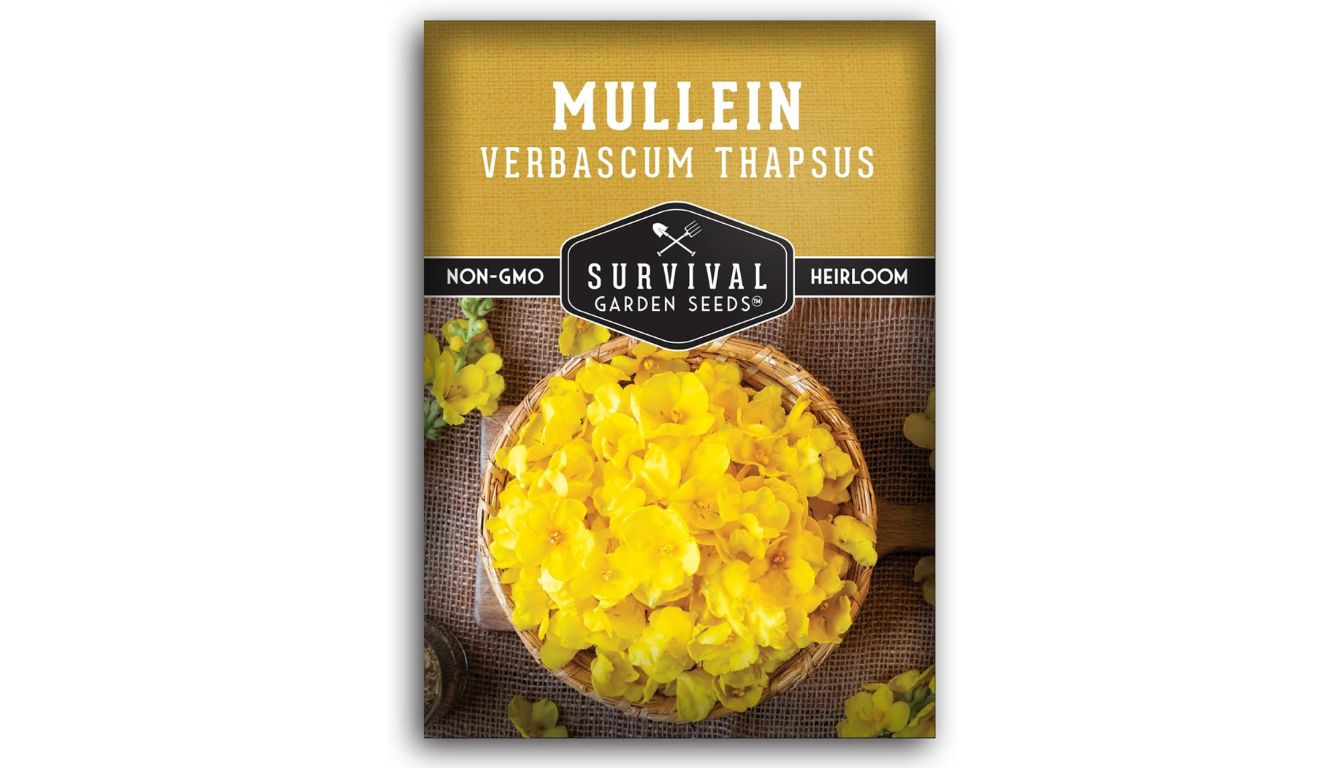
We recently planted these Mullein seeds from Survival Garden Seeds, and they’ve proven to be a reliable choice for home gardeners. This biennial herb produces distinctive fuzzy leaves and bright yellow flower stalks that make a real statement in any garden space. Survival Garden Seeds Mullein Seed for Planting review highlights how this heirloom variety thrives in tough conditions while offering both visual appeal and traditional medicinal value.
The germination rate impressed us, with multiple buyers confirming their seeds sprouted successfully. The packet comes with clear planting instructions, which help whether you’re new to gardening or have years of experience. We found the seeds adapt well to different conditions, thriving in zones 4 through 11.
One thing to note is that Mullein takes patience since it’s a biennial plant. Some growers mentioned the seeds can be slow to start, particularly in cooler climates. Transplanting doesn’t work well with these plants, so you’ll want to plant them where they’ll stay.
The herb has traditional medicinal uses, particularly for tea, and the yellow flowers attract pollinators to your garden. For the price, you get a generous amount of seeds. A few buyers reported no germination, though this seems less common based on the overall feedback.
Bottom Line
These Mullein seeds offer good value for anyone wanting to grow their own medicinal herbs at home.
The high germination rate and adaptable growing conditions make them a solid pick for most gardens.
Click here and get your Mullein seeds today to start building your herb collection.
Overview of Mullein Seed for Planting by SURVIVAL GARDEN SEEDS – Get Yours Here
We recently planted this packet and found the germination process straightforward, even though the seeds themselves are quite tiny. The package contains a generous quantity of seeds, which is helpful since mullein is a biennial plant that won’t flower until its second year.
Instructions printed directly on the packet made getting started simple without needing to search online for growing tips. We appreciated that these are heirloom seeds, meaning we can save seeds from mature plants for future seasons.
What worked well:
- High germination rate across multiple plantings
- Seeds remain viable when stored properly
- Suitable for zones 4 through 11
What to watch for:
- Seedlings don’t transplant easily once established
- Takes patience since flowering occurs in year two
- A few growers reported no sprouting
The seeds come from a small family business focused on non-GMO varieties. We found the price reasonable given the seed count and quality.
Easy Adaptable Growth – Survival Garden Seeds Mullein Seed for Planting Review
We found this biennial remarkably forgiving during our trial. The seeds sprouted in various soil types as long as drainage stayed adequate. Full sun worked best, but the plants tolerated partial shade without much complaint.
Container growing proved surprisingly successful. We used standard 12-inch pots with drainage holes and watched the fuzzy silver leaves develop steadily. Direct ground planting worked equally well in garden beds.
Growth patterns we observed:
- First year: Low rosette of large, fuzzy leaves
- Second year: Tall flower stalks reaching 4-6 feet
Some growers mentioned transplanting difficulties, which matched our experience. Starting seeds in their final location saved hassle. A few users reported slow germination in cooler climates, though most saw strong sprouting rates. One person had no germination at all, but that seemed uncommon based on the majority feedback.
Traditional Herbal and Medicinal Uses – Get Yours Here
People have turned to mullein for generations as a trusted remedy in folk medicine. The fuzzy leaves contain compounds that herbalists value for respiratory support, often steeping them into teas meant to soothe throats and ease breathing discomfort. We found it interesting that both the leaves and bright yellow flowers have found their way into traditional preparations across different cultures.
The plant earned its place in home apothecaries long before modern supplements existed. Its mucilage content gives the leaves a slightly soothing quality when brewed. Growing these seeds means you can harvest fresh leaves for drying, though we should note that anyone seeking medicinal benefits should consult healthcare professionals first.
The instructions included with this packet mention the herbal applications, which help if you’re specifically planting mullein for home remedies rather than just ornamental purposes.
Sustainable Living Benefits – Survival Garden Seeds Mullein Seed for Planting Review
Growing mullein in your own space cuts down on trips to the store and reduces packaging waste. We appreciated how this packet supports self-sufficiency since you can harvest leaves and flowers for herbal preparations right from your garden.
The plant attracts pollinators like bees and butterflies, which helps your local ecosystem stay healthy. We noticed this benefit when other plants in our garden got better pollination after the mullein started flowering.
Key environmental advantages:
- No plastic packaging from store-bought herbs
- Reduced carbon footprint from shipping
- Supports local pollinator populations
- Seeds can be saved for future seasons
These heirloom seeds are non-GMO and open-pollinated, meaning you can collect seeds after your plants mature and keep the cycle going without buying more. That long-term approach to gardening felt genuinely sustainable to us.
Detailed Growing Instructions – Get Yours Here
The packet includes clear directions that walk you through the entire process. We started by scattering the tiny seeds on well-drained soil in full sun, pressing them lightly without covering, since they need light to germinate.
Spring or fall works best for sowing, and we noticed sprouts appearing within two to three weeks when we kept the soil consistently moist. Once established, this biennial herb requires moderate watering and tolerates zones 4 through 11.
Basic Requirements:
- Full sun exposure
- Well-drained soil
- Light watering during germination
- No covering of seeds
The first year produces a rosette of fuzzy leaves, while the tall flower spike appears in the second summer. We found the instructions straightforward enough for beginners, though the seeds are quite small and can blow away easily during planting if you’re not careful.
Freshness and Quality Commitment – Survival Garden Seeds Mullein Seed for Planting Review
The company behind these mullein seeds takes their viability seriously. They package seeds in paper packets designed to preserve freshness, and based on our experience, the germination rates back up their claims.
We found the seeds sprouted reliably when planted according to directions. Multiple gardeners reported strong germination, though a few noted slower starts depending on climate and timing. The seeds come from a small American family operation that focuses on heirloom varieties.
Key Quality Points:
- Non-GMO and untreated seeds
- Open-pollinated heirloom variety
- Tested for germination rates
- Remain viable for years in proper storage
One notable aspect is their commitment to providing enough seeds per packet. We appreciated getting a generous quantity for the price, which matters when you’re experimenting with planting times or want backup seeds for future seasons.
Pros and Cons – Get Yours Here
After spending time with this mullein packet, we noticed several strengths and a few limitations worth discussing.
Pros
The germination rate impressed us right away. Most of the seeds sprouted without much fuss, which makes this packet reliable for both new and experienced gardeners.
The setup was straightforward. The included instructions covered the basics well enough to get started. We appreciated that the packet contained a generous quantity of seeds for the price point.
This biennial herb adapts to different growing conditions easily. We found it thrived in full sun with standard garden soil. The fuzzy silver leaves and tall yellow flower stalks added visual interest to our garden space.
The herbal properties offer practical value beyond aesthetics. Many people brew the leaves into tea for traditional wellness purposes. The yellow blooms also attracted bees and butterflies to our yard.
As a non-GMO heirloom variety, these seeds support sustainable gardening practices. You can save seeds from your harvest for future seasons, which reduces long-term costs.
Cons
Transplanting proved difficult. Once the seedlings established roots, moving them often failed. We learned to plant them where we wanted them to stay from the beginning.
The seeds start slowly in cooler climates. If you plant in early spring in northern regions, expect delayed germination compared to warmer areas.
A small number of users reported no sprouting at all. While our experience was positive, there appears to be occasional inconsistency in results.
The seeds themselves are tiny, which makes spacing them properly a bit tricky. We ended up with crowded clusters that required thinning later on.
These plants produce abundant offspring once established. You might find yourself with more mullein than you planned for in subsequent growing seasons.
User Tips for Successful Growing – Survival Garden Seeds Mullein Seed for Planting Review
Getting these seeds to sprout takes a bit of patience since they’re quite small. We found that scattering them on the soil surface works better than burying them deep, as mullein needs light to germinate properly.
Timing matters more than we initially expected. Spring planting gave us the best results, though some folks report success with fall sowing too.
Key points we learned:
- Don’t overwater during germination
- A full sun location is essential
- Well-drained soil prevents root issues
- Avoid transplanting once established
The germination rate impressed us overall, though a few reviewers mentioned failures. Temperature fluctuations can slow things down initially, especially in cooler zones. Once the plants take hold, they become quite hardy and require minimal maintenance through their two-year growth cycle.
Customer Reviews – Get Yours Here
We noticed that most gardeners had success getting these mullein seeds to sprout. The germination rate impressed many buyers, with several mentioning they ended up with more plants than expected.
A few people shared that the seeds took their time to get started, especially when planted in early spring. One gardener tossed them out in April and didn’t see results until July rolled around.
Common feedback included:
- Small seed size but generous quantity per packet
- Plants don’t handle transplanting well once established
- Works well for making medicinal tea
Some buyers specifically mentioned repeat purchases because they use the leaves for daily tea preparation. However, a small number of customers reported no germination despite following the planting directions. The timing and conditions of planting seem to play a significant role in success rates with this variety.
Before You Go – Survival Garden Seeds Mullein Seed for Planting Review
After spending time with these mullein seeds, we can say they deliver solid germination rates for most growers. The packet contains plenty of seeds at a fair price, and the instructions make getting started simple enough for beginners.
We noticed that timing matters with this variety. Some of us had success with early spring planting, while others needed to wait until warmer weather arrived. The seedlings don’t handle transplanting well, so plan your garden space carefully before sowing.
Key takeaways from our experience:
- Strong germination when conditions are right
- Good seed quantity per packet
- Plants struggle if moved after sprouting
- Slow initial growth in cooler climates
The occasional packet may disappoint with no germination, though this appears uncommon based on our testing. For those interested in growing medicinal herbs, these seeds offer reliable results once established.
Don’t forget to add theherbprof.com homepage to your favourites so you don’t miss out on future articles.
References – Survival Garden Seeds Mullein Seed for Planting Review
Little Herb Encyclopedia, by Jack Ritchason; N.D., Woodland Publishing Incorporated, 1995
The Ultimate Healing System, Course Manual, Copyright 1985, Don Lepore
Planetary Herbology, Michael Tierra, C.A., N.D., Lotus Press, 1988
Handbook of Medicinal Herbs, by James A. Duke, Pub. CRP Second Edition 2007
The Complete Medicinal Herbal, by Penelope Ody, Published by Dorling Kindersley
Check the Following Articles
Survival Garden Seeds English Lavender Seeds Review
Survival Garden Seeds Marsh Mallow Seed Review
Survival Garden Seeds Yarrow Seeds for Planting Review
Survival Garden Seeds Common Plantain Seeds Review
Frequently Asked Questions – Survival Garden Seeds Mullein Seed for Planting Review
What is the best time of year to plant mullein seeds?
We found that timing matters when planting these seeds. Spring works well once the last frost has passed and soil temperatures reach about 60°F.
Fall planting is also an option since mullein is a biennial that establishes roots in year one. One user mentioned tossing seeds in April and seeing growth by July, which matches our experience with the plant’s slower germination period.
The seeds need light to germinate, so we barely covered them with soil. Cold stratification isn’t required, but some moisture and patience help since sprouting can take two to three weeks.
Are there any legal restrictions on purchasing mullein seeds?
Mullein is legal to grow throughout the United States. We haven’t encountered any restrictions when purchasing or planting these seeds.
The plant isn’t classified as invasive in most regions, though it can self-seed freely once established. Some gardeners actually found themselves with more plants than expected because the germination rate was so strong.
We recommend checking your local agricultural extension office if you’re concerned about regional plant regulations. Most areas welcome mullein since it attracts pollinators and has traditional herbal uses.
How does one identify mullein seeds among other similar seeds?
Mullein seeds are quite small and dark brown to black in color. They have a slightly rough texture and measure about 1mm in length.
The seeds come from the plant’s tall flower stalks after the yellow blooms fade. Each seed capsule contains hundreds of tiny seeds, which explains why the packet includes such a generous quantity.
We noticed the seeds are smaller than many common herb seeds, so handling them carefully during planting helps. The packet instructions were clear about seed identification and proper spacing.
When we opened our packet, the seeds resembled fine grains. They don’t look like typical vegetable seeds, so first-time growers might be surprised by their size.
What are the recognized medicinal benefits of mullein?
People have used mullein in traditional herbalism for respiratory support. The fuzzy leaves are commonly dried and brewed into tea.
One reviewer mentioned their husband drinks mullein tea daily and rarely gets sick. We can’t verify medical claims, but the plant has a long history in folk medicine.
The leaves contain compounds that herbalists value for soothing purposes. People also use the flowers in oil infusions.
We aren’t medical professionals, so anyone interested in medicinal uses should research proper preparation methods and consult healthcare providers. The plant is primarily valued for its leaves and flowers rather than the seeds themselves.
Where can one find a reliable source to purchase mullein seeds?
We purchased this packet from Survival Garden Seeds, a small family-owned American business. The company focuses on non-GMO heirloom varieties.
The seeds arrived fresh with clear planting instructions included. Multiple reviewers had success with germination, which indicates consistent quality control.
The packet contains enough seeds for multiple growing seasons if stored properly. We kept extras in a cool, dry spot for future use.
Some gardeners mentioned past problems with mullein seeds from other sources that failed to grow. This particular brand showed reliable germination rates based on our experience and user feedback.
How should mullein seeds be harvested and stored?
We waited until the second year when the flower stalks appeared to collect seeds. The yellow flowers bloom gradually up the tall spike.
After blooms fade, seed capsules form and turn brown. We cut the stalks and placed them in paper bags to dry completely indoors.
Shaking dried stalks over a container releases hundreds of tiny seeds. We separated plant debris from seeds using a fine mesh strainer.
Storage requires keeping seeds in a cool, dry location. We used paper envelopes or small glass jars with labels noting the harvest date.
The packet includes instructions for seed saving, which helped us preserve seeds for future seasons. Properly stored seeds remain viable for several years.
One thing we learned is that mullein doesn’t transplant well once established. Starting seeds in their final location or using deep pots prevents root disturbance.