The Herb Prof Team researches and writes our herbal guides, drawing on published research, traditional herbal references, and hands-on growing experience.
Anxiety is one of the most common problems I see in clinic, and it can be exhausting to live with day after day. Many of my patients want to know which herbs for anxiety I actually use in practice, and whether these remedies are truly effective or just “natural placebos”.
In this guide, I’ll walk you through how I think about anxiety, the main herbs for anxiety I reach for, how they work in the body, and when herbs are helpful versus when you need more than a herbal approach. My aim is simple: to help you decide which herbal options might suit your picture, and which ones you should avoid.
Understanding Anxiety
Anxiety is a natural response to stress. It becomes a problem when it is frequent, intense, or out of proportion to what is happening. At that point it can affect sleep, work, relationships, and physical health.
Modern research has started to catch up with traditional use of herbs. A 2022 systematic review and network meta‑analysis found that medicinal herbs such as ashwagandha, saffron, passionflower, lavender and kava showed promising anxiolytic effects compared with placebo, although study quality and consistency varied and more research is still needed. Broader reviews of herbal medicine also highlight that many people use plant‑based treatments for anxiety and related conditions, but emphasise the need for careful attention to product quality and safety.
Common symptoms
People describe anxiety in many ways, but common symptoms include:
- Constant worry or fear
- Restlessness and feeling “on edge”
- Racing thoughts
- Difficulty concentrating
- Irritability
- Muscle tension, jaw clenching or headaches
- Palpitations, sweating, trembling
- Tight chest, shortness of breath or “air hunger”
- Nausea, gut upset or a “knot” in the stomach
- Problems falling asleep or staying asleep
If symptoms are severe, frequent, or start to limit your life, we are no longer dealing with simple stress. We are dealing with an anxiety disorder that needs a structured plan.
What Causes Anxiety?
There is never just one cause. Anxiety usually arises from an interaction of:
- Genetics and family history
- Childhood experiences and trauma
- Ongoing life stress and overwork
- Medical conditions (thyroid issues, heart disease, asthma, diabetes)
- Hormonal changes
- Substance or medication effects
Inside the body, several systems are usually involved:
- Sympathetic nervous system: controls the fight‑or‑flight response. When it is overactive, heart rate, blood pressure and tension rise.
- Neurotransmitters: serotonin, dopamine, norepinephrine, GABA and glutamate all influence mood, alertness and calm.
- HPA axis: the stress system linking brain and adrenal glands. It regulates cortisol and other stress hormones.
- Inflammation: chronic low‑grade inflammation can affect brain chemistry and mood.
Most herbs I use for anxiety work by nudging one or more of these systems back towards balance.
Conventional and Lifestyle Treatments (Alongside Herbs for Anxiety)
Herbs are one tool, not the whole toolbox. In moderate to severe anxiety they sit best alongside evidence‑based therapies, not instead of them.
Psychological therapies
For persistent or disabling anxiety, talking therapies often provide the deepest change. The main approaches I see help in practice are:
- Cognitive‑behavioural therapy (CBT): helps you identify and change anxious thoughts and avoidance patterns.
- Exposure‑based therapies: help you gradually face feared situations in a safe, structured way.
- Mindfulness‑based and acceptance‑based therapies: teach you to relate differently to anxious thoughts and body sensations.
Medication
Medication is not right for everyone, but it has a place, especially where anxiety is severe or there is co‑existing depression. Common options include:
- Antidepressants: SSRIs or SNRIs as first‑line for many anxiety disorders.
- Benzodiazepines: short‑term relief only, due to dependence and tolerance risks.
- Beta‑blockers: for physical performance anxiety, such as public speaking.
- Buspirone and others: in selected cases.
Herbs can often be used alongside these medicines, but interactions must be checked carefully.
Lifestyle foundations To Support Herbs For Anxiety
I never ignore the basics. Several lifestyle changes consistently reduce anxiety burden:
- Regular movement: walking, cycling, swimming, strength work.
- A simple, steady sleep routine.
- Reducing caffeine, alcohol and nicotine.
- A whole‑food diet with stable blood sugar.
- Structured relaxation: breathing, meditation, yoga, or guided muscle relaxation.
- Social connection and support.
Once these foundations are in place, we can layer herbal work on top much more effectively.
How Herbs For Anxiety Work
Herbs for anxiety do not all work in the same way. The main mechanisms I see in the literature and in practice include:
Modulating the HPA axis
Chronic stress over‑drives the HPA axis and keeps cortisol elevated. Adaptogenic herbs such as ashwagandha appear to help normalise this response and support better stress resilience.
Increasing GABA activity
GABA is the brain’s main calming neurotransmitter. Low GABA is linked with anxiety, insomnia and agitation. Several herbs:
- enhance GABA signalling,
- slow GABA breakdown, or
- bind to GABA receptors.
This is one reason herbs like valerian, passionflower and kava can feel similar (though milder) to certain pharmaceutical anxiolytics.
Modulating serotonin and dopamine
Serotonin and dopamine strongly influence mood, motivation and reward. Some herbs may:
- reduce breakdown of these neurotransmitters,
- alter their reuptake, or
- interact with their receptors.
Examples include saffron, ashwagandha and possibly Galphimia glauca.
Reducing inflammation and oxidative stress with herbs for anxiety
Chronic inflammation can affect brain function, neurotransmitters and the blood‑brain barrier. Several herbs used for anxiety also have anti‑inflammatory and antioxidant effects, which may indirectly support mood.
You do not need to memorise these pathways. I include them so you can see that herbs are working at recognisable physiological levels, not just “energetically”.
Key Herbs For Anxiety I Use in Practice
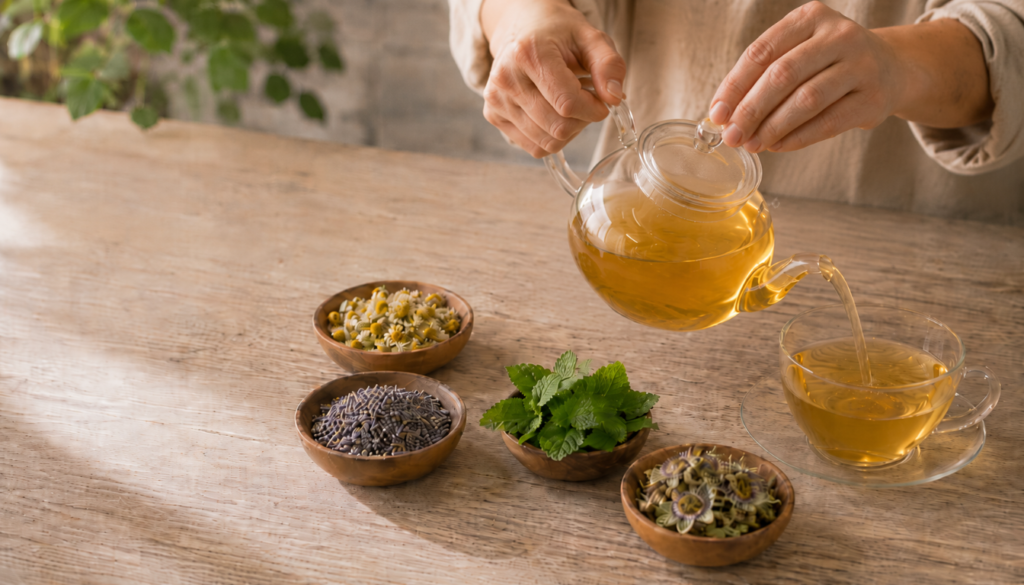
Below are the main herbs I actually reach for in clinic, plus one or two more specialised options. I’ll focus on how I use them, not theoretical lists.
Ashwagandha (Withania somnifera)
Ashwagandha is an adaptogen I use a lot in patients with chronic stress, “tired but wired” states, and anxiety mixed with fatigue.
What it may do:
- Help normalise HPA axis and lower raised cortisol.
- Support stress resilience, cognitive function and sleep quality.
- Modestly improve anxiety and low mood in several trials.
How I think of it clinically:
- Best suited to people who are depleted, overwhelmed or recovering from long‑term stress.
- Helpful when anxiety and poor sleep sit on top of exhaustion, rather than pure agitation.
Safety notes:
- Can be stimulating for a few people in the short term; I often start low and build slowly.
- Use caution with hyperthyroidism or thyroid medication.
- I avoid in pregnancy unless I am co‑managing with the patient’s doctor.
Chamomile (Matricaria recutita)
Chamomile is gentle but not trivial. I use it for milder anxiety, digestive tension, and sleep problems.
What it may do:
- Reduce generalised anxiety symptoms in some people, especially at higher extract doses.
- Soothe tension in the gut and smooth muscle.
- Support better pre‑bed winding down.
Who it suits:
- People with “nervous stomach”, light sleep and background worrying.
- Those who want a very gentle starting point.
Safety:
- Generally safe, but I am cautious in anyone with known ragweed or Asteraceae allergy.
Lavender (Lavandula angustifolia)
Lavender is one of the better‑studied herbs for anxiety and mood, particularly as an essential oil or oral extract.
What it may do:
- Reduce anxiety scores in some trials, including settings like dental procedures and generalised anxiety.
- Support sleep onset and perceived calm.
- Possibly modulate GABA and serotonin pathways.
How I use it:
- As aromatherapy (diffuser, bath, pillow) in lighter cases or as an adjunct.
- As standardised oral preparations in selected patients who prefer something very simple.
Safety:
- Topical oil can irritate sensitive skin.
- Oral products can cause mild digestive upset or drowsiness in some people.
Valerian root (Valeriana officinalis)
Valerian is a classic sedative herb I use primarily for insomnia with anxious over‑thinking.
What it may do:
- Enhance GABA signalling and reduce sleep‑onset time.
- Modestly reduce anxiety in some small studies.
How I use it:
- Short courses for periods of poor sleep with anxiety.
- Often combined with other calming herbs to reduce the dose.
Safety:
- Can cause drowsiness, vivid dreams, headache or “morning fog” in some people.
- I do not combine it with alcohol, sedative drugs, or other heavy sleep aids.
Passionflower (Passiflora incarnata)
Passionflower is a calming “nervine” I use for racing, looping thoughts and mild to moderate anxiety.
What it may do:
- Increase GABA activity and reduce subjective anxiety.
- Help people settle at night without strong sedation.
How I use it:
- As tea, tincture or capsule, often as part of a blend with other calming herbs.
- For busy minds and “nervous tension” in the chest.
Safety:
- Can cause drowsiness or dizziness in higher doses.
- I avoid combining high doses with other sedating herbs and drugs.
(For a detailed look at specific passionflower products, I keep that on a separate supplements page, and link to it from here.)
Lemon balm (Melissa officinalis)
Lemon balm is a pleasant‑tasting herb that can gently lift mood and reduce mild anxiety.
What it may do:
- Improve calmness and cognitive performance in short‑term studies.
- Support sleep and digestion.
Who it suits:
- People with “keyed‑up” anxiety and digestive upset, who want a tea they can drink through the day.
Safety:
- Usually well tolerated; occasional headache or nausea in some people.
Kava (Piper methysticum) – important cautions
Kava has some of the strongest short‑term evidence for reducing anxiety symptoms, but also the most serious safety concerns.
What it may do:
- Reduce anxiety scores in mild to moderate generalised anxiety in several trials.
- Produce noticeable calm without heavy sedation in many users.
Why I am cautious:
- There have been rare but serious reports of liver injury and liver failure associated with kava, especially with heavy use and when combined with other hepatotoxic agents.
- Reputable bodies advise people with liver disease, heavy alcohol use, or those on liver‑active drugs to avoid it.
How I handle it:
- I treat kava as a specialist option rather than a casual tea.
- If used at all, it is short term, with careful attention to liver health, alcohol intake and other medicines.
- I do not combine it with other sedatives or hypnotic medications.
Galphimia glauca (more specialised)
Galphimia glauca is a less well‑known Mexican shrub with some interesting early data for anxiety, particularly social and generalised types.
What the research suggests:
- Several small clinical trials have shown reductions in anxiety symptoms, sometimes compared with pharmaceutical agents.
- Proposed actions include effects on serotonin, MAO and the HPA axis.
How I approach it:
- I see it as a second‑line or specialist herb, used where common options have failed or not been tolerated.
- Because products are less standardised, I prefer to handle it only in a supervised, one‑to‑one context.
Cannabidiol (CBD)
CBD sits slightly outside classic herbalism, but many patients ask about it.
What it may do:
- In experimental settings, CBD has reduced anxiety in people with social anxiety, GAD and PTSD in some studies.
- Proposed actions involve the endocannabinoid system and serotonin receptors.
Cautions:
- Product quality and actual CBD content vary widely.
- Potential interactions with other CNS‑active drugs and with liver enzymes.
- Legal status and regulation differ by country.
Because of these issues, I always treat CBD as a medicine to be checked and monitored, not a casual wellness product.
Other Helpful Supplements
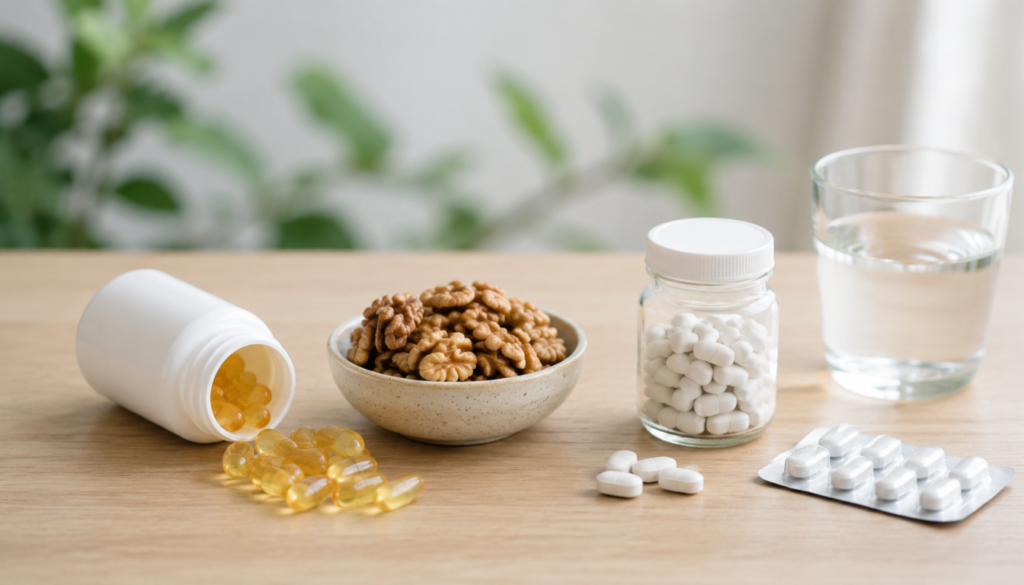
I don’t treat omega‑3 or magnesium as primary anxiety treatments, but they often make the rest of the plan work better by supporting the nervous system and stress response. Two non‑herbal supplements I often consider alongside herbs are omega‑3 fatty acids and magnesium.
- Omega‑3 fatty acids: EPA and DHA from fish oil have anti‑inflammatory and neuroprotective effects and appear helpful in some anxiety and mood contexts.
- Magnesium: involved in hundreds of reactions, including nerve function and NMDA receptor activity. Low intake is linked with anxiety, irritability and poor sleep in some people.
I use them to support the nervous system and HPA axis while the main herbal and lifestyle work takes effect.
Choosing The Right Herbs For Anxiety
There is no single “best” herb for anxiety. The right choice depends on:
- The type of anxiety (generalised worry, social anxiety, panic, trauma‑related).
- The pattern of symptoms (wired and exhausted, tense and over‑thinking, gut‑based, sleep‑driven).
- Your medical history, current medications and sensitivity.
- Practical factors such as availability, cost and preferred form (tea, tincture, capsules).
A few patterns I see often:
- Racing thoughts, light insomnia, mild daytime anxiety: chamomile, passionflower, lemon balm, sometimes lavender.
- Burnout, long‑term stress, anxiety with fatigue: ashwagandha ± magnesium and lifestyle rebuilding.
- Sleep‑driven anxiety with difficulty switching off at night: valerian, passionflower, chamomile as short‑term support.
- More severe or long‑standing anxiety: herbs used as adjuncts to therapy and, when needed, medication, rather than as the main treatment.
Whatever the pattern, I always:
- Check for possible interactions with existing drugs or conditions.
- Start low, increase slowly, and monitor response.
- Review after a reasonable trial, often 4–6 weeks.
Safety, Interactions and Quality
Herbs are active medicines. They deserve the same respect you would give a drug.
Key points I always emphasise:
- Regulation: in most countries, herbal supplements are regulated as foods, not as drugs, so quality and potency can vary.
- Interactions:
- Sedating herbs (valerian, passionflower, kava, hops) can add to the effects of sleeping tablets, benzodiazepines, opioid painkillers and some antidepressants.
- Kava and other herbs metabolised in the liver can interact with liver‑active drugs or existing liver disease.
- Special groups: pregnancy, breastfeeding, serious medical conditions, and children all need extra caution and usually one‑to‑one support.
- Product quality: I prefer products with:
I always invite patients to bring along every bottle they are taking so we can look at them together.
Other Helpful Supplements
I don’t treat omega‑3 or magnesium as primary anxiety treatments, but they often make the rest of the plan work better by supporting the nervous system and stress response. Two non‑herbal supplements I commonly consider alongside herbs are omega‑3 fatty acids and magnesium.
Omega‑3 fatty acids: EPA and DHA from fish oil have anti‑inflammatory and neuroprotective effects and appear helpful in some anxiety and mood contexts.
Magnesium: This mineral is involved in hundreds of reactions, including nerve function and NMDA receptor activity. Low intake is linked with anxiety, irritability and poor sleep in some people.
Treatment Options To Combine With Herbs For Anxiety
Herbs tend to work best when they are woven into a broader plan. In addition to the medical and lifestyle approaches already mentioned, I often encourage:
- Structured exercise: at least moderate activity most days.
- Sleep hygiene: regular bed and wake times, a simple winding‑down routine, and a bedroom reserved for sleep and intimacy.
- Relaxation techniques: deep breathing, progressive muscle relaxation, gentle yoga, or guided meditations.
- Social support: staying connected to trusted people rather than withdrawing.
- Therapeutic work: especially CBT and related methods for entrenched anxiety patterns.
When To Seek Professional Help
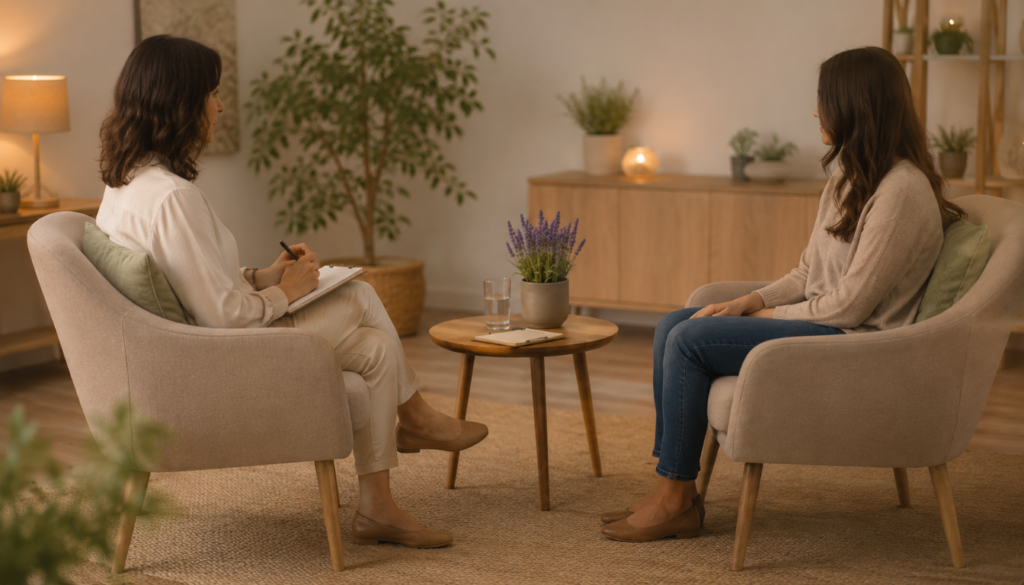
Herbs and lifestyle changes are not enough on their own when:
- Anxiety attacks are frequent, intense, or feel out of control.
- Worry is constant and out of proportion to what is happening.
- You avoid key parts of life because of fear.
- You notice signs of depression: low mood, loss of interest, hopelessness, thoughts of self‑harm.
- Alcohol or drugs are being used to self‑medicate anxiety.
- Physical symptoms (chest pain, breathlessness, dizziness) are severe or concerning.
- Work, studies, relationships or parenting are suffering.
In those situations, herbs can still play a useful supporting role, but they must sit inside a plan that includes proper medical and psychological care. There is no weakness in asking for help; it is a sign that you are taking your health seriously.
If you ever have thoughts of harming yourself, feel detached from reality, or cannot manage basic daily tasks because of anxiety, that is an emergency situation for medical care, not a case for herbs alone.
Before You Go – Herbs For Anxiety
Herbs for anxiety are not magic bullets, but they can be powerful allies when used thoughtfully. The research base is steadily growing, with good support for herbs such as ashwagandha, lavender, chamomile, passionflower, valerian and, more cautiously, kava.
In my practice, I rarely rely on a single plant. I look at the whole picture: your stress load, sleep, medical history, medications, and personal preferences. Only after that I build a plan that may include herbs, lifestyle changes, therapy, and sometimes medication. When done this way, herbs can help many people move from constant tension towards a calmer, more grounded life.
Always discuss new herbal treatments with your doctor or another qualified practitioner, especially if you are already on medication, have a complex health history, or are pregnant or breastfeeding.
References – Herbs For Anxiety
Little Herb Encyclopedia, by Jack Ritchason; N.D., Woodland Publishing Incorporated, 1995
The Ultimate Healing System, Course Manual, Copyright 1985, Don Lepore
Planetary Herbology, Michael Tierra, C.A., N.D., Lotus Press, 1988
Handbook of Medicinal Herbs, by James A. Duke, Pub. CRP Second Edition 2007
The Complete Medicinal Herbal, by Penelope Ody, Published by Dorling Kindersley
Medicinal herbs for the treatment of anxiety: A systematic review and network meta‑analysis. Phytomedicine. 2022.
Thompson et al. Herbal medicine for anxiety and related conditions: a review of clinical evidence and safety concerns. (From the Herbal Medicine review.)
Related Article
Herbal Remedies Books: The Best Natural Healing Guides
Frequently Asked Questions – Herbs For Anxiety
What is the best herb for anxiety?
There is no single “best” herb for anxiety. In practice I match the plant to the person: chamomile, passionflower, lemon balm or lavender often suit milder anxiety, while ashwagandha and sometimes valerian are more useful when stress, fatigue and sleep problems sit together. Kava is one of the stronger options, but I treat it as a specialist herb because of its liver‑related risks.
Do herbal remedies for anxiety really work?
Some herbs have meaningful evidence from clinical trials and systematic reviews, including ashwagandha, lavender, passionflower, saffron, chamomile and kava. Results are promising but not perfect: studies are often small, short‑term and use different preparations, so we still need better research. In my clinic, I see herbs work best as part of a complete plan that also addresses sleep, stress load and, where needed, therapy or medication.
Are herbs for anxiety safer than prescription medication?
“Safer” depends on the person. Herbs generally have a different side‑effect profile and can feel gentler, but they still interact with medicines and can cause problems. Kava, for example, has been linked to rare but serious liver injury, especially with alcohol or liver‑active drugs. Sedating herbs such as valerian and passionflower can add to the effects of sleeping tablets, benzodiazepines and other CNS depressants. This is why I ask patients to treat herbs as medicines and always discuss them with their doctor or pharmacist.
Is kava a good option for anxiety relief?
Kava can reduce anxiety symptoms for some people, but it carries important risks. There have been rare cases of severe liver damage and liver failure linked with kava use, sometimes requiring transplant. It can also interact with alcohol, benzodiazepines, sleeping tablets and other drugs that rely on liver metabolism. Because of this, I only consider kava short‑term, at conservative doses, in people without liver disease, and always alongside medical supervision.
How long do herbal treatments for anxiety take to work?
Timeframes vary. Calming nervines such as chamomile, lemon balm, lavender and passionflower can take the edge off within hours or days in some people. Adaptogens like ashwagandha usually need several weeks of regular use before you see clear changes in stress resilience and baseline anxiety. If there is no noticeable benefit after 4–6 weeks, I review the plan rather than simply adding more herbs.
Can I take herbs for anxiety if I am already on antidepressants or benzodiazepines?
Sometimes yes, but this always needs a careful interaction check. Sedating herbs (valerian, kava, passionflower, hops) can intensify drowsiness and impair coordination if combined with benzodiazepines, Z‑drugs or strong painkillers. Kava in particular can be dangerous with certain psychiatric medications and alcohol. If you take any prescription medicine, the safest approach is to involve your prescriber before you add herbal products.
Are these herbs safe in pregnancy or breastfeeding?
Evidence in pregnancy and breastfeeding is very limited for most herbs, and some (including kava and possibly valerian) are specifically advised against. In my practice I avoid using strong anxiolytic herbs in pregnancy unless I am co‑managing with the patient’s obstetric team, and I focus on non‑pharmacological measures first. If you are pregnant, trying to conceive, or breastfeeding, treat any herbal supplement as a medicine and get individual advice before you use it.