The Herb Prof Team researches and writes our herbal guides, drawing on published research, traditional herbal references, and hands-on growing experience.
Herbalist Matthew Wood is one of the best‑known contemporary practitioners of traditional Western herbalism. Since the early 1980s he has combined deep study of European and North American plant traditions with decades of clinical work and teaching. For students who want to understand herbs as more than isolated chemicals, his work offers a rich, experiential approach.
In this article, I will introduce who Matthew Wood is and how he practises. I will also outline the key themes in his books and teaching. Finally, we will look at how to decide whether his material is a good fit for you.
Who Is Herbalist Matthew Wood?
Matthew Wood has been practising herbalism since 1982. He is widely recognised as a leading figure in traditional Western herbalism. Over the course of his career, he has:
- Worked with thousands of clients in clinical practice
- Become a registered herbalist (RH) with the American Herbalists Guild
- Earned a Master of Science degree in herbal medicine from the Scottish School of Herbal Medicine, accredited by the University of Wales
- Lectured extensively across the United States, Canada, the UK, and Europe
Unlike purely academic authors, Wood’s writing and teaching are rooted in direct clinical experience. He is less interested in abstract theory and more in what herbs actually do in real bodies over years of practice.
Matthew Wood’s Approach to Herbalism
Wood’s work sits firmly in the Western herbal tradition. Rather than adopting Chinese or Ayurvedic systems, he has focused on European and North American herbs and the historical texts that describe their use.
Several themes stand out in his approach:
- Traditional Western herbalism – working with herbs as they have been used in European and North American folk and medical traditions for centuries.
- Energetics and “vitalism” – understanding herbs in terms of qualities such as hot/cold, damp/dry, tense/relaxed, and how they shift the body’s overall pattern, not just its lab numbers.
- Doctrine of Signatures – exploring the idea that a plant’s appearance can hint at its affinities in the body (for example, heart‑shaped leaves and heart medicine).
- Case‑based teaching – using detailed case histories to show how herbs behave in practice, not just on paper.
This blend of traditional doctrine, energetic thinking, and clinical casework gives his books their characteristic flavour.
Key Books and Topics
Matthew Wood has written several influential books. Some of the best known include:
- Seven Herbs, Plants as Teachers – an early work focusing on a small number of plants in depth, using them as gateways into the wider world of herbalism.
- The Book of Herbal Wisdom – a collection of clinical insights and plant portraits that many herbalists consider essential reading.
- The Practice of Traditional Western Herbalism – explores the theory and practice of Western energetics and vitalism.
- The Earthwise Herbal, Volumes I & II – comprehensive guides to Old World and New World medicinal plants. These books profile hundreds of herbs, with detailed discussion of their indications, energetics, and case histories.
Across these works, Wood places strong emphasis on the ‘logic’ of each plant. He looks at how it acts in the body, which tissues it favours, and what symptom patterns point toward its use.
The Matthew Wood Institute of Herbalism
The Matthew Wood Institute of Herbalism is his online teaching platform. It offers courses for students at different levels of experience.
Typical offerings include:
- Foundational courses in traditional Western herbal energetics
- Deep dives into specific body systems (heart and cardiovascular, digestion, nervous system, etc.)
- Classes on topics such as the Doctrine of Signatures and plant spirit medicine
- Longer programmes like the “Vital Herbalist” track, designed to guide students through a structured year of study
Courses are delivered online, making them accessible internationally. Many students choose to study with him alongside other schools or clinical training.
How Matthew Wood’s Work Fits into Your Herbal Journey
For readers of The Herb Prof, Wood’s work is most valuable in two situations:
- You are serious about Western herbalism and want to understand herbs at a deeper level than “X herb is good for Y condition.” His writing encourages you to see the whole pattern in a person and match herbs to that, rather than chasing single symptoms.
- You already have some basic grounding in anatomy, physiology, and safety, and you want to add a richer, more intuitive layer to your practice. His material assumes you are prepared to think carefully, not just memorise lists.
Like any strong perspective, his approach is best used as one influence among several. I always encourage students to balance traditional and energetic thinking with modern clinical research. It is also important to keep clear boundaries around safety and scope of practice.
How I Suggest Using Matthew Wood’s Material
If you decide to study with Matthew Wood or work through his books, I recommend approaching them as a long‑term study, not a quick fix. His plant profiles assume you are willing to sit with a herb, observe how it behaves over time, and match it carefully to the right person. Skipping straight to “this herb is good for X” will miss most of what he offers.
For practitioners, I find his work most useful in three ways: deepening your sense of plant energetics, broadening your picture of what a herb can do beyond its main headline uses, and sharpening your case‑taking skills by studying how he matches herbs to patterns. For home users, I would treat his books as reference material rather than instruction manuals. Always keep safety, dosage, and possible interactions in mind.
Before You Go – Herbalist Matthew Wood
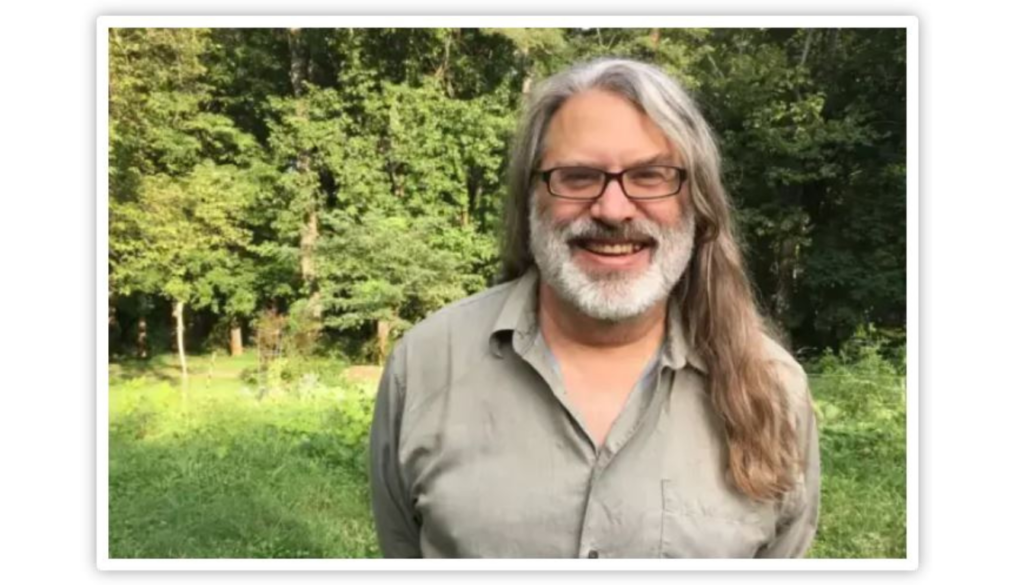
Matthew Wood has played a significant role in keeping traditional Western herbalism alive. He works in a world that often favours either pharmaceuticals or imported systems. His blend of historical scholarship, clinical practice, and plant energetics has influenced thousands of herbalists and students worldwide.
If you are drawn to Western herbalism and want to see how one practitioner has integrated old texts, long‑term clinical work, and a living relationship with plants, his books and courses are well worth exploring. As always, treat any teacher, including Matthew Wood and myself, as one voice in a larger conversation. Keep your decisions grounded in both tradition and good evidence.
Enjoyed this article? Add theherbprof.com to your favourites and stay up to date with the latest herbal health guides.
Please note: This article is for general educational purposes only and is not a substitute for personalised medical advice, diagnosis, or treatment. Always speak with a qualified healthcare provider about your own situation.
References – Herbalist Matthew Wood
Little Herb Encyclopedia, by Jack Ritchason; N.D., Woodland Publishing Incorporated, 1995
The Ultimate Healing System, Course Manual, Copyright 1985, Don Lepore
Planetary Herbology, Michael Tierra, C.A., N.D., Lotus Press, 1988
Handbook of Medicinal Herbs, by James A. Duke, Pub. CRP Second Edition 2007
The Complete Medicinal Herbal, by Penelope Ody, Published by Dorling Kindersley
Related Articles
Herbalist Career: What to Expect and How to Start
Herbalist Meaning: What It Really Means to Work With Plants
Frequently Asked Questions – Herbalist Matthew Wood
What are some of Matthew Wood’s indispensable herbs?
In his books and teaching, Matthew Wood often highlights a core group of “indispensable” herbs that he returns to again and again in practice. These include Echinacea, Skullcap, Lobelia, and Blue Vervain, along with others covered in detail in The Earthwise Herbal and The Book of Herbal Wisdom. He treats these herbs not as quick fixes, but as deep constitutional remedies used in specific patterns rather than for generic symptoms.
How does Matthew Wood use borage in herbal practices?
Wood describes borage as a cooling, moistening herb. It helps when heat and dryness are dominant in a person’s pattern. In his approach, borage can ease fevers, hot flushes, and inflammatory states. He also uses it to support the adrenal glands and general resilience in times of stress and exhaustion. He often places it in formulas for people who feel “burnt out” or dried out by long‑term strain.
What is Matthew Wood’s approach to using yarrow medicinally?
Yarrow is one of Wood’s key herbs for boundary and circulation issues. Traditionally used to stop bleeding and treat wounds, he also uses it for fevers, colds, and flu when the body needs help “breaking” a fever and moving stagnant circulation. He emphasises its ability to tighten and seal tissues, both physically (wounds) and energetically (people who feel too permeable to their environment).
Can lemon balm be used for relaxation, and how does Matthew Wood recommend its use?
Lemon balm is a gentle calming herb in Wood’s system, particularly useful for nervous agitation, mild anxiety, and sleep difficulties tied to an overactive mind. He often recommends it for children, sensitive adults, and those whose digestion is affected by nervous tension, using it as a tea or tincture in small, regular doses.
What are Matthew Wood’s insights on boneset in herbal healing?
Boneset is a classic fever herb in Western herbalism, and Wood follows that tradition. He uses it for deep, aching flu‑like states where the bones and muscles feel “beaten.” He also uses it for stubborn fevers with chills and alternating hot and cold. In his practice, boneset supports the immune system’s efforts rather than simply suppressing fever or pain.
Where can I find Matthew Wood’s publications or blog on herbalism?
Matthew Wood’s major books, including The Earthwise Herbal volumes, The Book of Herbal Wisdom, and The Practice of Traditional Western Herbalism, are available through major booksellers. They are also available from his publishers. His online courses and longer programmes are offered through the Matthew Wood Institute of Herbalism. The institute also hosts free and introductory classes for new students.