
The Herb Prof Team researches and writes our herbal guides, drawing on published research, traditional herbal references, and hands-on growing experience.
Passionflower supplements are a popular natural option for easing mild to moderate anxiety and supporting more restful sleep. Passionflower (Passiflora incarnata), often written as passion flower on supplement labels, is a traditional calming herb used for restlessness, nervous tension, and difficulty sleeping.
Modern research suggests that passionflower may help reduce symptoms of generalized anxiety and improve sleep quality for some individuals, especially when used regularly and at appropriate doses. It is typically taken as capsules, tinctures, or teas, each form offering slightly different onset, convenience, and intensity of effect.
This guide reviews several well‑known passionflower supplements, explains how they differ, and outlines how to choose a product and dose that fits individual needs, while staying within sensible safety limits.
How Passionflower Supplements May Help Anxiety And Sleep
Passionflower appears to work by gently influencing the balance of calming and excitatory signals in the brain, particularly through the GABA (gamma‑aminobutyric acid) system, which plays a key role in relaxation and sleep. Traditional use and early clinical studies suggest it can reduce subjective feelings of anxiety, improve sleep quality, and decrease physical tension in some people.
Most evidence so far comes from small human trials and animal studies, so passionflower should be viewed as a supportive tool rather than a cure‑all. Effects are usually gradual and subtle: when it helps, people typically describe feeling calmer, less “wired,” and better able to fall asleep, rather than heavily sedated.
Passionflower is just one of several herbs that can help with anxiety; for a broader overview of options, see my article on the best herbs for anxiety.
Best Passionflower Supplements
Below you will find a quick comparison table, followed by detailed notes on each product, a buying guide, and answers to common questions.
| Product | Approx. dose per serving | Form | Key features | Best suited for |
|---|---|---|---|---|
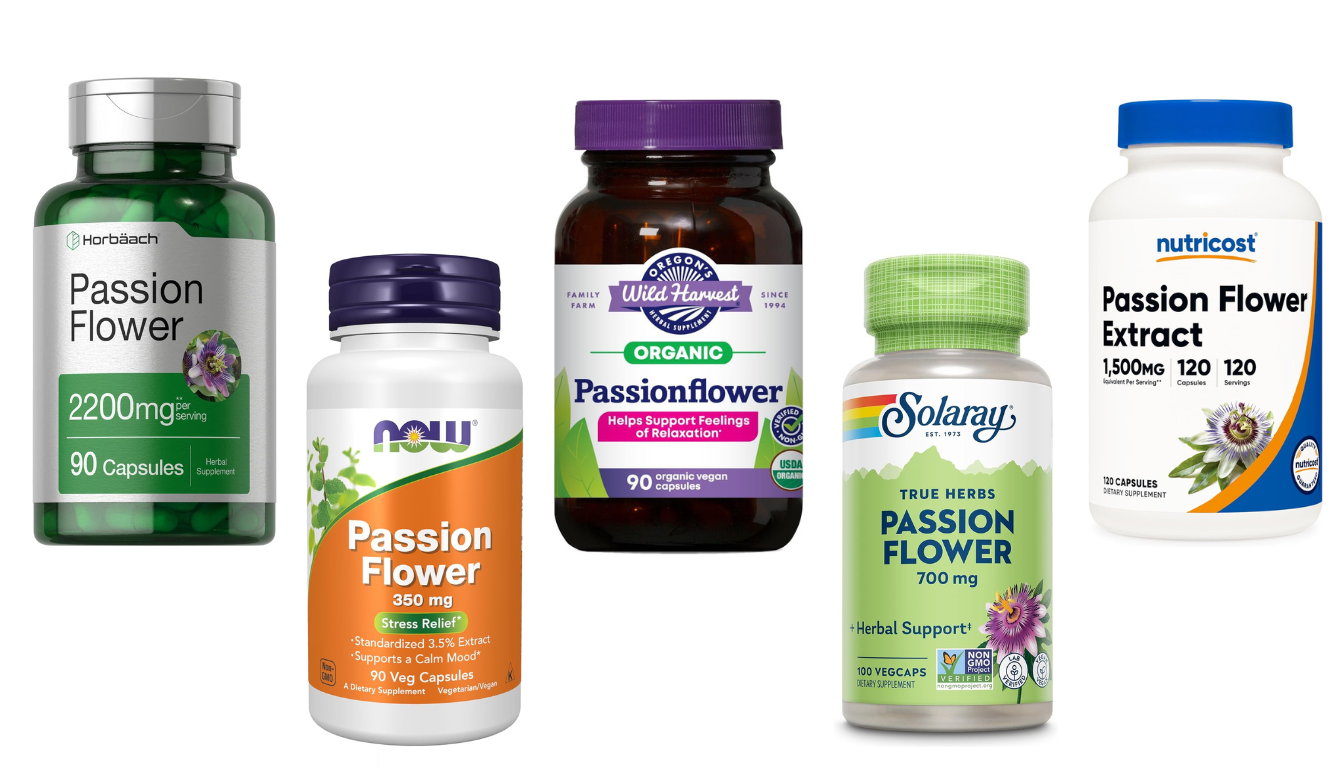
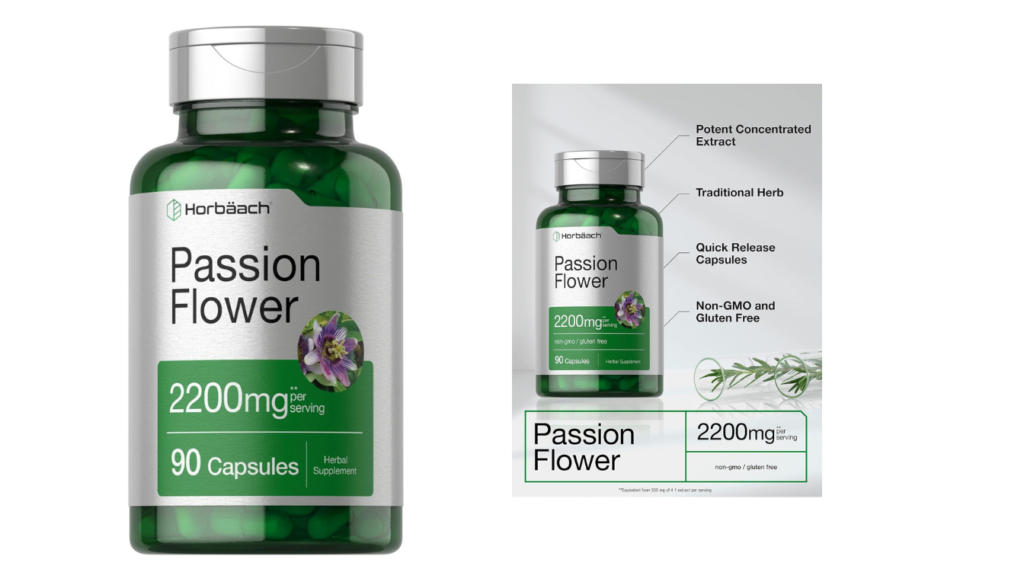
| Horbäach Passion Flower | 2,200 mg equivalent | Capsules | High‑equivalent dose, lab‑tested, non‑GMO | Stronger evening support for stress and sleep |
| Solaray Passion Flower Capsules | 700 mg whole herb | Capsules | Whole aerial parts, vegan, Non‑GMO verified | Gentle daytime or evening calming |
| Nutricost Passion Flower | 1,500 mg equivalent | Capsules | Concentrated extract, good value, non‑GMO | Night‑time use and deeper relaxation |
| NOW Passion Flower Capsules | 350 mg standardized (3.5%) | Capsules | Standardized extract, GMP brand | More precise dosing and consistency |
| Oregon’s Wild Harvest Passion Flower | Whole organic herb | Capsules | Certified organic, vegan, non‑GMO | Clean, plant‑only option for regular use |
Horbäach Passion Flower – Get Yours Here
This high‑equivalent capsule is suitable for people who want a stronger, once‑or‑twice daily passionflower dose for stress and sleep support.
Pros
- 2,200 mg equivalent passionflower per serving
- Non‑GMO and gluten‑free
- Lab‑tested for purity and potency
Cons
- Can cause heartburn if taken on an empty stomach
- Calming effects may take a week or two to build
- Capsule size may be large for some
Higher‑equivalent capsules like this can be useful for those who want something simple: one capsule in the evening (and sometimes a second earlier in the day) to take the edge off continuous stress. The stronger equivalent dose may help some people fall asleep more readily and stay asleep more consistently when taken regularly over several days. Taking it with food often reduces the chance of mild heartburn in sensitive individuals.
Because the formula is non‑GMO and gluten‑free, it usually suits people with common dietary restrictions. The independent lab testing is another key point to look for: herbs are only as good as their growing and manufacturing, and third‑party testing is one of the better safeguards available.
Solaray Passion Flower Capsules – Get Yours Here
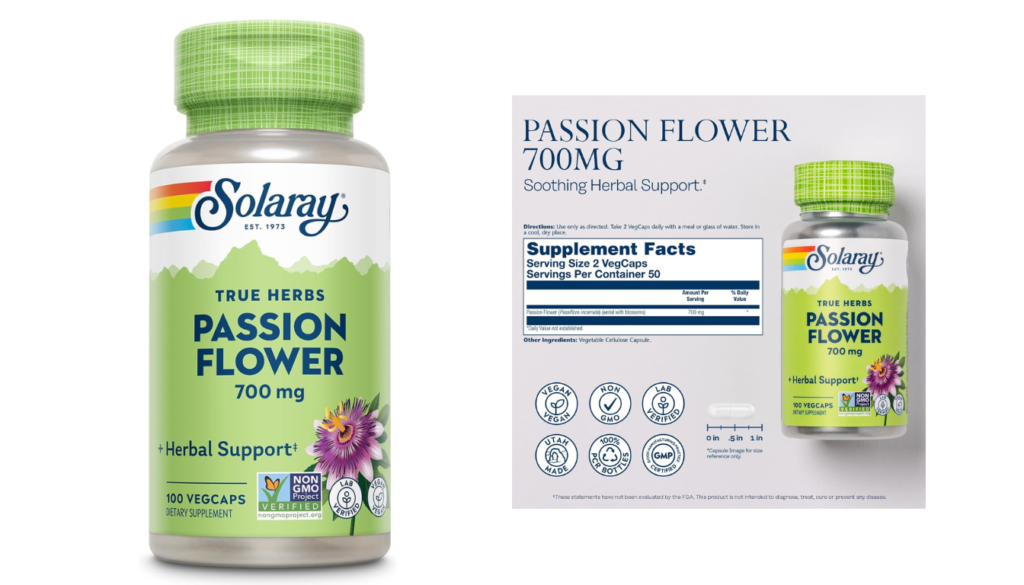
These capsules are a good fit for those who prefer a whole‑herb approach and want a moderate, steady dose for daytime calm.
Pros
- 700 mg of whole aerial parts per capsule
- Vegan and Non‑GMO Project verified
- Made in a GMP‑certified facility
Cons
- May cause mild drowsiness
- Effects tend to build gradually
- Capsules are on the larger side
Whole‑herb preparations like this can feel “softer” than very concentrated extracts, which can be ideal for people who are sensitive to herbs or only need gentle calming support. They are often used once or twice during the day to take the edge off stress, or in the early evening to help the nervous system wind down.
Solaray’s focus on Non‑GMO, vegan capsules and GMP manufacturing gives extra reassurance for long‑term use. A sensible approach is to start with one capsule in the evening for a few days to gauge drowsiness, then adjust the timing or dose if needed.
Nutricost Passion Flower Supplements – Get Yours Here
This option suits those who want strong value for money and a more concentrated capsule as part of their night‑time routine.
Pros
- 1,500 mg equivalent per capsule
- 120‑capsule bottle offers a long supply
- Non‑GMO and vegetarian‑friendly
Cons
- May trigger vivid dreams in some
- Possible morning drowsiness
- Occasional skin reactions in very sensitive people
Concentrated passionflower extracts like this are often most helpful in the evening for people whose anxiety shows up as difficulty falling asleep or staying asleep. The stronger equivalent dose can support deeper relaxation when used consistently, but it is important to listen to the body and adjust the timing if morning grogginess appears.
The clean label, vegetarian capsules, non‑GMO, minimal fillers, makes this type of product a reasonable choice for longer stretches of use, provided users check in regularly with how they feel. If vivid dreams occur, reducing the dose slightly or taking it earlier in the evening can be helpful.
NOW Passion Flower Capsules – Get Your Here
This is a sensible choice for those who want a standardized extract from a long‑established supplement company.
Pros
- Standardized 3.5% extract for consistent potency
- Designed to promote relaxation naturally
- Produced by a well‑known, GMP‑compliant brand
Cons
- Drowsiness is possible in some users
- Not everyone feels the same level of effect
- Best reserved for shorter to medium‑term use
Standardized extracts provide a more predictable amount of key plant compounds from capsule to capsule, which is clinically helpful when fine‑tuning dose. This type of product is often used either in the early evening for busy, over‑active minds, or occasionally during the day when someone needs to soften anxiety but can tolerate some drowsiness.
Because passionflower is a calming herb, it is safest not to combine it with other sedatives without professional guidance. With this type of standardized extract, it is wise to start low, observe the response over several days, and only then consider increasing.
Oregon’s Wild Harvest Passionflower Supplements – Get Yours Here
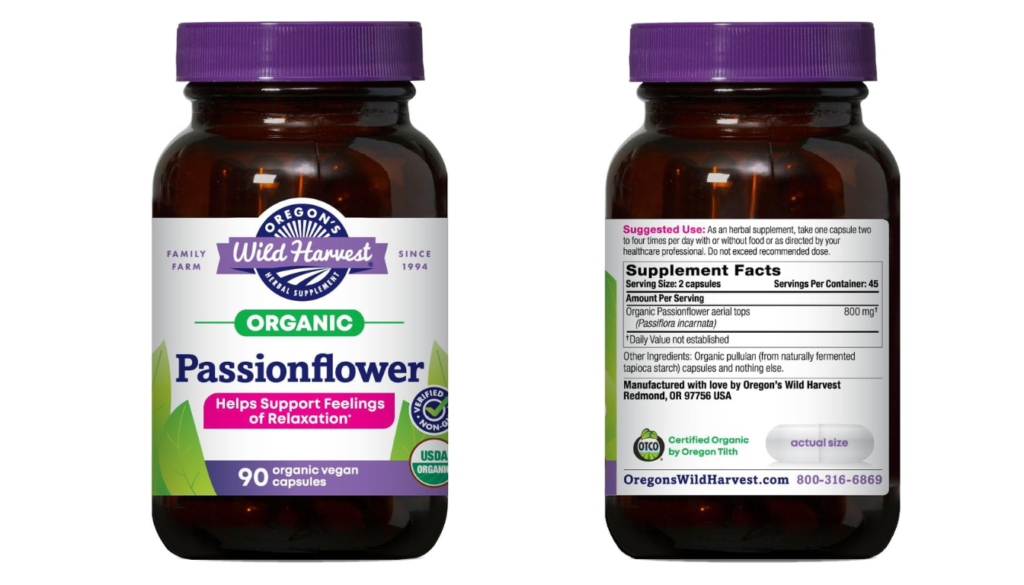
These organic, whole‑herb capsules suit people who value careful sourcing and want a clean, plant‑only option.
Pros
- Certified organic and non‑GMO ingredients
- Often helpful for relaxation and sleep support
- Vegan‑friendly capsules
Cons
- May still cause drowsiness in some
- Individual responses vary
- Higher price point than some alternatives
Organic whole‑herb products appeal to many who already focus on clean, sustainable food and supplements. This type of capsule can work well as an evening calming aid, or at a lower dose during the day for people with milder tension who still need to function clearly.
Because effects can fade slightly with continuous daily use for some, cycling can be useful – for example, five days on and two days off, or taking a break after a few weeks to reassess whether the herb is still needed.
Buying Guide – How I Choose Passionflower Supplements
When I select a passionflower supplement, either for myself or a patient, I look at several key factors.
1. Quality and testing
Look for:
- Clear mention of Good Manufacturing Practices (GMP).
- Third‑party testing for purity and potency where possible.
- Transparent labelling of plant part used (usually aerial parts) and extract ratio or standardization.
Herbal products are not regulated like pharmaceuticals, so these quality markers are among the best tools for choosing safer, more reliable supplements.
2. Form: capsules, tinctures, or tea
Different forms suit different people:
- Capsules – convenient, easy to dose, and travel‑friendly.
- Tinctures – absorbed relatively quickly and easy to adjust drop by drop.
- Teas – gentle, and become a relaxing ritual as much as a treatment.
Matching the form to lifestyle is important. A busy person who forgets multiple doses might do best with a single evening capsule, whereas someone who enjoys an evening wind‑down routine may prefer a strong passionflower tea.
3. Dose and sensitivity
Check:
- The amount of passionflower per serving.
- Whether it is a whole herb or standardized extract.
It is sensible to start at the lower end of the suggested range, especially for people who are sensitive to herbs, on other medications, or prone to low blood pressure or daytime fatigue. It is easier to slowly increase a dose than to recover from over‑sedation.
4. Other ingredients and blends
Some products combine passionflower with other calming herbs like valerian, lemon balm or hops. These combinations can be useful but also increase the risk of drowsiness and interactions. For targeted use, when you want to see how passionflower works on its own, it is usually better to choose a simple single‑herb formula.
5. Safety and when to be cautious
Passionflower is generally well tolerated, but there are a few situations where extra care is needed:
- Pregnancy and breastfeeding – best avoided, or used only under specialist guidance.
- Use alongside sedatives, sleep medicines, or alcohol – possible additive effects.
- Pre‑existing liver, kidney, or serious psychiatric conditions – discuss with the prescribing clinician before use.
It is best used as a supportive tool for mild to moderate stress, nervous tension, and sleep problems, not as a stand‑alone solution for severe anxiety, panic disorder, or major depression. In more serious cases it may still play a role, but only as part of a broader treatment plan.
Passionflower can also interact with other sedatives, sleep medicines, or anti‑anxiety drugs by enhancing their calming effects, and may not be appropriate for people who need to remain fully alert for driving or operating machinery. Anyone on prescription medication, especially for mood, seizures, blood pressure or sleep, should speak with a healthcare professional before starting regular use.
Before You Go – Passionflower Supplements
Passionflower can be a gentle ally for people dealing with ongoing stress, nervous tension, or difficulty winding down at night, especially when combined with good sleep habits, blood sugar balance, and realistic workload. It works best when used consistently, at appropriate doses, and with clear expectations that it will take the edge off, not erase anxiety completely.
If symptoms are severe, worsening, or associated with panic attacks, suicidal thoughts, or major depression, it is important to seek prompt medical advice rather than relying on herbs alone. Passionflower may still have a place in a broader plan, but it should sit alongside, not replace, professional assessment and treatment.
References – Passionflower Supplements
Little Herb Encyclopedia, by Jack Ritchason; N.D., Woodland Publishing Incorporated, 1995
The Ultimate Healing System, Course Manual, Copyright 1985, Don Lepore
Planetary Herbology, Michael Tierra, C.A., N.D., Lotus Press, 1988
Handbook of Medicinal Herbs, by James A. Duke, Pub. CRP Second Edition 2007
The Complete Medicinal Herbal, by Penelope Ody, Published by Dorling Kindersley
Related Articles
Herbal Supplements for Men’s Health: My Top 5
Echinacea Supplements: Top Immune Boosters
Valerian Root Supplements: Top Choices for Sleeping
Herbal Supplements for Brain Health: My Personal Top 5
Frequently Asked Questions – Passionflower Supplements
I’m often asked similar questions about passionflower. These answers reflect both the research and what I see in practice.
What are the potential side effects on the liver?
Passionflower has not been strongly linked with liver damage in the doses used in common supplements, and it is generally considered low‑risk for the liver in otherwise healthy people. However, we do not have the same depth of long‑term liver safety data as we do for many prescription medicines. If you have existing liver disease or take medications processed by the liver, I recommend speaking with your doctor before adding any herbal product.
How much passionflower should I take to improve sleep?
Most adults do well starting with a lower dose within the product’s recommended range, taken around 30–60 minutes before bed. In studies, doses equivalent to roughly 500–900 mg of passionflower have been used for sleep, but individual responses vary. I prefer to start at the lower end, observe sleep and next‑day alertness for a week, and then adjust if needed.
What is a typical dose for managing anxiety?
For general daytime anxiety, supplements often suggest doses in the region of 250–400 mg taken up to three times daily, or an equivalent amount of extract. In my practice, I am conservative: I start with once or twice daily, monitor for drowsiness, and only increase if someone tolerates it well. Always follow the instructions on the product label and seek personalised advice if you are on other medicines.
What do people usually report about its effectiveness?
Many people report that passionflower helps them feel calmer, less “keyed up,” and better able to fall asleep, especially when their anxiety is mild to moderate. Others notice little effect. It is not a sedative hammer; when it works, it tends to feel like a gentle smoothing of the edges rather than a knockout. As with all herbs, individual biology and expectations make a big difference.
How might passionflower affect the heart and kidneys?
There is no strong evidence that passionflower damages the heart or kidneys in healthy individuals at typical doses. However, it may slightly lower blood pressure or add to the sedative effects of other drugs in some people. If you have heart disease, low blood pressure, kidney disease, or take cardiac or kidney medications, you should speak with your healthcare provider before using it.
Can I take passionflower every day? What about long‑term use?
Many people take passionflower daily for weeks or months without obvious side effects, and short‑term studies generally find it well tolerated. That said, our long‑term data are limited. In my clinic, I encourage people to:
- Review their need for passionflower every few months.
- Take short breaks (for example, a week off every few months) when appropriate.
- Work on underlying drivers of anxiety or insomnia: sleep habits, caffeine, blood sugar, trauma, and so on, rather than relying on any herb indefinitely.