
The Herb Prof Team researches and writes our herbal guides, drawing on published research, traditional herbal references, and hands-on growing experience.
Holy basil vs Thai basil is one of the most common mix-ups in Thai cooking, and the two herbs taste very different. For example, Kaphrao, the Thai name for holy basil, is peppery and clove-like. Horapha, the Thai name for Thai basil, is sweet with an anise, licorice-like flavor. They are different species, so each one suits different dishes.
Holy Basil vs Thai Basil at a Glance
| Holy basil | Thai basil | |
|---|---|---|
| Thai name | Kaphrao (กะเพรา) | Horapha (โหระพา) |
| Botanical name | Ocimum tenuiflorum (also called tulsi) | Ocimum basilicum var. thyrsiflora, a sweet basil variety |
| Flavor | Peppery, spicy, clove-like | Sweet, with an anise or licorice note |
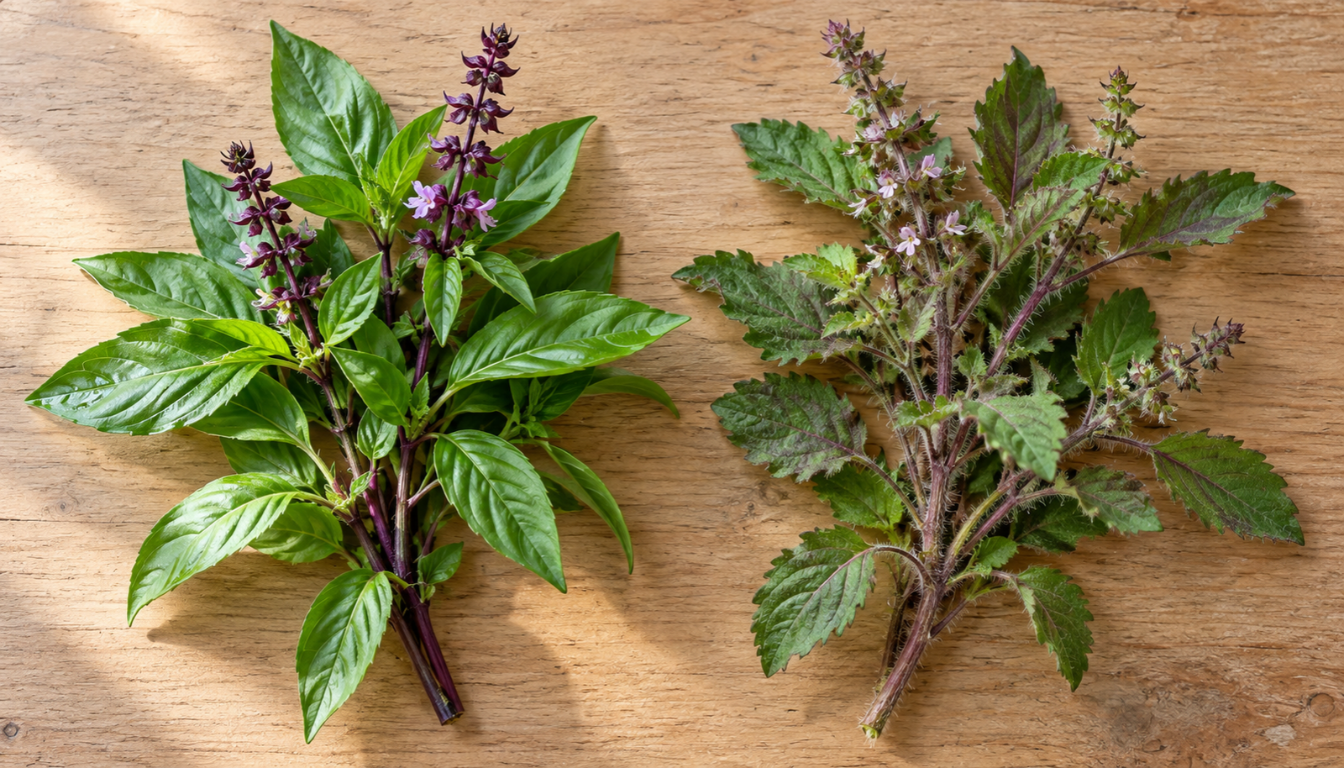
| Leaves | Fuzzy, with serrated edges; green or purple | Smooth, narrow, and pointed; bright green |
| Stems | Hairy; green or purple | Usually purple, with purple flowers |
| Best in | Pad kaphrao, drunken noodles, spicy stir-fries | Green and red curry, noodle soups like pho, fresh rolls |
How Holy Basil and Thai Basil Taste
Kaphrao is bold. It tastes peppery and spicy, with a clove-like aroma that gets stronger when cooked. Horapha, in contrast, is sweeter and gentler, with an anise or licorice flavor. Its larger, sturdier leaves also hold up well in curries.
Cooking With Each
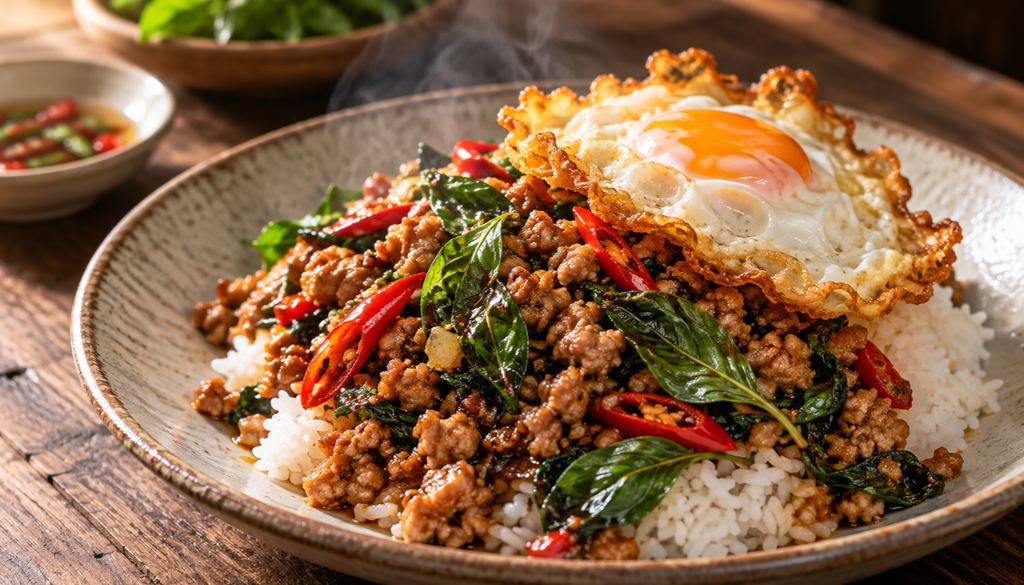
Add kaphrao at the very end of cooking, in the last 30 seconds or so. That way, the leaves keep their color and aroma, while overcooked leaves turn bitter. In Thailand, for instance, cooks use it for pad kaphrao and for drunken noodles.
Horapha, on the other hand, is the traditional choice for green and red curry. Cooks also use it in noodle soups, such as pho, and in fresh rolls.
Can you swap one for the other? You can, but the dish will taste different. Thai basil or Italian basil works in place of kaphrao, though Italian basil is milder and more floral. Traditionally, a stir-fry made with other basils isn’t called pad kaphrao. Cooks call it pad horapha instead.
How to Tell Holy Basil and Thai Basil Apart
- Leaves: Kaphrao leaves are fuzzy with serrated edges, while horapha leaves are smooth, narrow, and pointed.
- Stems: Horapha stems are usually purple, and the plant has purple flowers. Kaphrao stems are hairy and can be green or purple, so check the leaves too.
- Smell: Kaphrao smells peppery and clove-like, whereas horapha smells sweet, like anise.
- A third look-alike: Thai lemon basil (maenglak) has a lemony scent, and cooks use its leaves in certain curries.
Where to Find Each Herb
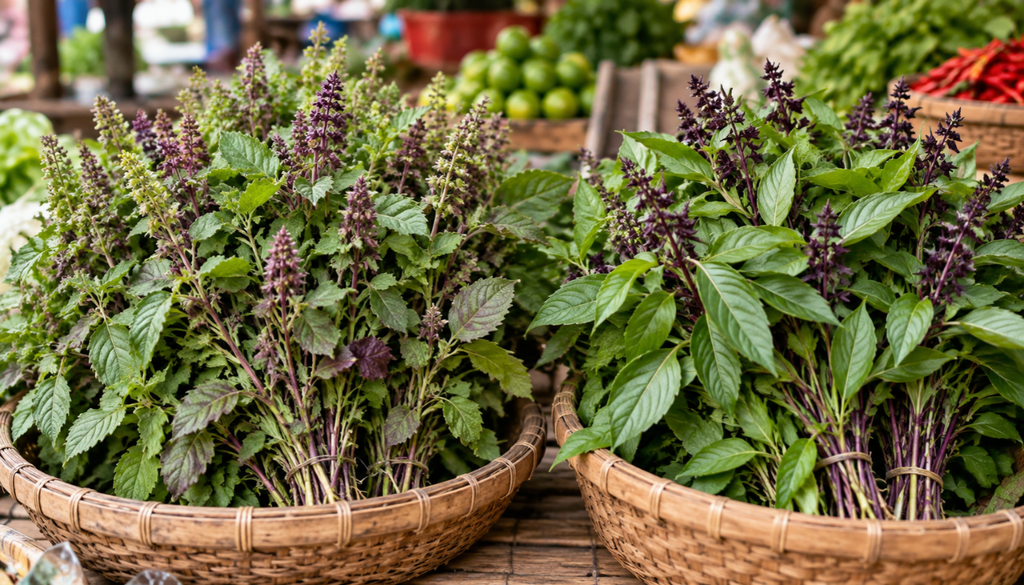
At most grocery stores, the basil labeled Thai basil is horapha, the sweet, anise-scented one. Kaphrao is harder to find. Look for it at Asian markets, where some stores sell it as hot basil, or grow it yourself from seed.
Health and Nutrition
Holy basil, also called tulsi, is a medicinal herb in Ayurveda, and early research on tulsi extracts looks promising for stress and mood. However, the evidence is limited, and tulsi isn’t a proven treatment for any condition. See our tulsi research and safety guide for the details and cautions. Thai basil is mainly a culinary herb. In the small amounts used in cooking, neither herb adds much in the way of vitamins or minerals.
Growing Both Herbs
Both are warm-season herbs, and frost kills them. Horapha is hardy only in very warm climates, and pinching off its flowers keeps the leaves from turning bitter. Kaphrao tends to grow more slowly and needs more heat, so gardeners in cooler climates grow it as an annual. For care and harvesting, see our guides on how to harvest basil and growing medicinal herbs.
Before You Go – Holy Basil vs Thai Basil
Holy basil and Thai basil aren’t interchangeable. Use kaphrao for peppery, clove-like stir-fries such as pad kaphrao, and use horapha for sweet, anise-scented curries and noodle soups. If you swap one for the other, the dish will still taste good, but it will taste different.
References
Little Herb Encyclopedia, by Jack Ritchason; N.D., Woodland Publishing Incorporated, 1995
The Ultimate Healing System, Course Manual, Copyright 1985, Don Lepore
Planetary Herbology, Michael Tierra, C.A., N.D., Lotus Press, 1988
Handbook of Medicinal Herbs, by James A. Duke, Pub. CRP Second Edition 2007
The Complete Medicinal Herbal, by Penelope Ody, Published by Dorling Kindersley
Sources
- Wikipedia, entry on Ocimum tenuiflorum (Thai name, cuisine, and botany): wikipedia.org
- Wikipedia, entry on Thai basil (flavor, appearance, climate, and the basil used in drunken noodles): wikipedia.org
- Wikipedia, “List of Thai ingredients” (kaphrao, horapha, and maenglak): wikipedia.org
- Hospitality Institute, “Pad Kra Pao Gai” (adding the leaves last, and flavor differences): hospitality.institute
- Viet World Kitchen, “Beyond Pesto: A Guide to Thai, Holy & Lemon Basil” (the pad horapha naming): vietworldkitchen.com
- Simply Suwanee, “Different Types of Thai Basil and Their Uses” (grocery store labeling and substitutions): simplysuwanee.com
Related Articles
Crafting a Herbal Steam Inhalation Blend for Soothing Relief
Mushroom Remedies: A Practical Guide to Natural Healing
Frequently Asked Questions – Holy Basil vs. Thai Basil: Flavor, Uses, and Key Differences
What is the main difference between holy basil and Thai basil?
Holy basil is peppery and clove-like, while Thai basil is sweet with an anise or licorice flavor. They are different species, and cooks use them in different dishes.
Can I use Thai basil instead of holy basil?
Yes, but the dish will taste quite different. For authentic pad kaphrao, use kaphrao.
Which basil goes in Thai green curry?
Horapha, the sweet Thai basil, is the traditional choice for green curry.
What is holy basil called in Thailand?
Thais call it kaphrao, often spelled kra pao or krapow in English. Some stores sell it as hot basil.
Is holy basil the same as tulsi?
Yes. Tulsi is the Hindi name for holy basil.