
The Herb Prof Team researches and writes our herbal guides, drawing on published research, traditional herbal references, and hands-on growing experience.
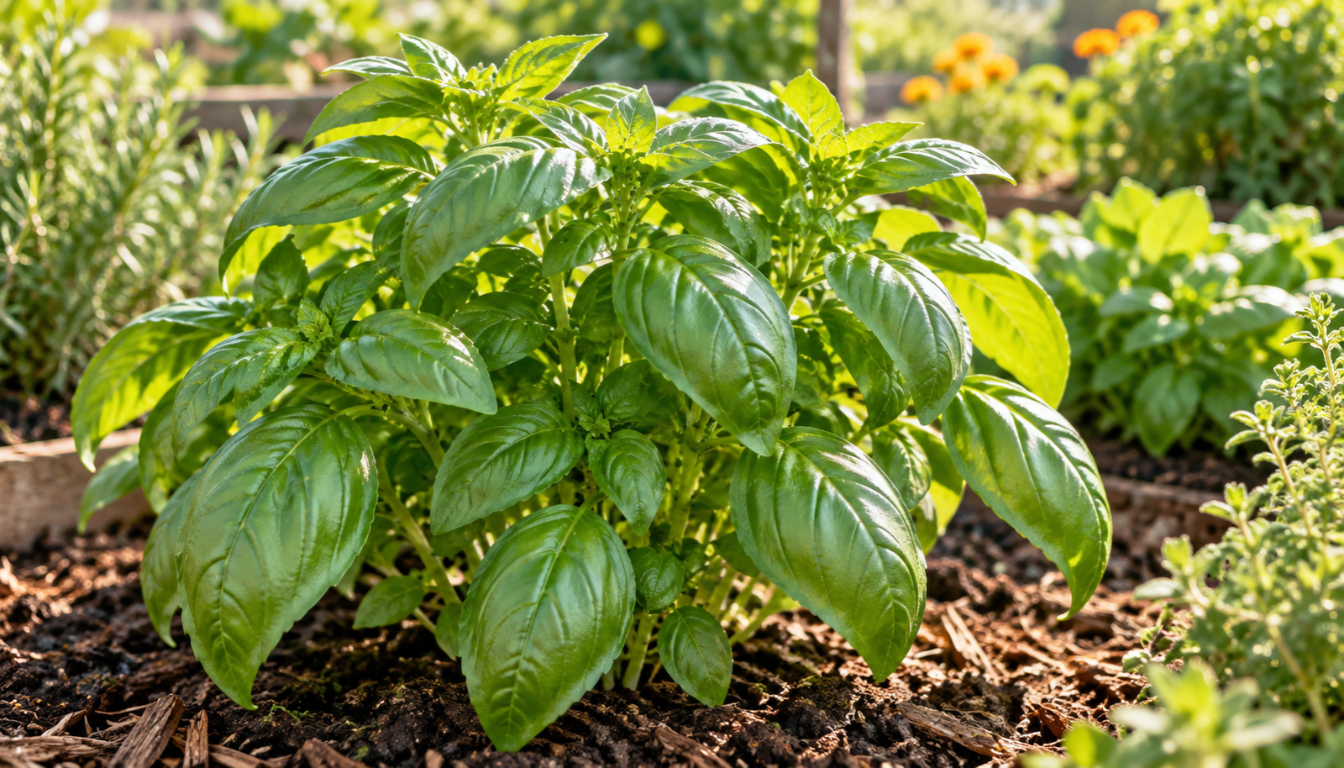
Learning how to grow basil is easy once you know what it wants: warmth, sun, and steady moisture. Basil is a tender annual, so you replant it every year. It also dies at the first frost, so timing matters more than anything else. This guide covers when to plant, where to put it, how to care for it, and which varieties to try.
Basil Growing Needs at a Glance
| Need | What basil wants |
|---|---|
| Sun | 6 to 8 hours of full sun a day |
| Soil | Fertile, well-drained, with a pH of about 6.0 to 7.0 |
| Warmth | Plant after the last frost, once soil is at least 60°F |
| Spacing | 10 to 12 inches apart |
| Water | Steady moisture, about 1 to 1.5 inches a week |
When to Plant Basil
Basil doesn’t tolerate cold, and frost damages it. Plant outdoors after the last frost, once the soil has warmed to at least 60°F. Iowa State Extension suggests direct sowing once night temperatures stay above 50°F. Don’t rush it, since basil sitting in cold soil stalls. Once temperatures reach 80°F, Penn State Extension notes, basil really starts leafing out.
Here’s a simple timeline:
- 4 to 6 weeks before the last frost: start seeds indoors in bright light, so they don’t grow lanky.
- After the last frost, once the soil is at least 60°F: transplant seedlings or sow seeds outdoors.
- When plants reach 6 to 8 inches: start pinching and harvesting.
- About six weeks in: watch for early flower buds, and pinch them off.
- Before the first cold snap: harvest everything you want to keep.
In general, seeds germinate best in warm soil, around 70 to 85°F, and usually sprout in 10 to 14 days.
Where to Plant Basil: Sun, Site, and Soil
Pick a spot with 6 to 8 hours of full sun. In fact, basil grown in full sun has more essential oils and better flavor than shade-grown basil. However, in very hot climates, afternoon shade helps. Also, choose a site with good air movement, and keep it away from busy roads, where exhaust can settle on the leaves.
Basil likes fertile, well-drained soil. Work in compost before planting, and aim for a pH around 6.0 to 7.0. In fact, soggy soil rots the roots, and root rot from poor drainage is one of the biggest threats to basil.
Also, go easy on fertilizer. Iowa State Extension warns that too much nitrogen affects flavor. If growth is slow or the leaves look pale, feed lightly with a balanced fertilizer, following the label.
How to Sow and Transplant
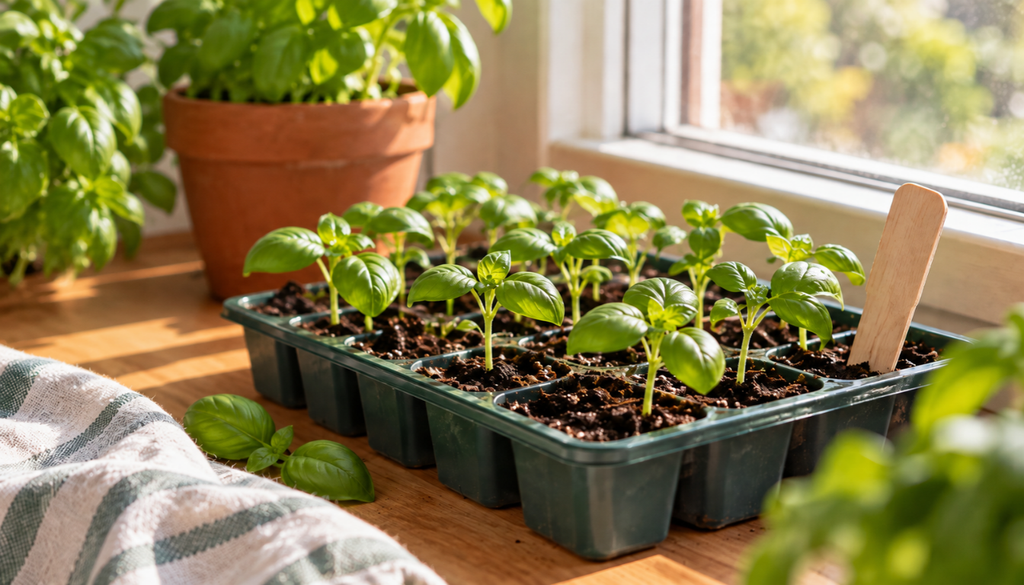
- First, sow seeds about 1/8 to 1/4 inch deep, and keep the soil moist.
- Next, thin seedlings to 10 to 12 inches apart as they grow.
- Then harden off indoor seedlings. Move them outdoors for a little longer each day over about a week.
- After that, transplant on a cloudy day, and water them in.
- Finally, spread mulch around the plants to hold moisture and cut down weeds.
Watering and Mulching Basil
Keep the soil evenly moist, not soggy. Water the soil, not the leaves, because wet leaves invite disease. Most gardens need about 1 to 1.5 inches of water a week, and potted basil dries out faster. In addition, mulch with straw or a similar material to hold moisture and reduce weeds. Heat and water stress can push basil to flower early, which hurts the leaf flavor.
How to Grow Basil in Pots
Basil does well in containers. Penn State Extension reports a plentiful harvest from one large pot about a foot wide, two feet long, and 8 inches deep. Use a pot with drainage holes and a quality potting mix, and put it in a sunny, sheltered spot. Container basil dries out faster than basil in the ground, so check the soil often in hot weather.
Pinching, Harvesting, and Starting New Plants
Pinching makes basil bushy and productive. After the first six leaves appear, pinch or prune above the second set of leaves, per Penn State Extension. Start harvesting once plants reach 6 to 8 inches tall, and pinch off flower buds as soon as they appear, because leaf flavor declines after bloom. Our guide on [how to harvest basil] explains exactly where to cut.
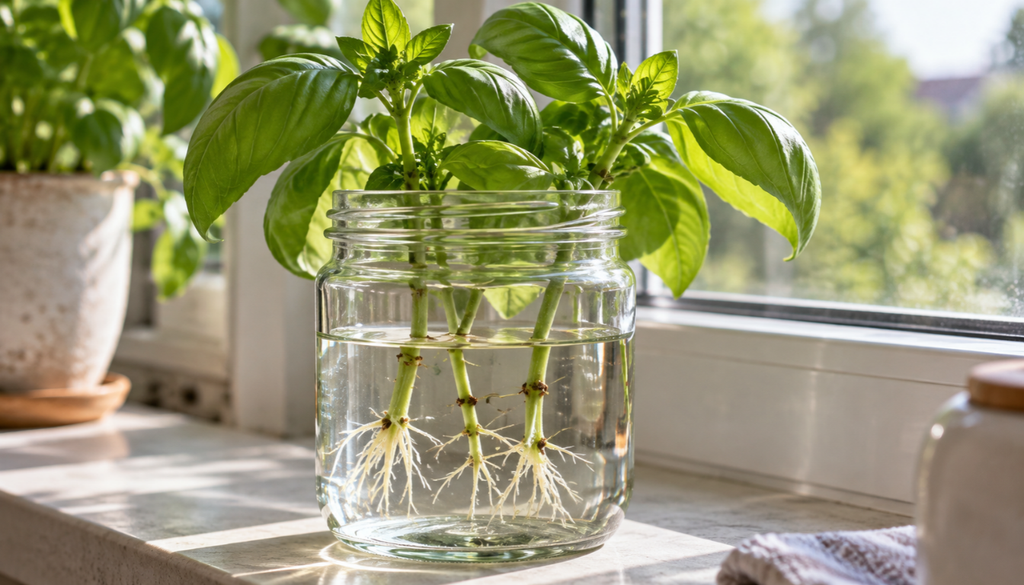
Stems you cut can become new plants. Basil cuttings root easily in water, according to Penn State Extension.
- Take a 4 to 6 inch cutting just below a leaf node.
- Strip the lower leaves, so none sit in the water.
- Stand the stem in a jar of water in bright, indirect light, and change the water every few days.
- Roots usually appear in one to two weeks. Pot the cutting up once the roots are 1 to 2 inches long.
Choosing a Basil Variety
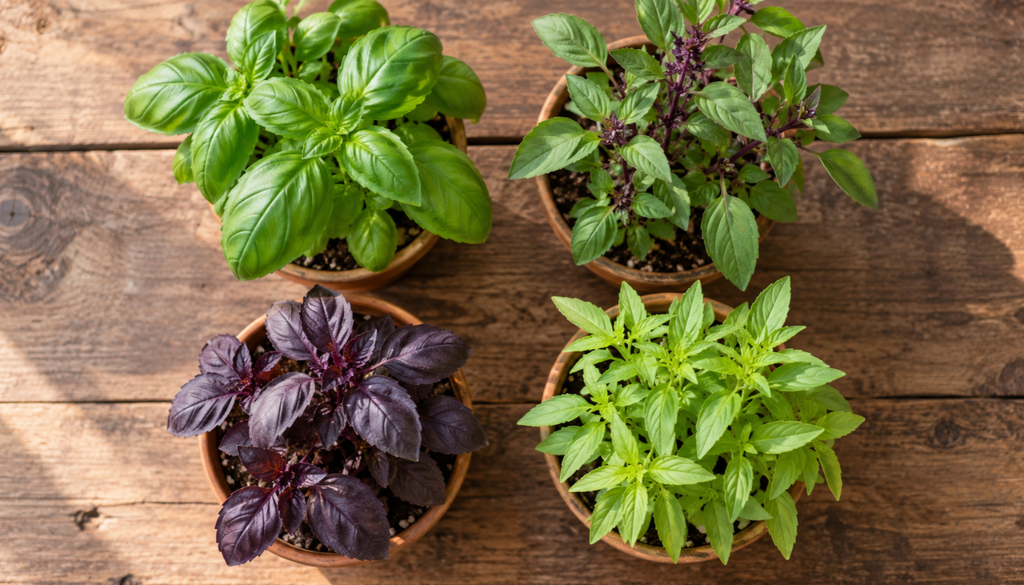
- Sweet or Genovese basil: the classic choice for pesto and Italian cooking.
- Thai basil: anise-scented, with purple stems. It’s hardy only in very warm climates, so pinch its flowers to keep the leaves from turning bitter. See our guide to [holy basil vs Thai basil] for cooking uses.
- Lemon basil: a bright citrus scent.
- Purple basil: adds color to the garden and the plate.
- Cinnamon basil: a warm, spicy note.
- Holy basil (tulsi): a different species that needs more heat and grows more slowly. See our guide to the difference between basil and holy basil.
Variety also matters for disease. Sweet basil is the most susceptible to downy mildew, while purple, Thai, and lemon basil are less so. Resistant sweet basil varieties exist for both downy mildew and Fusarium wilt.
Growing Basil With Tomatoes
Basil and tomatoes make a classic pair in the kitchen, and they like the same conditions: sun, warmth, and regular water. So it’s easy to plant them side by side. The garden claims are weaker than the folklore, though.
- Studies reported by University of Minnesota Extension found basil reduced thrips on tomatoes, but found no solid evidence that it repels tomato hornworms.
- Researchers have found no evidence that basil changes the flavor of nearby tomatoes.
Plant them together because they share needs, but check your tomatoes for hornworms regardless. Hand-picking works best.
Common Basil Problems
| Problem | Likely cause | What to do |
|---|---|---|
| Tall, sparse growth | Not pinched, or too little light | Pinch above a leaf pair, and move it to more sun |
| Early flower buds | Heat, water stress, or age | Pinch the buds, and water consistently |
| Curling or wilting leaves | Water, heat, pests, or disease | See our guide on [basil leaves curling and wilting] |
| Yellow patches with gray-purple fuzz underneath | Downy mildew | No cure. Harvest healthy leaves and remove the plant |
| Sudden wilt, brown streaks inside the stem | Fusarium wilt | No cure. Remove the plant and the soil |
The most common pests on basil are Japanese beetles, slugs, and aphids, according to Clemson Extension. Hand-pick beetles and slugs. For aphids and spider mites, spray the plant with water first, then use insecticidal soap if needed. To cut disease risk, space plants so the leaves dry quickly, and keep water off the foliage.
Protecting Basil From Cold
Penn State Extension notes that temperatures below 40°F discolor basil leaves, and frost kills the plant. When cold weather is forecast, harvest all your basil. You can also take cuttings, or dig up a healthy plant to grow indoors. See our guide on growing basil indoors.
Before You Go – How to Grow Basil
Basil rewards a little attention. Plant it after the last frost in full sun, keep the soil evenly moist, and pinch it early and often. Match the variety to your climate, and water the soil, not the leaves. For more on gardening with herbs, see our growing medicinal herbs guide.
References – How to Grow Basil
Little Herb Encyclopedia, by Jack Ritchason; N.D., Woodland Publishing Incorporated, 1995
The Ultimate Healing System, Course Manual, Copyright 1985, Don Lepore
Planetary Herbology, Michael Tierra, C.A., N.D., Lotus Press, 1988
Handbook of Medicinal Herbs, by James A. Duke, Pub. CRP Second Edition 2007
The Complete Medicinal Herbal, by Penelope Ody, Published by Dorling Kindersley
Sources
- Penn State Extension, “Basil, A Summer Favorite”: extension.psu.edu
- Iowa State University Extension, “Growing Basil in the Home Garden”: extension.iastate.edu
- Utah State University Extension, “How to Grow Basil in Your Garden”: extension.usu.edu
- UF/IFAS Extension (Pasco County), “Spice Up Your Life: A Beginners Guide to Growing Basil”: blogs.ifas.ufl.edu
- University of Wisconsin Extension, downy mildew of basil: extension.wisc.edu
- Ask Extension, Fusarium wilt in sweet basil: ask.extension.org
Related Articles
White Vinegar vs. Apple Cider Vinegar: Key Differences
Persian Cucumbers: A Nutritional Powerhouse for Wellness
Frequently Asked Questions – How to Grow Basil
When is the best time to plant basil?
Plant it outdoors after the last frost, once soil is at least 60°F. Start seeds indoors 4 to 6 weeks earlier if you want a head start.
How much sun does basil need?
Basil needs 6 to 8 hours of full sun a day. In very hot climates, afternoon shade helps.
How far apart should I plant basil?
Thin or space plants about 10 to 12 inches apart, so air can circulate.
How often should I water basil?
Keep the soil evenly moist, about 1 to 1.5 inches of water a week outdoors. Potted basil dries out faster, so check the soil often.
Can I grow basil in a pot?
Yes. Use a pot with drainage holes, ideally about 8 inches deep or more, and a good potting mix.
Can I grow basil from cuttings?
Yes. Basil cuttings root easily in water, usually in one to two weeks. Pot them up once the roots are 1 to 2 inches long.
Does basil help tomatoes grow better?
They grow well together because they like the same conditions. Evidence that basil repels hornworms or improves tomato flavor is weak, though basil may reduce thrips.
How do I keep basil from flowering?
Pinch the tips regularly, and pinch off flower buds as soon as they appear. Heat and water stress push basil to flower early.