
The Herb Prof Team researches and writes our herbal guides, drawing on published research, traditional herbal references, and hands-on growing experience.
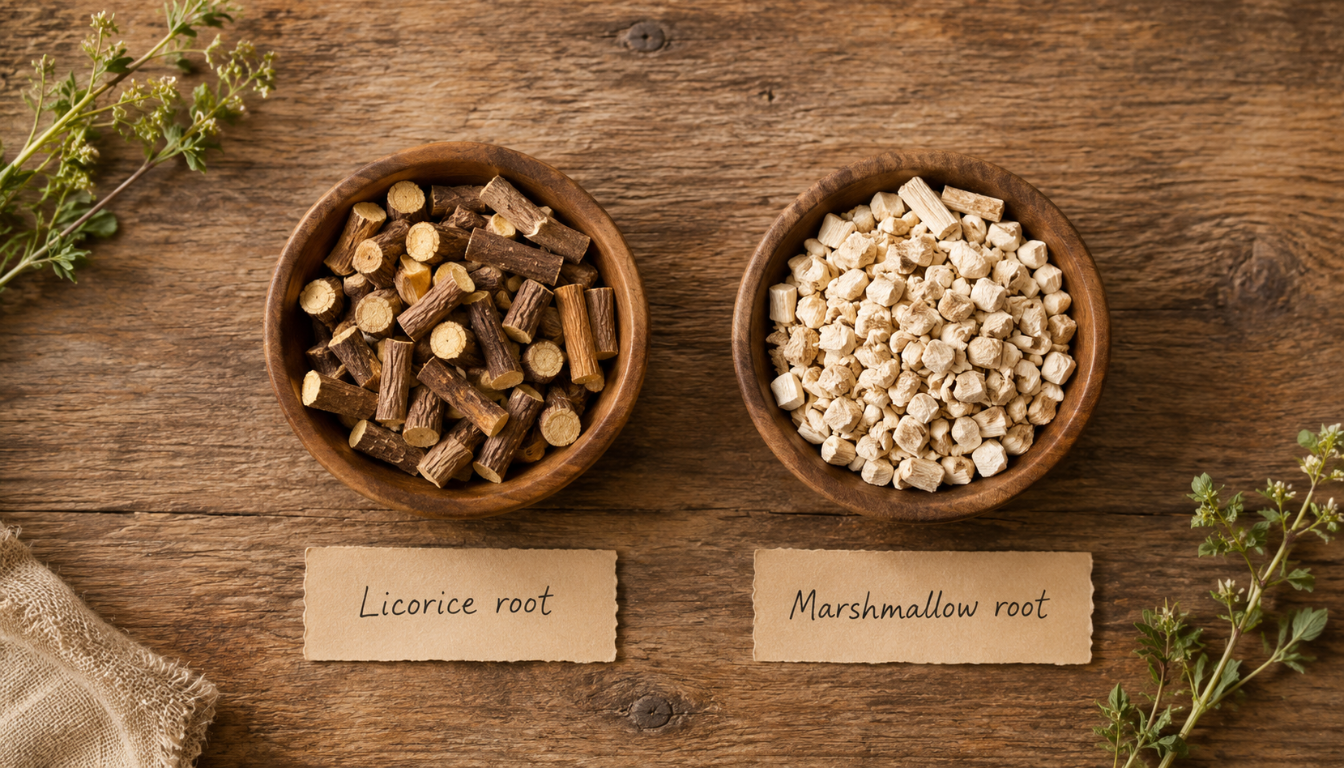
Licorice vs Marshmallow Root is a common question when people look for gentle, comforting remedies. Both roots are classic soothing herbs in traditional medicine and can calm irritated tissues in the throat and digestion in different ways.
In this guide, I’ll walk you through how each herb works, what they are best at, and when to be careful, so you can choose the right soothing ally for your situation.
Overview of Licorice Root and Marshmallow Root
Licorice root comes from Glycyrrhiza glabra and has been used since ancient times in the Mediterranean, Middle East and Asia for coughs, sore throats and digestive complaints. Marshmallow root comes from Althaea officinalis, a soft, mucilaginous plant used for centuries to calm irritated mucous membranes in the throat, lungs and gut.
- Licorice root is sweet, warming and slightly stimulating, with key compounds like glycyrrhizin that influence hormones involved in fluid and mineral balance.
- Marshmallow root is bland, moistening and very gentle, rich in mucilage that forms a slippery gel coating over inflamed tissues.
Both are classic “soothing” herbs, but they do it in different ways.
Health Benefits of Licorice Root
Soothing and Supportive Actions
Licorice root has a broad range of traditional uses and modern research interest.
- Respiratory support. Licorice is traditionally used to ease sore throats, dry or irritated coughs and bronchial discomfort, acting as a demulcent and gentle expectorant.
- Digestive comfort. It has been used for indigestion, mild gastritis and heartburn, often in combination with other herbs to support gut lining and reduce irritation.
- Stress and adrenal support (traditional use). In herbal practice licorice is sometimes used to support adrenal function and help the body cope with stress, though good human evidence here is limited.
Many people find that a small amount of licorice in a tea blend gives a sweet taste and a smooth, comforting feel for the throat and chest.
Safety and Side Effects of Licorice Root
This is where licorice is very different from marshmallow.
Licorice root contains glycyrrhizin, which can act in a hormone‑like way on the kidneys and mineral balance. Taken in excess or for long periods, glycyrrhizin can:
- Raise blood pressure.
- Lower blood potassium.
- Cause fluid retention and, in severe cases, heart rhythm problems and heart failure.
Studies show that even relatively small daily amounts of glycyrrhizin (around 100 mg per day) can measurably increase blood pressure in healthy people. Because of this, major health bodies recommend caution or avoidance in people with:
- High blood pressure or heart disease.
- Kidney disease.
- A tendency to low potassium.
- Pregnancy.
If licorice is used, it should be:
- In moderation, usually as a minor part of a blend rather than a high‑dose long‑term supplement.
- For short periods, unless you are under the care of a knowledgeable practitioner.
There are also deglycyrrhizinated licorice (DGL) products designed for digestive support that have much less glycyrrhizin and a better safety profile for many people.
Health Benefits of Marshmallow Root
Soothing Properties
Marshmallow root is a classic demulcent herb. Its mucilage swells in water to form a soothing, protective coating over mucous membranes.
- Throat and cough. Marshmallow root teas and syrups are used for dry, tickly coughs and sore throats, coating irritated tissue and calming the urge to cough.
- Digestive tract. The same mucilage can ease heartburn, mild gastritis, reflux and general gut irritation by forming a gentle barrier over inflamed surfaces.
- General mucous membrane support. Traditional use also includes urinary tract and mouth irritation, where the demulcent gel soothes raw, burning tissues.
Unlike licorice, marshmallow’s actions are mostly local and physical rather than hormonal, which is one reason it tends to have a milder safety profile.
Safety and Side Effects of Marshmallow Root
Marshmallow root is generally well tolerated in traditional doses, and is even listed as “generally recognized as safe” as a food ingredient.
There are still a few points to watch:
- Medication absorption. The mucilage can slow or reduce absorption of oral medicines by coating the gut wall, so most sources advise taking marshmallow 1–2 hours apart from prescription drugs.
- Allergy. Rare allergic reactions are possible with any plant; stop use and seek help if you experience rash, itching, swelling or breathing difficulty.
- Pregnancy and breastfeeding. There is limited reliable human data, so it is safest to use only food‑like amounts or work under professional guidance.
For most people, marshmallow root is considered a gentle, low‑risk soothing herb when used appropriately.
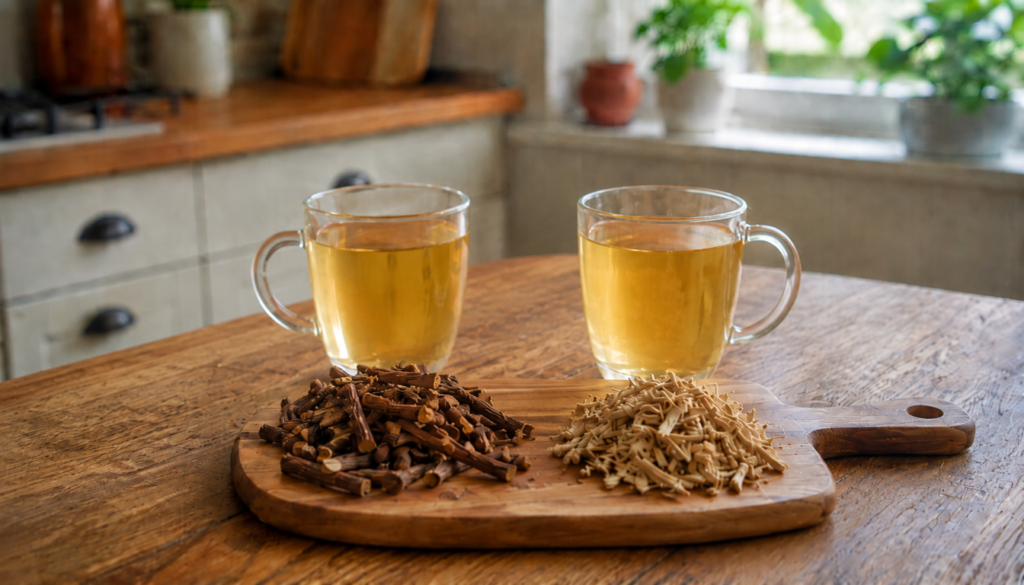
Licorice vs Marshmallow Root: Which Soothes Best?
Efficacy in Soothing
Both herbs soothe, but they shine in slightly different arenas.
- Licorice root
- Strong demulcent and gentle expectorant for respiratory tract, especially when there is dryness plus some stubborn mucus.
- Traditionally used for indigestion and gastritis, often in formulas that include other herbs and, in some cases, DGL preparations.
- Marshmallow root
- Outstanding demulcent for very dry, raw, irritated tissues, especially in the throat and upper digestive tract.
- Particularly good when symptoms are dominated by burning, scratchiness or dryness rather than heavy mucus.
In simple terms:
- For a dry, scratchy throat or “sandpaper” cough, marshmallow root is often the gentlest first choice.
- For mixed respiratory issues where you also want expectorant and immune support, a small amount of licorice in a blend can be very helpful, as long as you have no blood pressure or heart concerns.
Many traditional cough and throat formulas combine the two: marshmallow to coat and soften, licorice to sweeten, moisten and add extra demulcent and expectorant action.
Safety Comparison
| Aspect | Licorice Root | Marshmallow Root |
|---|---|---|
| Main soothing mechanism | Demulcent, mild anti‑inflammatory, hormonal effects via glycyrrhizin | Strong demulcent via mucilage coating |
| Best fit | Respiratory blends, mild gastritis, traditional adrenal support | Dry coughs, sore throat, reflux, irritated gut and mucous membranes |
| Big safety concern | Raises blood pressure, lowers potassium, fluid retention at modest doses in some people | May reduce absorption of oral medicines if taken too close together |
| Higher‑risk groups | Hypertension, heart or kidney disease, pregnancy, people on certain drugs | People on multiple oral medicines; those with rare plant allergies |
| Overall profile | Effective but needs strict caution and limits | Gentle, usually low‑risk in traditional doses |
How to Choose Between Them
When deciding which herb to use, ask three questions:
- Where is the irritation?
- Mainly throat and lungs with some mucus: consider a blend with a small amount of licorice plus marshmallow (if you have no blood pressure or heart issues).
- Very dry, raw throat or reflux‑type burning: start with marshmallow root as the main herb.
- What is your health background?
- Any history of high blood pressure, heart disease, kidney problems or low potassium? Then minimize or avoid licorice root unless your clinician says otherwise, and lean on marshmallow and other gentle demulcents instead.
- On several prescription medicines? Focus on marshmallow but separate it from your meds by 1–2 hours and confirm with your doctor or pharmacist.
- How long will you use it?
- Short‑term (a few days) in a tea blend for a cold or mild flare is very different from daily high‑dose supplements. Long‑term or high‑dose use of licorice especially should always be supervised.
Quick examples:
- Dry, scratchy throat or tickly cough: Start with marshmallow root tea or syrup. It coats and calms without affecting blood pressure.
- Mixed cough with mucus, and no blood‑pressure issues: Use a blend of both herbs, with a small amount of licorice plus marshmallow for extra soothing and flavour.
- Heartburn, mild gastritis or reflux: Choose marshmallow root as your main herb because its mucilage protects the gut lining.
- History of high blood pressure or heart disease: Avoid or minimise licorice and lean on marshmallow and other demulcents instead.
- Taking several prescription medicines: Use marshmallow, but take it 1–2 hours away from your meds so the mucilage does not interfere with absorption.
Simple ways to use these herbs
- For short‑term soothing, most people use licorice or marshmallow as part of a herbal tea blend rather than high‑dose capsules.
- Keep licorice as a small proportion of the blend, and avoid daily long‑term use unless a practitioner is supervising you.
- Take marshmallow root tea or cold infusion 1–2 hours apart from medicines, so the mucilage doesn’t interfere with absorption.
If you’d like a deeper dive into marshmallow itself, see my full guide on marshmallow leaf uses and my marshmallow root tincture recipe for more preparation ideas.
Before You Go – Licorice vs Marshmallow Root
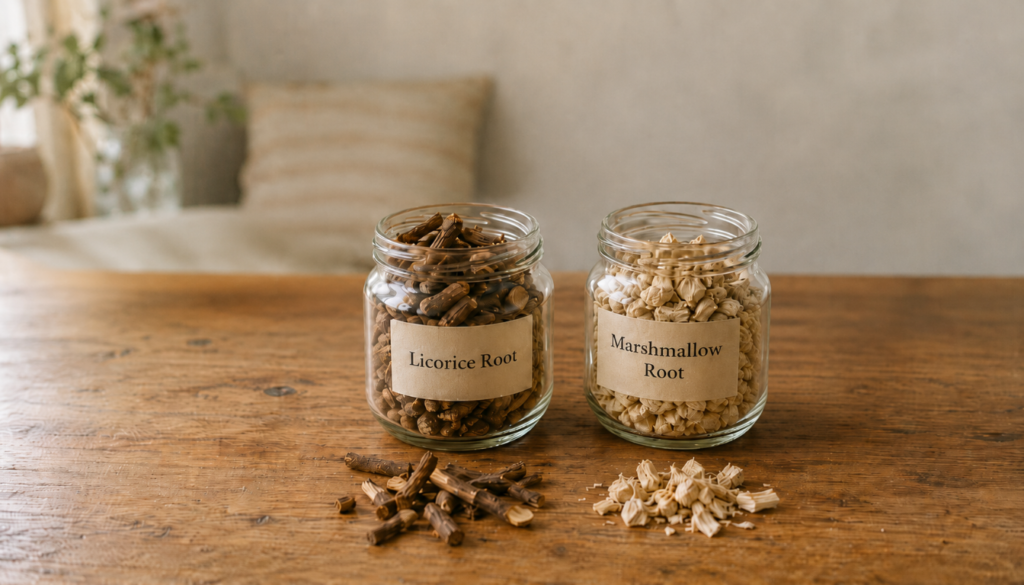
Licorice root and marshmallow root are both excellent soothing herbs, but they are not interchangeable. Licorice is powerful and versatile, especially for respiratory blends, yet it can raise blood pressure and disturb mineral balance even at modest doses in some people. Marshmallow root is gentler, with a strong demulcent action and a much milder safety profile, making it a good first choice when you want soothing without hormonal side effects.
For most people, a marshmallow‑based formula, sometimes with a modest amount of licorice, gives excellent relief when used sensibly and at the right time. Always check with a qualified healthcare professional if you have medical conditions, take prescription medications, are pregnant, or plan to use these herbs for more than a short time.
References – Licorice vs Marshmallow Root
Little Herb Encyclopedia, by Jack Ritchason; N.D., Woodland Publishing Incorporated, 1995
The Ultimate Healing System, Course Manual, Copyright 1985, Don Lepore
Planetary Herbology, Michael Tierra, C.A., N.D., Lotus Press, 1988
Handbook of Medicinal Herbs, by James A. Duke, Pub. CRP Second Edition 2007
The Complete Medicinal Herbal, by Penelope Ody, Published by Dorling Kindersley
Check the Following Article
Natural Herbal Support for Endocannabinoid Balance
Herbal Teas for Health: Antioxidant Insights from Studies
Top Tips for Growing Medicinal Herbs in Hanging Baskets
Frequently Asked Questions – Licorice vs Marshmallow Root
What are the main differences between licorice root and marshmallow root?
Licorice root is sweet, warming and slightly stimulating, with glycyrrhizin that affects hormones involved in fluid and blood pressure; marshmallow root is bland, moistening and strongly demulcent, coating irritated tissues with soothing mucilage.
Which herb is better for sore throats and coughs?
Both can help, but marshmallow root excels for very dry, scratchy throats and “tickly” coughs, while licorice root is often used in small amounts in respiratory blends where you also want expectorant and immune support.
Which is better for digestion: licorice root or marshmallow root?
Marshmallow root is usually the gentler choice for heartburn, mild gastritis and irritated digestion because it forms a protective mucilaginous coating, while licorice root is often used in carefully dosed formulas or DGL products for upper‑GI support.
What are the main safety concerns with licorice root?
Regular or high intakes of licorice containing glycyrrhizin can raise blood pressure, lower potassium, cause fluid retention and, in severe cases, trigger serious heart problems, so people with hypertension, heart or kidney disease, or pregnancy should be especially cautious.
Is marshmallow root safer than licorice root?
Marshmallow root is generally considered gentler and lower‑risk when used in traditional doses, but its mucilage can slow the absorption of oral medicines, so it should usually be taken 1–2 hours apart from prescription drugs.
Can I use licorice root and marshmallow root together?
Yes, many traditional throat and cough formulas combine a small amount of licorice root with marshmallow root, using marshmallow for deep soothing and licorice for extra demulcent action and flavour, provided there are no licorice‑related blood pressure or heart concerns.