
The Herb Prof Team researches and writes our herbal guides, drawing on published research, traditional herbal references, and hands-on growing experience.
Marshmallow leaf comes from Althaea officinalis, a soft, downy plant used for more than 2,000 years. Marshmallow leaf uses focus on soothing irritated tissues in the throat, lungs, digestive tract, urinary system and skin. Today, herbalists still reach for marshmallow when they need a gentle, moistening herb that soothes dryness, rawness, and inflammation almost anywhere it can touch.
In this guide you will learn what marshmallow leaf is, how it works, the main medicinal uses backed by traditional practice and modern research, how to prepare it at home, and when to be careful.
What Is Marshmallow Leaf?
Marshmallow is a perennial herb in the mallow family that grows in damp meadows and marshy ground across Europe, Western Asia and North Africa. Herbalists use the roots, leaves, and sometimes flowers, but the leaf is especially valued for supporting the lungs, bladder, and skin.
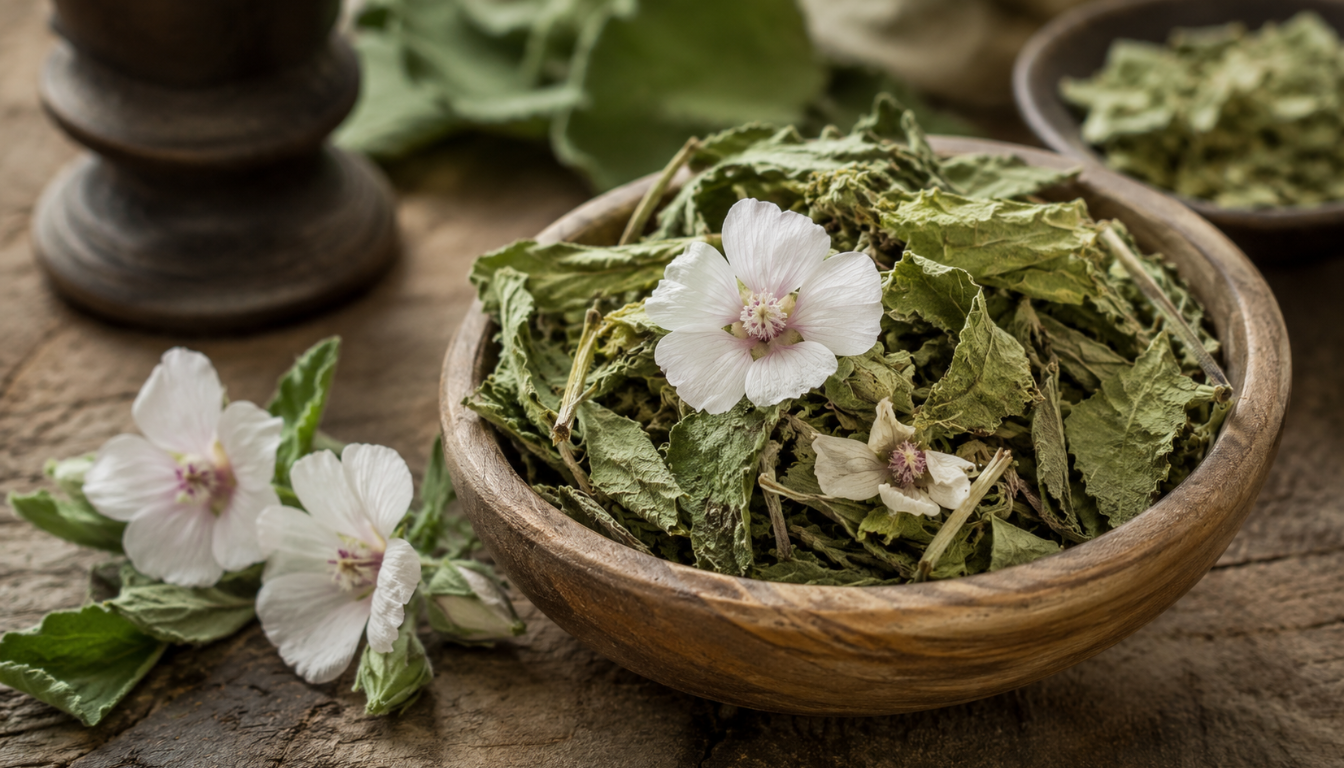
The leaves are soft, grey‑green and slightly hairy, with a mild, almost bland taste. When they are chopped and mixed with water they release mucilage, a gel‑like substance that thickens the liquid and gives marshmallow its characteristic “slippery” feel.
How Marshmallow Leaf Works
The main action of marshmallow leaf is demulcent. It forms a soothing, protective coating over irritated tissues.
- High mucilage content. Marshmallow leaves and roots contain large amounts of polysaccharides that swell in water to form a slippery gel.
- Protective barrier. This gel behaves a bit like the body’s own mucus, lining irritated surfaces and shielding them from further friction, acid, or infection while they heal.
- Gentle anti‑inflammatory and emollient effects. By keeping tissues moist and protected, marshmallow reduces the sensation of burning, dryness and rawness and supports normal repair.
Because this effect is local, marshmallow leaf works best when it can directly touch the problem area. Use it as a tea, cold infusion, lozenge, mouthwash, poultice, or wash.
Key Medicinal Uses of Marshmallow Leaf
1. Throat, Lungs and Coughs
Traditional herbal texts describe marshmallow as one of the classic “soothing herbs” for dry, tickly, or hacking coughs, sore throats, and irritated airways.
- The mucilage coats the throat and upper airways, calming the urge to cough and reducing soreness.
- A review of Althaea officinalis found that extracts can reduce dry cough and work well in combination syrups with other herbs such as ivy, thyme or ginger.
Herbalists often pair marshmallow leaf tea or cold infusion with demulcent lozenges for dry, non‑productive coughs and irritated throats, especially when things feel “scratchy” or raw rather than congested.
2. Digestive Tract Soother
Marshmallow has a long history of use for gastritis, peptic ulceration, heartburn and general inflammation of the digestive tract.
- The mucilage coats the lining of the oesophagus and stomach and can reduce the burning sensation of reflux and indigestion.
- Traditional practice uses marshmallow for conditions such as gastritis, peptic and duodenal ulcers, colitis and enteritis, often alongside other herbs and dietary changes.
Modern articles aimed at clinicians still highlight marshmallow as a key mucilaginous herb for supporting gut integrity and comfort.
3. Urinary Tract and Bladder
Herbal sources note that the leaves in particular are useful for the urinary system, including cystitis, urethritis, and “urinary gravel.”
- The demulcent mucilage soothes irritated urinary tissue in much the same way as it calms the throat or gut.
- Because it is also mildly diuretic, marshmallow leaf is often included in blends for urinary tract comfort and general urinary tract “washing through.”
People traditionally drink marshmallow leaf infusions during episodes of burning urination or mild cystitis, usually alongside medical care if infection is suspected.
4. Skin, Wounds and Topical Use
Externally, marshmallow leaf has a reputation as a softening, moistening herb for hot, dry, irritated skin.
- Poultices, washes or creams made with marshmallow leaf have been used for eczema, dermatitis, burns, ulcers, varicose veins and poorly healing wounds.
- The same demulcent gel that soothes internal tissues can calm itch, tightness and soreness externally, especially when skin is inflamed and dry.
It rarely acts alone in serious skin conditions, but makes a useful adjunct in traditional ointments and compresses.
5. Food and Culinary Uses
Marshmallow leaves are technically edible and have been used historically as a famine food or pot herb.
- Young leaves can be finely chopped into salads or added to soups and stews as a mild thickener.
- Because the texture is fibrous and slightly hairy, most people prefer them cooked or blended rather than eaten whole.
This culinary use is more of a bonus than the main reason herbalists value marshmallow leaf today.
How to Use Marshmallow Leaf

Cold Infusion (Best for Demulcent Effect)
Many herbalists prefer cold water for marshmallow because it preserves mucilage especially well.
- Put 1–2 tablespoons of dried marshmallow leaf into a jar.
- Cover with 1 cup of cold or room‑temperature water per tablespoon.
- Cover and leave to steep for 4–8 hours or overnight.
- Strain and sip throughout the day.
This method is ideal for throat, digestive or urinary soothing, and you can blend it with a little mint, licorice or chamomile for flavour.
Warm Tea
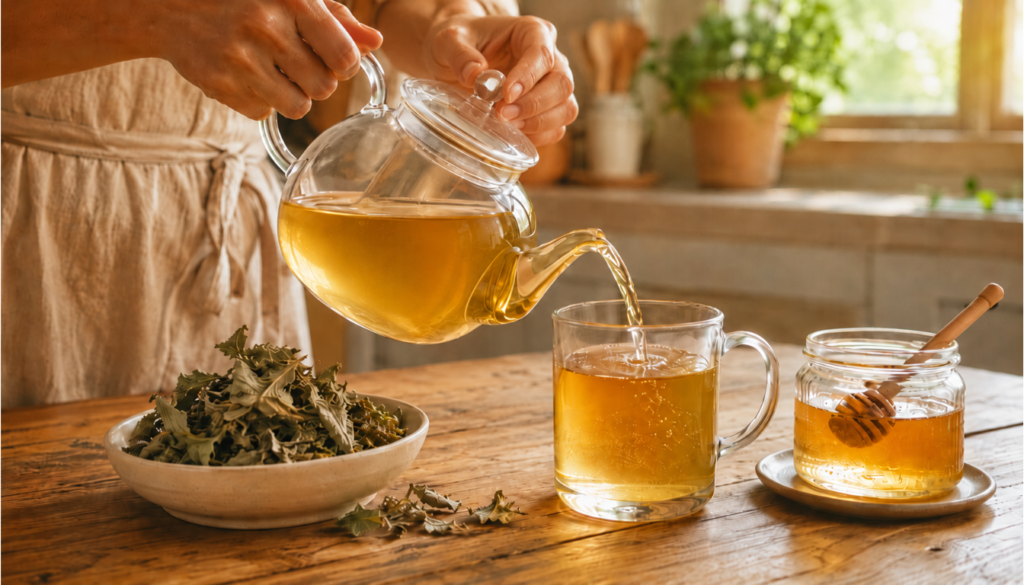
A simple warm tea is also effective and may be more comforting in cold weather. The texture will still be slightly slippery, which is exactly what you want for demulcent action.
- Use around 1–2 teaspoons of dried leaf per cup.
- Pour hot (not boiling hard) water over the herb and steep 10–15 minutes, then strain.
For dried marshmallow, I like using an organic, cut‑and‑sifted root or leaf. A good example is this organic marshmallow root from Frontier Co‑op, which works well for teas and infusions.
Gargles, Mouth Rinses and Lozenges
Because marshmallow leaf is safe in food‑like amounts, you can use the infusion as a gargle or mouth rinse for sore mouth and throat.
- Gargle with the cooled tea or cold infusion several times a day, then swallow or spit depending on your practitioner’s advice.
- Herbal lozenges and syrups for dry coughs often include marshmallow alongside other soothing herbs.
Topical Use
For skin applications:
- Poultice: Soak dried leaves in warm water until soft, then wrap in clean cloth and apply to the affected area.
- Wash or compress: Use cooled tea on clean cloths as a soothing compress for irritated skin.
Always keep the area clean and seek medical care for serious or infected wounds.
Safety, Interactions and Who Should Avoid It
Marshmallow leaf and root are generally well tolerated in the amounts used in foods and traditional herbal practice. Still, there are some important cautions.
- Medication absorption.The mucilage can slow the absorption of medicines taken by mouth, potentially reducing their effect. Take marshmallow at least one to two hours after oral medications unless your doctor or pharmacist advises otherwise.
- Blood‑thinning drugs.Some sources suggest marshmallow might modestly slow blood clotting, so use caution if you take anticoagulant or antiplatelet drugs and always involve your prescriber.
- Pregnancy and breastfeeding.There is not enough reliable human data for marshmallow in pregnancy and lactation, so most conservative sources recommend sticking to small food‑like amounts only, or avoiding medicinal doses unless guided by a qualified practitioner.
- Allergy and sensitivity.Allergic reactions are rare but possible with any plant. Discontinue immediately if you notice rash, itching, breathing difficulty or throat swelling.
As always, if you have a medical condition, take prescription medication, are pregnant, or are preparing for surgery, speak with a suitable healthcare professional before using marshmallow leaf as a remedy.
Marshmallow Leaf vs Marshmallow Root
Both leaf and root come from the same plant, but herbalists traditionally use them for slightly different emphases.
| Part | Traditional focus | Best forms |
|---|---|---|
| Leaf | Lungs, urinary tract, mild skin and digestive support | Cold infusion, tea, gargles, poultices |
| Root | Strong gut demulcent, intense dryness, classic cough syrups | Decoction, cold infusion, syrups, tinctures |
In practice they overlap a lot, and many formulas combine both. Your leaf‑focused article can link to your separate marshmallow root tincture recipe for readers who want a more concentrated preparation.
Before You Go – Marshmallow Leaf Uses
Marshmallow leaf is one of the gentlest, most reliable herbs for calming hot, dry, irritated tissues in the throat, lungs, digestive tract, urinary system and skin. Its strength lies not in being a dramatic “hero” herb, but in quietly coating and protecting surfaces so the body can do its own healing work.
Used as cool infusions, warm teas, rinses and poultices. With good attention to medication timing and safety in special situations, marshmallow leaf earns a permanent spot in a soothing herbal toolkit.
References – Marshmallow Leaf Uses
Little Herb Encyclopedia, by Jack Ritchason; N.D., Woodland Publishing Incorporated, 1995
The Ultimate Healing System, Course Manual, Copyright 1985, Don Lepore
Planetary Herbology, Michael Tierra, C.A., N.D., Lotus Press, 1988
Handbook of Medicinal Herbs, by James A. Duke, Pub. CRP Second Edition 2007
The Complete Medicinal Herbal, by Penelope Ody, Published by Dorling Kindersley
Related Articles
Milk Thistle Benefits: A Natural Detoxifier and Liver Protector
Biblical Myrrh: The Ancient Resin with Modern Benefits
Neem Tree Benefits: Amazing Health From This Secret!
Frequently Asked Questions – Marshmallow Leaf Uses
What is marshmallow leaf used for medicinally?
Marshmallow leaf is mainly used as a demulcent herb to soothe irritated mucous membranes in the throat, lungs, digestive tract, urinary system, and on the skin.
What is the difference between marshmallow leaf and root?
Both come from Althaea officinalis, but herbalists tend to use the leaf more for lungs and urinary tract, and the root more for deep digestive issues like gastritis, ulcers and intense dryness.
How do you make a marshmallow leaf tea or infusion?
For a warm tea, steep 1–2 teaspoons of dried leaf in hot water for 10–15 minutes; for a stronger soothing effect, make a cold infusion by soaking 1–2 tablespoons of leaf in cool water for 4–8 hours, then strain and sip through the day.
Can marshmallow leaf help with coughs and sore throat?
Yes, the high mucilage content coats the throat and upper airways, easing dryness, tickly coughs and soreness, especially in dry, non‑productive coughs.
Is marshmallow leaf good for digestion?
Marshmallow has long been used for heartburn, gastritis, reflux and irritated digestion because its mucilage forms a soothing layer over inflamed stomach and intestinal tissue.
Is marshmallow leaf safe to take with medications or during pregnancy?
There is not enough reliable research to confirm safety in pregnancy or breastfeeding, so most experts advise avoiding medicinal doses at those times. Because marshmallow’s mucilage can slow drug absorption, take it at least one to two hours after oral medicines and speak with your doctor or pharmacist if you use prescription drugs.